HimLocal
Sign in
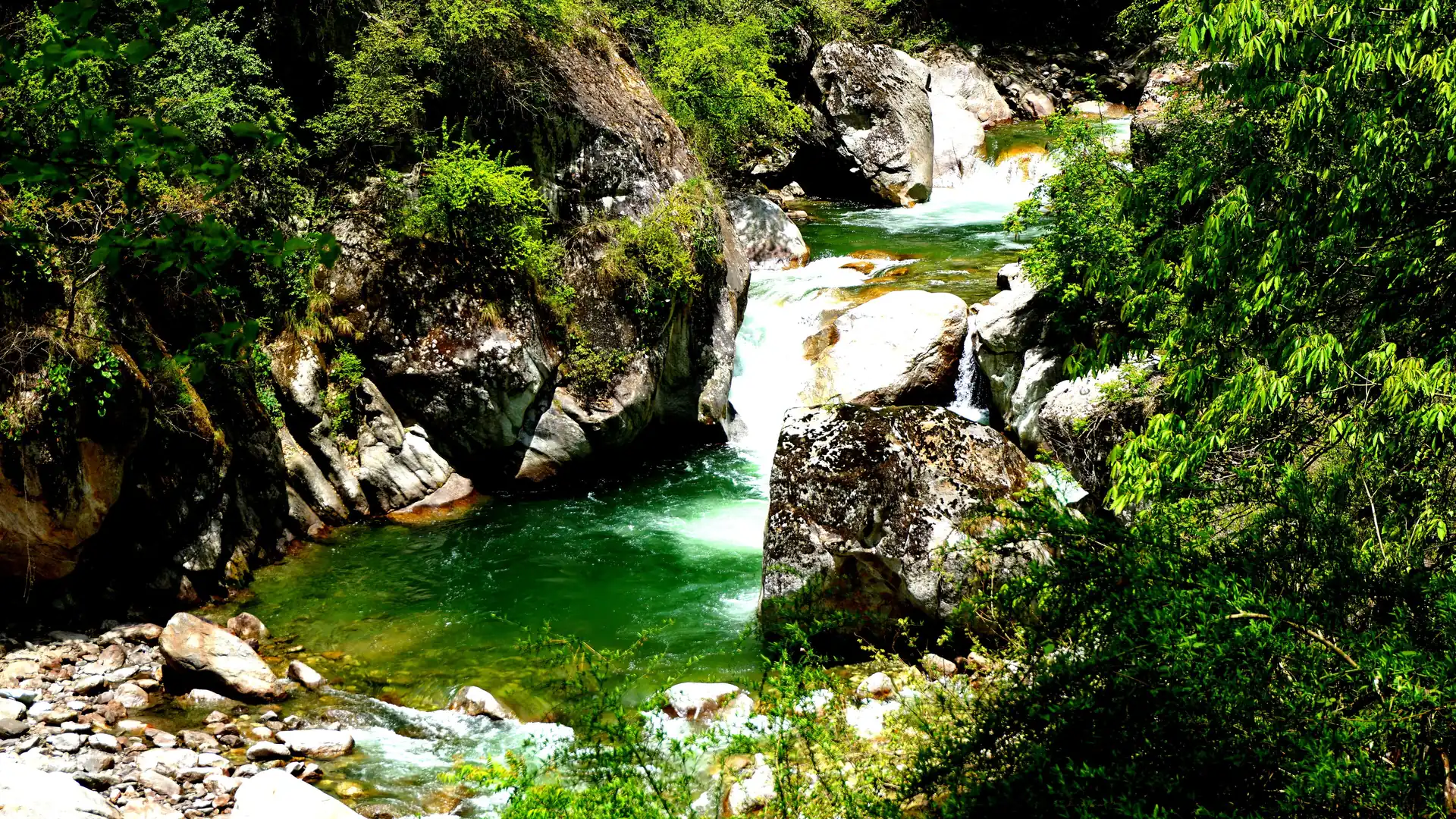
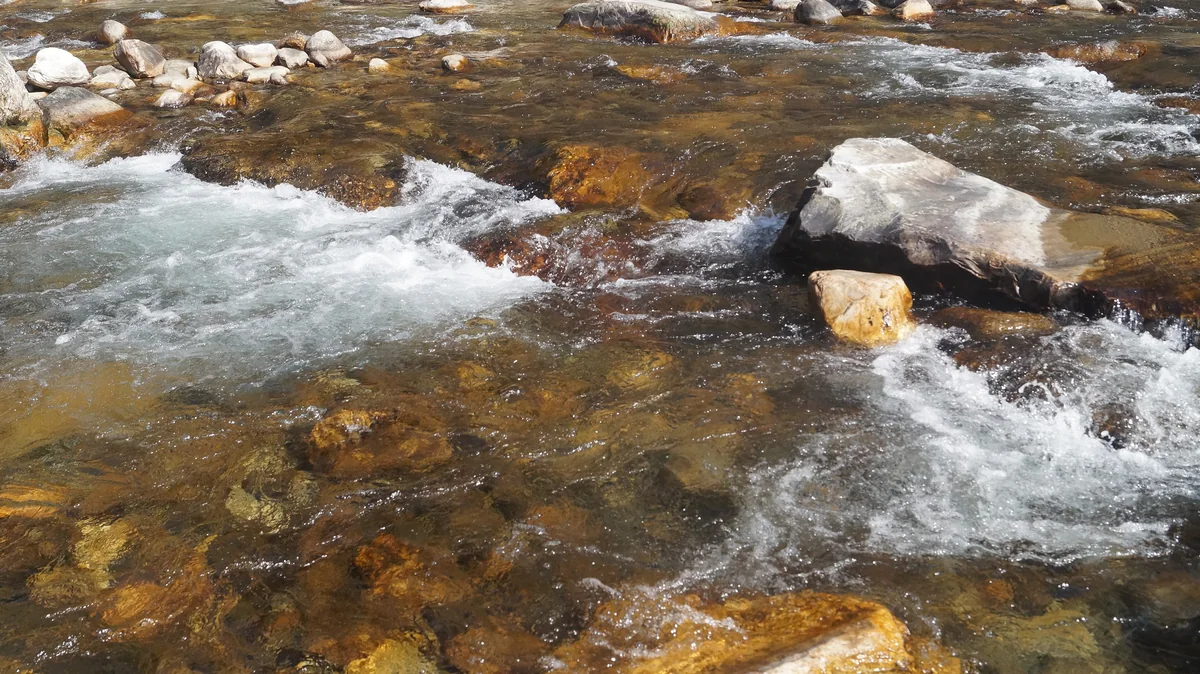
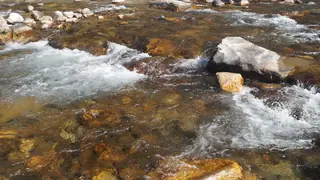
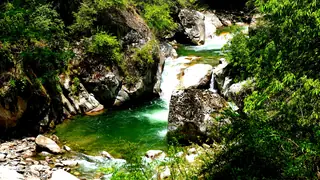
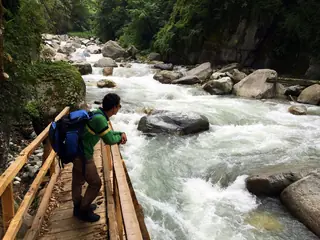
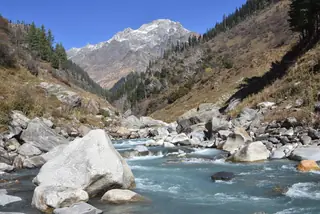
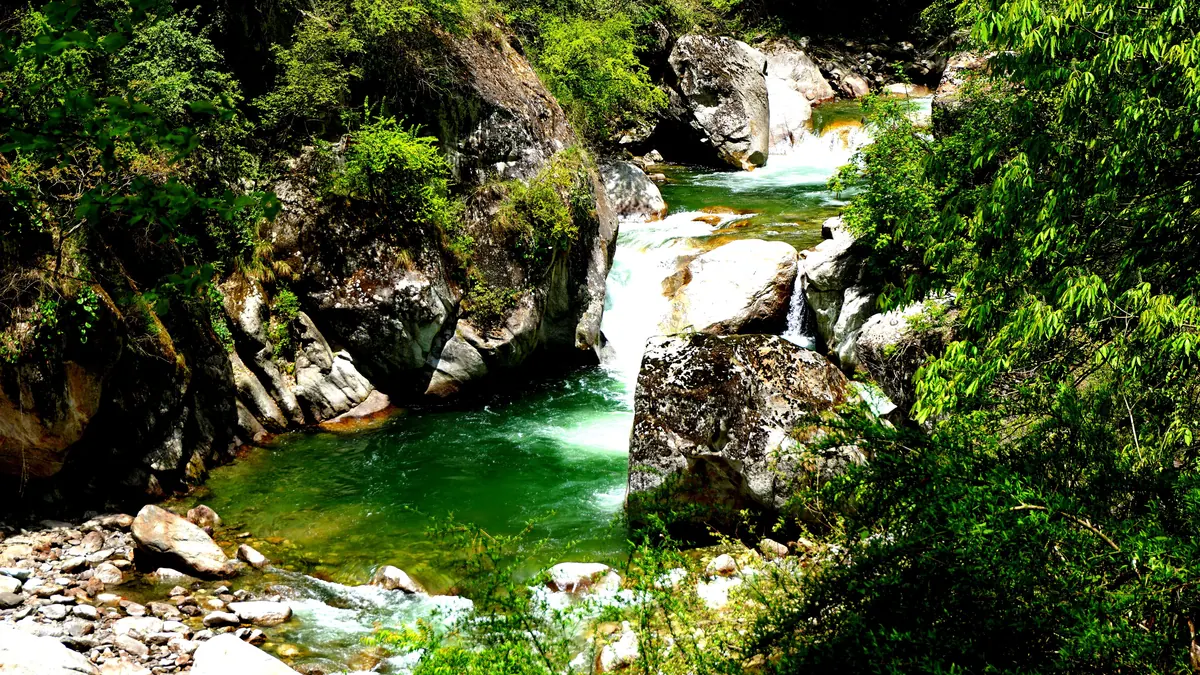
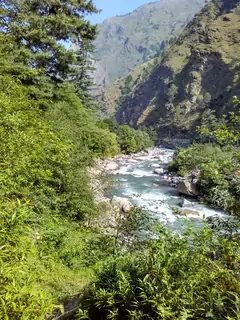
The Tirthan river running green between boulders and forest
Himachal Pradesh1,435 m16 itineraries

Banjar, Jibhi and the Tirthan valley

Banjar at 1,435 m on the Tirthan: homestays at Gushaini and Jibhi, Jalori Pass and Serolsar lake, the Great Himalayan National Park, trout, IMD weather, plans.
1 / 7
Photo: Vishrutpanday · CC BY-SA 4.0

Itineraries you can copy

All 16
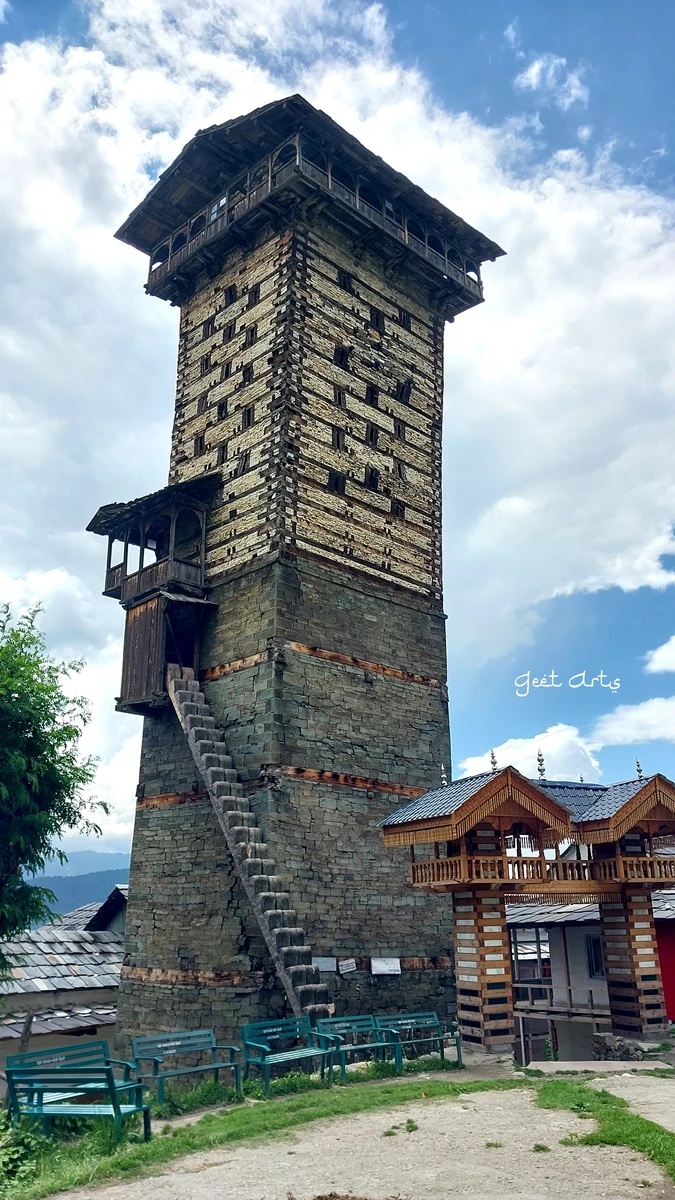
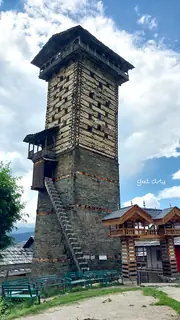
The wooden tower of Chehni Kothi above the village roofsDay plan · First visitTemples & heritage
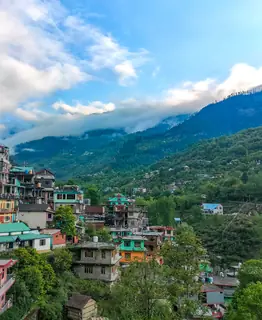
Chehni Kothi in a day — Shringa Rishi's temple, the wooden tower above Banjar, Bahu lake and the bazaar
A day on the valley's heritage from Banjar: Shringa Rishi's temple, the climb to the kath-kuni tower of Chehni Kothi, Bahu's temple pond and the bazaar.
Best Mar–Jun · Sep–Dec
See the plan →
The Tirthan river running green between boulders and forest1 night · 2 days · First visitClassic
Two days in the Tirthan valley — the river at Gushaini, then Jibhi and its waterfall on the way out
Two days in the Tirthan valley for a first visit: the park centre at Sai Ropa, a night on the river at Gushaini, Jibhi and its waterfall on the way out.
Best Mar–Jun · Sep–Nov
See the plan →
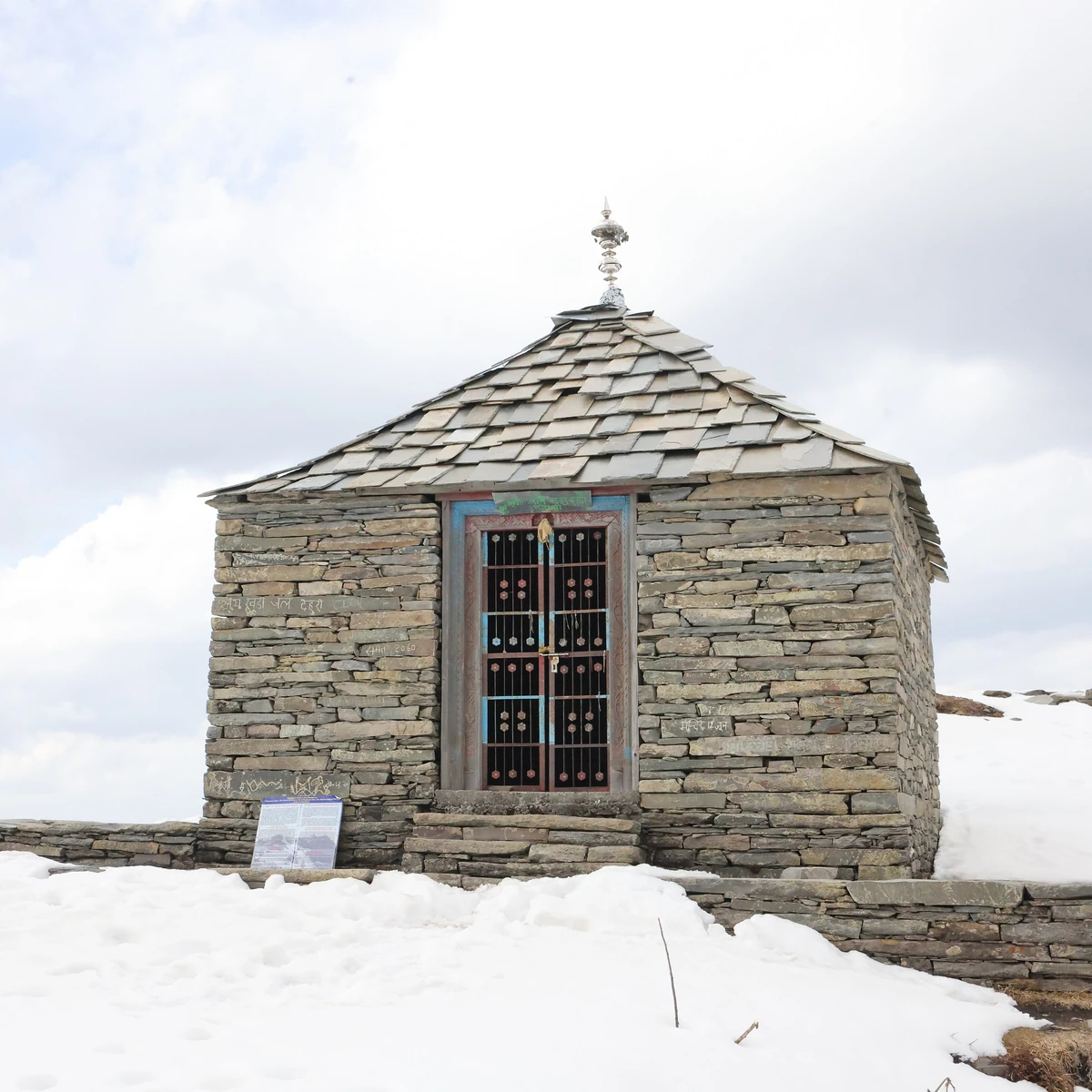
The stone hut on the summit meadow of Raghupur Fort under snow1 night · 2 days · First visitWalks & treks
Jibhi and Jalori Pass in two days — the stream, the gorge and the waterfall, then the climb to Raghupur Fort
Two days at Jibhi: the gorge at Mini Thailand and the waterfall on the first afternoon, Jalori Pass and the climb to Raghupur Fort on the second, with times.
Best Mar–Jun · Sep–Nov
See the plan →
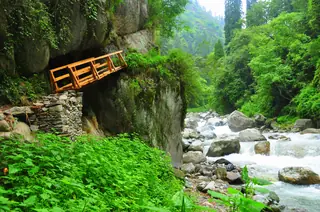
A walker on a wooden bridge above the Tirthan's rapids2 nights · 3 days · Slow travelCafés & food
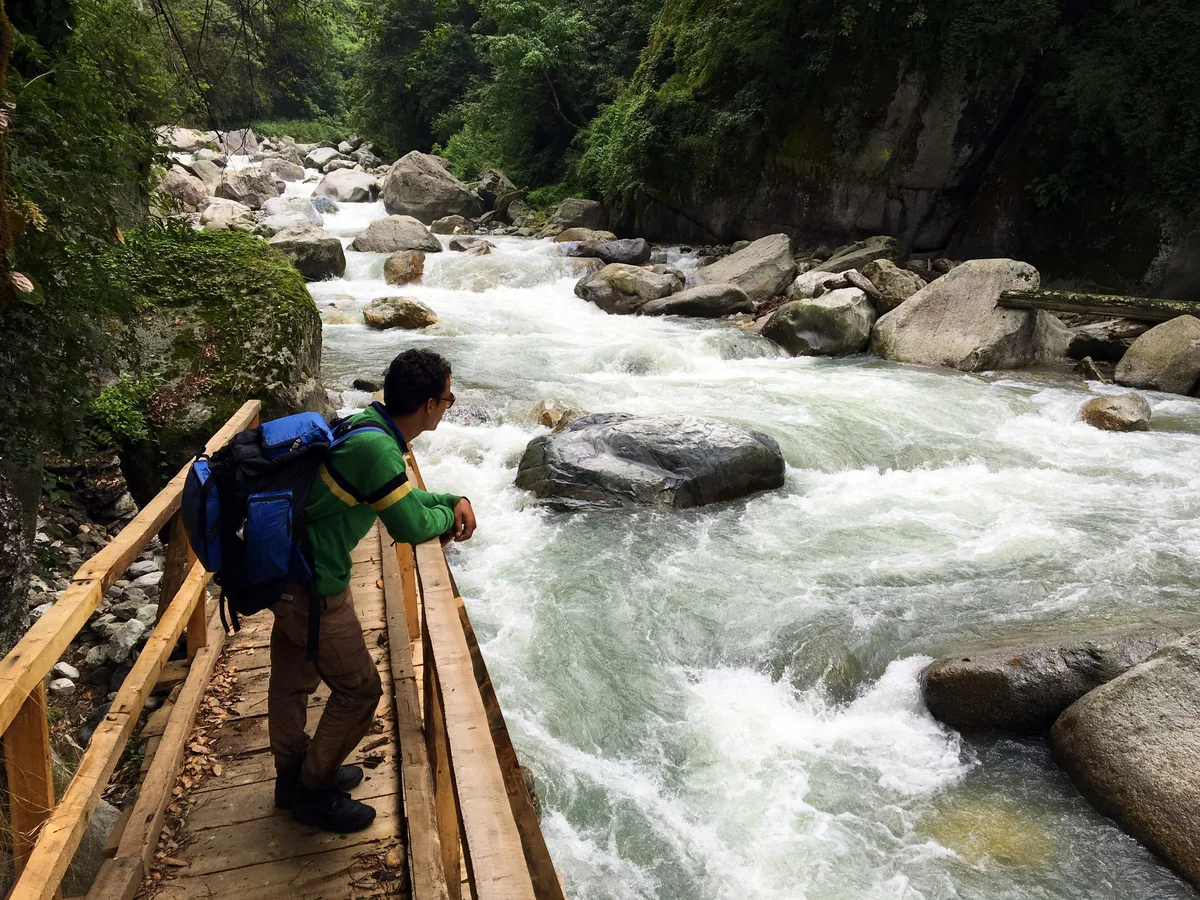
Trout and the river — three days on the Tirthan: the licence at Sai Ropa, the pools below Nagini and Gushaini, lunch at Sharchi, the confluence at Larji
Three days beside the Tirthan for anglers and their families: the licence at Sai Ropa, the pools at Nagini and Gushaini, a trout lunch at Sharchi, Larji last.
Best Mar–Jun · Sep–Oct
See the plan →
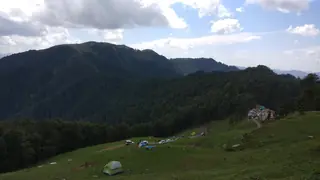
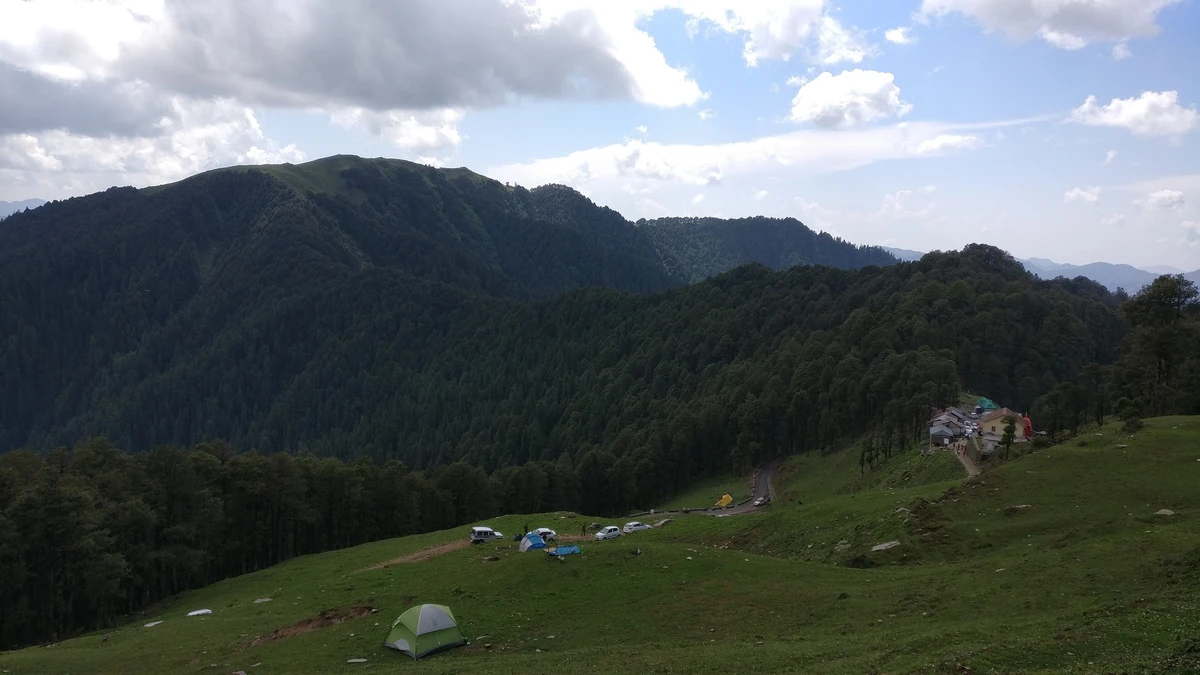
The meadow at Jalori Pass with tents and the temple2 nights · 3 days · First visitClassic
Three days in the Tirthan valley — the river, Jalori Pass and Serolsar lake, then Chehni Kothi and Jibhi
The classic three days in the Tirthan valley: the river at Gushaini, Jalori Pass and the ridge walk to Serolsar lake, Chehni Kothi and Jibhi on the way out.
Best Mar–Jun · Sep–Nov
See the plan →
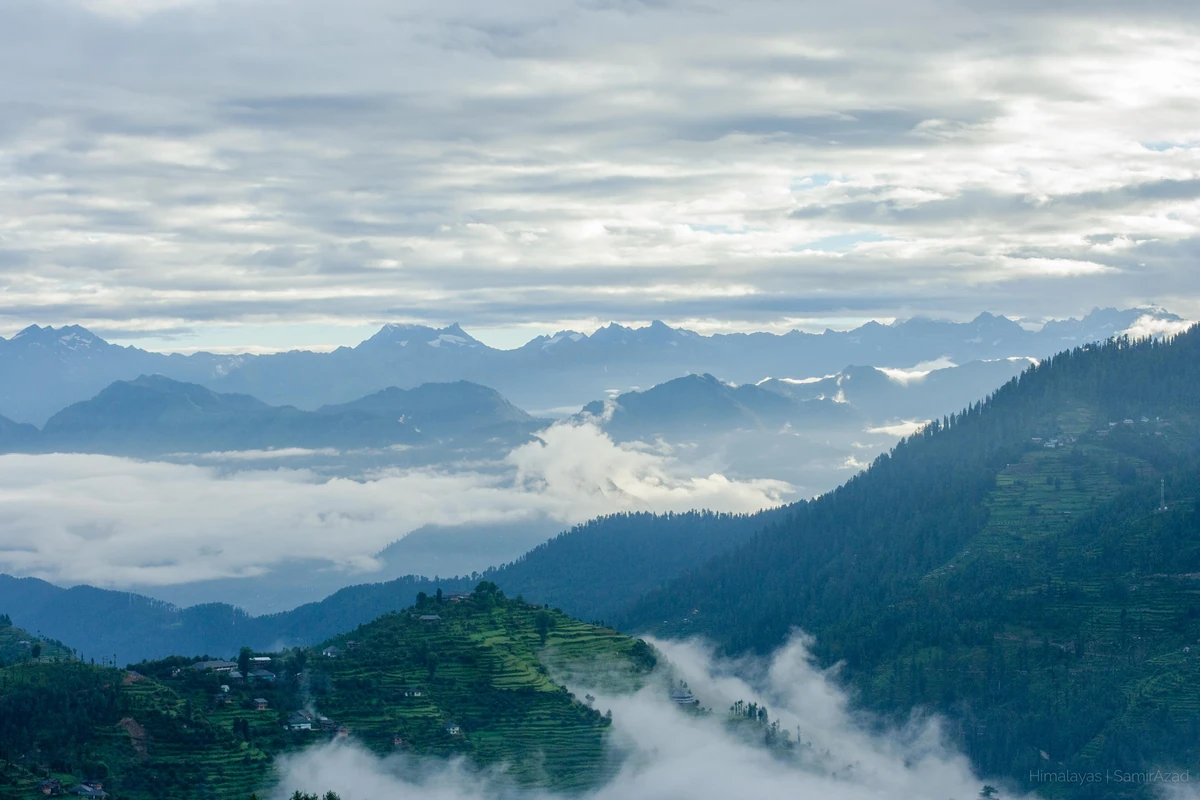
Cloud filling the forested valleys of the Great Himalayan National Park2 nights · 3 days · Slow travelMonsoon
The Tirthan valley in the monsoon — what still works: the river from the bank, Chehni Kothi, the park's museum and a wet Jibhi
The Tirthan valley from July to September, honestly: the river from a terrace, Chehni Kothi between showers, the park's museum, an empty Jibhi, what is closed.
Best Jul–Sep
See the plan →

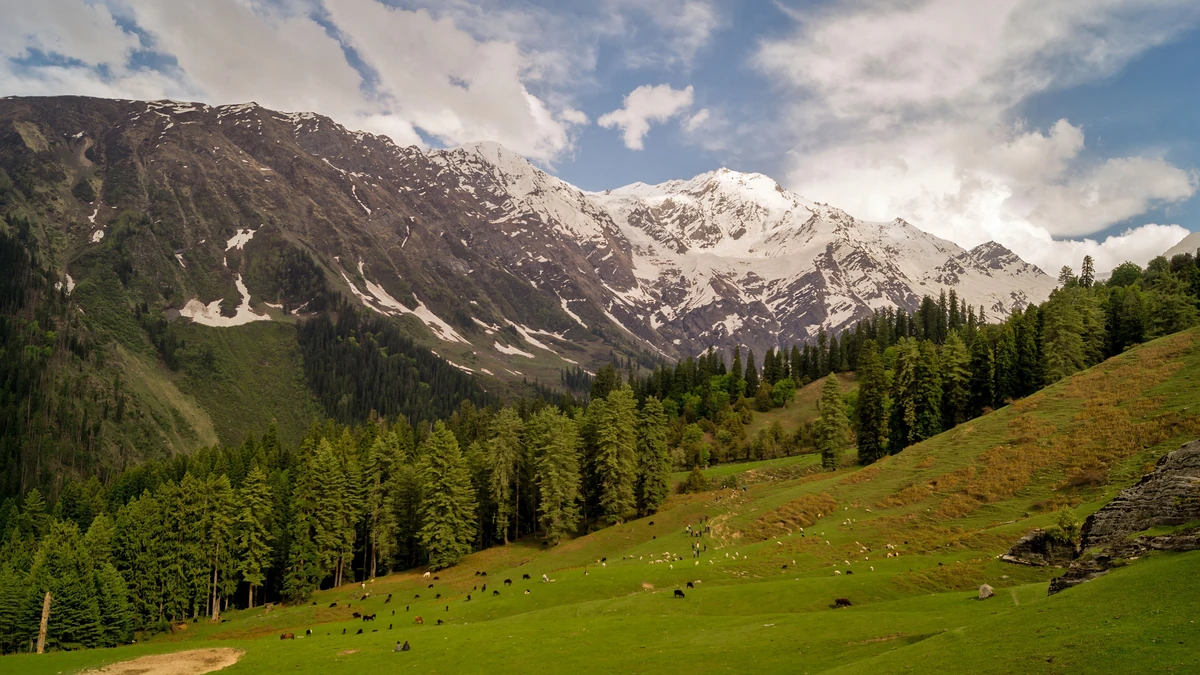
Banjar is the bazaar town of the Tirthan valley, 1,435 m up a side valley that leaves the Beas at Aut. It is the hub for two places people actually come for: Jibhi, a village of wooden guesthouses on the road up to Jalori Pass, and Gushaini, where the river road meets the Great Himalayan National Park. The valley is a river, a pass and a park: trout water and homestays along the Tirthan, a ridge walk to Serolsar lake from the top of the pass, and a path into a park on the UNESCO list that no road enters.

This guide is built from the data we keep for every place in the valley — road minutes measured on the actual road network, how long people spend at each stop, what a walk climbs — and from the stays and cafés that list on HimLocal. Every itinerary below is copyable into your own trip planner and editable there.

Plans that include this

All Banjar itineraries →
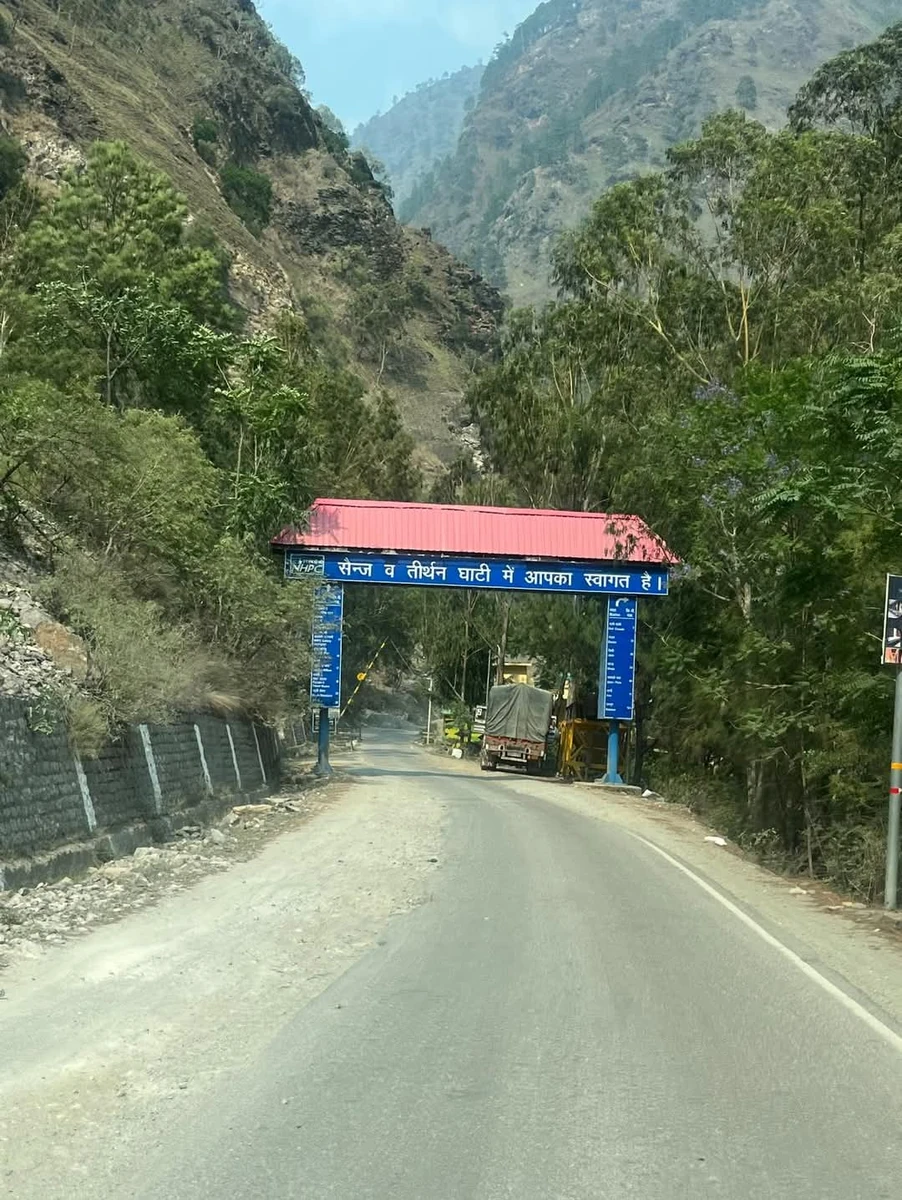
The welcome gate over the valley road at Larji2 nights · 3 days · BudgetClassic
The Tirthan valley from Delhi in a weekend — overnight bus to Aut, the river at Gushaini, Jibhi, and the bus back
A weekend in the Tirthan valley from Delhi by bus: the night bus to Aut, the valley bus to Gushaini and Jibhi, homestays, the waterfall and the river.
Best Mar–Jun · Sep–Nov
See the plan →
The Tirthan running fast over boulders2 nights · 3 days · Couplesslow
The Tirthan valley for couples, three days — a homestay above the river at Sharchi, the Jibhi waterfall, sunset at Shoja
Three slow days in the Tirthan valley for two: a homestay above the river at Sharchi, the Jibhi waterfall and gorge, sunset at Shoja, the forest at Sai Ropa.
Best Mar–Jun · Sep–Nov
See the plan →
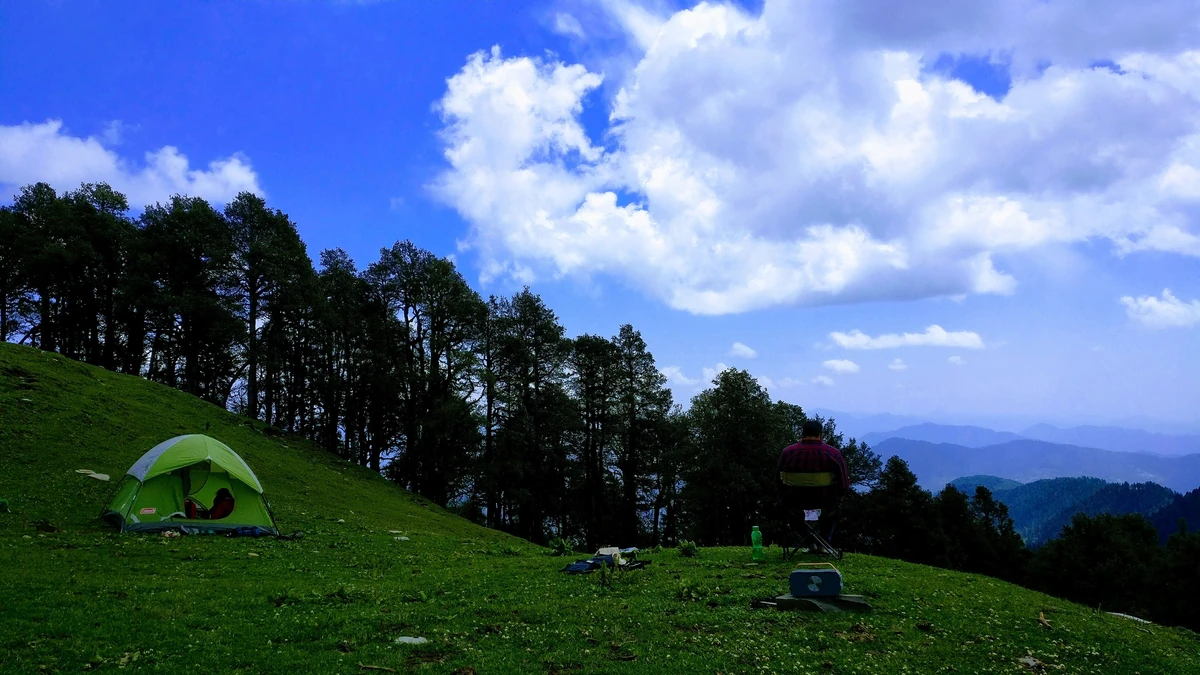
A tent pitched on the meadow at Jalori Pass under a wide sky2 nights · 3 days · FriendsAdventure
The Tirthan valley's activities in three days — the park's ecozone on a permit, a rod on the river, a night under canvas at Jalori, and the fort at dawn
Three days of everything the Tirthan offers on foot: the park's ecozone on a permit, a rod on the river, Serolsar lake, a tent at Jalori, the fort at dawn.
Best Apr–Jun · Sep–Oct
See the plan →
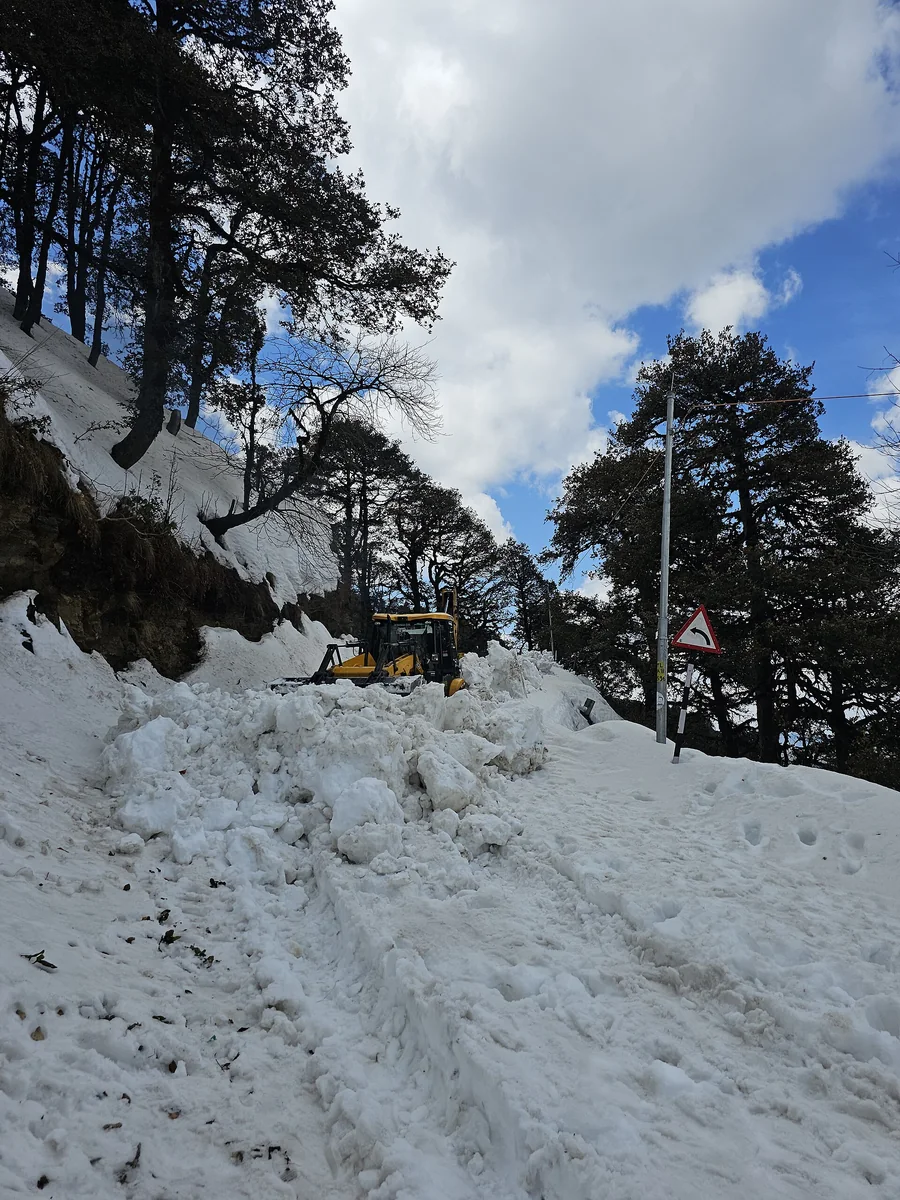
Snow on the slope and the trees above Jibhi2 nights · 3 days · CouplesSnow
Jibhi in winter — snow on the pass road, a frozen-edged waterfall, Shoja by the fire, and Chehni Kothi in the cold
Jibhi and Shoja in December to February: the waterfall with ice on its edges, the pass road as far as the plough has been, Chehni Kothi in the cold, what shuts.
Best Jan–Feb · Dec
See the plan →
Snow ranges seen from Jalori Pass under cloud2 nights · 3 days · PhotographersAutumn
Jalori Pass in October and November — Shoja as the base, Serolsar at dawn, Raghupur at sunrise, and Bahu lake on the way down
The Jalori ridge in its clearest months: Shoja as the base, the ridge walk to Serolsar lake at sunrise, Raghupur Fort at first light, Bahu lake on the road.
Best Oct–Nov
See the plan →
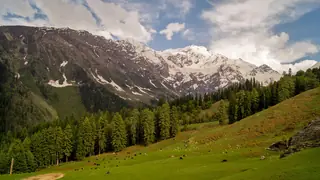
A meadow with snow peaks inside the Great Himalayan National Park3 nights · 4 days · TrekkersWalks & treks
Four days of walks from Gushaini — the Great Himalayan National Park's ecozone, the Chhoie waterfall, Pekhri and the river villages
Four days of walks from Gushaini: the permit at Sai Ropa, the Chhoie waterfall, the ecozone path to the Great Himalayan National Park gate, Pekhri, Sharchi.
Best Apr–Jun · Sep–Nov
See the plan →

What the valley is, and is not

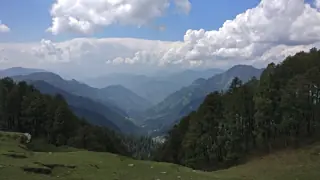
Two valleys, really, that share a town. The pass road climbs south from Banjar through Jibhi and Shoja to Jalori Pass, 21 km and 40 minutes up, and that is the side with the views, the ridge walks and the snow. The river road runs east from Banjar past Sai Ropa to Gushaini, 10 km and 18 minutes, and on up a rougher road to the road-end at Bathad; that is the side with the trout, the homestays on the water and the park. Most people stay on one side and drive to the other for a day.

It is not a resort. There is no mall, no ropeway, no adventure counter, and the one bus a day matters. The days are made of a walk, a river, a long lunch and a fire in the evening. If that is what you want, three nights is right; if you want sights and shops, Manali is 90 km and two hours away and has them.

Plans that include this

All Banjar itineraries →
The welcome gate over the valley road at Larji2 nights · 3 days · BudgetClassic
The Tirthan valley from Delhi in a weekend — overnight bus to Aut, the river at Gushaini, Jibhi, and the bus back
A weekend in the Tirthan valley from Delhi by bus: the night bus to Aut, the valley bus to Gushaini and Jibhi, homestays, the waterfall and the river.
Best Mar–Jun · Sep–Nov
See the plan →
The Tirthan running fast over boulders2 nights · 3 days · Couplesslow
The Tirthan valley for couples, three days — a homestay above the river at Sharchi, the Jibhi waterfall, sunset at Shoja
Three slow days in the Tirthan valley for two: a homestay above the river at Sharchi, the Jibhi waterfall and gorge, sunset at Shoja, the forest at Sai Ropa.
Best Mar–Jun · Sep–Nov
See the plan →
A tent pitched on the meadow at Jalori Pass under a wide sky2 nights · 3 days · FriendsAdventure
The Tirthan valley's activities in three days — the park's ecozone on a permit, a rod on the river, a night under canvas at Jalori, and the fort at dawn
Three days of everything the Tirthan offers on foot: the park's ecozone on a permit, a rod on the river, Serolsar lake, a tent at Jalori, the fort at dawn.
Best Apr–Jun · Sep–Oct
See the plan →
Snow on the slope and the trees above Jibhi2 nights · 3 days · CouplesSnow
Jibhi in winter — snow on the pass road, a frozen-edged waterfall, Shoja by the fire, and Chehni Kothi in the cold
Jibhi and Shoja in December to February: the waterfall with ice on its edges, the pass road as far as the plough has been, Chehni Kothi in the cold, what shuts.
Best Jan–Feb · Dec
See the plan →
Snow ranges seen from Jalori Pass under cloud2 nights · 3 days · PhotographersAutumn
Jalori Pass in October and November — Shoja as the base, Serolsar at dawn, Raghupur at sunrise, and Bahu lake on the way down
The Jalori ridge in its clearest months: Shoja as the base, the ridge walk to Serolsar lake at sunrise, Raghupur Fort at first light, Bahu lake on the road.
Best Oct–Nov
See the plan →
A meadow with snow peaks inside the Great Himalayan National Park3 nights · 4 days · TrekkersWalks & treks
Four days of walks from Gushaini — the Great Himalayan National Park's ecozone, the Chhoie waterfall, Pekhri and the river villages
Four days of walks from Gushaini: the permit at Sai Ropa, the Chhoie waterfall, the ecozone path to the Great Himalayan National Park gate, Pekhri, Sharchi.
Best Apr–Jun · Sep–Nov
See the plan →

Where to stay

  • Jibhi — guesthouses and cafés along the stream, 7 km and 14 minutes up the pass road from Banjar; the valley's best-known stop, and the busiest on a long weekend.
  • Shoja — the last village below the pass, 15 km and 28 minutes from Banjar. Colder, quieter and closer to the walks; the place to sleep before a Serolsar or Raghupur morning.
  • Gushaini, Nagini and the river road — homestays on the Tirthan between Sai Ropa and the park gate, 10 km and 18 minutes from Banjar. For the river, the trout and the walks into the park.
  • Sharchi and Pekhri — villages on the slopes above Gushaini, reached by side roads. Homestays with the whole valley below them and nobody passing.
  • Banjar itself — the bazaar, the bus stand and the banks. Convenient for one night off the bus; nobody's first choice for three.

Operators

No operator has listed this on HimLocal yet. The prices above are typical local rates; you pay the operator on the ground.

Run a centre here? List it on HimLocal →

When to go (and what each month is like)

The numbers below are India Meteorological Department normals for Bhuntar, the district's airport station, read from the climate table on Wikipedia. Banjar sits a few hundred metres above the airport and runs cooler in every month; Jibhi and Shoja cooler still, and Jalori Pass is another world.

  • March–April — days 23–27 °C at Bhuntar, cooler here; nights 7–10 °C. The snow goes off the pass road through March, the rhododendron comes out along it in April, and the park's lower paths reopen.
  • May–June — days 31–33 °C in the valley floor, the warmest and busiest months; the river road stays pleasant and Jalori is cold in the evening. Long weekends fill Jibhi a week ahead.
  • July–September — the monsoon: 136 mm of rain in July and 129 mm in August. The Tirthan runs high and brown, slides close the Aut road for hours, the park's walks are off, and the leeches are out. Cheap, green and quiet.
  • October–November — the clearest skies; days 23–28 °C, nights 5–10 °C. The best walking of the year, the apple harvest on the slopes, and the river back to clear.
  • December–February — days 16–18 °C at Bhuntar, nights near freezing; snow at Jalori shuts the pass road in spells, and Jibhi gets its own. The park's high paths are closed by snow; the valley is empty and half its cafés shut.

How to reach

  • By road from Delhi — 466 km. Overnight buses run from ISBT Kashmere Gate towards Kullu and Manali; get off at Aut, before the tunnel, and take the valley bus or a taxi for the last 24 km to Banjar. Some private buses in season run through to Banjar or Jibhi.
  • By road from Chandigarh — 216 km; the routing model gives a little over four hours of driving, slow through Mandi and the Pandoh gorge, then the turn at Aut.
  • By air — Kullu–Manali Airport at Bhuntar is 42 km and about 63 minutes by taxi. Flights are few and weather-dependent.
  • By rail — the nearest railhead is Joginder Nagar, 114 km and about 204 minutes by road; most people take the train to Chandigarh and the bus from there.
  • From Manali — 90 km and about two hours by road, down the Beas past Kullu and Bhuntar to Aut, then up the valley. Buses change at Aut or Kullu.
  • From Kasol — 72 km and a little over two hours: down the Parvati to Bhuntar, on to Aut, and up the Tirthan.

The walks

Serolsar lake from Jalori Pass is the valley's classic: an easy ridge path through oak and fir, about five kilometres each way, to a small round lake with a temple on its bank. Raghupur Fort is the other half of a Jalori day, an hour's climb west of the pass to a grass-topped ruin with the ranges on both sides. Chehni Kothi is a short, steep walk from the Shringa Rishi road above Banjar to a wooden tower older than anything else in the valley. On the river side, the Chhoie waterfall is half an hour above Nagini, and the park's ecozone paths run from Sai Ropa and Gushaini. Beyond the gate at Rolla is the Great Himalayan National Park itself, on a permit from the Sai Ropa office, with a guide and a night or more under canvas.

The park, the fish and the small print

The Great Himalayan National Park is entered on a permit issued at the range office at Sai Ropa on the Tirthan side, with separate charges for cameras; the fee is fixed by the park and changes, so ask at the office. Nothing motorised goes past the gate. Angling for trout on the Tirthan is licensed by the state's fisheries department and closed in the winter breeding months; ask at Sai Ropa or your homestay for the licence and the season. Prices below are typical local rates as bands with the date we checked; operators quote on the day. Cash matters above Banjar, where the ATMs stop.

Places worth the drive

Shoja
Shoja is the last village below Jalori Pass, 15 km and 28 min above Banjar: guesthouses on a bend, deodars, cold nights, the earliest start for Jalori.
Sharchi
Sharchi is a village on the slope across the Tirthan from Gushaini, up a side road from the bridge, 46 min from Banjar: homestays with terraces, the valley.
Serolsar Lake
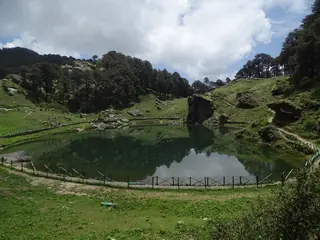
Serolsar is a small round lake about 3,100 m up on the ridge east of Jalori Pass, 5 km and 103 min on foot from the road, the Budhi Nagin temple on its bank.
Sai Ropa
Sai Ropa is the Tirthan-side office of the Great Himalayan National Park, 5 km and 10 min from Banjar: the entry permit, a small museum, the ecozone paths.
Raghupur Fort
Raghupur Fort is a grass-topped ruin on the ridge west of Jalori Pass, 1.8 km and 47 min up from the road: old walls round a meadow, the valley below.
Pekhri
Pekhri is a village on a shelf above the north bank of the Tirthan at Gushaini, a steep hour's walk up from the bridge: fields, tea in a courtyard, the valley.
Nagini
Nagini is a hamlet on the Tirthan between Sai Ropa and Gushaini, 8 km and 14 min from Banjar: camps and homestays on the bank, trout pools, the Chhoie fall.
Larji
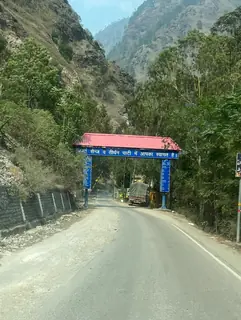
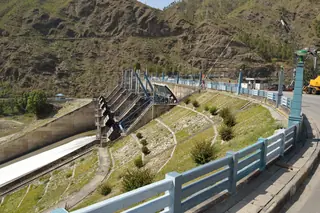
Larji is the junction at the mouth of the Tirthan, 20 km and 34 min below Banjar, where the road from Aut splits for the Sainj and Tirthan valleys by the dam.
Jibhi
Jibhi is a village of wooden guesthouses on a stream 7 km and 14 min above Banjar on the Jalori road: a waterfall, a gorge, cafés on the water, the pass above.
Jibhi Waterfall
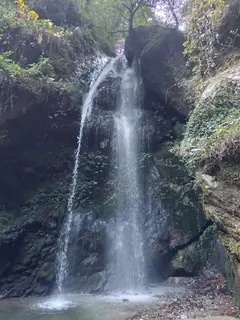
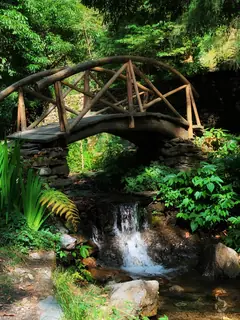
The Jibhi waterfall is a small fall on the stream above the village, a few minutes from the bridge through a wooden gate: a pool, two bridges, the first walk.
Jalori Pass
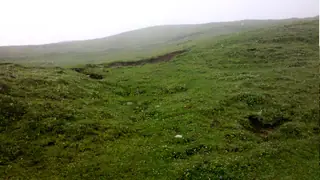
Jalori Pass is the road pass at the head of the Banjar valley, 21 km and 40 min above Banjar: a temple, dhabas, tents on the meadow, and two ridge walks.
Gushaini
Gushaini is where the Tirthan road reaches the river and the park, 10 km and 18 min from Banjar: a bridge, a dozen shops, homestays on the water, trout.
Chhoie Waterfall
The Chhoie waterfall is a fall in a side stream above Nagini on the Tirthan, 8 km and 14 min from Banjar and half an hour up a forest path: a pool, deodars.
Chehni Kothi
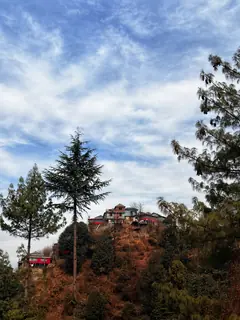
Chehni Kothi is a tower of stone and deodar above the hamlet of Chehni, a steep half-kilometre up from the Shringa Rishi road above Banjar: a shrine, a home.
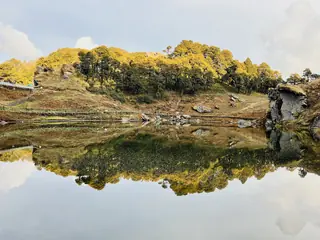
Bahu Lake
Bahu Lake is a small temple pond in the fields above Bahu village on the Jalori side of Banjar, 17 km and 32 min by road, the old ridge forts on the skyline.
Aut
Aut is the town on the Beas where the Kullu highway enters its tunnel and the Tirthan road turns off, 24 km and 40 min below Banjar: the valley bus starts here.
Shringa Rishi Temple
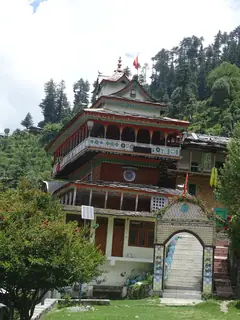
Shringa Rishi's temple stands above Bagi east of Banjar, 7 km and 13 min by the side road: a pagoda-roofed shrine in a courtyard, the start of the Chehni walk.
Mini Thailand
Mini Thailand is a narrow gorge on the stream below Jibhi where the water runs between rock walls under a footbridge, ten minutes from the road.

The places a Banjar day reaches, with the road time from town. Each opens on the map with its plans and pages beside it.

Things to do — the honest guides

Before you go

All articles →
Where to stay in the Tirthan valley — Jibhi, Shoja, Gushaini, Nagini, Sharchi and Banjar, honestly compared
The Tirthan valley's villages compared for a stay: Jibhi's cafés and the pass road, Gushaini's homestays on the river, Shoja for the walks, Sharchi for quiet.
What a Tirthan valley trip costs on the ground — the honest price sheet
The Tirthan valley's prices as bands with the date checked: homestays and guesthouses, taxis from Aut and to Jalori, the park permit and guide, trout, the bus.
Jibhi or the Tirthan valley? The same valley, two sides — which to sleep on, and how to have both
Jibhi and the Tirthan are one valley with two sides half an hour apart: Jibhi's cafés and the Jalori road, Gushaini's homestays and the park. Who each suits.
Jalori Pass, Serolsar lake and Raghupur Fort — the pass day, walk by walk
The pass day from Banjar and Jibhi: the road to Jalori, the ridge walk to Serolsar lake, the climb to Raghupur Fort, the dhabas, a tent at the top.
How to reach the Tirthan valley — from Delhi, Chandigarh, Manali and the airport at Bhuntar, by bus, car and taxi
Every way into the Tirthan valley: the turn at Aut on the Kullu highway, the night bus from Delhi, Chandigarh by car, Bhuntar's airport 42 km away, Manali.
The Great Himalayan National Park from the Tirthan side — permits, the ecozone, the gate at Rolla, and what the park asks of a visitor
How the Great Himalayan National Park works from the Tirthan valley: the permit and guide at Sai Ropa, the ecozone paths from Gushaini, the gate at Rolla.
The best time to visit the Tirthan valley and Jibhi — month by month, with the IMD numbers
When to go to the Tirthan valley and Jibhi: October for the pass and the clear river, April to June for green and rhododendron, monsoon closures, winter snow.

Questions people ask

How many days do you need in the Tirthan valley?

Three nights covers the two sides: a day up the pass road to Jalori with the walk to Serolsar, a day on the river at Gushaini with the park's ecozone paths, and a slow day at Jibhi. Two nights forces a choice between the pass and the river. A week suits walkers and anglers.

Jibhi or Gushaini — where should you stay?

Jibhi for cafés, guesthouses and the pass road; it is livelier and fills on long weekends. Gushaini and the river road for homestays on the Tirthan, trout and the park; quieter, and closer to the walks. They are about half an hour apart by road through Banjar, so either side can drive to the other for a day.

Can you drive over Jalori Pass?

Yes, in a car with reasonable clearance and a driver used to hairpins; the road from Banjar climbs 21 km in about 40 minutes and continues down the far side towards the Sutlej. Snow shuts it in spells between late December and March, and the Serolsar and Raghupur walks start from the top.

Do you need a permit for the Great Himalayan National Park?

Yes, for the park itself: a permit from the range office at Sai Ropa on the Tirthan side, with separate charges for cameras, and a guide for anything beyond the gate. The ecozone paths around Sai Ropa and Gushaini need none. The park fixes the fee and closes areas by notice, so ask at the office first.

How do you get to the Tirthan valley from Delhi?

An overnight bus from ISBT Kashmere Gate towards Kullu or Manali, off at Aut before the tunnel, then the valley bus or a taxi for the last 24 km to Banjar and on to Jibhi or Gushaini. By car it is 466 km. Flights land at Bhuntar, 42 km away, when the weather allows them.

Photographs by Wikimedia Commons contributors (CC0, CC BY, CC BY-SA), resized; each picture is credited on its own page.