
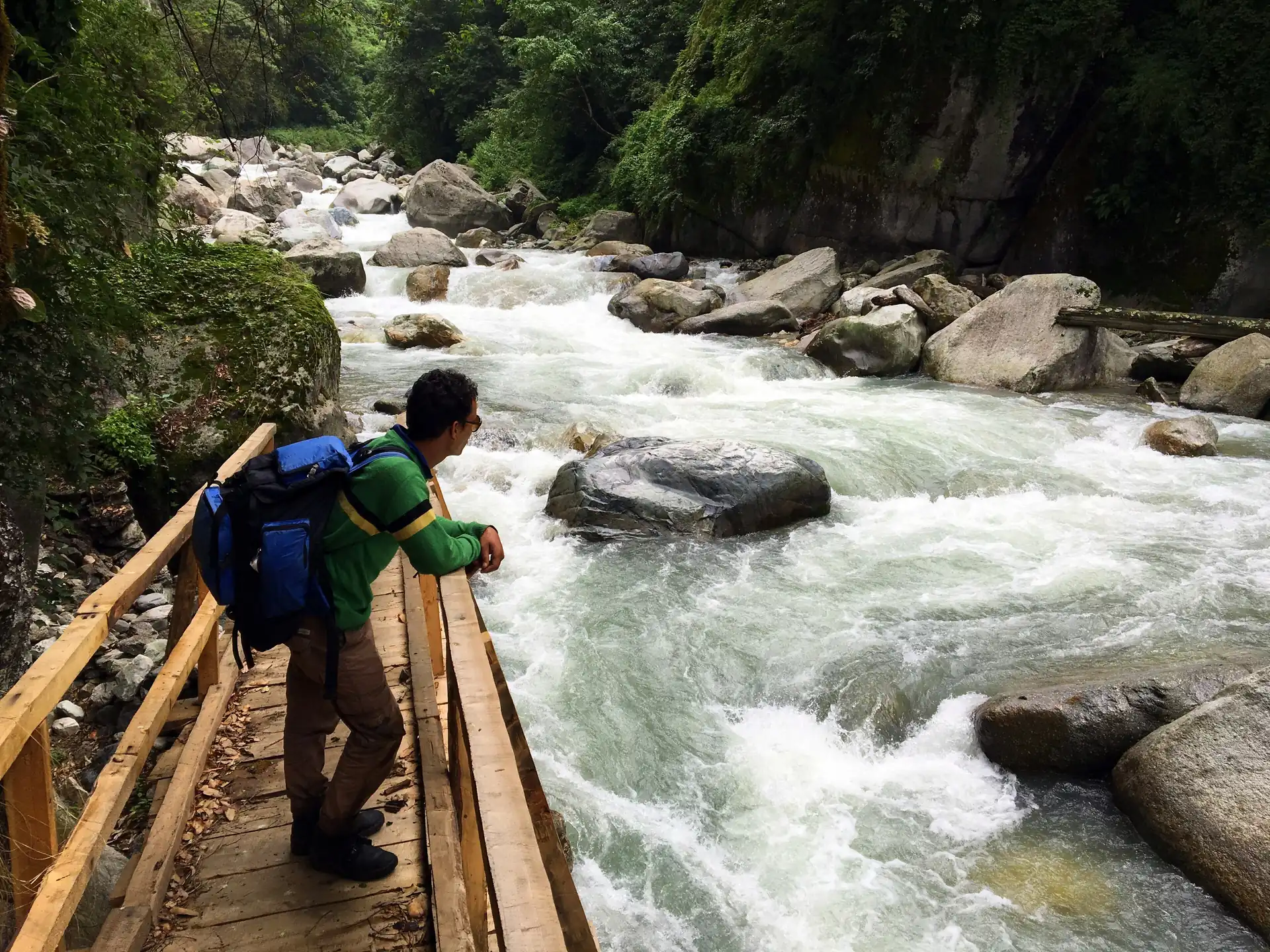
Trout fishing on the Tirthan — the licence, the season, the beats and the plate
A trout river, by licence
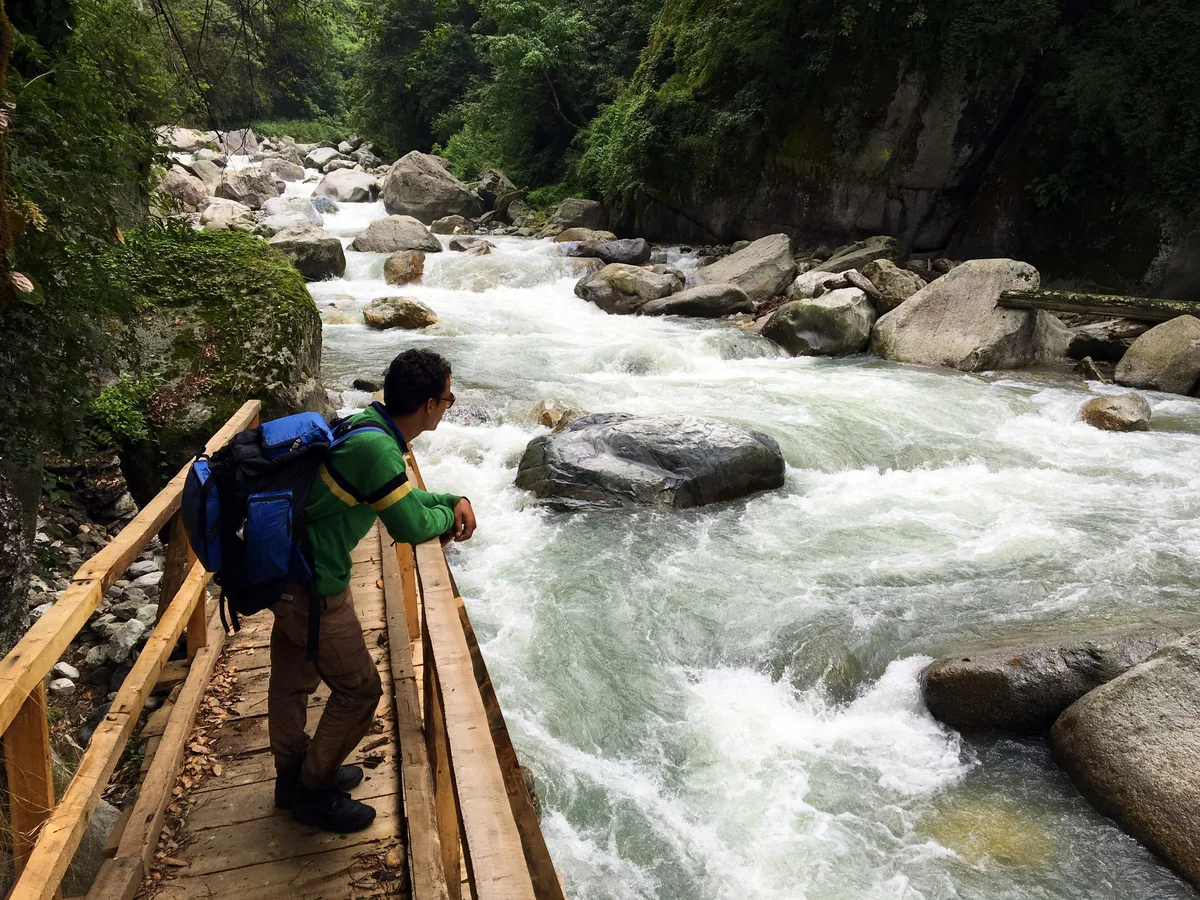
The Tirthan is the valley's one activity that is not a walk: a cold, clear river with brown trout in its pools from the confluence at Larji up past Nagini and Gushaini to the park. It is fished under a day licence from the state's fisheries department and closed in the winter breeding months. It is a quiet sport here — a rod, a local who knows the water, a morning — and it suits people who fish as well as people who want to sit near the water while someone does.
Photos: Vishrutpanday (CC BY-SA 4.0) · Nanda ramesh (CC BY-SA 4.0) · Debashritaiitmandi (CC BY-SA 4.0) — via Wikimedia Commons, resized.
The licence and the season
Angling is by permission: a day licence issued through the fisheries department, taken in practice through the homestays on the river road or with a word at the park's office at Sai Ropa, which will also say which beats are open. The river closes to rods through the coldest part of the year, when the fish breed; it fishes best in spring before the snowmelt colours the water and again in autumn when it runs clear and low. The monsoon is no good for it. Ask before the first cast; the rules and the beats change with the season, and the homestay will know that week's.
Where
The beats most people fish are around Gushaini — above and below the bridge — and the pools below the camps at Nagini; the wide water at Larji, where the Tirthan meets the Beas below the dam, is the other end of the river. Rods are hired through the homestays, and a local who knows the pools is arranged the same way and quoted on the day. The trout plan is three days built on exactly this.
On the plate
Trout is on every menu on the river road, grilled or fried, typically ₹400–700 a plate as of September 2026. Most of it is rainbow trout from the valley's own farms rather than the river's brown, which keeps the river's stock where it belongs. Ask which; both are good. A lunch above the river at Sharchi, with the valley below, is the meal the valley is known for.
What this valley does not have
No rafting — the Tirthan is too small and too cold, and the rafting is on the Beas below Kullu. No paragliding, no ropeway; those are Manali's. The Tirthan's activities are the rod, the walks and the park, and that is the point of it.
Plans that include this
All Banjar itineraries → Day plan · First visitTemples & heritage
 1 night · 2 days · First visitClassic
 1 night · 2 days · First visitWalks & treks
 2 nights · 3 days · Slow travelCafés & food
 2 nights · 3 days · First visitClassic
 2 nights · 3 days · Slow travelMonsoon
Questions people ask
Do you need a licence to fish on the Tirthan?
Yes — angling on the Tirthan is licensed by the state's fisheries department by the day, and the river is closed to rods in the winter breeding months. The homestays on the river road will say how the licence is taken that season and which beats are open; a local who knows the water is arranged the same way.
What trout are in the Tirthan?
Brown trout in the river, stocked long ago and now wild in its pools and runs, and rainbow trout in the valley's farms, which is what most homestay kitchens serve. The river's fish are for the rod under a licence; the farmed ones are for the plate in any month, typically ₹400–700 as of September 2026.
When is the best time to fish the Tirthan?
Spring, after the winter breeding closure lifts and before the snowmelt colours the water, and again in autumn when the river runs clear and low. The monsoon months turn it brown and high and are no good for the rod; the fisheries department closes the river through the coldest part of the year.