Kullu — the district town, its temples and the valley's week of gods
Kullu at 1,279 m on the Beas: the Raghunath temple, Bijli Mahadev, Dussehra at Dhalpur, rafting at Pirdi, IMD weather month by month and copyable itineraries.
Kullu is the district town of the valley that carries its name, 1,279 m up the Beas and 11 km above the airport at Bhuntar. Most people pass through it on the way to Manali, 40 km and about 49 minutes further up the river, and that is the mistake this guide is written against. The town holds the valley's ruling deity at the Raghunath temple, the ridge temple at Bijli Mahadev above it, the ground at Dhalpur where the whole valley gathers for a week each October, and the looms that made the Kullu shawl.
This guide is built from the data we keep for every place in the valley — road minutes measured on the real road network, how long people spend at each stop, what a walk climbs — and from the stays and cafés that list on HimLocal. Every itinerary below is copyable into your own trip planner and editable there.
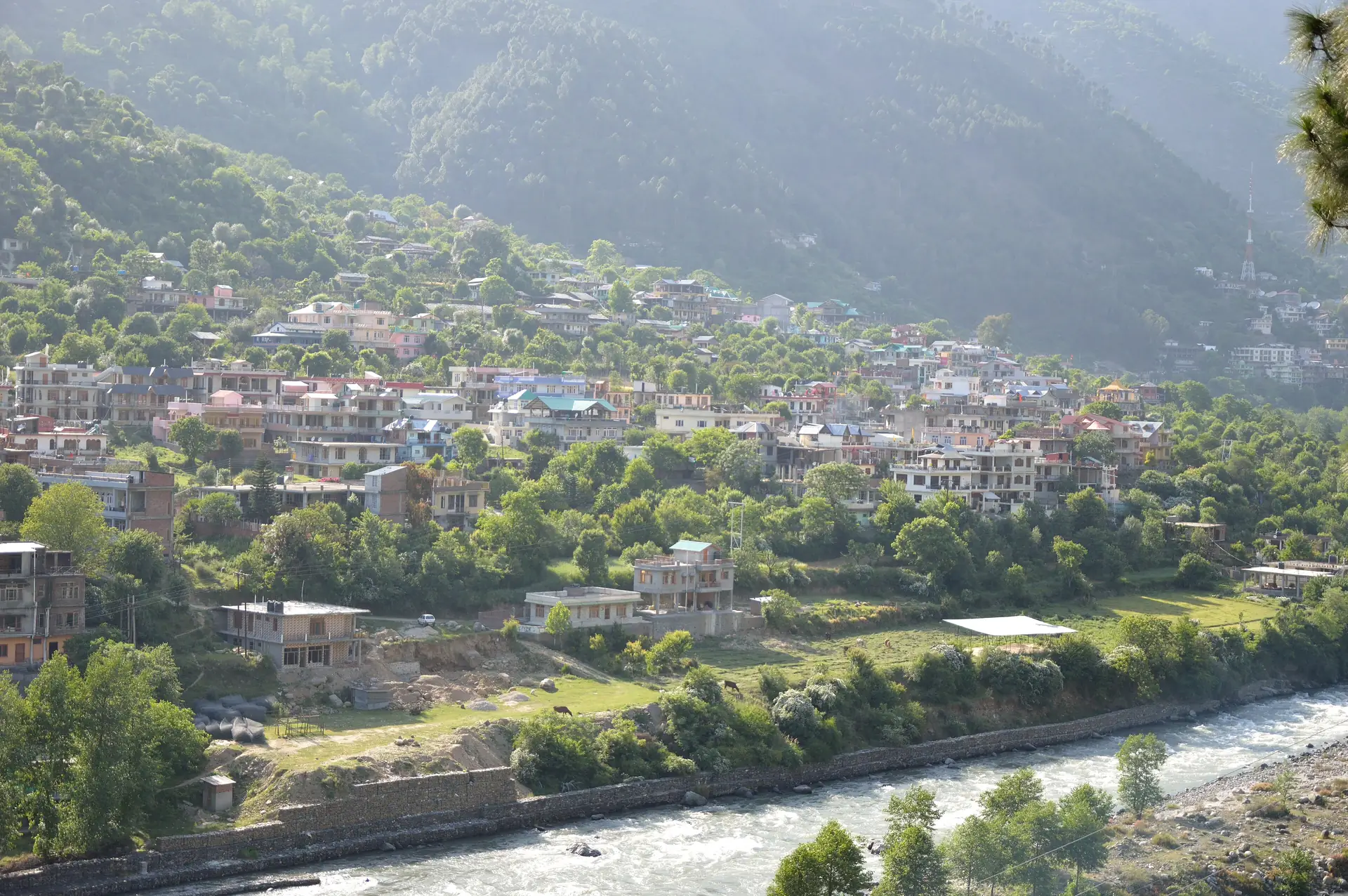
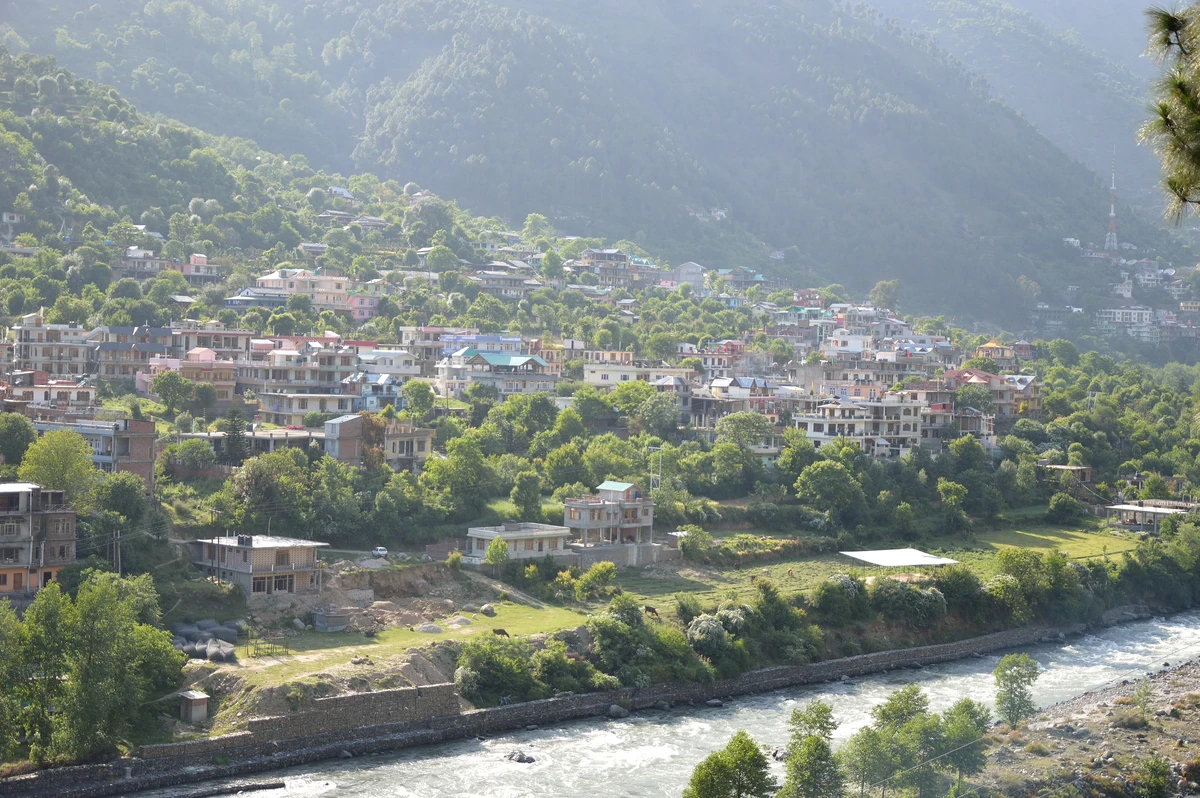
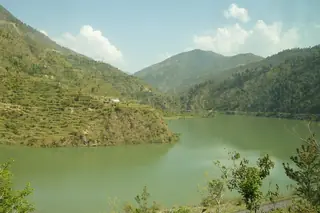
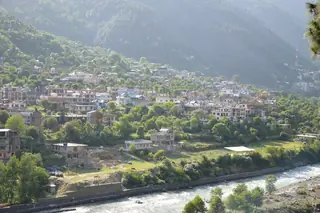
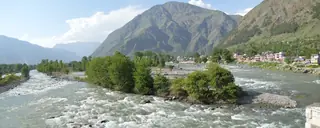
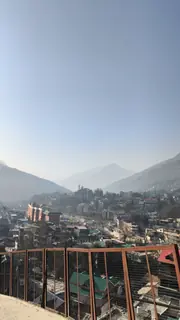
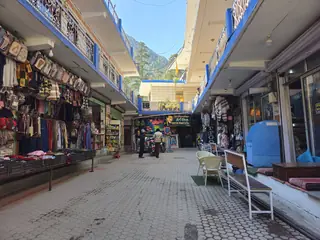
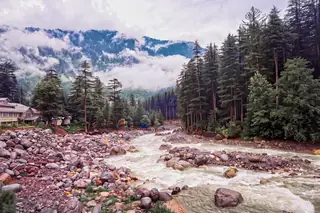
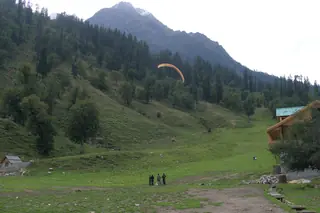
Kullu is a working district headquarters: a long bazaar along the highway, the offices, the banks and the buses that leave for every side valley. The old quarter of Sultanpur sits above the road with the Raghunath temple in it, and the Dhalpur ground lies at the south end, empty for most of the year and the centre of the state's largest fair for one week of it. The river runs the length of the town, wide and grey with snowmelt in summer.
It is not a resort, and it is not trying to be. There is no mall road of cafés, no ropeway and no snow point. What it has is the valley's religious centre and a ridge walk to one of the best-known temples in the Himalayas. It also has a rafting stretch at Pirdi four kilometres away, and a position that puts Naggar, Jana, Bajaura and the Parvati valley inside a day.
Where to stay
The bazaar and Akhara Bazaar — hotels along the highway and the older lanes behind it, walking distance from the temple and the bus stand. Convenient, noisy, and the cheapest beds in the valley.
Dhalpur — around the maidan at the south end, five minutes from the bazaar. The quieter side of town, and the middle of everything during the fair, when every room for miles is taken.
Raison and the river bank — 15 km and 20 minutes up the valley towards Manali, where the camps sit on the gravel by the water. For a night on the river rather than in a town.
Naggar, on the left bank — 23 km and 36 minutes, a hillside of orchards under the castle. A different valley altogether; see the Manali guide for it.
Bhuntar — 13 km and 19 minutes south at the airport and the Parvati turning. Worth a night only for an early flight or a first bus up the Parvati.
Operators
No operator has listed this on HimLocal yet. The prices above are typical local rates; you pay the operator on the ground.
The numbers below are India Meteorological Department normals for Bhuntar, the district's airport station 11 km down the river, read from the climate table on Wikipedia. Kullu sits a little higher and runs a degree or so cooler; the ridge at Bijli Mahadev is another world, and cold whenever the town is warm.
March–April — days 22.7–27.3 °C at Bhuntar, nights 6.8–9.8 °C. Clear, green and cheap; the fruit blossom is on the slopes, and the Bijli Mahadev walk is at its best before the heat.
May–June — days 31.3–32.9 °C, the warmest months and the ones when the highway fills with cars heading up the valley. Start the ridge walk early; the river is high with snowmelt and rafting runs hard and fast.
July–September — the monsoon: 135.6 mm of rain in July and 129.4 mm in August. Slides close the highway in spells, the Beas runs brown, rafting stops when the water is up, and the valley is at its greenest and emptiest.
October–November — the clearest skies of the year; days 22.9–27.9 °C, nights 4.9–10.1 °C. Dussehra falls in this window, the walking is perfect, and the rooms are the hardest to get of any week.
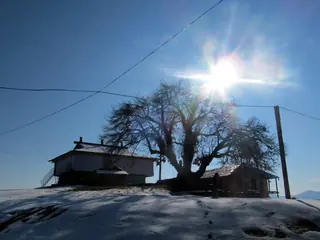
December–February — days 16.1–18.3 °C, nights near 1.5 °C. Snow sits on the ridges and comes down to the town only occasionally; the temples are empty, the fair ground is bare, and the valley belongs to the people who live in it.
How to reach
By air — Kullu–Manali Airport at Bhuntar is 11 km and about 17 minutes from the town by taxi. Flights are few, small and weather-dependent, and cancel in the monsoon and in fog.
By road from Chandigarh — 225 km; the routing model gives a little over four hours of driving, slow through Mandi and the Pandoh gorge.
By road from Shimla — 200 km and about 325 minutes over the hill roads through Narkanda, or longer by bus.
By rail — the nearest railhead is Joginder Nagar, 124 km and about 207 minutes by road; most people take a train to Chandigarh and a bus from there.
From Manali — 40 km and about 49 minutes down the Beas; buses run through the day.
From Mandi — 69 km and about 98 minutes up the gorge.
From Kasol — 39 km and about 79 minutes down the Parvati and up the Beas.
The temples, and the week the valley comes down
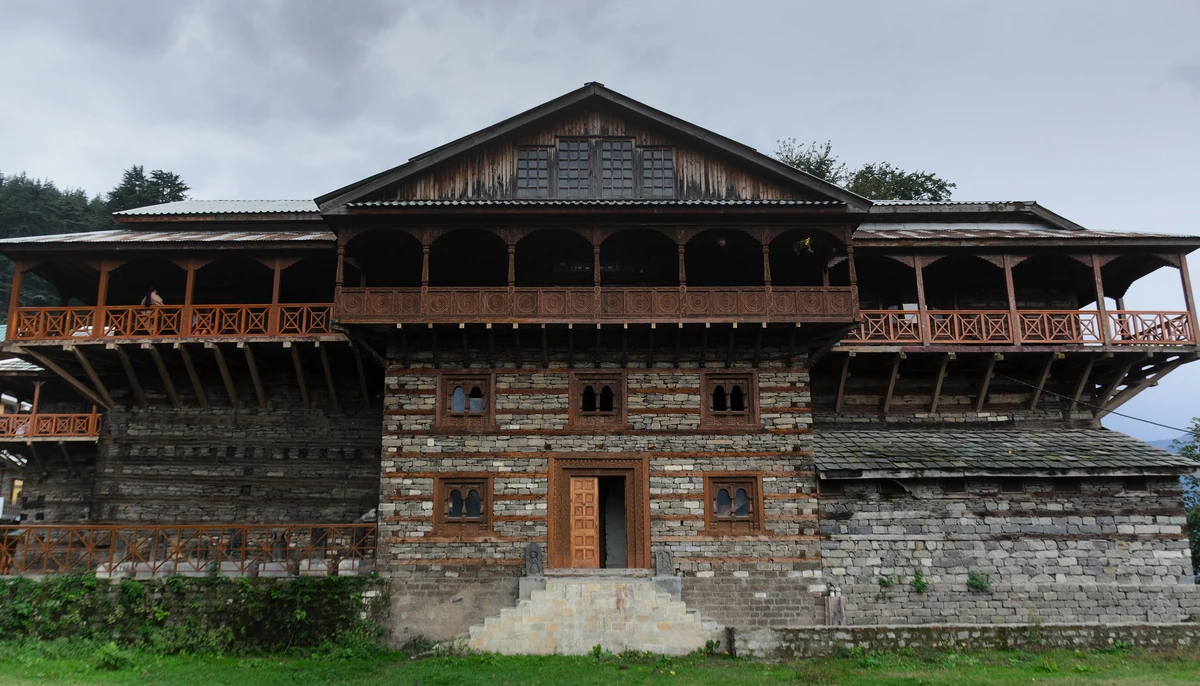
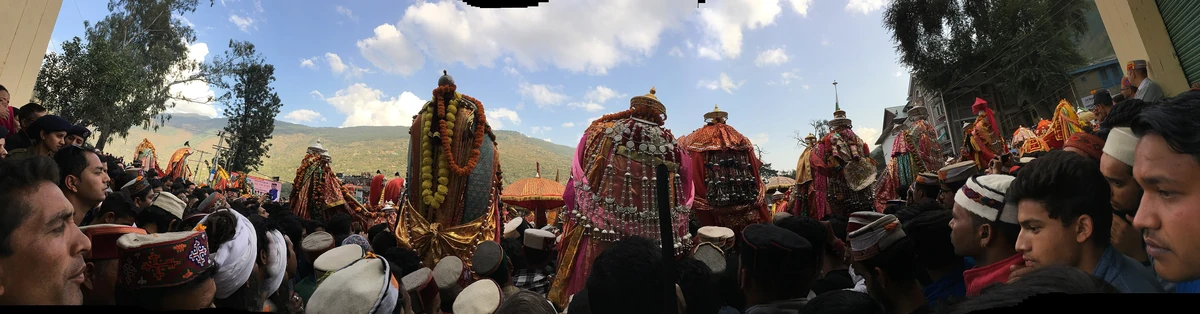
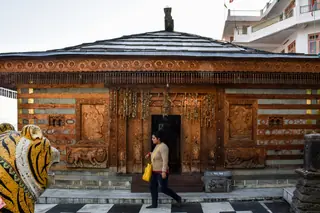
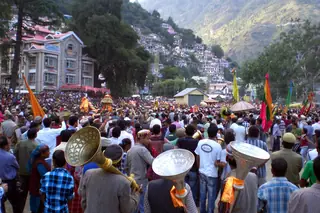
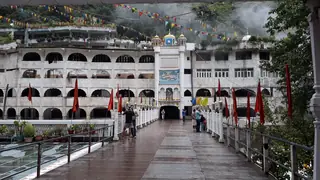
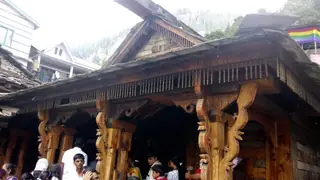
The Raghunath temple in Sultanpur holds the image that has been the valley's ruling deity since the 17th century, when the king of the day installed it as an act of penance and gave the valley to the god. Everything else follows from that: the Dussehra here begins on Vijayadashami, when the rest of India finishes, and runs seven days while the deities of the valley's villages are carried down to Dhalpur to attend the god.
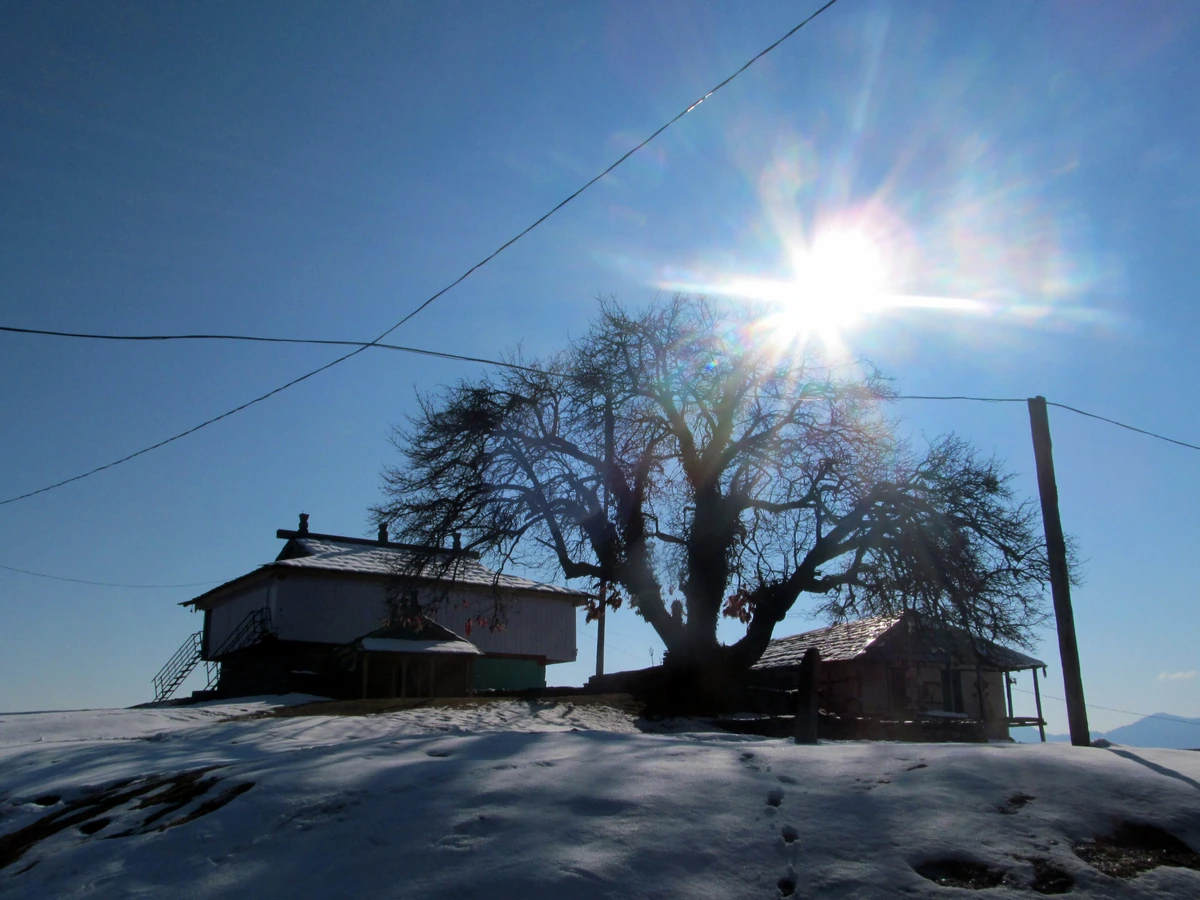
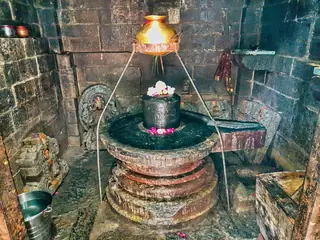
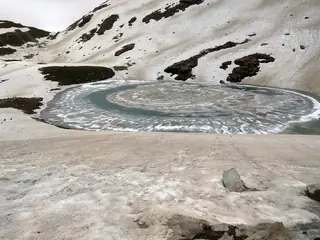
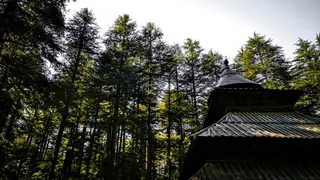
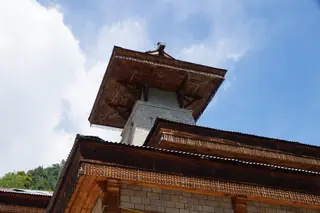
Bijli Mahadev stands at about 2,460 m on the ridge across the river, reached by road to Chansari — 15 km and 28 minutes — and an hour's climb on foot from there. The temple at Bhekhli sits on the hill directly above the town, carved in wood and stone, with the valley and the airport laid out below. South on the highway, the stone temple at Bajaura is 15 km and 21 minutes away and older than anything standing in the town.
The river, the looms and the small print
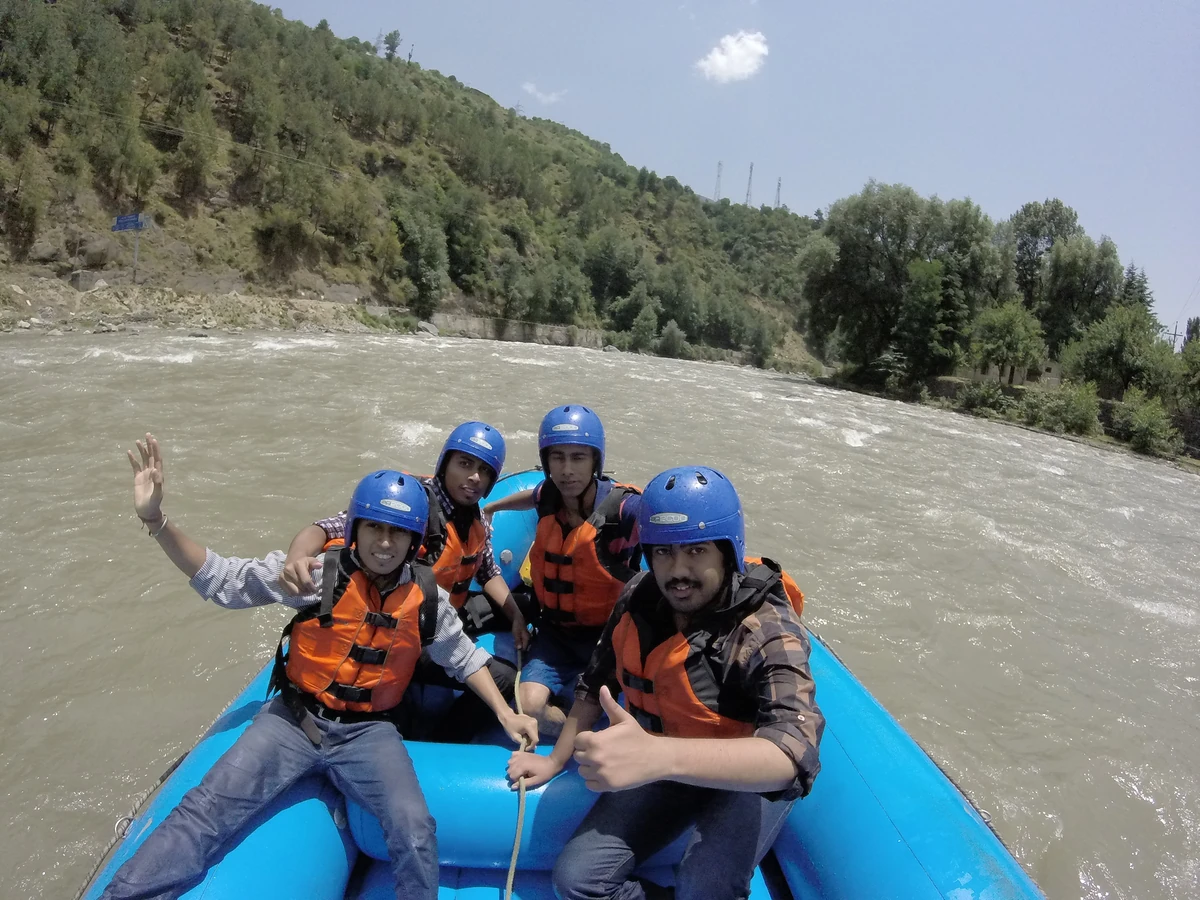
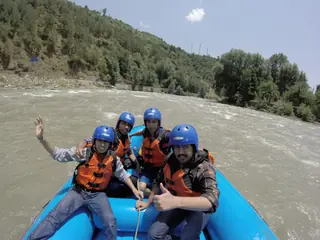
Rafting runs on the Beas from Pirdi, 4 km and 7 minutes below the town, in the months when the water allows it; operators stop when the river is in flood, and that is their call, not a schedule. The Kullu shawl is woven in the valley on handlooms, sold in the town's showrooms and along the highway, and the price follows the wool — sheep wool, angora, pashmina — rather than the pattern. Prices below are typical local rates as bands with the date we checked; they are not quotes, and nobody here takes a booking on our behalf.
Is Kullu worth stopping for, or should you go straight to Manali?
It is worth a day, and two if the ridge walk interests you. The valley's ruling deity sits in the Raghunath temple here, Bijli Mahadev is the best half-day walk in the lower valley, and Dhalpur is the ground the whole valley gathers on. Manali is 40 km further up the river and does a different job.
How do you get to Bijli Mahadev, and how hard is the walk?
Drive to the road-end at Chansari, 15 km and about 28 minutes from the town, then climb on foot: 2.8 km, about 96 minutes up and an hour back down, on a stone path through pine and then open hillside. Start early in summer; there is no shade on the last stretch and no water past the village.
When is Kullu Dussehra, and can you visit during it?
It begins on Vijayadashami — the day the rest of India ends its Dussehra — and runs seven days at the Dhalpur maidan, in October by the lunar calendar. You can visit, and it is the best week to see the valley as itself, but every room within an hour is taken months ahead and the town is at a standstill.
Where do you stay in Kullu — the town or the river?
The bazaar for the temples, the buses and the cheapest rooms; Dhalpur for a quieter night five minutes away; Raison, 15 km and about 20 minutes up the valley, for a camp on the gravel bank of the Beas. Bhuntar is worth a night only for an early flight or a first bus up the Parvati.
Can you raft on the Beas at Kullu?
Yes, from Pirdi, 4 km and about 7 minutes below the town, in the months when the water allows it. Operators stop when the river is in flood, which is most of July and August, and that judgement is theirs on the day rather than a published season.
Photographs by Wikimedia Commons contributors (CC0, CC BY, CC BY-SA), resized; each picture is credited on its own page.