
Raghunath Temple, Kullu
What it is
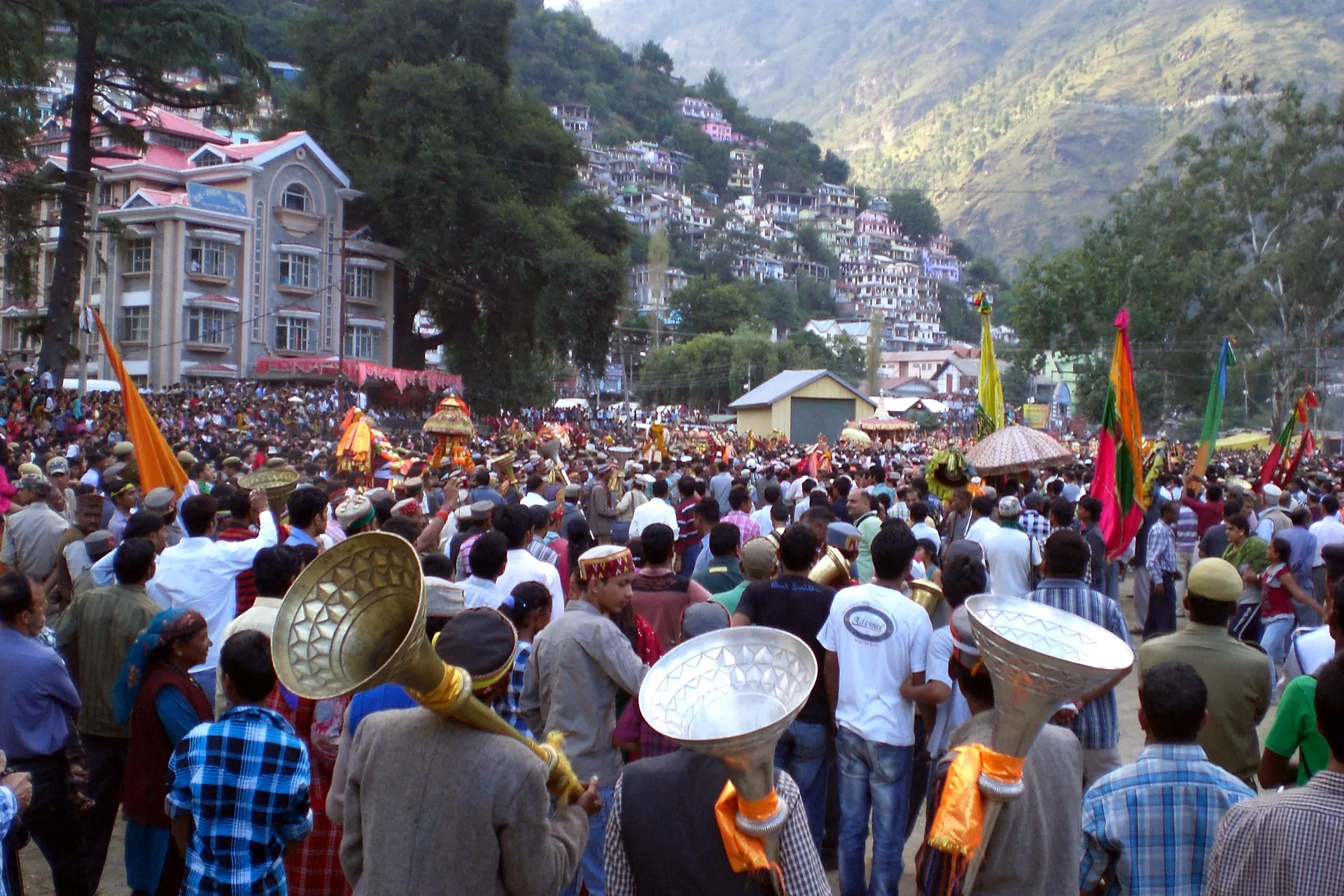
The temple of Raghunath — Ram, in the valley's name for him — above the bazaar in the old Sultanpur quarter of Kullu town, and the seat of the deity who rules the valley. The story the valley tells: in the seventeenth century Raja Jagat Singh, under a curse, was told that only the idol of Ram from Ayodhya could lift it; the idol was brought, installed on the throne, and the raja made himself its regent. From then Raghunath was the kingdom's ruler, and every village in the valley — each with its own deity — owed him a visit. They still pay it: at Dussehra in October the deities are carried down to the Dhalpur ground below the town to attend him, which is the whole of that festival.
Photos: Madhrakangri (CC BY 4.0) · Himalayanvision (CC BY-SA 4.0) — via Wikimedia Commons, resized.
The building is modest for its importance: a courtyard, a sanctum, a priesthood and a daily ritual, and a view over the town and the river from the terrace.
Getting there
About 38 km and roughly 49 min from the Manali bus stand down the valley to Kullu, then a short climb on foot through the old town above the bazaar. Buses from Manali every few minutes; a taxi in under an hour, with the option of going on to the stone temple at Bajaura below the town. The Kullu day trip starts here.
When to go
Any morning, for the temple quiet and in use. The opening day of Kullu Dussehra in October for the sight of it in its element. The deity brought down to the ground in a chariot pulled by ropes and by the crowd, the village deities in attendance, the bands playing — a crush, and the moment. The date follows the lunar calendar; the district administration announces it.
Manners
Shoes off at the courtyard, covered shoulders, no photographs of the idol or the sanctum, and ask before photographing anyone at prayer. This is the valley's ruling deity to the people who keep the temple; a visitor is welcome and a visitor is a guest.
Around it
The bazaar below, and the shawl weavers' co-operatives where the Kullu shawl is bought at the weavers' price. The Dhalpur ground where the festival happens. The carved stone temple at Bajaura a short way down the highway. Naggar Castle up the left bank, the seat of the rajas before Kullu, on the way back to Manali. The temples and heritage plan has the valley's older layer; the Hadimba temple in Manali is the goddess the town keeps.
Plans that include this
All 1 plans that stop here →
Questions people ask
What is the Raghunath temple in Kullu?
The temple of Raghunath — Ram — the presiding deity of the old Kullu kingdom, above the bazaar in the Sultanpur part of the town. The idol was brought from Ayodhya in the seventeenth century for Raja Jagat Singh, who installed it as the kingdom's ruler and made himself its regent; every village deity still comes to it at Dussehra.
How far is the Raghunath temple from Manali?
About 38 km and roughly 49 min by road down the valley to Kullu, then a short climb through the old town above the bazaar. Buses run from the Manali bus stand to Kullu every few minutes; a taxi does it in under an hour and can go on to Bajaura. The first stop on our Kullu day trip.
When is the best time to visit?
Mornings on any day for the temple itself, quiet and in use. The opening day of Kullu Dussehra in October for the sight of it in its element, when the deity is brought down to the Dhalpur ground in a chariot pulled by the crowd, with the village deities in attendance. A crush, and worth it.
What are the rules for visiting?
Shoes off at the courtyard, covered shoulders, no photography of the idol or the sanctum, and ask before photographing anyone at prayer. It is a working temple with a priesthood and a daily ritual, not a monument; a visitor is a guest. The courtyard and the view over the town are open to everyone.