Kullu's Dussehra runs seven days and nobody except the valley stays for all of them. This plan takes the three that give a visitor the most. The day before, when the ground is still empty and the temple is quiet. The first day, when the chariot crosses the maidan and the village deities arrive. And the morning after, spent on the ridge above the town where there is nobody at all.
The dates move with the lunar calendar and the administration announces them, so confirm before booking. What does not move is the shape of the week, or the fact that every room within an hour goes months ahead.
Who this is for
Anyone who wants the festival rather than a photograph of it, and who can book far enough ahead to sleep in the town. Not a plan for a first visit that also wants snow and cafés — for that, take Manali and come down for the day. Outside October, the two-day plan does the same places without the crowd.
Day by day
Day 1
The ground while it is still empty, and the temple quiet
Arrive a day early. Walk the maidan before the stalls take it, see the temple in its normal working morning, and learn the geography you will need when the town stops moving.
09:00
Shri Raghunath Mandirtemple · 1 min from Kullu · about 45 min there
The valley's ruling deity, a minute above the bazaar in Sultanpur. See it quiet, in use, with nobody else there — tomorrow it is the middle of the largest gathering in the state.
↓ 4 min by road · 2 km
11:30
Dhalpur Maidanarea · 1 min from Kullu · about 30 min there
The ground at the south end of the town, filling with stalls and poles. Walk it end to end now; knowing where things are is worth more than any photograph you will take tomorrow.
↓ 25 min by road · 11 km
15:00
Kullutown · 2 min from Kullu · about 1 h 30 min there
The bazaar: shawls at ₹1,200–4,000 for sheep wool as of Sep 2026, a cap if you want one, and an early dinner. Rooms run above the usual ₹900–2,500 this week and are booked months ahead.
Day 2
The first day — the chariot, and the deities arriving
The day the festival starts. Be at the maidan early, stay on foot, and give the afternoon to the deities rather than the stalls.
08:30
Dhalpur Maidanarea · 1 min from Kullu · about 30 min there
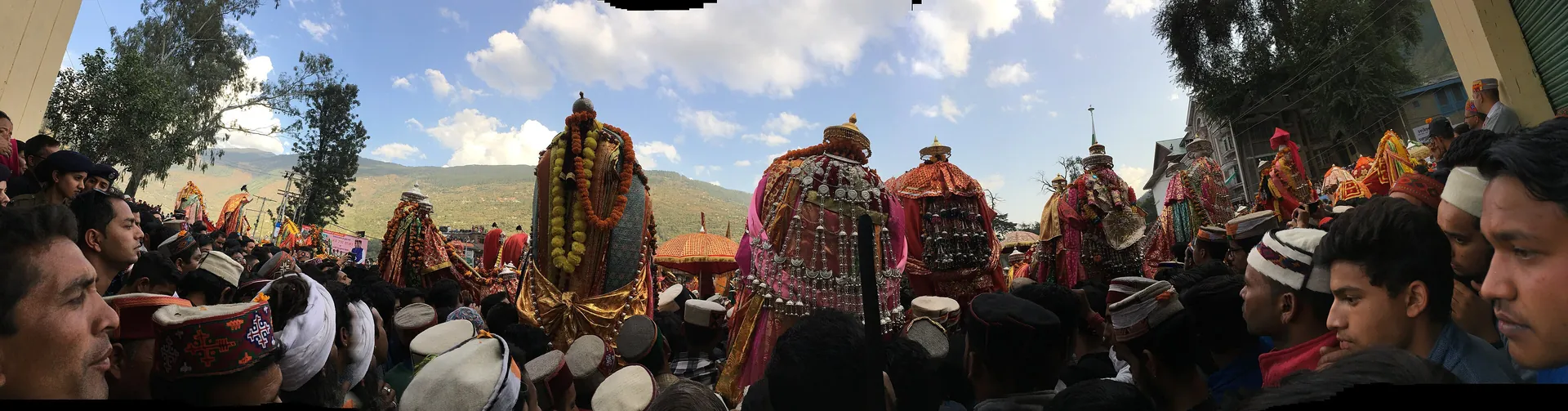
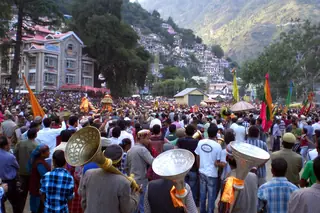
The crowd forms long before anything moves. The image comes down from the temple and the chariot is pulled across the ground by rope and by hand. Stand at the edge, not in the path.
↓ 4 min by road · 2 km
16:00
Shri Raghunath Mandirtemple · 1 min from Kullu · about 45 min there
Back up to the old quarter in the afternoon, when the lanes are emptier than the ground and the temple has given up its occupant for the week.
Day 3
The ridge, while the town sleeps it off
The best morning of the three. Out early to the road-end and up to the temple on the ridge, back for a late lunch, and away before the evening fills the road again.
07:00
Chansaritown · 28 min from Kullu · about 1 h 30 min there
15 km and 28 minutes from the town, on the ridge road across the river. A taxi with waiting is ₹1,200–2,000 return as of Sep 2026 and is easier to arrange the night before during fair week.
↓ 1 h 36 min on foot · 2.8 km
07:45
Bijli Mahadev Templetemple · 28 min from Kullu · 1 h 36 min on foot · about 2 h 30 min there
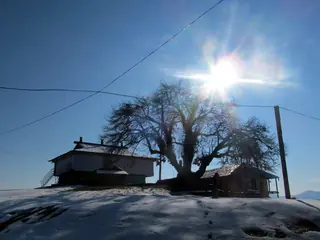
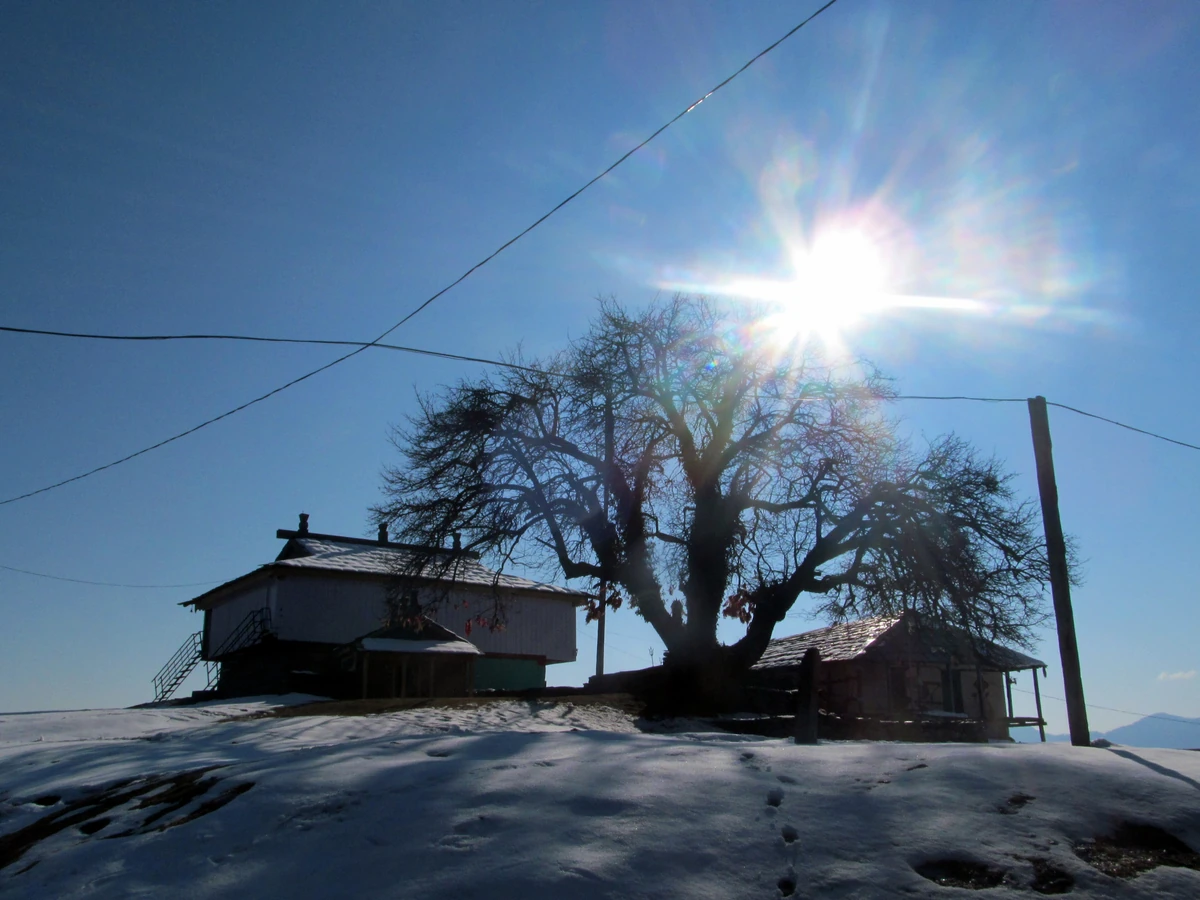
2.8 km and about 96 minutes up, an hour down, to a courtyard at about 2,460 m with both valleys below. After two days in a crowd of half a lakh, the silence is the point.
↓ 3 h 25 min by road · 36 km
13:30
Kullutown · 2 min from Kullu · about 1 h 30 min there
A late lunch in the bazaar and the road out — down to Bhuntar for a flight, or up the valley to Manali, 40 km and about 49 minutes away.
Getting there
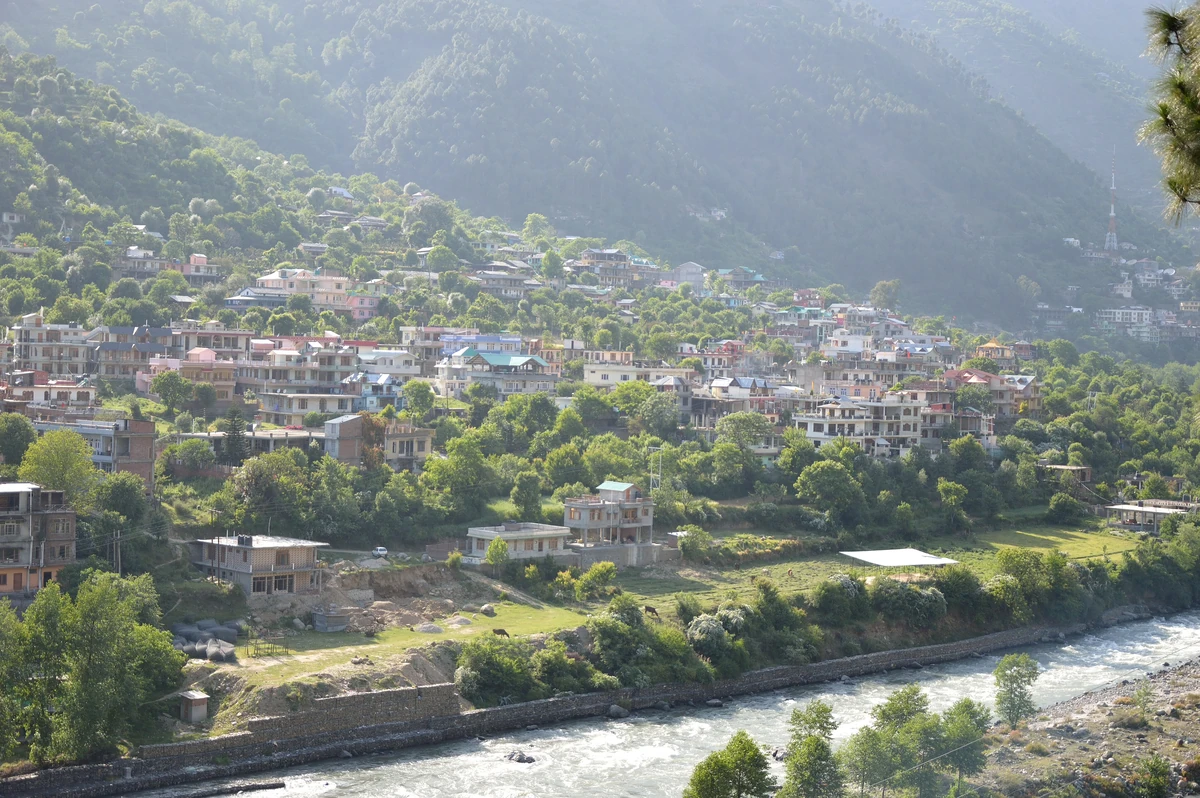
Fly to Bhuntar, 11 km and about 17 minutes below the town, or take a bus: Chandigarh is 225 km and about 254 minutes, Mandi 69 km and 98 minutes, Manali 40 km and about 49 minutes. During the week leave the car wherever you sleep — the highway through the bazaar does not move.
Where to stay
In the town if you can: the bazaar or Dhalpur, both walkable to the ground. Failing that, Raison 15 km up the valley or Bhuntar 11 km down it, and a bus in each morning. Rates run above the usual ₹900–2,500 a night, and the rooms are gone months ahead.
Know before you go
- Book the room before anything else, and pick one you can walk from.
- Arrive a day early — the empty ground is what makes the full one legible.
- Stand at the edge of a procession; never touch a palanquin or cross its path.
- Ask before photographing people, and take no for an answer.
- Keep the third morning for the ridge; two days in that crowd is enough for anyone.
If plans change
Outside the fair: the two-day plan covers the same town and ridge with nobody in the way.
From up the valley: the Kullu day trip from Manali comes down for the day and sleeps elsewhere.
The background: the Dussehra guide has the history, the seven days and the manners.
1 night · 2 days · First visittemples-heritage
Two days in Kullu — the ridge temple on the first morning, the town, the river and the stone temple at Bajaura on the second
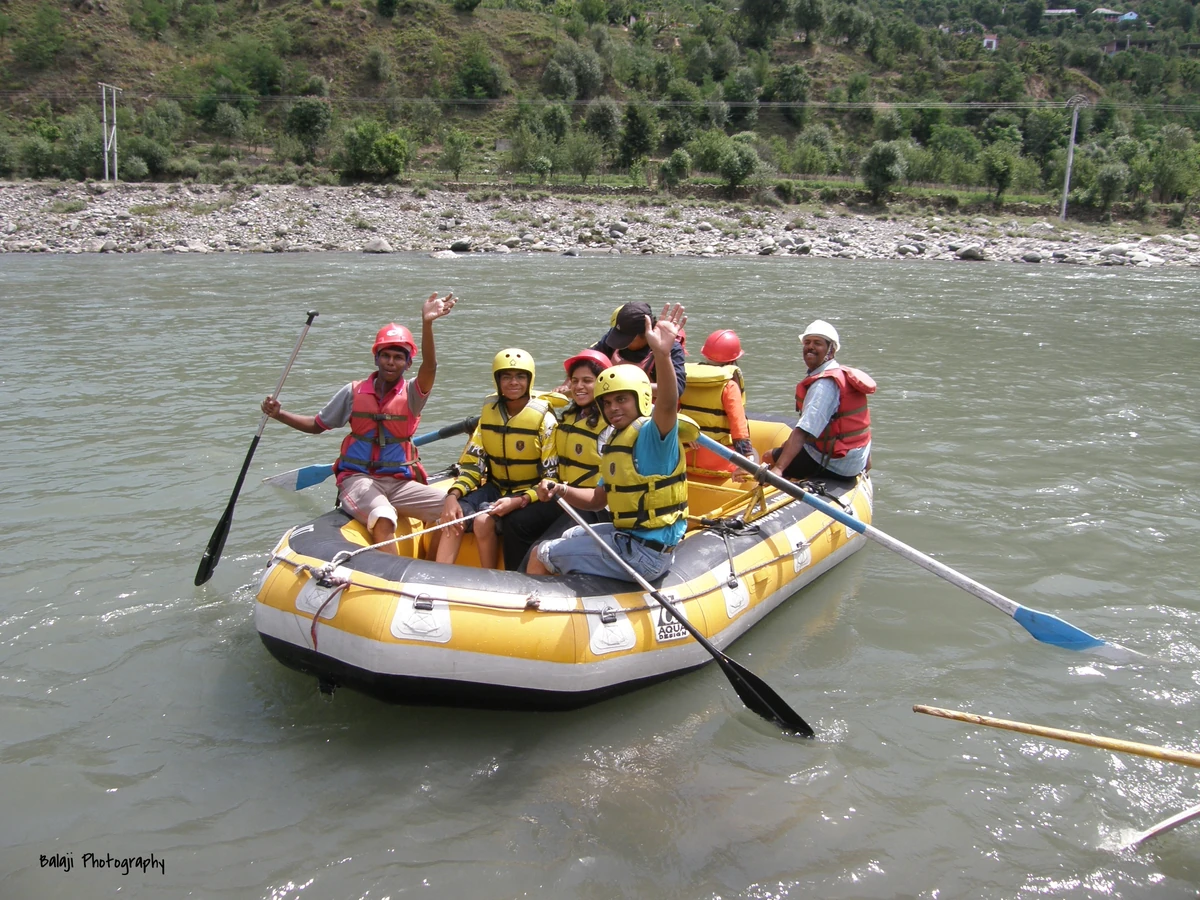
Two days in Kullu: the climb to Bijli Mahadev on the first morning, then Dhalpur, rafting at Pirdi and the stone temple at Bajaura, with measured road times.
Day plan · First visittemples-heritage
One day in Kullu — the Raghunath temple, the bazaar, the ground at Dhalpur and the hill temple above the town
A day in Kullu town: the Raghunath temple at Sultanpur, the shawl bazaar, the Dhalpur fair ground and the carved hill temple at Bhekhli, with measured times.
Day plan · Slow travelTemples & heritage
Kullu from Manali — the district town, its temples and the river, in a day
A day in Kullu from Manali, 40 km down the valley: the Raghunath temple above the bazaar, the Dhalpur ground, the shawl weavers, the stone temple at Bajaura.
Questions people ask
How many days of Kullu Dussehra should you stay for?
Three is the useful answer: the day before for the empty ground and the quiet temple, the opening day for the chariot and the arriving deities, and a third morning out of the town. The fair runs seven days, and only the valley itself stays for all of them.
Where do you stay during Dussehra week?
In the town if you booked months ago — the bazaar or Dhalpur, both within walking distance of the ground. Otherwise Raison 15 km up the valley or Bhuntar 11 km down it, with a bus in each morning. Rates run well above the usual ₹900–2,500 a night.
Is the ridge walk worth keeping for the last morning?
Yes, and it is the best-judged part of this plan. After two days in a crowd of several lakh people, 2.8 km of climbing to a courtyard at about 2,460 m with nobody on it is the thing you will remember. Start at seven; the taxi is easier arranged the night before.