
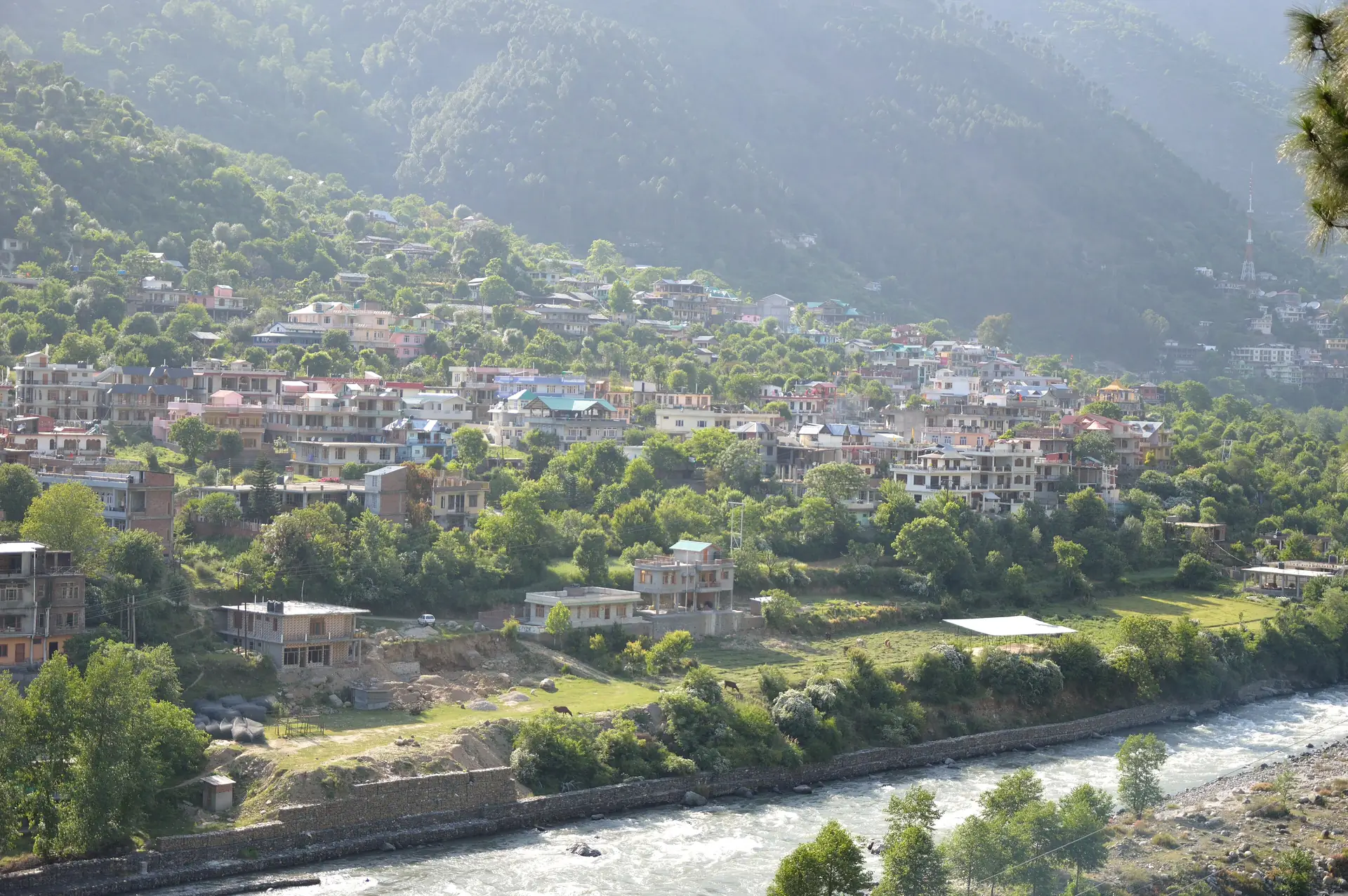
Kullu town
What it is
The district town of the Kullu valley, at about 1,279 m on the bank of the Beas, with a population of roughly 18,500. A long bazaar along the highway, the older quarter of Sultanpur on the slope above it with the Raghunath temple in its lanes, and the Dhalpur ground at the south end. The buses for every side valley leave from here, which is the practical reason the town matters.
Photos: Rajani Gairshail (CC BY-SA 4.0) · UnpetitproleX (CC BY-SA 4.0) — via Wikimedia Commons, resized.
Getting there
On the main valley highway: 40 km and about 49 minutes below Manali, 11 km and 17 minutes above the airport at Bhuntar, 69 km and 98 minutes up the gorge from Mandi, and 225 km from Chandigarh. Buses stop in the bazaar rather than on the edge of town, which makes arriving without a vehicle easy.
What a day here holds
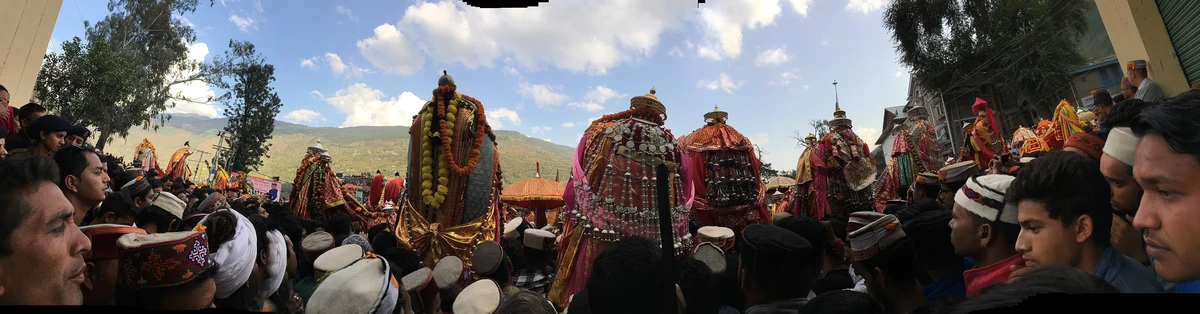
The temple first, before the lanes fill. The bazaar through the middle of the day — shawls at about ₹1,200–4,000 for sheep wool as of September 2026, and a cap if you want one. The fair ground in the afternoon, empty and worth ten minutes for what stands on it in October. The hill temple at Bhekhli for the last of the light. The ridge at Bijli Mahadev is the town's other half-day and needs a morning of its own.
Staying
Rooms in the bazaar run about ₹900–2,500 a night as of September 2026, and Dhalpur is the quieter five minutes away. Raison, 15 km and 20 minutes up the valley, puts you on the river instead. In Dussehra week everything within an hour is taken months ahead and the rates go well above those bands.
When to go
March to June and September to November. October is the clearest month and the one with the fair; the monsoon is green, cheap and slide-prone; December to February the town is cold, quiet and entirely itself. The one-day plan is the shape of a first visit, and the two-day plan adds the ridge.
Plans that include this
All 6 plans that stop here →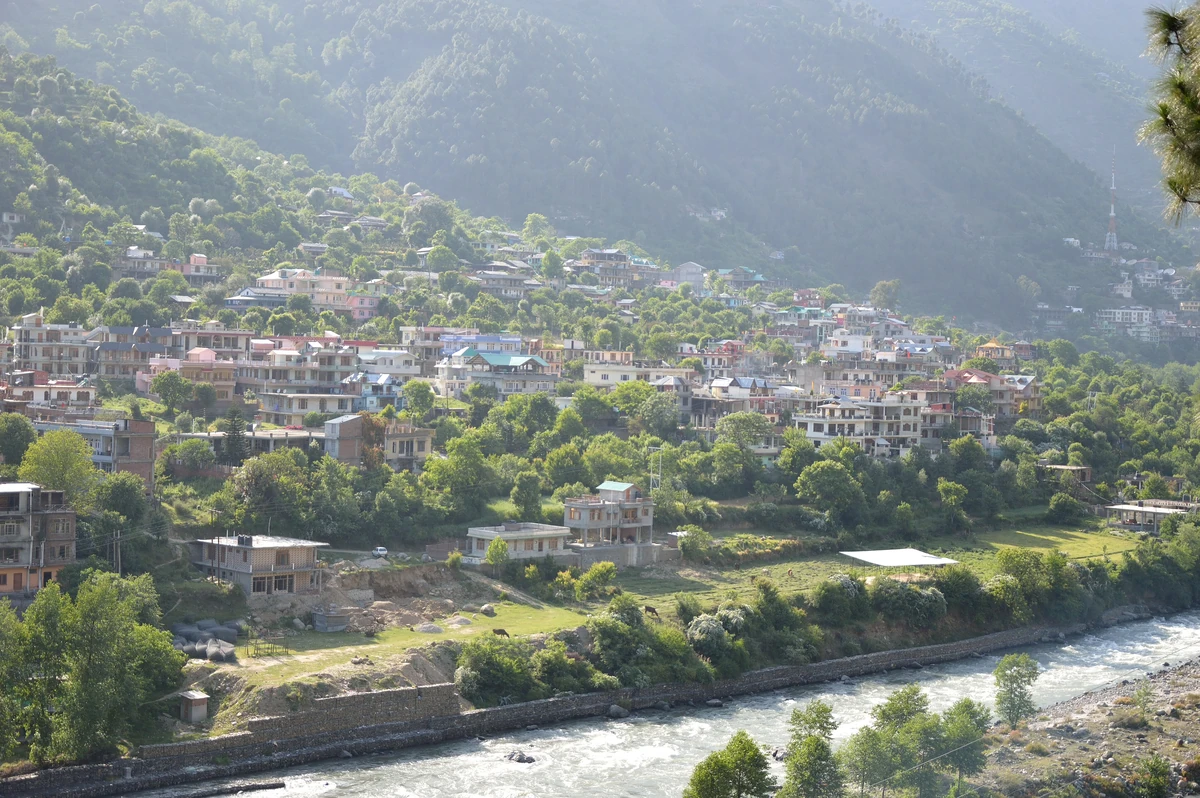
Questions people ask
What is there to do in Kullu town?
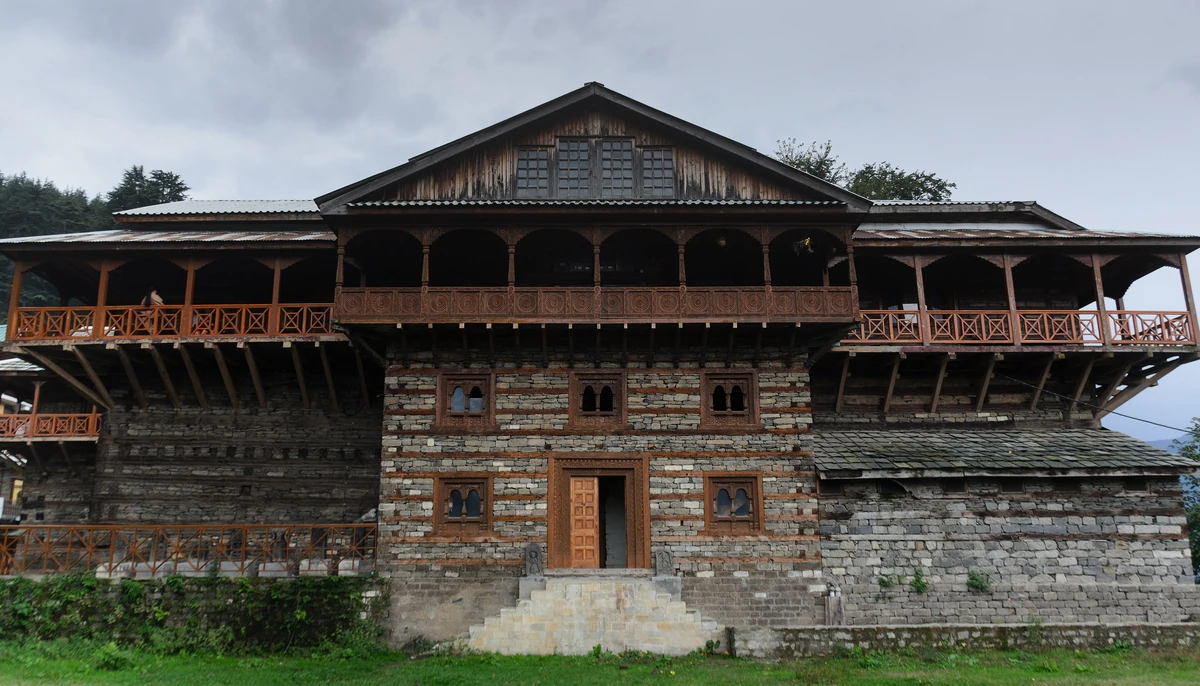
The Raghunath temple in the old quarter, the bazaar and its shawl showrooms, the Dhalpur ground where Dussehra happens, and the carved wooden temple at Bhekhli on the hill above. The ridge walk to Bijli Mahadev starts 15 km away and needs its own morning.
How high is Kullu, and how big?
About 1,279 m, on the bank of the Beas, with a population of roughly 18,500. It is the headquarters of the district that carries its name, which means the offices, the courts, the banks and the buses for every side valley are here rather than in Manali.
Is Kullu worth staying in rather than passing through?
For a night or two, yes — for the temples, the ridge walk and the cheaper rooms at about ₹900–2,500. It is a working town with little evening life, so anyone who wants cafés and sights within a walk is better off 40 km up the valley in Manali.