
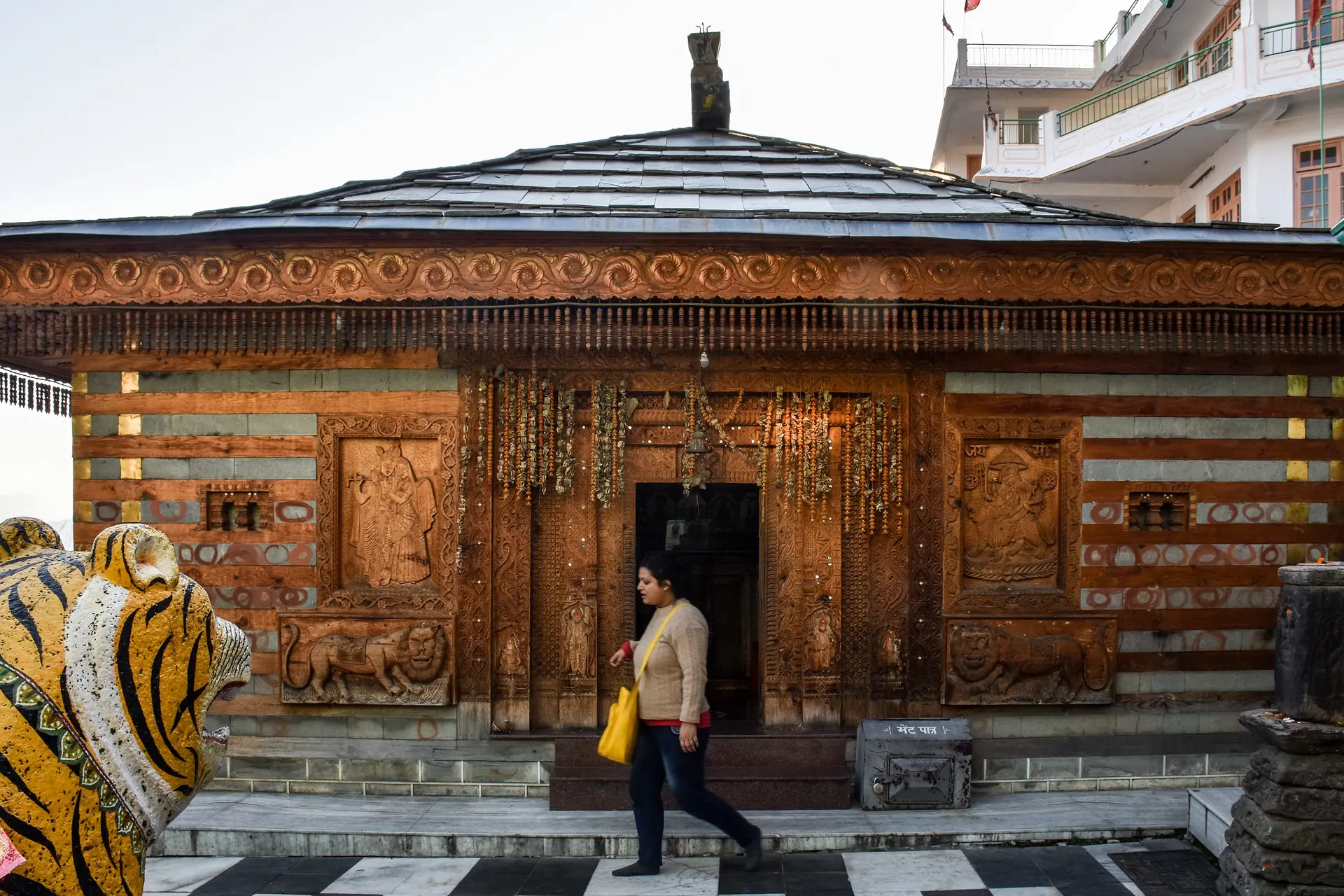
The temple at Bhekhli
What it is
A temple on the hill directly above Kullu, in the village of Bhekhli, built in the valley's own way: courses of deodar alternating with stone, a slate roof, and a carved front. From beside it the town is laid out below, the river runs through the middle of the view, and the airport strip at Bhuntar is visible down the valley on a clear day.
Photos: Neha Sharma (CC BY-SA 4.0) — via Wikimedia Commons, resized.
Getting there
A single-track side road climbs from the highway to the village, and the last stretch is on foot. A taxi from the bazaar goes up and waits; the road is narrow with blind bends and is not a place to meet a bus. Anyone walking the whole way from the town is in for a steep hour and should start early rather than late.
What to look at
The front, which carries the carving; the beam ends and the roof line, which tell you how the thing is put together; and the way the building sits on the slope rather than on a platform. It is a working village temple, not a monument — quiet on most days, and busy on its own festival days, which follow the village's calendar rather than the visitor's.
Manners
Shoes off at the courtyard, shoulders covered, the sanctum not photographed, and nobody at prayer photographed without being asked. The village is somebody's home as well as a view, so keep to the lanes and the temple ground.
Fitting it into a day
It is the last stop of the one-day plan, after the Raghunath temple, the bazaar and the Dhalpur ground. If the ridge at Bijli Mahadev has taken the morning, this is the gentle end of the same day.
Plans that include this
All 1 plans that stop here →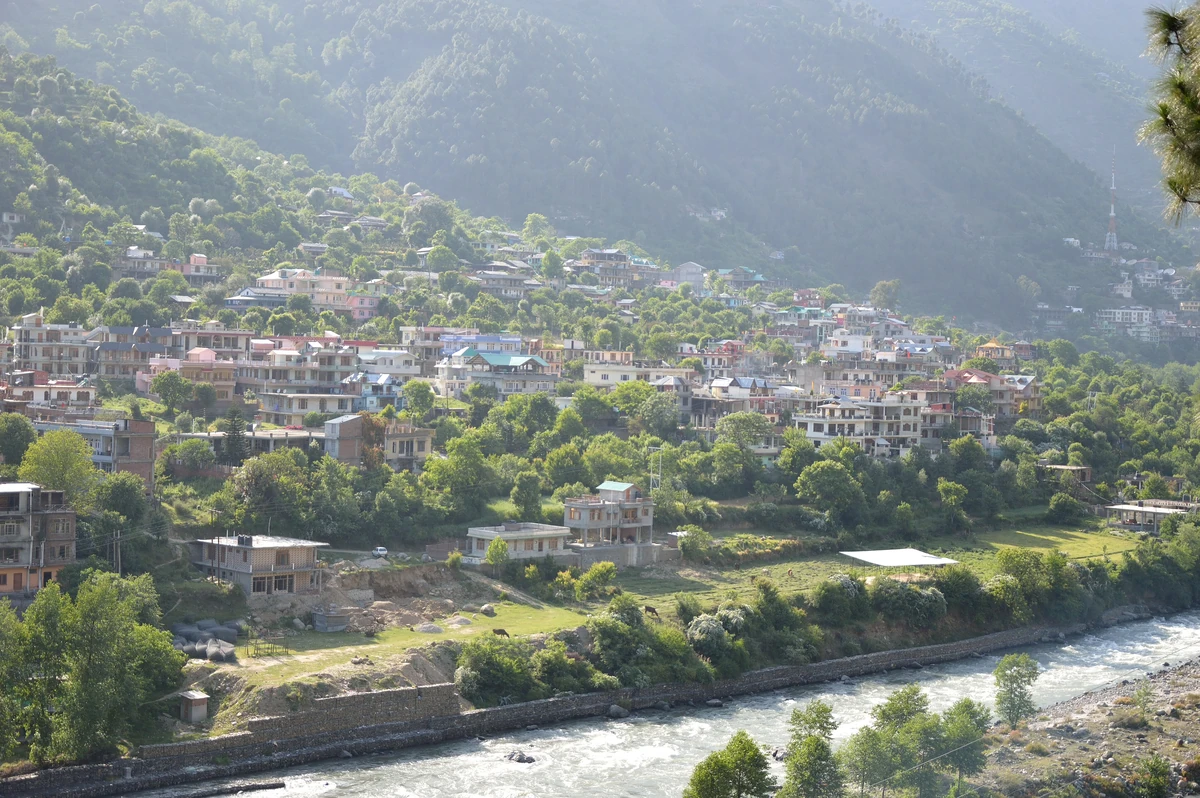
Questions people ask
Where is the Bhekhli temple?
On the hill directly above Kullu town, reached by a single-track side road off the highway and a short walk at the end. It is a few kilometres of climbing by road from the bazaar, and the village sits high enough to see the airport strip down the valley.
What is there to see?
A temple built the way the valley builds — courses of deodar and stone under a slate roof, with a carved front — and the view from beside it. The building itself is the interest; the panels on the front repay standing still for a few minutes.
How long does a visit take?
Half an hour at the temple, plus the drive up and back. Late afternoon is the best light and the usual time to go, after the town and before dinner. A taxi waits at the village while you walk the last stretch; there is nothing to buy up there.