
Kullu Dussehra from Manali — the valley's biggest week, and how to see it
The week the valley comes to town
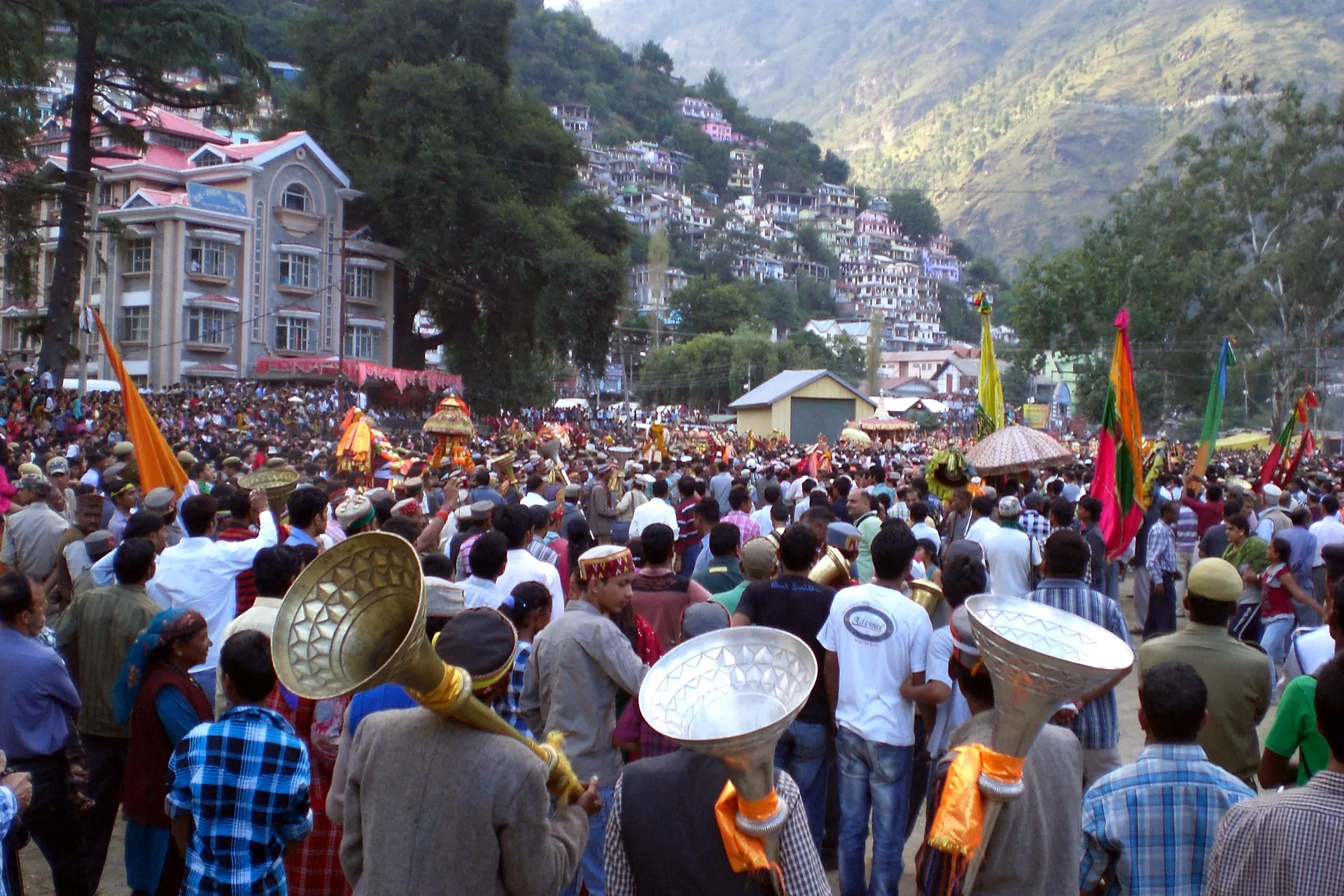
Every village in the Kullu valley has its own deity — a devta or devi, kept in the village temple, carried in a palanquin of timber and metal masks on festival days by the village that owns it. Once a year, in the autumn, hundreds of them are carried down the valley to Kullu town to pay their respects to Raghunath, the presiding deity of the old Kullu kingdom, and to camp for a week on the Dhalpur ground. That is Kullu Dussehra, and it is the biggest thing that happens in the valley each year.
Photos: Kondephy (CC BY-SA 3.0) · Madhrakangri (CC BY 4.0) · Schwiki (CC BY-SA 4.0) — via Wikimedia Commons, resized.
It is not the Dussehra of the plains. There is no burning of effigies on the first day; the festival begins on Vijayadashami, the day the rest of India's Dussehra ends, and runs seven days from there. Processions on the first and last days, the deities in their tents on the ground through the week, a fair and a market, folk dance and music in the evenings, and the valley's whole population passing through. The date follows the lunar calendar and falls in October in most years.
From Manali it is 40 km and about 49 min down the valley, which makes Manali the natural base: go down for a day or two, come back up to sleep.
What to see
The first day. The procession that opens the week. Raghunath is brought from his temple above the bazaar to the Dhalpur ground in a chariot pulled by ropes and by the crowd, with the village deities in attendance and their bands playing. It is a crush and it is the moment; arrive early and stand somewhere high.
The ground through the week. The deities camp in tents around the maidan, each with its village, its drummers and its priests, and the ground becomes a fair. Stalls from across the state, a market for the valley's woollens and metalwork, food, the evening's dance and music. Walking the ground on a weekday afternoon, when the crowd is thinner, is the way to see the deities close and hear the bands.
The last day. The procession to the river for the rite that closes the week, and the deities' departure for their villages, each carried back up its own side valley. It is the reason the roads around Kullu are full of palanquins and drummers for a day afterwards.
Kullu town itself. The Raghunath temple in the bazaar, the old timber temples, and the shawl weavers' co-operatives, which are the honest place to buy the Kullu shawl the Mall sells at a markup.
How to plan it from Manali
Stay in Manali and go down. Kullu's few rooms are taken by the valley's own people during the week, the roads into town are slow, and Manali in October is at its best anyway — clear skies, days around 22 °C, the pass open. Take the bus or a shared taxi down early, walk the ground, eat in the town, and take the bus back in the evening; a car is a liability in Kullu during the week.
Give the festival one full day for the opening procession and one half day for the ground on a quieter afternoon, and build the rest of the trip round Manali's own October. The October plan is the shape, with the Dussehra day swapped in for the pass day or added to it. The temples and heritage plan is the valley's older layer for anyone the festival has made curious — Naggar Castle was the seat of the rajas whose deity Raghunath is, and the drive down to Kullu passes it.
The small print
Book the Manali room early: the Dussehra week, and the Diwali week that often follows it, are the autumn's peak in the valley, and October's clear weather brings everyone else too. Cash for the ground, where nothing takes a card. Shoes off and a scarf for the shoulders when you go near a deity's tent. Ask before photographing a palanquin, and put the phone away if the answer is no — these are living gods to the villages that carry them, not a parade. The masks are old, the bands are loud, and the whole thing is the valley's own occasion; a visitor is welcome and a visitor is a guest.
And the rest of the valley's calendar
The Hadimba festival in May at Manali, when the Hadimba deity is carried and the valley comes to the grove. The village fairs of the left bank through the spring and autumn, which the dhabas at Jana Falls know the dates of. Winter Carnival on the Mall in January. And Dussehra in October, the one that matters most. The Manali guide has the month-by-month; this is the week to plan for.
Plans that include this
All Manali itineraries → Day plan · FriendsRoad trip
 Day plan · First visitClassic
 Day plan · Slow travelTemples & heritage
 1 night · 2 days · Slow travelCafés & food
 1 night · 2 days · CouplesTemples & heritage
 1 night · 2 days · Slow travelWaterfalls
Questions people ask
When is Kullu Dussehra?
It begins on Vijayadashami — the tenth day of the autumn festival, the day Dussehra ends in the rest of India — and runs for seven days after it, on the Dhalpur ground in Kullu town. The date moves with the lunar calendar and falls in October in most years; the district administration announces it.
What happens at Kullu Dussehra?
The valley's village deities, carried in their palanquins by their own villages, come to Kullu to pay their respects to Raghunath, the presiding deity of the old kingdom, and camp on the Dhalpur ground for the week. Processions on the first and last days, a fair and a market, folk dance in the evenings, a vast crowd.
How do I get from Manali to Kullu Dussehra?
Kullu is 40 km and about 49 min down the valley from the Manali bus stand, with buses every few minutes and shared taxis in the mornings. During the week the road is busy and the town is full; leave Manali early and take the bus back rather than driving. Stay in Manali and go down for a day.
Is Kullu Dussehra worth planning a Manali trip around?
If you are interested in the valley's own culture rather than its snow, yes — it is the one week when the deities of every village are in one place and the valley is at its most itself. October is also the best month for everything else in Manali. Book the room early.