
The Kullu shawl — what the patterns mean, what the wool costs, and how to buy one in the valley
What it is
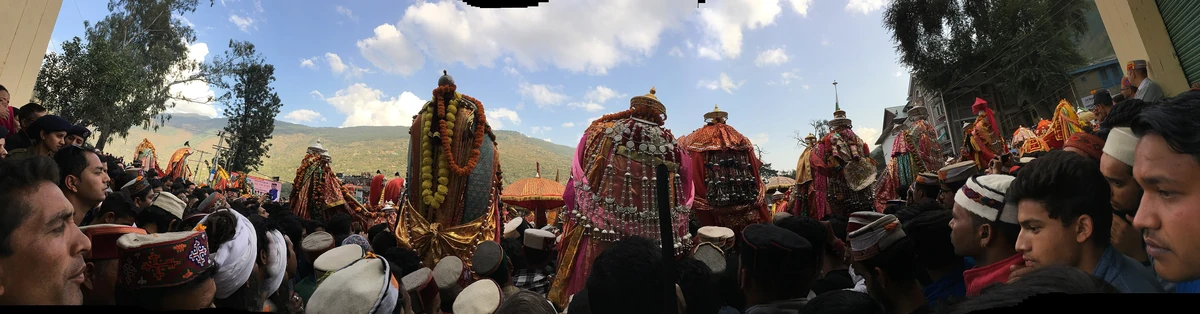
A plain shawl with a band of geometric pattern across each end, woven on a handloom in the Kullu valley. The bands are the signature — stepped diamonds and stripes in a few strong colours — and they are what people mean when they say Kullu shawl. It is worn here before it is sold: at a wedding, at a funeral, on a bus in February, and over the shoulders of half the men on the Dhalpur ground during the fair.
Photos: Rajani Gairshail (CC BY-SA 4.0) — via Wikimedia Commons, resized.
The wool decides the price
This is the one thing worth knowing before walking into a showroom. The pattern is roughly the same across the range; what changes is the fibre. Sheep wool from the valley is the everyday shawl and runs about ₹1,200–4,000 as of September 2026. Angora is warmer, lighter and several times the price. Pashmina is another step again. A mill-made acrylic piece with the same pattern costs a fraction of any of them, and there is nothing wrong with that as long as you know which one you are buying.
Handloom or mill
Turn the shawl over and look at the back of the pattern band. A handloom carries the coloured threads across behind the design, so the reverse is untidy in a regular, readable way. Mill weave comes out identical on both faces and perfectly even. Neither is a fault — but one is a person's week of work and the other is a machine's hour, and the prices should not be the same.
Where to buy
The showrooms along the highway in the bazaar are the obvious option and the easiest. The weavers' societies behind the main road sell the same cloth closer to the loom. Up the valley, the roadside shops between the town and Raison sell to people who are already stopping, which is not a recommendation in itself. Nothing here is bought through HimLocal and nobody quotes on our behalf: these are bands we checked, and the shop quotes on the day.
What else the valley makes
The cap — a flat band with a coloured front — is the other thing the valley wears and sells, and it is on every second head at Dussehra. Wool blankets, socks and gloves come off the same looms. If you are in the town during the fair week, the trade stalls on the Dhalpur ground are the one time everything in the district is in one place.
Fitting it into a trip
The bazaar is 20 minutes of any day in the town. The one-day plan gives it the middle of the day between the temple and the Dhalpur ground; the two-day plan leaves it for the afternoon after the ridge, when you will want to sit down anyway.
Plans that include this
All Kullu itineraries →

Questions people ask
What is a Kullu shawl?
A handloom shawl woven in the Kullu valley, plain in the body with a band of geometric pattern across each end. The pattern is the signature; the wool decides the price. It is a working garment here before it is a souvenir, and most households own several.
What should a Kullu shawl cost?
As a band checked in September 2026: roughly ₹1,200–4,000 for sheep wool in the valley. Angora and pashmina cost several times that, and a mill-made piece costs a fraction. Prices are quoted on the day and a showroom on the highway is rarely the cheapest place to buy.
How do you tell a handloom shawl from a mill-made one?
Look at the back of the pattern band: on a handloom the coloured threads are carried across and the reverse is untidy in a regular way. Mill weave is identical front and back and perfectly even. Weight and warmth follow the wool, not the pattern, so ask what the fibre is.