
The temples of the Kullu valley — stone, wood and a god who rules a district
A valley with a ruling deity
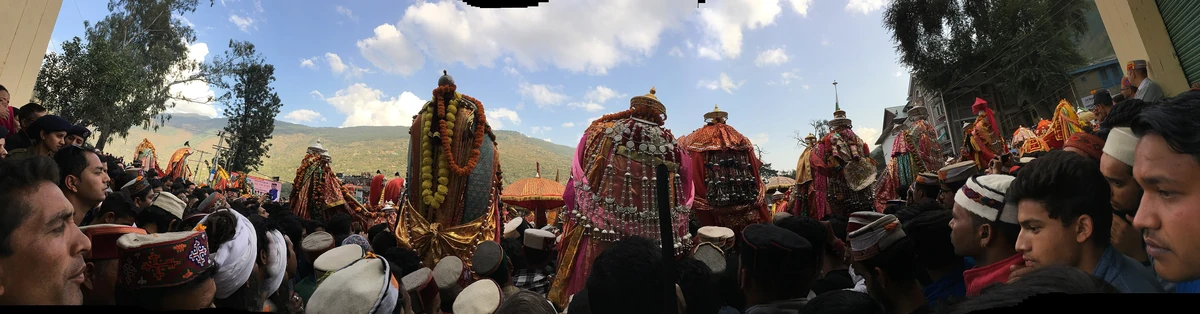
Start with the fact that organises everything else: since the 17th century the valley has had a god as its ruler, installed at the Raghunath temple in the old quarter above the bazaar. Every village here has its own deity, and every one of them owes that god a visit — which is what the week at Dhalpur each October is. Once you know this, the temples stop being a list of buildings and become a structure.
Photos: Ms Sarah Welch (CC0) · Ashish Sharma (CC BY-SA 4.0) — via Wikimedia Commons, resized.
The four to see
[Raghunath](/places/raghunath-temple-kullu), in the town. Small, working, a minute above the bazaar. What it holds matters more than what it looks like. Go early.
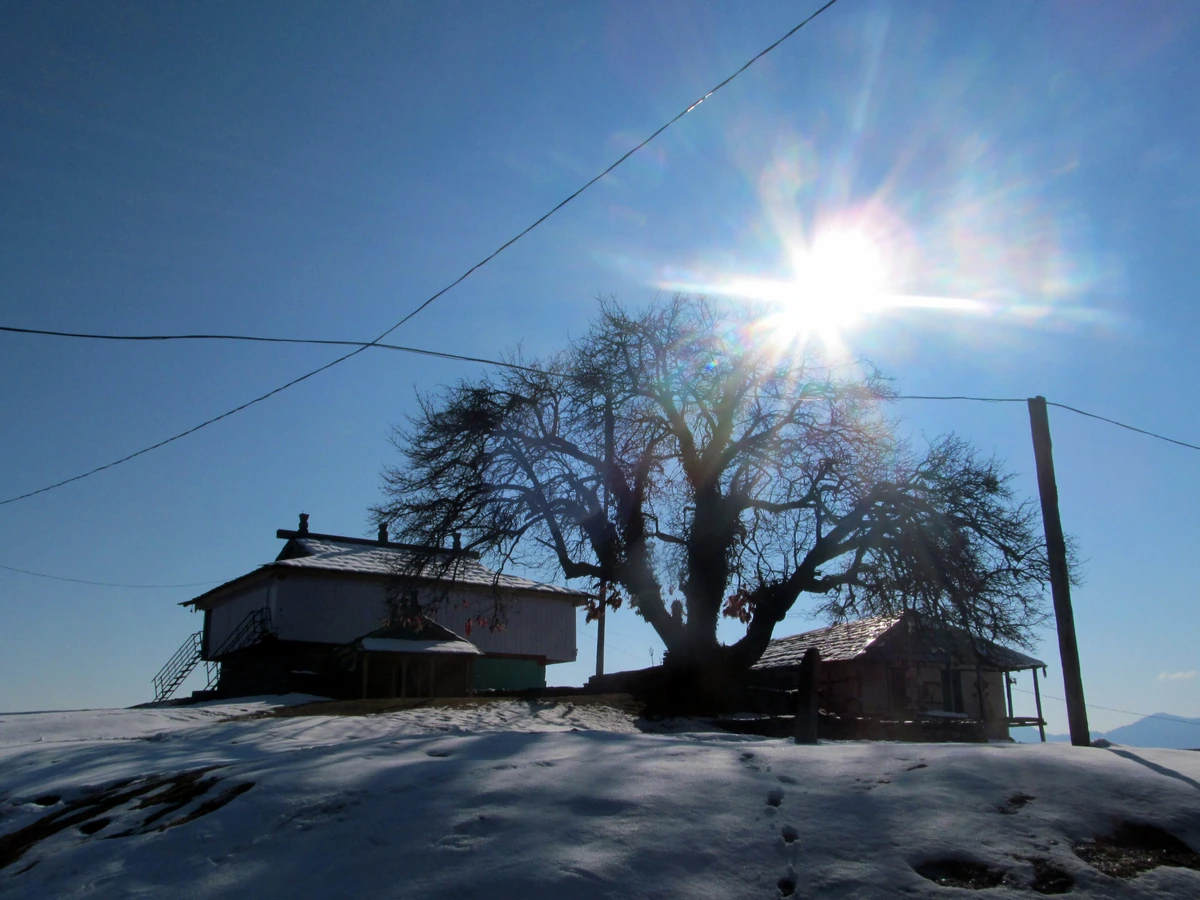
[Bijli Mahadev](/places/bijli-mahadev-temple), on the ridge. At about 2,460 m, above the meeting of the two rivers: a stone courtyard, a wooden shrine and the staff everyone photographs. It is 15 km to the road-end at Chansari and about 96 minutes of climbing on foot, and it is the best half-day in the district.
[Bajaura](/places/basheshar-mahadev-temple-bajaura), on the highway. 15 km and 21 minutes below the town: a stone temple, carved on its outer faces, older than anything standing on this stretch of the valley floor. Fifteen minutes, usually alone.
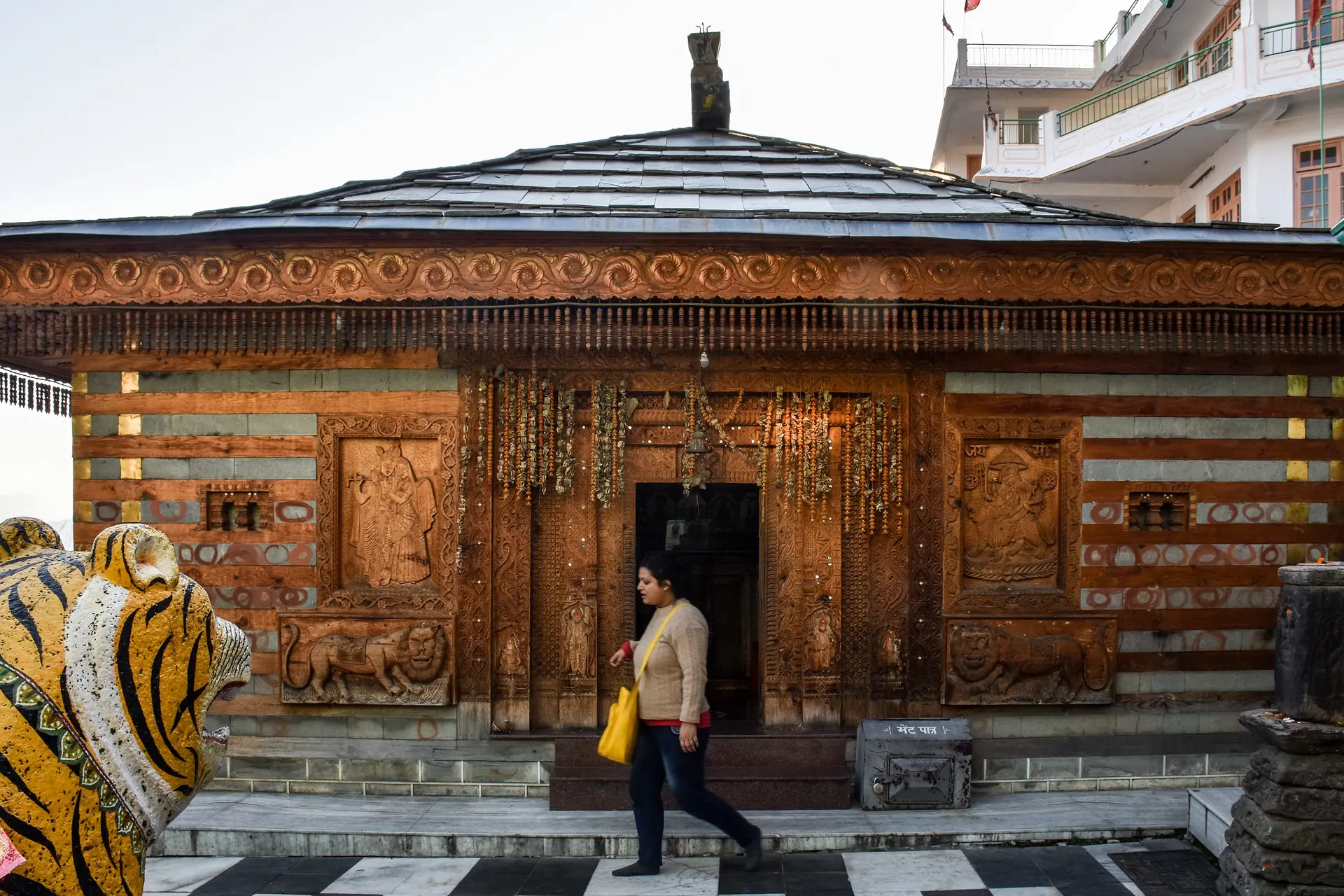
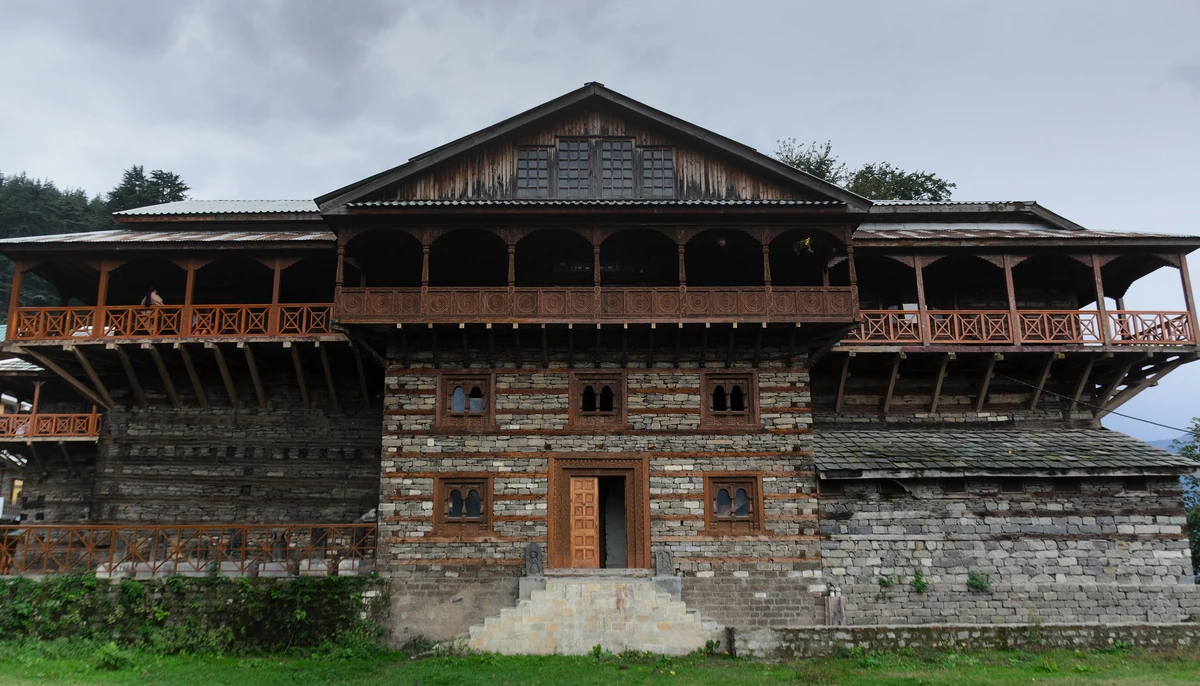
Bhekhli, above the town. A carved wooden temple on the hill directly above Kullu, reached by a side road and a short walk, with the valley and the airport strip laid out below it. The building is the valley's own way of making things.
How the valley builds
Courses of deodar alternating with stone, a slate roof, a carved front, and a courtyard that does the work of a hall. It is the same grammar as the houses, scaled up, and it holds through earthquakes better than masonry does — which is why it is still standing. The stone tower at Bajaura belongs to another tradition and looks it; that contrast is the most interesting thing you can notice in a day here.
Manners, in all of them
Shoes off at the courtyard. Shoulders covered. No photographs of the sanctum or its image, and none of people at prayer without asking first. Nothing here is ticketed and nobody will ask you for money at the door; if someone does, they are not the temple.
Fitting them into a trip
The one-day plan takes the town's two and the fair ground; the two-day plan adds the ridge on its first morning and Bajaura on its second afternoon. During the fair week all of this is in one place on one ground, which is the single best day to see the valley's religion as a living thing rather than as architecture.
Plans that include this
All Kullu itineraries →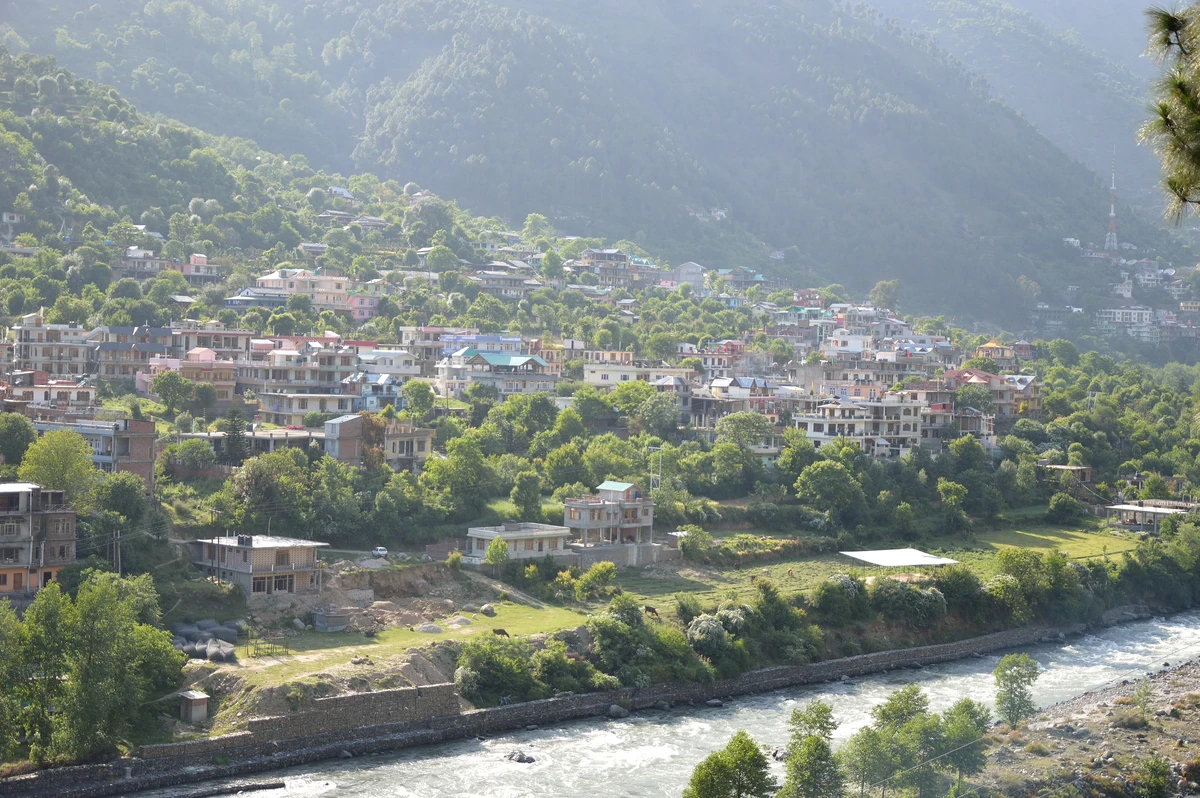
Questions people ask
Which temples should you see around Kullu?
Four. Raghunath in the town, for what it means rather than how it looks. Bijli Mahadev on the ridge, for the walk and the view. The stone temple at Bajaura, for its age and its carving. And the carved wooden temple at Bhekhli, on the hill directly above the town.
What makes the valley's temple architecture distinctive?
Most of it is built the way the houses are — courses of deodar beams alternating with stone, under a slate roof, with carved fronts. The stone tower at Bajaura is the exception rather than the rule, which is exactly why it stands out on the valley floor.
Can visitors enter these temples?
Yes, at all four. Shoes come off at the courtyard, shoulders are covered, the sanctum is not photographed and nobody at prayer is photographed without being asked. These are working temples with daily ritual, not monuments, and the courtyards are open to everybody.