
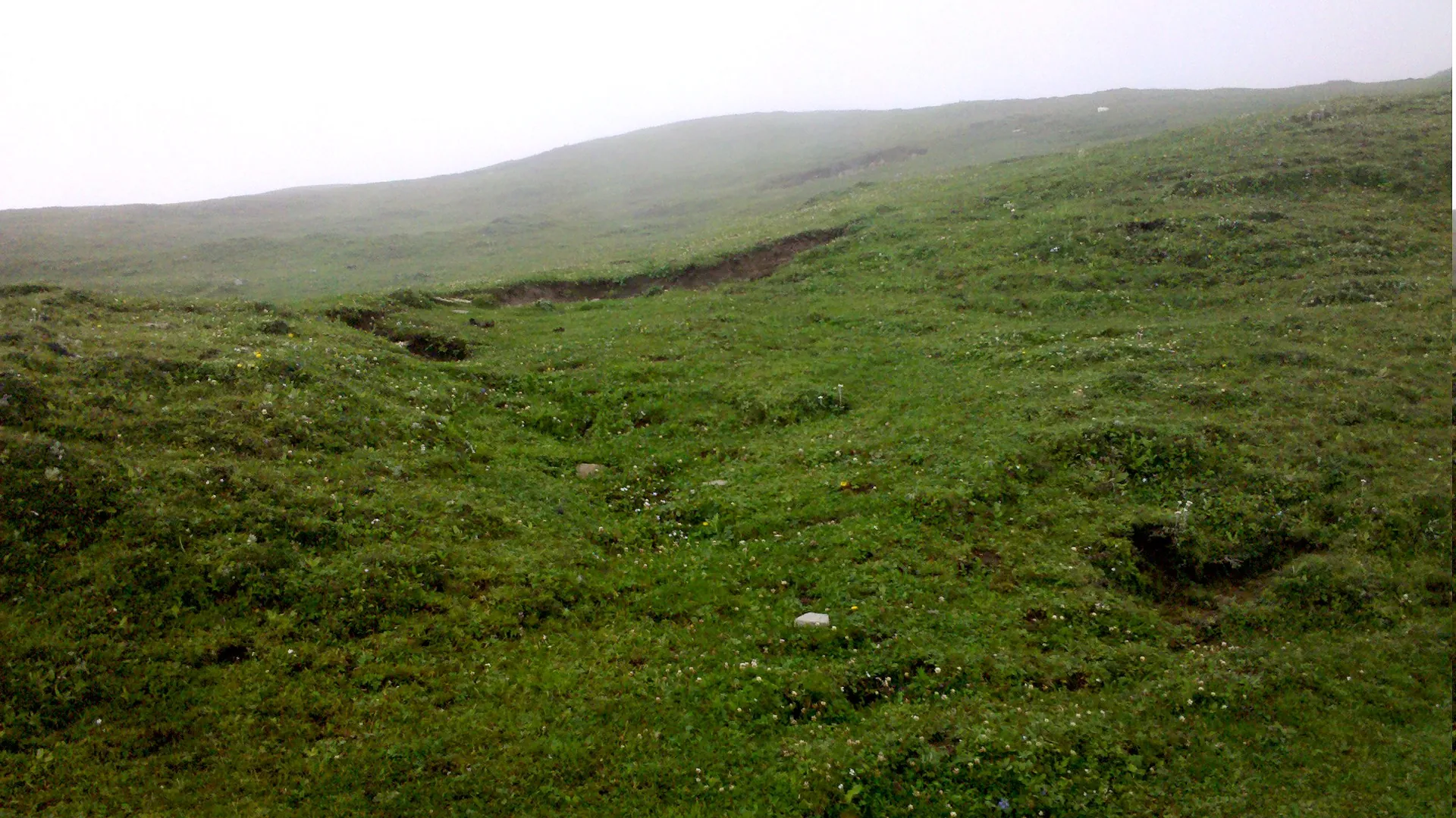
Bahu Lake
What it is
A small pond beside a temple in the fields above Bahu village, a short way from Banjar on the Jalori side, with the ridge forts of Fatehpur and Trilokpur on the skyline above it. A quiet hour rather than a sight — the last frame of a day on the Banjar side.
Photos: Banchida (CC BY-SA 4.0) · Sheena Thakur @thebluesheeep (CC BY-SA 4.0) — via Wikimedia Commons, resized.
Getting there
From Banjar, 17 km and 32 minutes by road to Bahu village, by taxi or the local bus, then a short walk into the fields above. It sits on the heritage day after Chehni Kothi, and on the road down from Jalori Pass in the October–November plan.
The visit
An hour: the pond, the temple, the fields, the ridge. The forts above are a stiff climb on local paths without signs — ask in the village, take water, and treat the ridge as weather.
When to go
Any dry month. Mud in the monsoon, snow on the ridge from December.
Around it
Banjar below. Chehni Kothi and Shringa Rishi's temple across the valley. Jibhi and the pass road above.
Plans that include this
All 2 plans that stop here →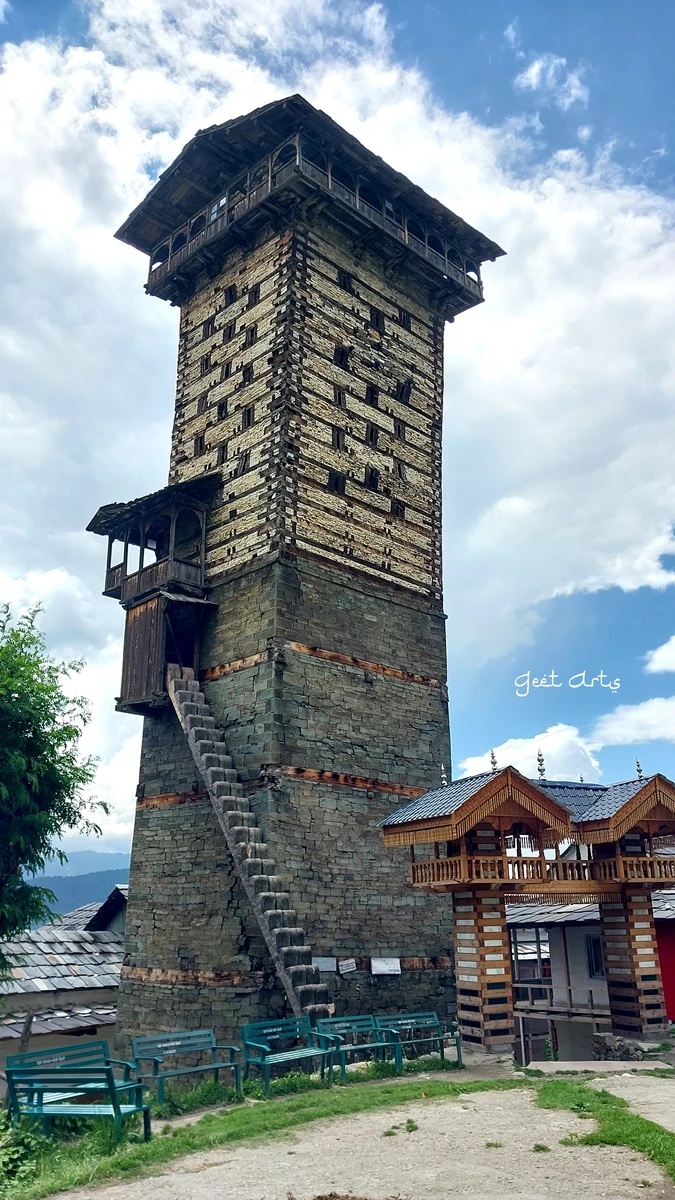 Day plan · First visitTemples & heritage
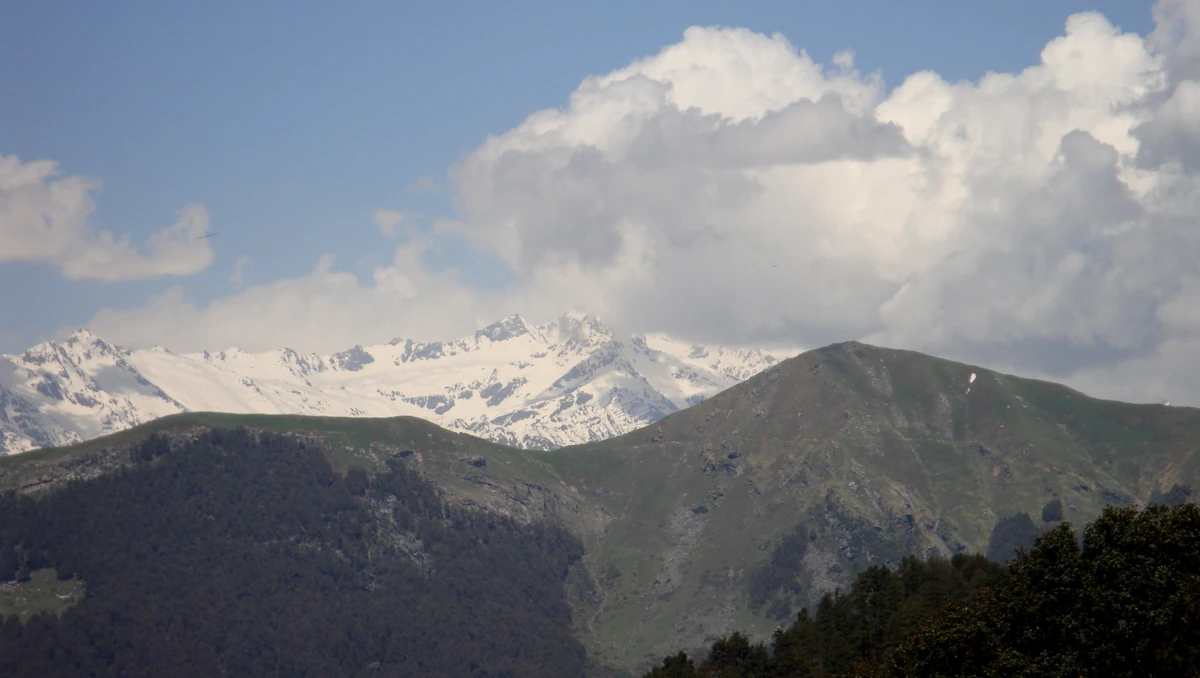 2 nights · 3 days · PhotographersAutumn
Questions people ask
How do I get to Bahu Lake?
By road from Banjar on the Jalori side — 17 km and 32 minutes as of September 2026, by taxi or the local bus to Bahu village — and a short walk into the fields above the village to the pond and its temple. It pairs with Chehni Kothi for the heritage day; a taxi does both.
Is Bahu Lake worth visiting?
As a quiet hour, yes: a small pond beside a temple in open fields, the ridge forts of Fatehpur and Trilokpur on the skyline, and nobody there. It is not a sight in the way the Jalori walks are, and it is best as the last frame of a day on the Banjar side rather than the reason for one.
Are there walks from Bahu?
The ridge above the village carries the ruins of two old hill forts, Fatehpur and Trilokpur, a stiff climb up from the fields, with the whole Banjar valley below them. They are local paths without signs; ask in the village for the start, take water, and turn back if the weather comes in on the ridge.