Himachali food guide — siddu, dham, babru, chha gosht, Chamba chukh and the trout
The dishes of Himachal and where they come from: dham feasts, siddu buns, babru, sepu badi, chha gosht, Chamba chukh and the Kullu trout, from open sources.
Food that changes with the valley
Himachali food is not one cuisine. In the lower hills the plate is wheat rotis, lentils and vegetable curries. In the central districts it is steamed breads, dumplings and a few meat dishes. In Lahaul and Spiti it is Tibetan. This page names the dishes people ask about and says where each belongs. It does not rate restaurants.
Dham is the dish that defines the state: a festive vegetarian feast served at weddings, birthdays and religious occasions. It is cooked only by hereditary cooks called botis, in brass vessels, and served in courses to people sitting on the floor, on leaf plates. Work begins the night before.
A typical dham opens with rice and a madra, which is rajma or chickpeas cooked in a yoghurt gravy. Dal and a sweet-and-sour khatta follow, and a sweet rice ends the meal. Each region has its own: the dham of Mandi, of Kullu and of the Kangra valley differ. Temples serve it on festival days; see the fairs and festivals of Himachal.
Siddu
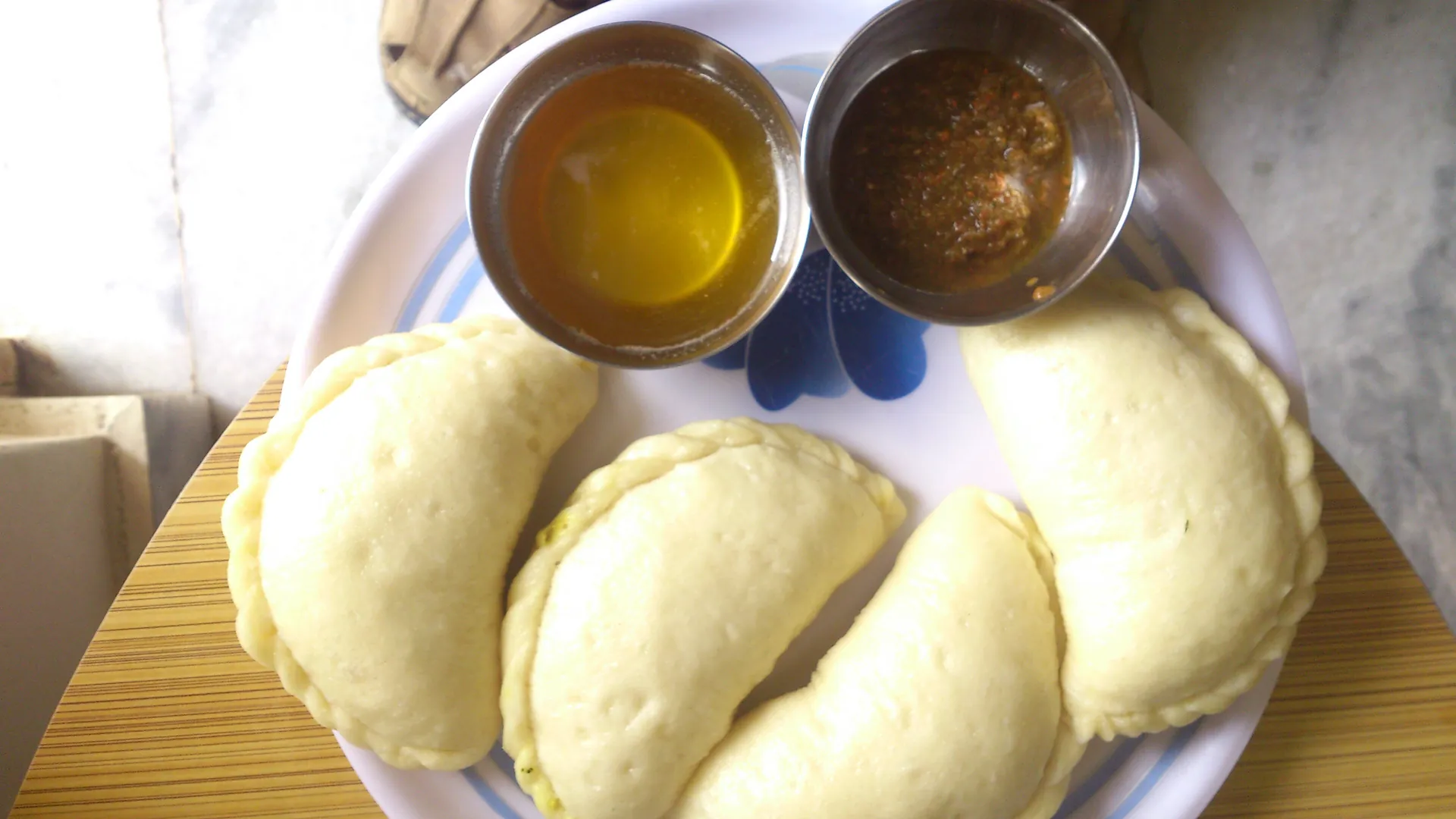
A steamed wheat bun, often stuffed, eaten hot with ghee and chutney. It is street food in winter in Shimla, Manali and Dharamshala. In the Kullu valley it is the dish people drive up to Jana Falls for; see what to eat in Manali. To make it yourself, the wheat matters. Raw Himalayas in Kullu mills Himalayan wheat to order.
Babru
A stuffed fried bread of the central districts, fried where siddu is steamed.
Sepu badi
Lentil dumplings in a spinach gravy, one of the everyday dishes of the central hills. Wikipedia's list of specialities spells it sepu badi.
Chha gosht
Mutton in a tangy yoghurt sauce, another of the central districts' dishes. Pahadi chicken sits beside it on Wikipedia's list, along with the fried fish of Chamba.
Chamba chukh
A hot chilli sauce made by the women of the Chamba valley, from sun-dried red chillies, which give it a smoky taste, or fresh green ones. It is mixed with the juice of a local citrus fruit and cooked in mustard oil with spices. It is a condiment at meals, a pickle and a cooking ingredient. The district administration has helped village women's groups standardise their recipes, and in December 2020 the state sought a geographical indication for it. See things to do in Chamba.
Kullu trout
Fresh trout from the Beas is the valley's one restaurant fish; Wikivoyage points travellers to it, and Wikipedia lists Kullu trout among the state's specialities. Ask for it grilled or pan-fried, and in the Kullu valley, near Manali and Kullu.
In the high valleys
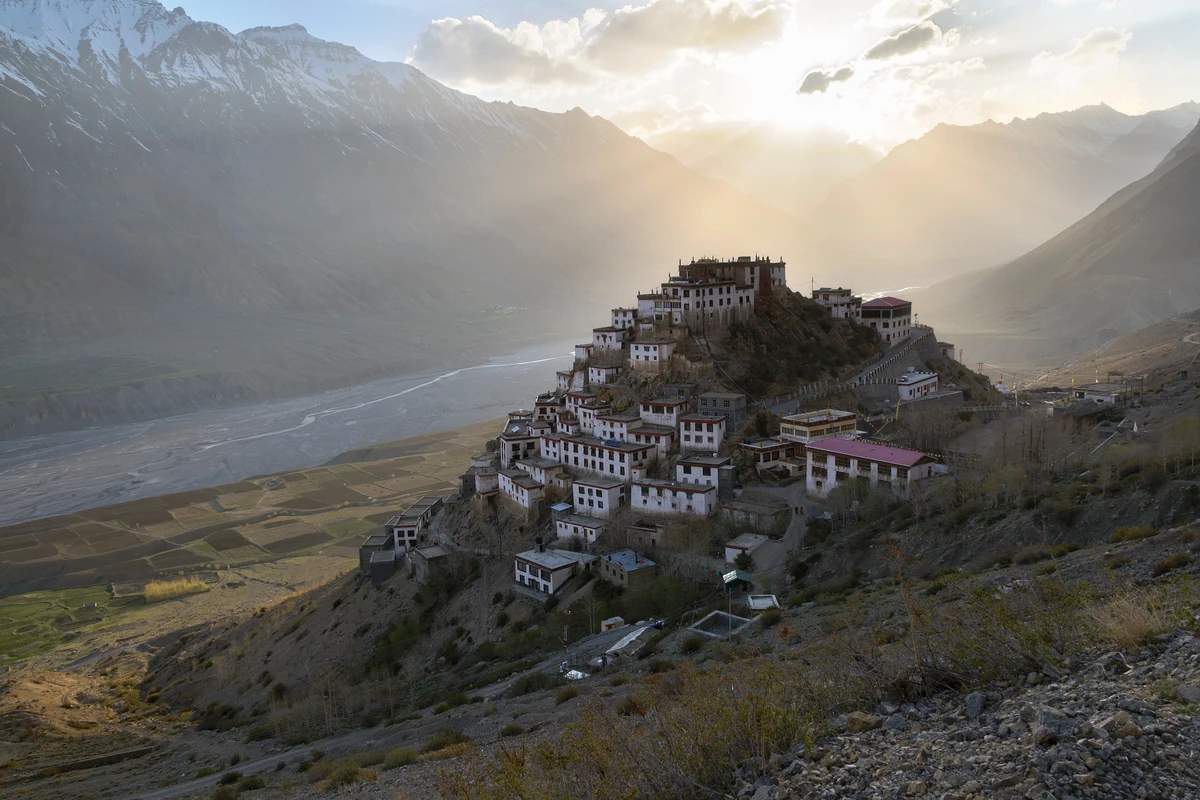
In Lahaul and Spiti the food follows the Tibetan one: thukpa, momos, tsampa and butter tea form the core of daily meals. See Spiti in winter and Keylong.
Other dishes on Wikipedia's list
Khatta, mhanee, patrode, mah ki dal, auriya kaddu, aloo palda, pateer, bhagjery and a chutney of til are on the same list of specialities, with makki di roti and sarson ka saag.
Been here?Help the next traveller — our team checks every contribution.
Questions people ask
What is dham in Himachal?
A festive vegetarian feast served at weddings, festivals and temple occasions, cooked by hereditary cooks called botis in brass vessels and eaten sitting on the floor from leaf plates. A typical dham has rice, dal, a rajma or chickpea madra in yoghurt, a sweet-and-sour khatta, and a sweet rice to end.
What is siddu?
A steamed wheat bun, often stuffed with a spiced filling, eaten hot with ghee and chutney. Siddu is one of the dishes Wikipedia lists among Himachal's specialities, and it is a common street food in Shimla, Manali and Dharamshala in winter.
What is Chamba chukh?
A hot chilli sauce from the Chamba valley, made by women from sun-dried red or fresh green chillies, mixed with the juice of a local citrus fruit and cooked in mustard oil with spices. It is eaten with meals and snacks as a condiment and used in cooking.