Himachali crafts — Kullu shawls, Kangra painting, Chamba rumal, the Himachali cap and Kangra tea
Himachal's crafts and where they come from: Kullu shawls, Kangra painting, Chamba rumal, the Himachali cap and Kangra tea, with links to a shop that has some.
A craft for each valley
Wikipedia lists Himachal's well-known handicrafts as carpets, leather work, Kullu shawls, Kangra paintings, Chamba rumals, stoles, embroidered grass footwear called Pullan chappal, silver jewellery, metalware, knitted woollen socks, Pattoo, cane and bamboo basketry, and woodwork. Most belong to one valley. This guide takes the five that people ask about and says where each comes from.
A Kullu shawl carries geometric patterns in bright colours, usually at both ends, sometimes with flowers across the whole cloth, and a design can use up to eight colours. They are woven in sheep's wool, yak wool and pashmina. The Kulivi people once wove plain shawls. After craftsmen from Bushahr arrived in the early 1940s, patterned shawls became the fashion.
Named for the former state of Kangra, Kangra painting rose as the Basohli school faded in the mid-18th century. It came out of Guler, and Maharaja Sansar Chand, who lived from about 1765 to 1823, made Kangra the most important centre of Pahari painting. The style was registered as a geographical indication on 2 April 2012. The Maharaja Sansar Chand Museum, beside Kangra Fort, holds examples. Pahari painters began as artist families who moved to the hill states from Gujarat in the late 16th century.
Chamba rumal
Chamba is a centre for handicrafts. Its handkerchiefs and shawls were traditionally hand-spun and embroidered, and the rumals are worked so that both sides of the cloth look identical. Examples are kept in the Himachal State Museum and in collections abroad, which is how the Mahavidyas rumal above reached a museum. Chamba shawls are woven on handlooms in wool, with a bright border, and a similar weave makes caps. The town also casts metalware and carves wood. See things to do in Chamba.
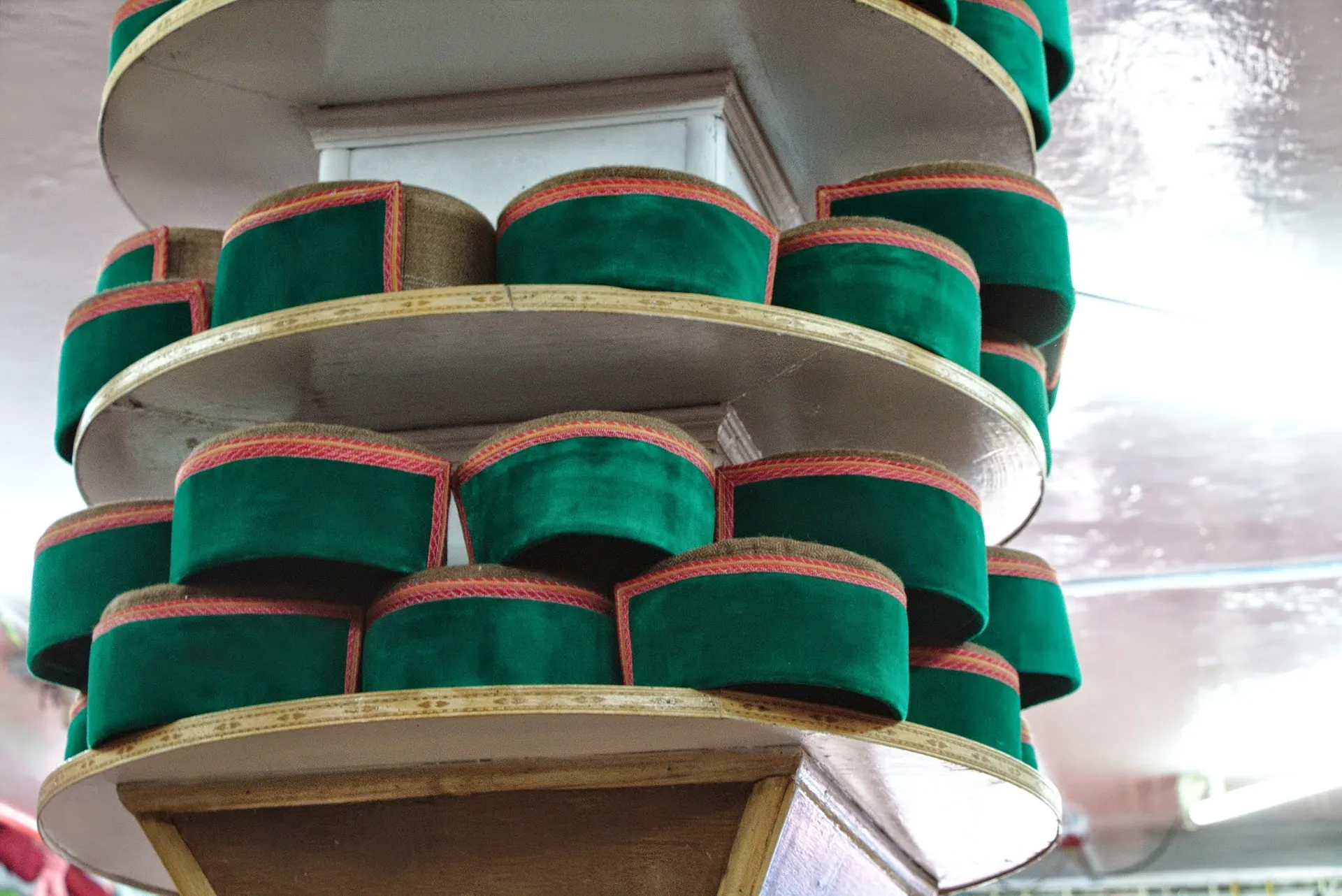
A round or boat-shaped woollen cap that Himachalis wear every day and on festival and wedding occasions, and a mark of local pride. It began in Kinnaur, which was part of the Bushahr kingdom, and spread through Bushahr and Kullu. Kinnaur's traditional cap, the thepang, comes in maroon and green velvet. Lavi fair at Rampur Bushahr sells Kinnauri woollens, shawls, pashmina and tweeds; see the fairs and festivals of Himachal.
Kangra tea
Tea has grown in the Kangra valley since the mid-19th century. A survey in 1848 found the area suitable, and a Chinese variety was planted across it. Palampur and Dharamshala did well. By the 1880s Kangra tea was held to be better than tea from other places, and in 1886 and 1895 it won medals in London and Amsterdam. The earthquake of 1905 destroyed factories and ended British ownership. Production never recovered, and it has been revived only in small ways since. Black tea is about 90 percent of the crop today. The tea received GI status in
Been here?Help the next traveller — our team checks every contribution.
Questions people ask
What are the famous handicrafts of Himachal Pradesh?
Kullu shawls, Kangra paintings, Chamba rumals, carpets, leather work, metalware, silver jewellery, knitted woollen socks, woodwork and basketry, according to Wikipedia. The Himachali cap, Kangra tea and Pattoo are also well known. Each belongs to a district: shawls to Kullu, painting to Kangra, rumals to Chamba.
What is a Chamba rumal?
An embroidered handkerchief or cover from Chamba, made so that both sides of the cloth look identical. The traditional ones are hand-spun and embroidered. Old Chamba rumals are kept in museums, among them the Himachal State Museum, and the craft is still made in Chamba today.
Which Himachali products have a geographical indication?
Kangra tea received GI status in 2005, and Kangra painting was registered on 2 April 2012. Chamba chukh, the chilli sauce, was the subject of an application in December 2020. A GI marks a product as belonging to its place of origin.