Karva Chauth — the moon through a sieve, and the day that leads to it
Karva Chauth from sargi before dawn to the moon through a sieve: the fast, the karva pots, the circle of thalis and the arghya. In 2026 it falls on 29 October.
The picture everyone knows is the last minute of Karva Chauth: a woman on a rooftop at night, holding up a sieve to the moon. But that minute is the end of a whole day, and the day starts in the dark, hours before sunrise. From the first light until the moon comes up, she does not eat and she does not drink a drop of water. She keeps the fast for her husband's long life.
The name: a pot and the fourth day
Karva is a small earthen pot of water. Chauth means the fourth. The festival falls on the fourth day of the waning moon, the Krishna Paksha, in the month of Kartika, which is why its Sanskrit name is Karaka Chaturthi. It is kept by Hindu women across northern and western India and in Nepal.
Before dawn: the sargi
In Punjab the day begins with sargi, a meal eaten just before sunrise. It always includes fenia, and by tradition it comes from the mother-in-law: she sends it, or gives it with her own hands, and if the two share a house she cooks it herself. This is the last food and water until moonrise.
The day of the fast
Through the day the fasting woman does no housework. Women put mehandi on their hands and help each other dress, and the hours pass in visits to friends and family. In some regions they give one another painted clay pots, karvas, filled with bangles, ribbons, sweets and small gifts.
Evening: the circle of thalis
In the evening the women gather, often in their finest clothes and sometimes in their wedding dresses. They sit in a circle, each with her puja thali. An older woman, or a priest if one is there, tells the story of Karva Chauth, stopping as she goes, and the women sing the Karva Chauth song together. In parts of Uttar Pradesh, at each pause, they pass their thalis round the circle; these turns are the feris.
In Uttar Pradesh and Rajasthan the women exchange karvas seven times. In Rajasthan, before water is offered, the fasting woman is asked «Dhapi ki Ni Dhapi?», are you satisfied? Her answer: water has satisfied her, but her love for her husband never will.
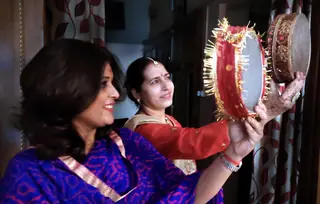
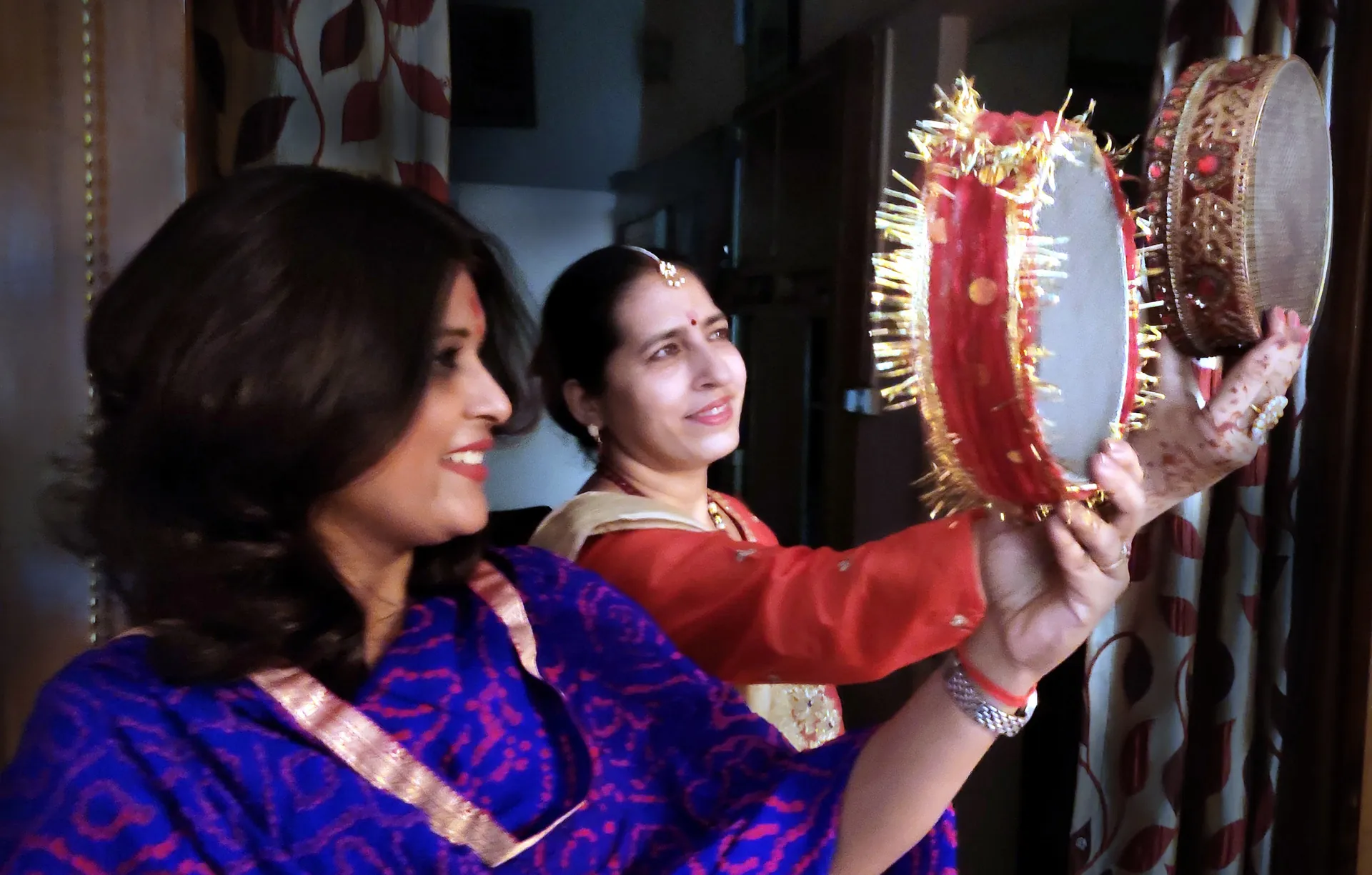
Then everyone waits for the moon. When it rises, the fasting woman looks at it through a sieve, through the cloth of her dupatta, or at its reflection in a vessel of water, as her region and family keep it. She offers water to the moon, the arghya, for its blessing. Then she turns and looks at her husband's face through the same sieve. He takes the water from her thali and gives her the first sip of the day, and the fast is broken.
The date in 2026
Karva Chauth falls on Thursday, 29 October 2026. By Drik Panchang's times for New Delhi, the fast runs from 6:31 in the morning until moonrise at about 8:17 in the evening. In other cities the moon rises at a different minute, so watch for your own.
Been here?Help the next traveller — our team checks every contribution.
Questions people ask
When is Karva Chauth in 2026?
On Thursday, 29 October 2026. By Drik Panchang's times for New Delhi, the fast runs from 6:31 in the morning to moonrise at about 8:17 in the evening. Moonrise comes at a different minute in every city, so women in other towns watch for their own moon or check a local panchang.
What does Karva Chauth mean?
Karva is a small earthen pot of water, and chauth means the fourth. The festival falls on the fourth day of the waning moon, the Krishna Paksha, in the month of Kartika. Its Sanskrit name, Karaka Chaturthi, says the same thing: karaka is an earthen water pitcher and chaturthi the fourth day.
What is sargi?
Sargi is the meal a fasting woman eats before dawn on Karva Chauth, the last food and water she takes until the moon rises. In Punjab it always includes fenia, and by tradition the mother-in-law sends or gives it to her. If the two live in one house, the mother-in-law makes the meal herself.
Why is the moon seen through a sieve on Karva Chauth?
When the moon rises, the fasting woman looks at it through a sieve, through the cloth of a dupatta, or at its reflection in a vessel of water, depending on her region and family. She offers water to the moon, then looks at her husband's face through the same sieve, and he gives her the first sip of water.