
Loktak Lake and Keibul Lamjao — the national park that floats
Northeast India has no bigger freshwater lake than Loktak, at Moirang in Manipur, and much of it is not open water. It is covered in phumdis, floating islands of grass, reeds, roots and soil, and the largest of them carries a whole national park. Keibul Lamjao, about 40 km² in the south-east of the lake, is described as the world's only floating national park.
Photos: G Devadarshan Sharma (CC BY-SA 4.0) · Arati.ning (CC BY-SA 4.0) · Wang Tensu (CC BY-SA 4.0) — via Wikimedia Commons, resized.
An island that is mostly underwater
A phumdi is a mat of living plants growing on a spongy, black mass of soil and organic matter in every stage of decay. It can be a few centimetres thick or about 2 m. The striking part is how little of it you see: only about a fifth of its thickness rides above the surface, and the other four-fifths hang in the water below. That top fifth is firm enough for the park's deer to walk on.
Loktak itself breathes with the seasons. Its surface grows and shrinks between roughly 250 and 500 km² over the year, with about 287 km² as a typical figure, and the phumdis rise and settle with it.
They feed on the bottom of the lake
The old cycle went like this. In the monsoon the water rises and the phumdis float. In the dry months the level falls, the mats sink until they rest on the lake bed, and there their roots draw nutrients from the mud. When the rains return they lift again, carrying that store of food. A floating island, in other words, depended on touching the ground for part of every year.
What the barrage changed
A barrage at Ithai, on the Manipur River, now holds the lake high all year for a hydroelectric and irrigation project. The sources do not agree on the year it was built or completed, so this page gives none. What they agree on is the effect: the phumdis no longer settle on the bed in the dry season, the feeding is disturbed, and the mats are losing biomass and growing thinner each year. In January 1999 a big piece of the park's northern phumdi was reported to have broken apart and floated off.
Loktak was listed as a Ramsar wetland of international importance in 1990, and in 1993 it was added to the Montreux Record, the list of Ramsar sites whose ecology is changing or likely to change.
The deer that lives only here
The park exists for one animal. The sangai, Manipur's brow-antlered deer and the state animal, is found in the wild only at Keibul Lamjao. It was reported extinct in 1951 and then found again in this swamp, which led to the area becoming a sanctuary in 1966 and a national park in 1977. The count was 14 deer in 1975; the census of March 2016 recorded 260. It is sometimes called the dancing deer, and its future is tied to the thickness of the mats it stands on.
People on the water
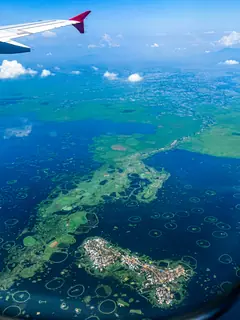
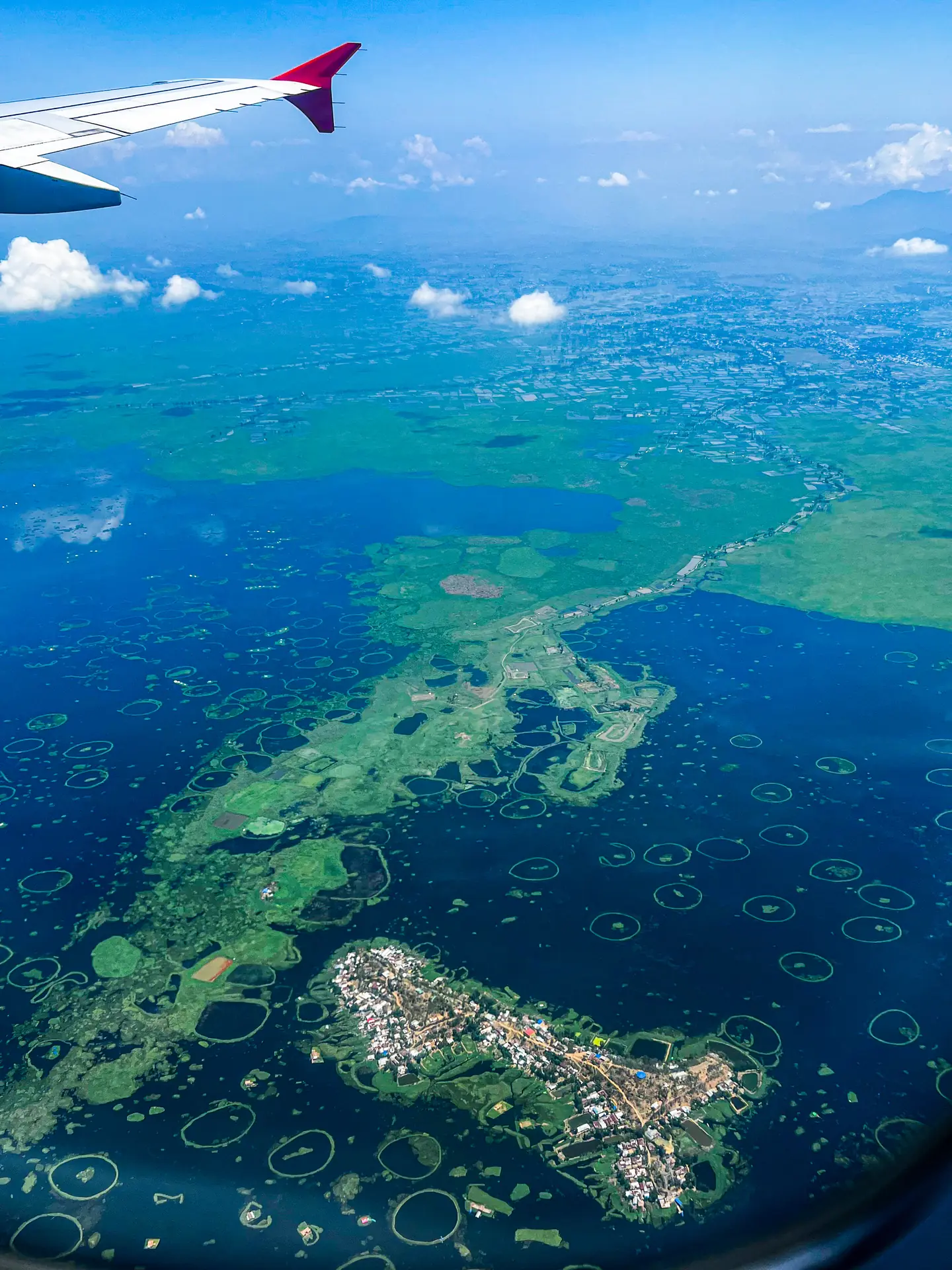
Loktak is not only a park. Around 100,000 people live in the hamlets around the lake, and some fishing families live in huts on the phumdis themselves. Villagers also build athaphums, circular rings of phumdi used as fish enclosures; they are the neat circles you see from the air, and their spread has added to the floating mass.
More stories from across India
The same series has told the stories of phulkari, Punjab's embroidery worked from the back, of Jaipur's blue pottery, made without potter's clay, and of the butter-joined Shivling at Bijli Mahadev. For lakes in the hills, read about Prashar Lake and its floating island or start from the destination guides. Every story is on the Blog.
Questions people ask
Why is Keibul Lamjao called a floating national park?
Most of the park stands on phumdis, mats of vegetation, soil and decaying matter that float on Loktak Lake. Only about a fifth of a mat's thickness rides above the water; the rest is below. Wikipedia calls Keibul Lamjao the world's only floating national park, and the park is part of the lake itself.
What is a phumdi?
A floating island found on Loktak: grasses, reeds and roots growing on a spongy black mass of soil and rotting plant matter. Its thickness runs from a few centimetres to about 2 m. People also build circular athaphums from phumdi as fish enclosures, and some live in huts on them.
Where does the sangai deer live?
The sangai, Manipur's brow-antlered deer and its state animal, lives in the wild only at Keibul Lamjao, on the phumdis in the south-east of Loktak. It was once reported extinct. Only 14 were counted in 1975; the census of March 2016 counted 260, after the park was set aside for it.