Karva Chauth — the moon through a sieve, and the day that leads to it
Karva Chauth from sargi before dawn to the moon through a sieve: the fast, the karva pots, the circle of thalis and the arghya. In 2026 it falls on 29 October.
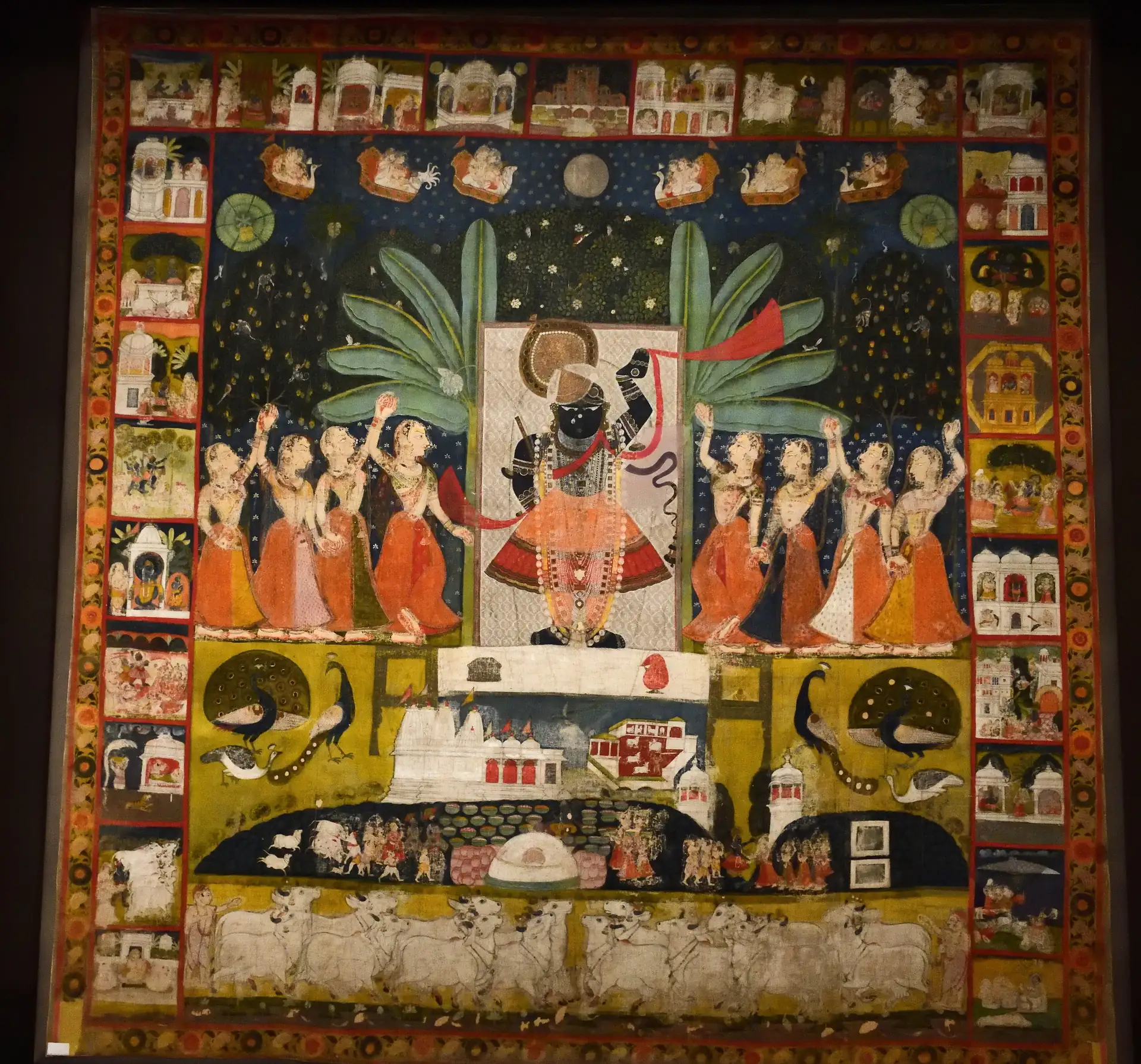
There is one night in the year when the full moon of Ashvin rises over the whole of India, and it goes by a different name in almost every region. In Bengal it is Kojagari. In Maharashtra it is Kojagiri, in Odisha Kumar Purnima, in the north Sharad Purnima, and across the border in Nepal it is Kojagrat. Five names for one moon, and each one comes with its own way of keeping the night.
In 2026 that night is Sunday, 25 October.
In Bengal, Assam and Tripura the night is Kojagari Purnima, and the name is a question: «who is awake?» On this night Lakshmi Maa comes down to the earth and goes from house to house to see who is keeping awake. Those she finds awake, she blesses. So families keep the Kojagari Lakshmi Puja at home and stay up through the night.
In Maharashtra the same night is Kojagiri Paurnima. Families make masala milk and set it outside under the full moon, because the moon's rays carry amrit and the milk takes it in.
In Uttar Pradesh, Bihar, Jharkhand, Madhya Pradesh and Chhattisgarh, kheer is cooked at night and left in the open, on a roof or in a courtyard, until morning. All night the moon's rays carry amrit, the nectar of immortality, into it. The next day the kheer is eaten as prasad, and Lakshmi Maa is worshipped on this night here too.
In Odisha the night is Kumar Purnima, and it belongs to unmarried young women. They keep a fast and pray for a good husband. At dawn they worship the moon in new clothes. In the evening they worship the full moon again, and break the fast with a dish of fried paddy and fruit, with curd and jaggery, offered to the moon before a tulsi plant. Then they play games and sing in the moonlight.
In the Mithila region of Nepal the night is Kojagrat Purnima, and it closes the Dashain festival. Kojagrat also means «who is awake», and as in eastern India, Hindus stay up all night in reverence to Lakshmi Maa. The night's puja gathers around the Janaki Temple in Janakpur, the temple of Mata Sita. It is also the last day to receive the Dashain tika from relatives.
Photos: ShotgunMavericks (CC BY-SA 4.0) · Biswarup Ganguly (CC BY 3.0) · Girish1288 (CC BY-SA 4.0) · Barsa Bijayinee (CC BY-SA 4.0) · Askalore (CC BY-SA 4.0) · Aditya Pal (CC BY-SA 4.0) — via Wikimedia Commons, resized.
By Drik Panchang's times for New Delhi, the Purnima tithi begins at 11:55 on 25 October 2026 and ends at 09:41 on 26 October. So the full moon night to keep awake, set out the kheer or the milk, and look up is the night of Sunday, 25 October.
For more of India's stories, read how phulkari is embroidered from the back, why Jaipur's blue pottery is made without clay, or how the British learned polo from Manipur. Or browse every destination.
On Sunday, 25 October 2026. By Drik Panchang's times for New Delhi, the Purnima tithi begins at 11:55 that morning and ends at 09:41 on 26 October, so the full moon night is the night of the 25th. Times shift a little from city to city, so check a panchang for your own town.
Kojagari means «who is awake». On this night Lakshmi Maa comes down to the earth and goes from house to house to see who is keeping awake, and she blesses those who are. That is why families in Bengal, Assam and Tripura keep the Kojagari Lakshmi Puja and stay up through the night.
Because on this night the moon's rays carry amrit, the nectar of immortality, and the kheer left out in the open takes it in. In Uttar Pradesh, Bihar, Jharkhand, Madhya Pradesh and Chhattisgarh it is made at night, kept under the moonlight until morning, and then eaten as prasad. In Maharashtra it is masala milk.
It is Odisha's name for the same full moon. Unmarried young women keep a fast and pray for a good husband. They worship the moon at dawn and again in the evening, offer it fried paddy, fruit, curd and jaggery before a tulsi plant, and then play games and sing under the full moon.