
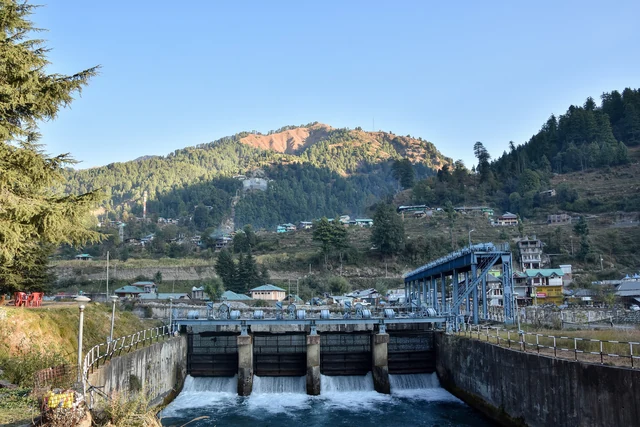
The Uhl river and the Barot barrage
Checked on
What it is
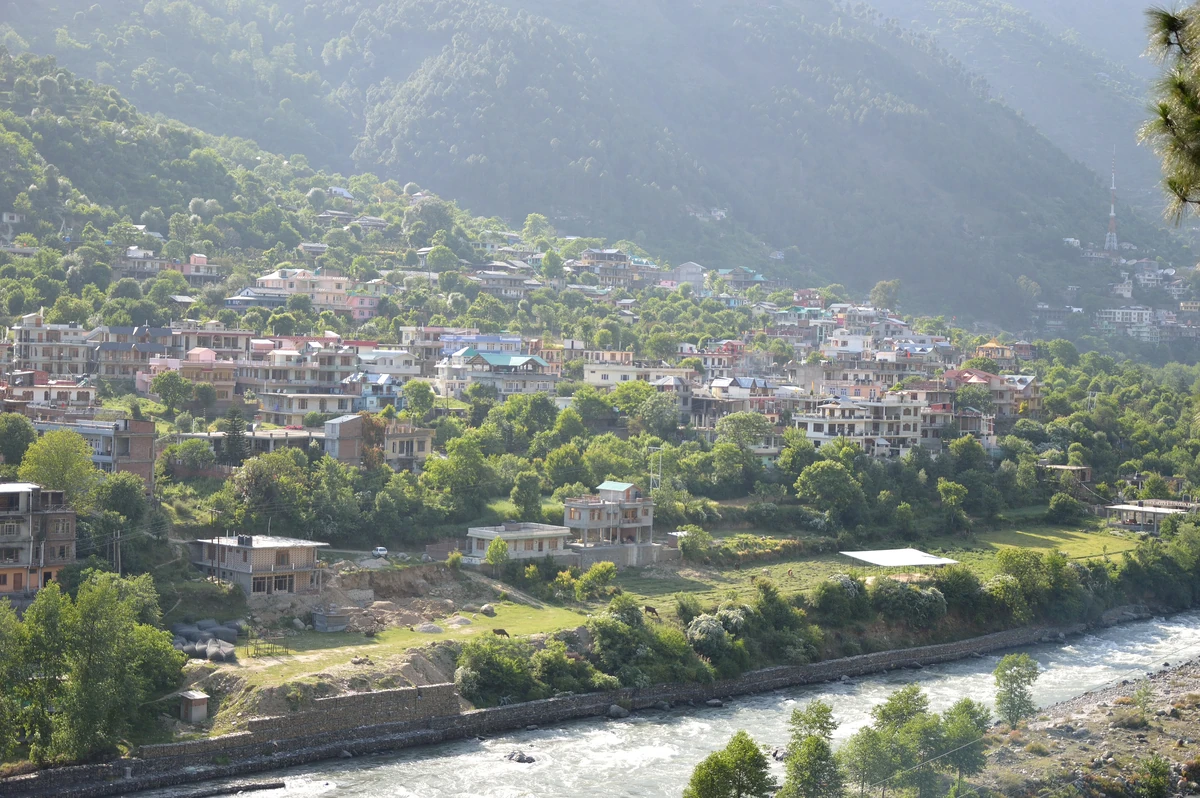
The Uhl river runs through the valley at Barot, where a diversion dam, the Uhl barrage, was commissioned in 1932. It is the inlet of the tunnel that carries the water through the mountain to the Shanan Power House near Joginder Nagar, and it forms the reservoir that is the village's main feature. The village itself was developed in the 1920s for the project.
Photos: Timothy A. Gonsalves (CC BY-SA 4.0) · Timothy Gonsalves (CC BY-SA 4.0) — via Wikimedia Commons, resized.
Getting there
Barot is about 39 km from Joginder Nagar by road, roughly 106 minutes, on a mostly single-lane road. The barrage and reservoir are in the village.
Where the water goes
Stand at the barrage and look at the reservoir: that water does not carry on down the valley. It is taken into a tunnel and led under the ridge to the Shanan Power House near Joginder Nagar, which is only 7.3 km away in a straight line. The project's own figures put the intake at about 1,829 m and the power house at 1,283 m, and that fall is what turns the turbines.
Two things were built just to make it possible. A railway was laid from Pathankot to Joginder Nagar to bring the men and materials, and a funicular trolley was strung up to Barot to carry what the reservoir needed. Until the road opened in 1975 that trolley was the only way in. It is not in use today and is run only for occasional inspections, so you come by road.
The visit
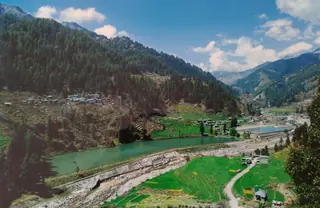
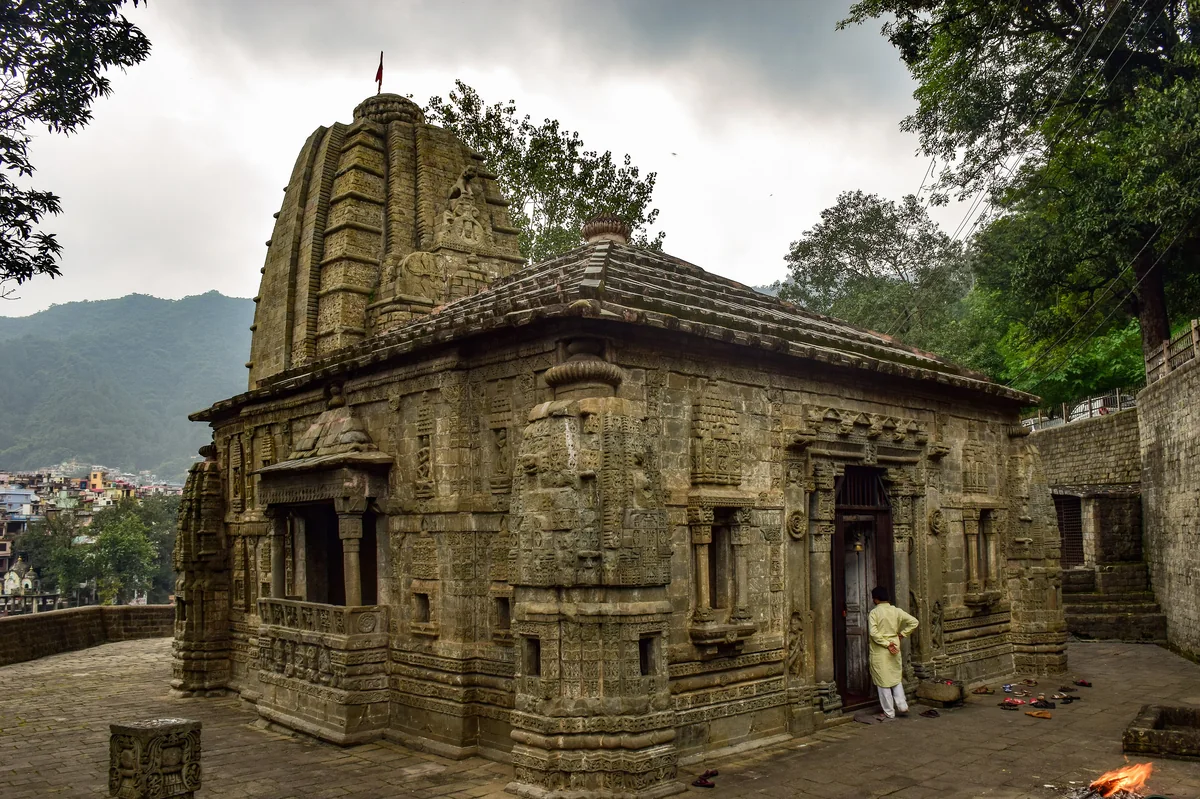
Walk along the reservoir and the river below the barrage. The Uhl supports trout breeding, and Barot has a few fish farms and a trout-breeding centre. An old fountain channels the river's water, and the temple of Dev Pashakot, the local rain deity, stands opposite it. Across the river is the Nargu Wildlife Sanctuary. The funicular trolley that once linked Barot with Joginder Nagar is not in use, and its line is part of the story told above.
When to go
We have no weather table for Barot. June and September are the ideal months for the Dehnasar trek above it. See when to visit Barot.
Around it
Things to do in Barot lists the rest, and the Dehnasar Lake trek starts nearby. The one-day plan covers the river.
Going to Barot?
 One day in Barot — the Uhl river and the barrageDay plan, ready to copy and change
- Stays in BarotCompare live prices
- See it on the map
- Send this on WhatsApp
Reels from these places: follow @himlocal.in on Instagram
Run a café, a stay or a trek company near Uhl Barrage, Barot? List it on HimLocal →



Plans that include this
All 1 plans that stop here →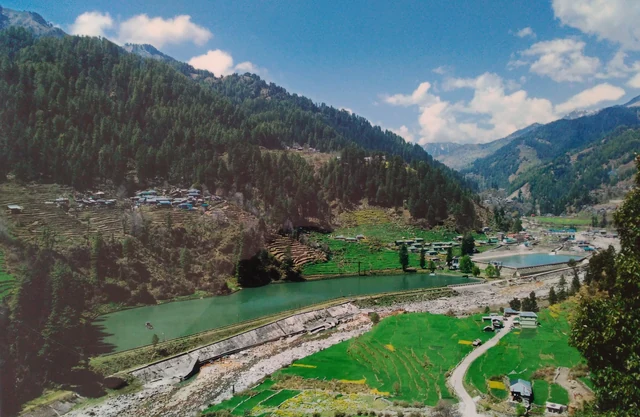
Nearby destinations
All destinations →
Questions people ask
What is the Barot barrage?
A diversion dam on the Uhl river at Barot, commissioned in 1932. It is the inlet of the tunnel that carries the river's water through the mountain to the Shanan Power House near Joginder Nagar, one of the oldest hydroelectric projects begun under British rule in India. The reservoir above it is the village's main feature.
Can you fish in the Uhl?
The river supports trout breeding, there are fish farms in Barot, and a 30 km section of the Uhl is used for angling. We have no verified rules on licences or seasons, so ask in the village or at the trout-breeding centre before you plan to fish.
What else is there to see in Barot?
The Nargu Wildlife Sanctuary lies across the river, with goral, Himalayan black bear and pheasants. The village also has an old fountain channelling the Uhl's water, the temple of Dev Pashakot, the local rain deity, and several trek routes, including the one to Dehnasar Lake.