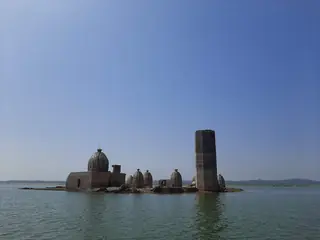
Maharana Pratap Sagar (Pong Dam lake)
lake · 10.9 km away
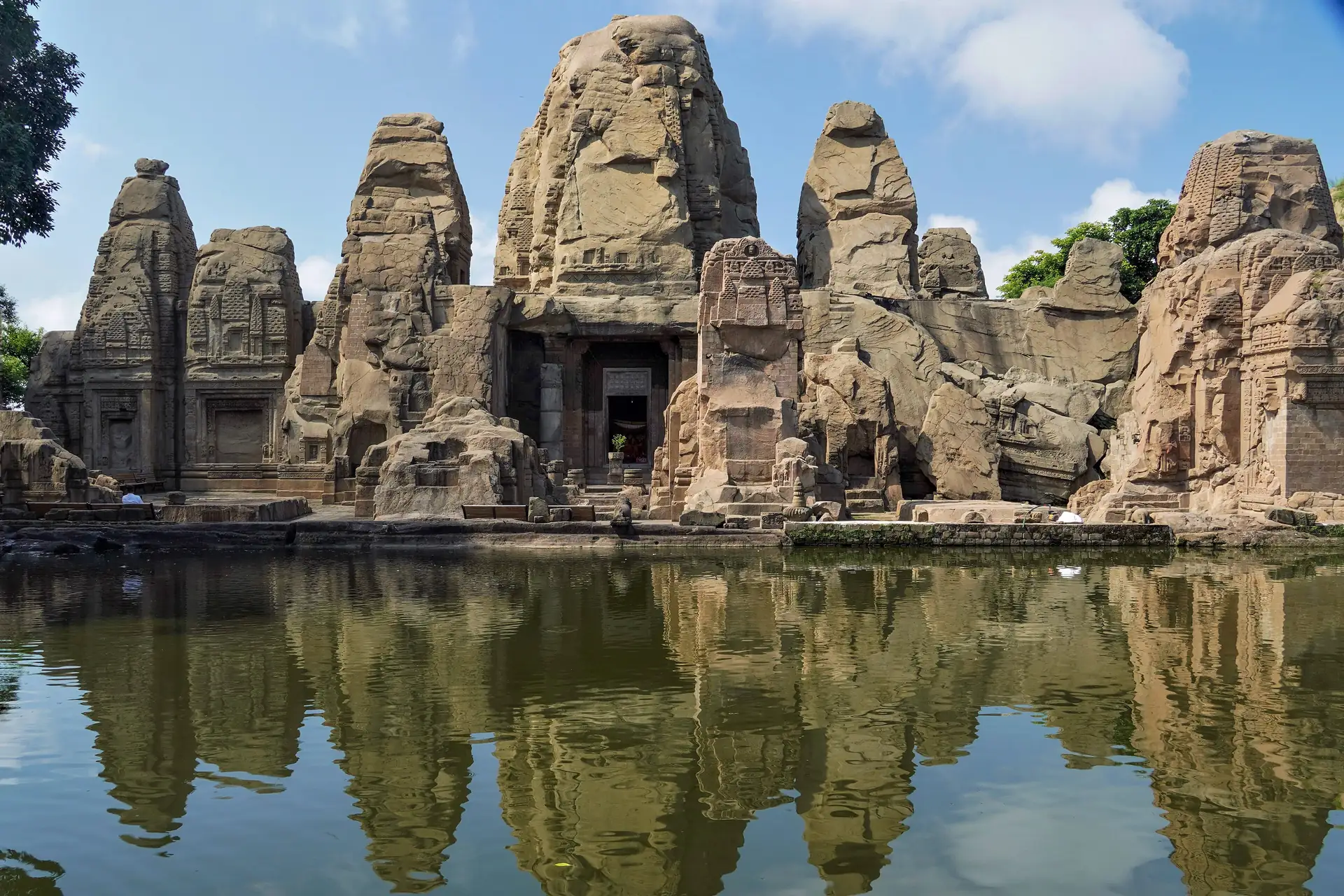
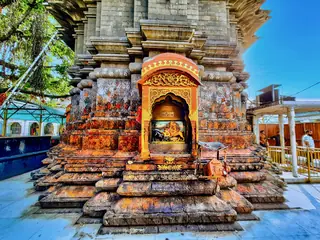
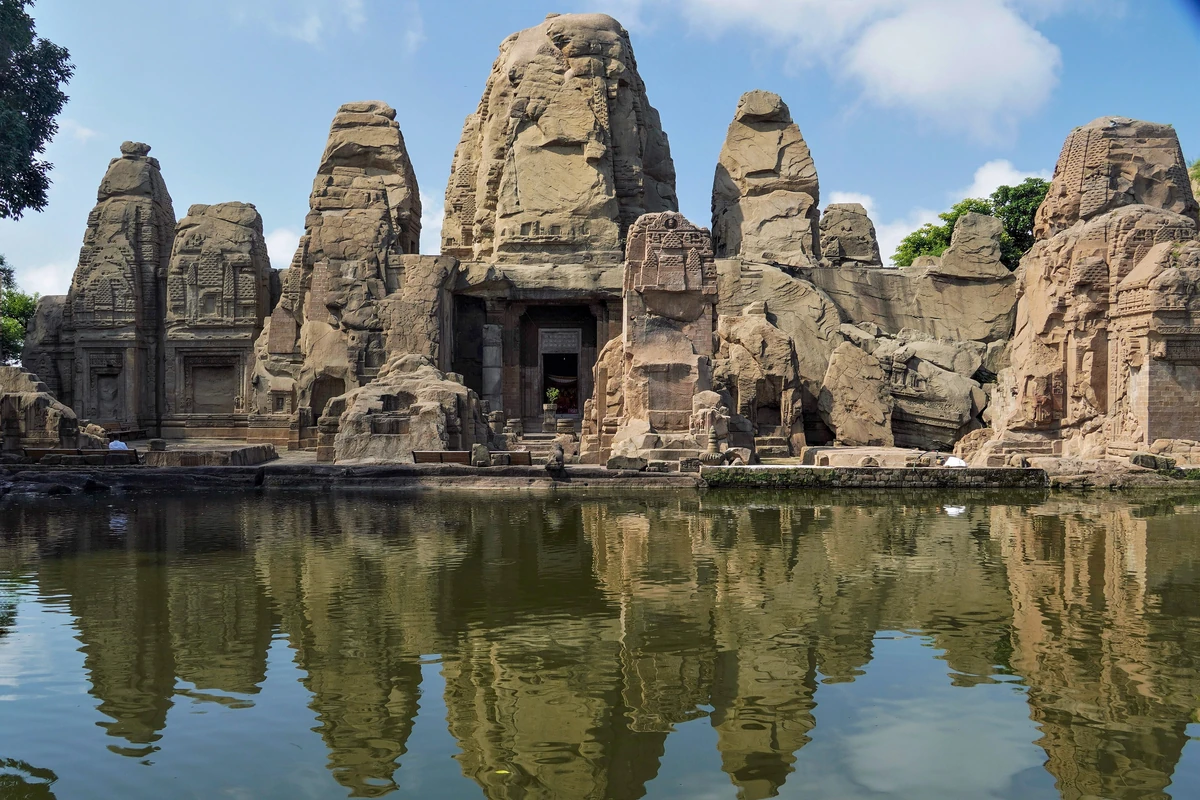
The Masrur temples, also written Masroor and called Rock-cut Temples at Masrur, are a group of Hindu temples cut into one sandstone outcrop in the Kangra valley of the Beas, dated to the 8th century. A main shrine with its shikhara spire is surrounded by smaller spires, with a sacred pool in front, and the whole faces north-east towards the Dhauladhar range. Locally the central temple is called the Thakurdvara.
Photos: Dhruvaeng (CC BY-SA 4.0) · Timothy Gonsalves (CC BY-SA 4.0) · Brahmavadini (CC BY 4.0) — via Wikimedia Commons, resized.
About 45 km and 79 minutes by car from Jawalamukhi on our routing. Wikipedia places the temples about 35 km west of Kangra town, so it is a natural pairing with the Kangra Fort from the Dharamshala side. We have no verified opening hours or entry fee, so ask before you set out.
Walk to the pool first and look back at the spires reflected in it; the temples were laid out to be seen across that water. Then look at how the stone is cut. The spires seem to grow out of the rock itself, and the stone over the main sanctum was trimmed flat and merged with the main spire. Inside the main sanctum sit nine deities around a four-faced Shiva, and the surrounding shrines honour a wide range of gods, Vishnu, Surya and the goddesses among them, with Vishnu's avatars in the niches.
Then notice what is missing. The complex is incomplete: of the main sanctum's four entrances only the east one is finished, and the mandapa in front of it was destroyed in the 1905 Kangra earthquake. Early surveyors disagree on the count of spires, thirteen by Hargreaves and fifteen by Shuttleworth, who first reported the site in 1913 before Harold Hargreaves surveyed it in 1915. The temple stayed standing in 1905, the account says, because it is monolithic, cut from the rock in place.
Local legend says the Pandavas lived here in exile and built the temple, and left it unfinished when their hiding place was discovered.
The hot months are hard on a site with little shade; winter and spring are easier. See when to visit Jwalamukhi.
The Jwalamukhi Temple and Maharana Pratap Sagar are the other big stops. The two-day plan puts Masrur on its own morning, and things to do in Jwalamukhi has the rest.
Hindu temples of the 8th century, cut into rock in the Kangra valley and also written Masroor. They are carved from a single sandstone outcrop, with a main shikhara, smaller spires and a sacred pool in front. They face north-east towards the Dhauladhar range.
Studies suggest the builders planned a far larger complex than the one that survives, and much of the sculpture was lost, most likely to earthquakes. Of the four entrances to the main sanctum only the east one is complete. Local legend says the Pandavas began it during their exile and left when they were found out.
About 45 km and 79 minutes by car on our routing. Wikipedia places the temples about 35 km west of Kangra town and 45 km from Dharamshala, so the road you take matters, and it makes a half-day trip from either town, paired with the Jwalamukhi Temple or the Kangra Fort.