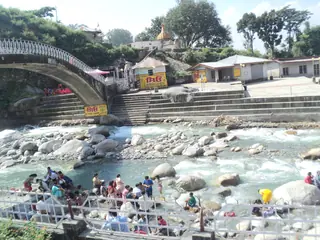
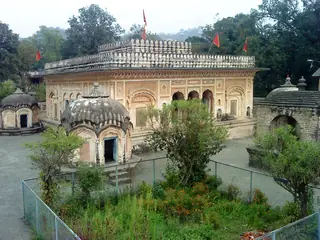
Narbadeshwar Temple, Sujanpur Tira
temple · 17.5 km away
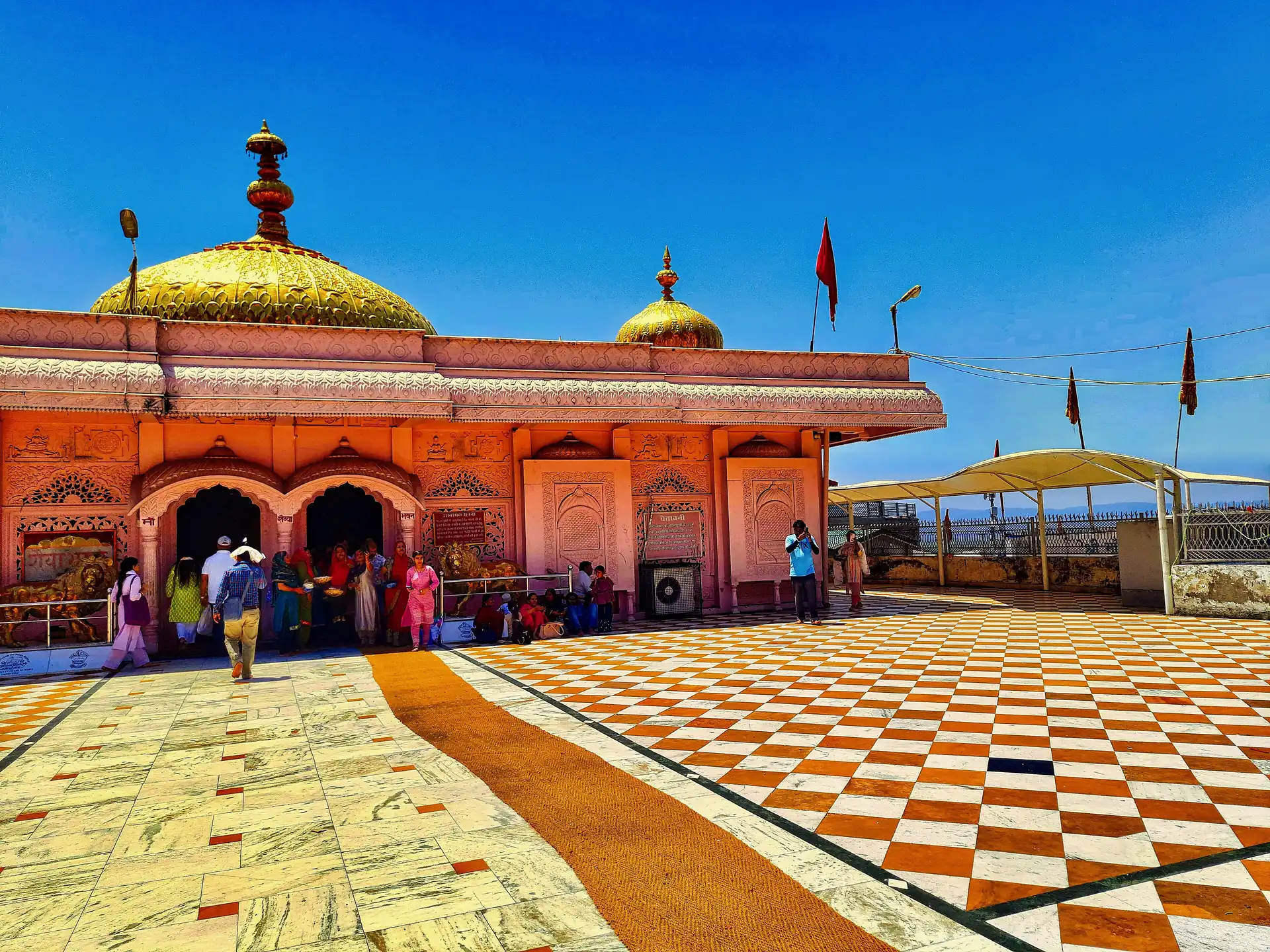
The Jwalamukhi Temple, also written Jwala Ji and Jvalamukhi, is a temple to the goddess Jwala Devi in the town of Jawalamukhi in Kangra district. It is known for a natural flame that burns from a fissure in the rock, with the main shrine built over it, and it is counted as one of the major Shakti pithas.
Photos: Ms Sarah Welch (CC0) · Pardeeps (CC BY-SA 4.0) · Ms Sarah Welch (CC0) — via Wikimedia Commons, resized.
The temple is in the town, about a minute from the centre. From Chandigarh it is about 178 km, roughly 197 minutes by car, and from Dharamshala it is 77 minutes. The narrow-gauge Kangra Valley line stops at Jawalamukhi Road, 22 km away, where pilgrims to the temple get off.
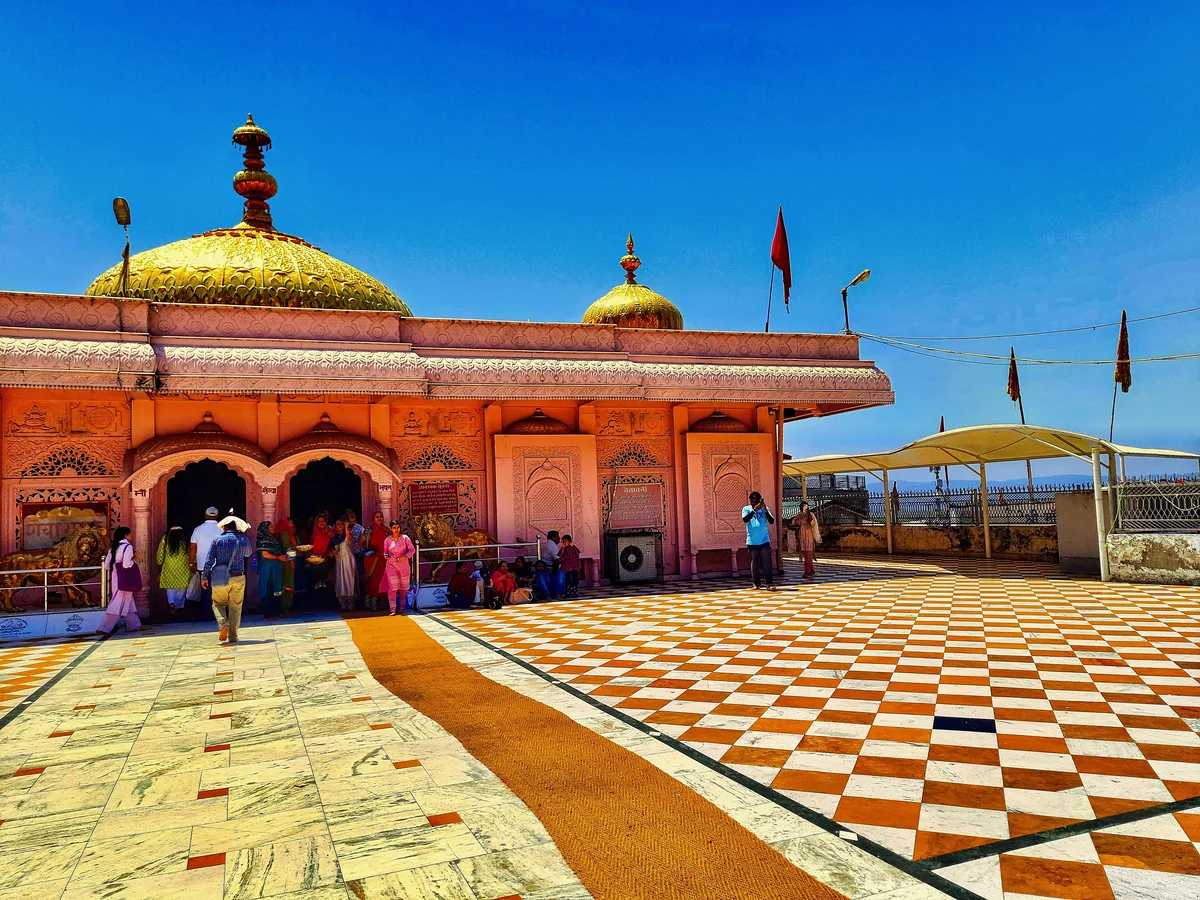
The flame is the reason to come, and the building around it is a modern one: a golden dome and pinnacles over the main shrine, a silver-plated folding door given by Kharak Singh, and small temples to other gods and goddesses around the courtyard. The fissure gives off combustible natural gas. Devotees hold that the flame is the goddess's mouth and that her body lies in the Vajreshwari temple at Kangra, so the two are linked in the tradition; see the Vajreshwari Devi Temple.
The place has long drawn visitors. A Chinese envoy around 650 CE described a site of both hot and cold springs in the rock, which Alexander Cunningham identified with Jwalamukhi. The 14th-century Tarikh-i-Firuz-Shahi is the first text to name it, and records Firuz Shah Tughlaq's visit. In the 16th century Abul Fazl described mountain lights like lamps and thought the flame a natural effect of a sulphur mine. Pilgrims' genealogy registers are kept here by priests.
Summers here are hot and humid, with highs of 40 °C, so the cooler months are the easier ones. See when to visit Jwalamukhi.
The Himachal Shakti Peeth circuit puts this temple with Chintpurni, Kangra, Chamunda Devi and Naina Devi. Maharana Pratap Sagar and the Masrur temples are the other big stops. The one-day plan starts here.
An eternal flame that burns from a fissure in the rock beneath the main shrine, which devotees take to be the goddess Jwala Devi herself. The fissure gives off combustible natural gas. The temple is one of the major Shakti pithas, and one of five in Himachal Pradesh.
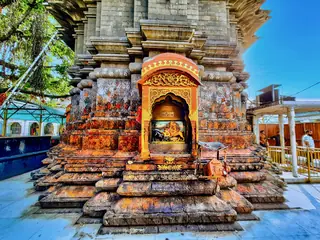
The golden dome and pinnacles of the main building, which is in a modern style, the silver-plated folding door given by Kharak Singh, and the small shrines to other gods and goddesses around it. Ask where the flames can be seen, as we have no verified access rules.
The present building is modern, and the original structure does not survive. A Chinese envoy of about 650 CE described a site of hot and cold springs that Alexander Cunningham identified as this one, and a 14th-century text is the earliest to name Jwalamukhi. So the site is old, but no date for the shrine is firm.