
Sainj or Tirthan — two flanks of the same park, and which one you actually want
The short answer
Take the Tirthan if this is your first time and you want the trip to be easy: more beds, more food, a shorter drive, and somebody who will arrange the walk for you. Take Sainj if you have done that already, or if what you want from a valley is that there is almost nothing in it.
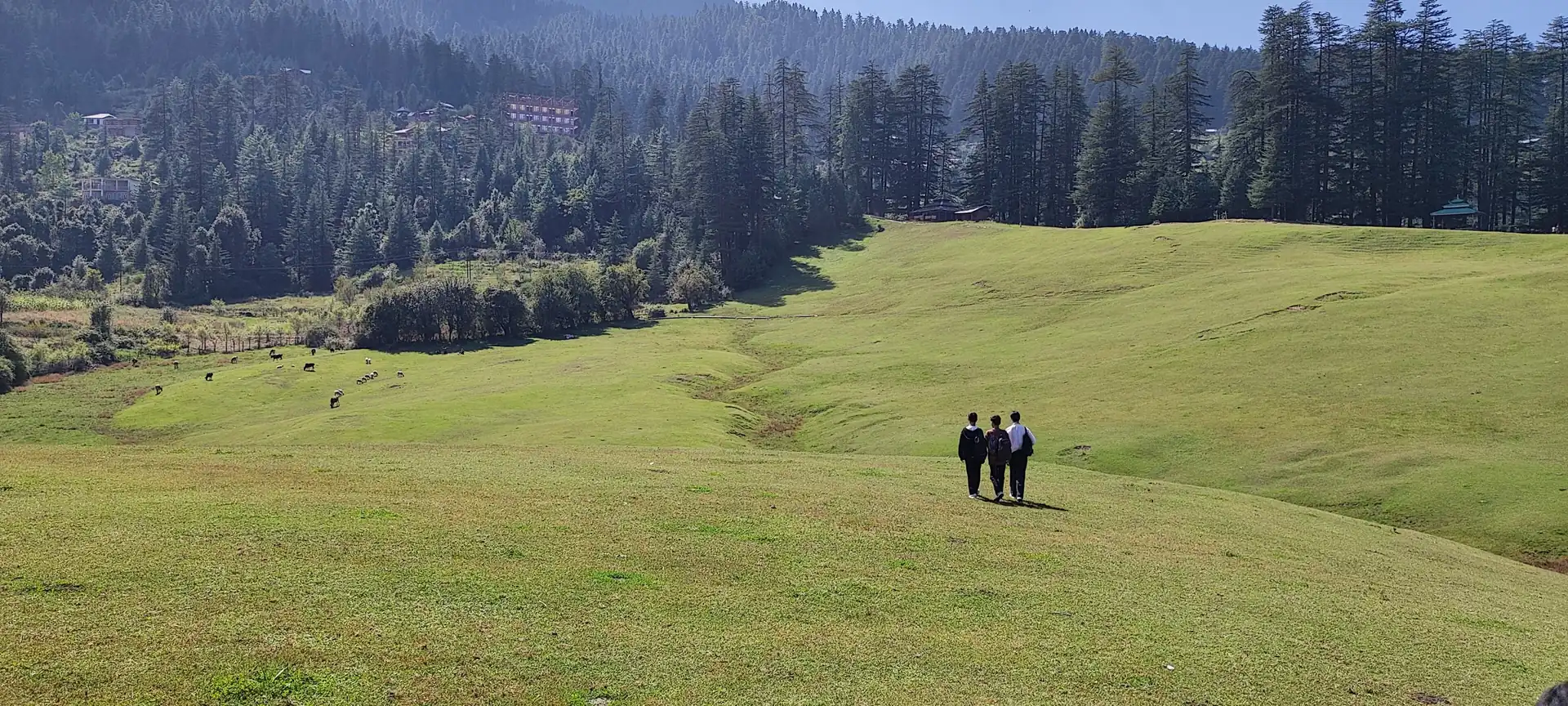
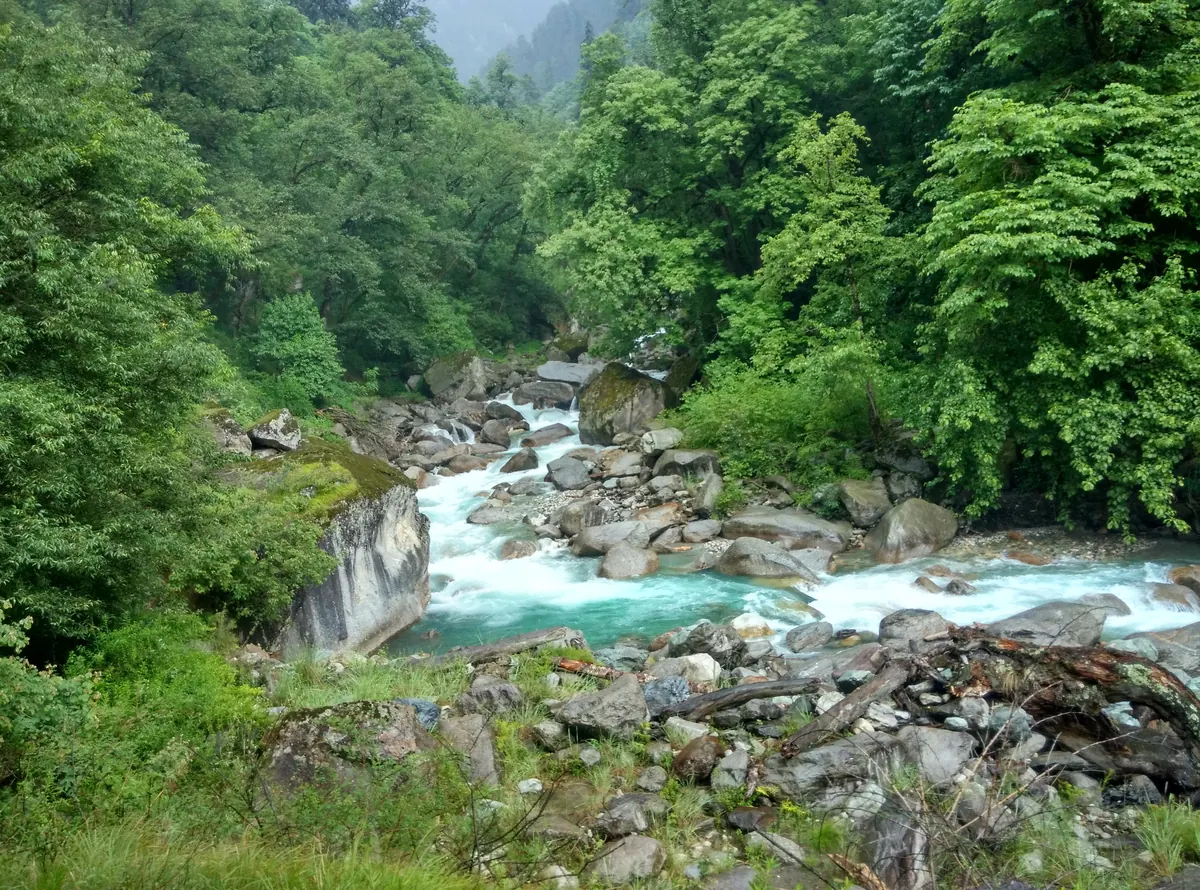
Photos: Rah.sin89 (CC BY-SA 4.0) — via Wikimedia Commons, resized.
They are 34 km and about 58 minutes apart and they enter the same park — established in 1984, 1,171 km², running from 1,500 to 6,000 m, on the UNESCO list since 2014 — from opposite flanks.
What each valley actually has
Tirthan has the infrastructure. Guesthouses along the river, trout, a cluster of places to eat, people who run walks for a living, and the park's better-known gate. It is also where the weekend traffic goes, which on a long weekend is the whole story.
Sainj has one famous place and a lot of quiet. The meadow at Shangarh — 14 km and about 26 minutes above the village, allow 35 — is a flat green shelf above the river with a temple at its edge, and it is the only thing in the valley that gets crowded. Neuli, 10 km and 17 minutes up, is where the homestays are. Ropa, 7 km and 13 minutes up, is the park's gate on this side.
Where they differ that matters
- Beds. Tirthan has range, from a room in a house to something with a designer in its past. Sainj has homestays, at ₹1,200–2,800 a night with meals as of September 2026, and that is the range.
- Company on the path. Sainj's park gate sees a fraction of the Tirthan's. This is the single biggest difference and the whole reason to choose it.
- Getting in. Tirthan's first day into the park is gentler. From Sainj the permit is issued in person at Ropa, a guide is required beyond the ecozone at roughly ₹1,500–2,500 a day, and the walking starts where the road gives out.
- A wet afternoon. Tirthan has somewhere to sit it out. Sainj has your homestay.
- The drive. Both leave the Kullu highway within a few kilometres of each other. Sainj's turning is at Larji, 14 km and about 26 minutes below the village.
Who should pick which
Pick Tirthan for a first visit, a family, anyone who wants trout and a river to sit beside, or a group who will want choices at dinner.
Pick Sainj for a second visit to this park, for a couple who would rather sit in one meadow than tick off six viewpoints, or for walkers who dislike queues. It suits anyone whose idea of a good valley is one where the loudest thing is the river.
Doing both
A night in each, not a day trip. The two-day Sainj plan slots onto the end of a Tirthan trip without rearranging anything, and the three-day walk-in is the version for people who came for the park rather than for the meadow.
Plans that include this
All Sainj itineraries →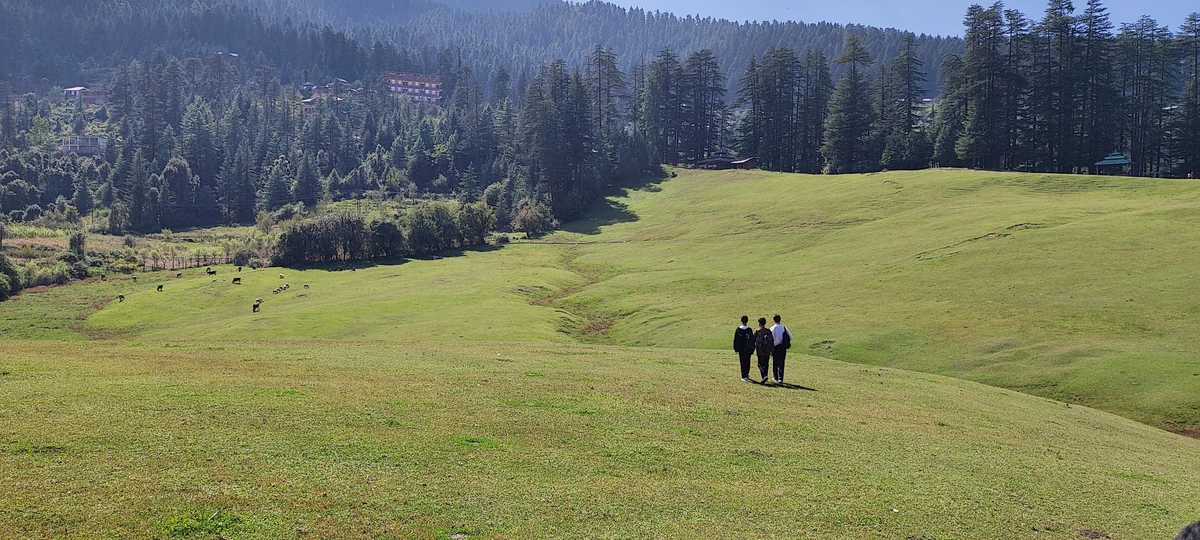
Questions people ask
How far apart are the Sainj and Tirthan valleys?
34 km and about 58 minutes, down to the Kullu highway and back up the other side. They share a boundary in the mountains and no road over it, so moving between them means dropping to the river and climbing again.
Is Sainj or Tirthan better for the Great Himalayan National Park?
Both enter the same park. Tirthan's gate is the busier and better-equipped one; Sainj's gate at Ropa is quieter, with fewer beds and less company on the paths. Choose Tirthan for an easier first day and more help arranging things, and Sainj if the point of the trip is to be somewhere with nobody in it.
Is Sainj cheaper than the Tirthan valley?
Roughly the same on paper: homestays run ₹1,200–2,800 a night with meals in Sainj as of September 2026. But Sainj has far less to spend money on — no café strip, no rafting operation, no cluster of riverside stays — so a weekend there tends to cost less simply because there is less of it to buy.
Can you do both valleys in one trip?
Yes, and the sensible way is a night in each rather than day trips between them: 58 minutes each way eats the part of the day the valleys are actually for. Two nights in the Tirthan and one at Shangarh is the shape most people end up with.