Roopkund's skeletons — the DNA says they did not die together
The Roopkund skeletons were long blamed on one hailstorm. DNA from 38 of them, read in 2019, found three groups who died about 1,000 years apart.
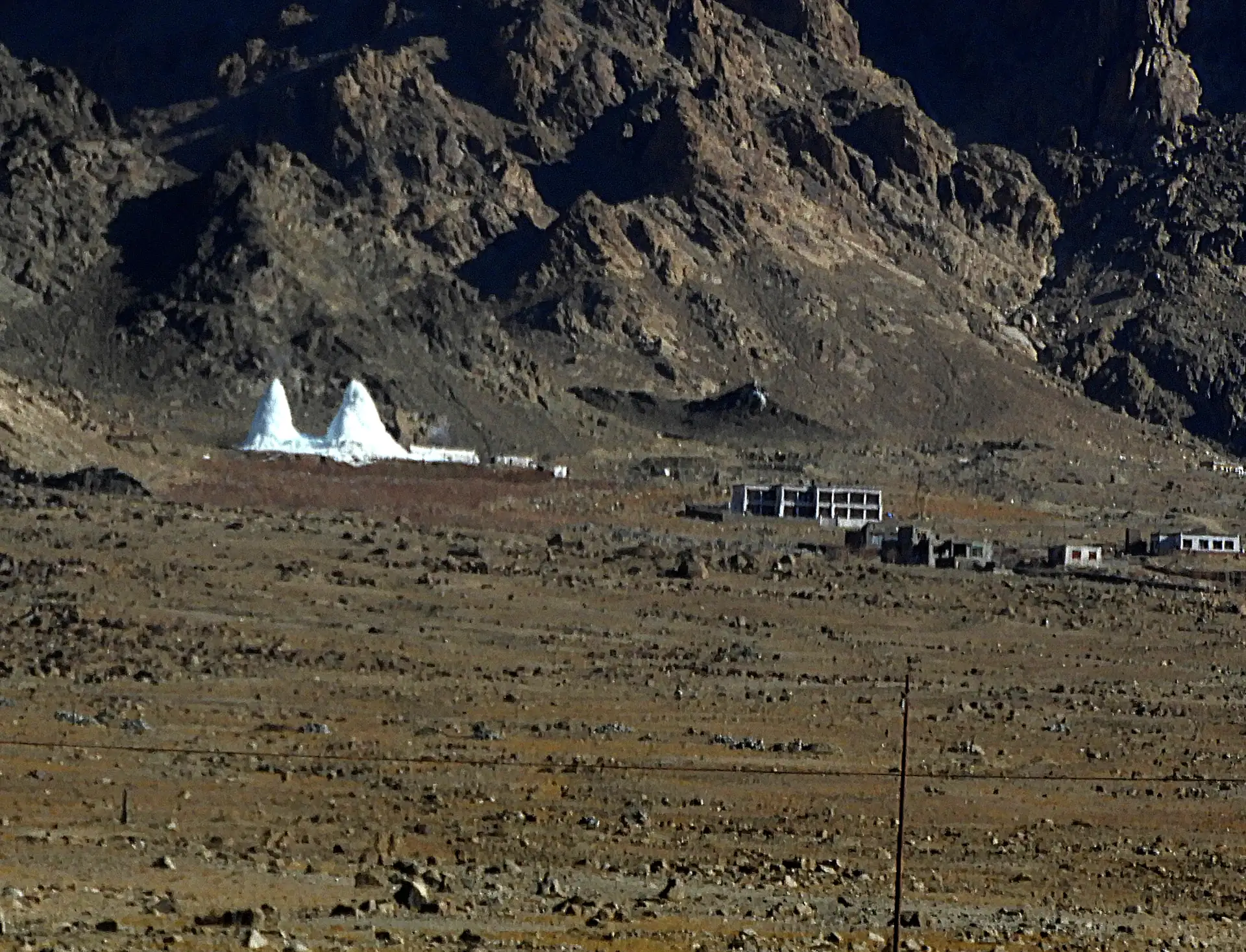
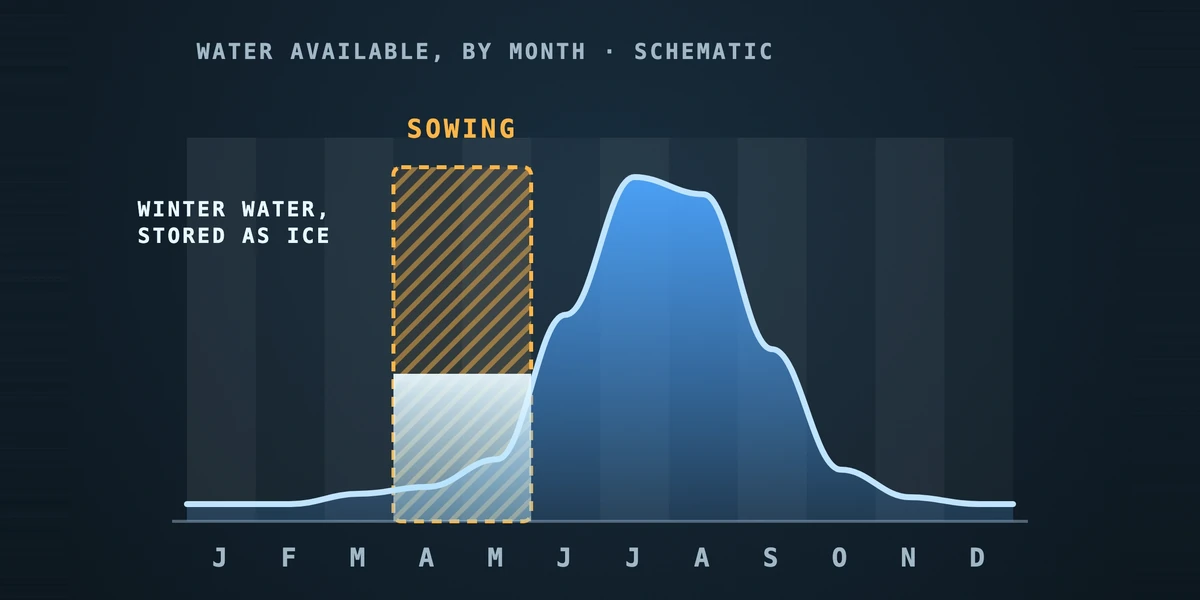
Ladakh is a cold desert. It gets less than 50 mm of rain in a year, so its fields live on snow and glacier melt. The trouble is timing. In spring, when the fields must be sown, the streams run low. The meltwater from the glaciers peaks later, in summer, after the sowing has needed it. So in winter, villages freeze some of the water they cannot use yet, and keep it as ice until they need it.
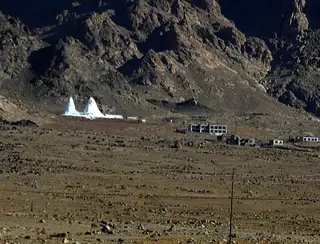
Through winter the soil is frozen and nothing is farmed, but a stream may still run. That water used to flow away. An ice stupa catches it and holds it, as ice, through the months when the fields are bare, then gives it back slowly as the days warm. It works like a small glacier built for one village's spring.
The equipment is simple: a pipeline and a fountain. Water is taken from a stream higher up and piped a few kilometres downhill, moved by gravity alone, with no pump or electricity. At the site it climbs a vertical pipe and sprays out of a nozzle. In the freezing air the spray turns to ice and builds up, layer on layer, into a bumpy cone. As the cone grows, the pipe in its centre is made longer.
The name comes from the shape, which looks like the spire on top of a Buddhist stupa.
Photos: Crb43 (CC BY-SA 4.0) · Goutam1962 (CC BY-SA 4.0) · Bernard Gagnon Canon EOS REBEL T4i (CC BY-SA 4.0) — via Wikimedia Commons, resized.
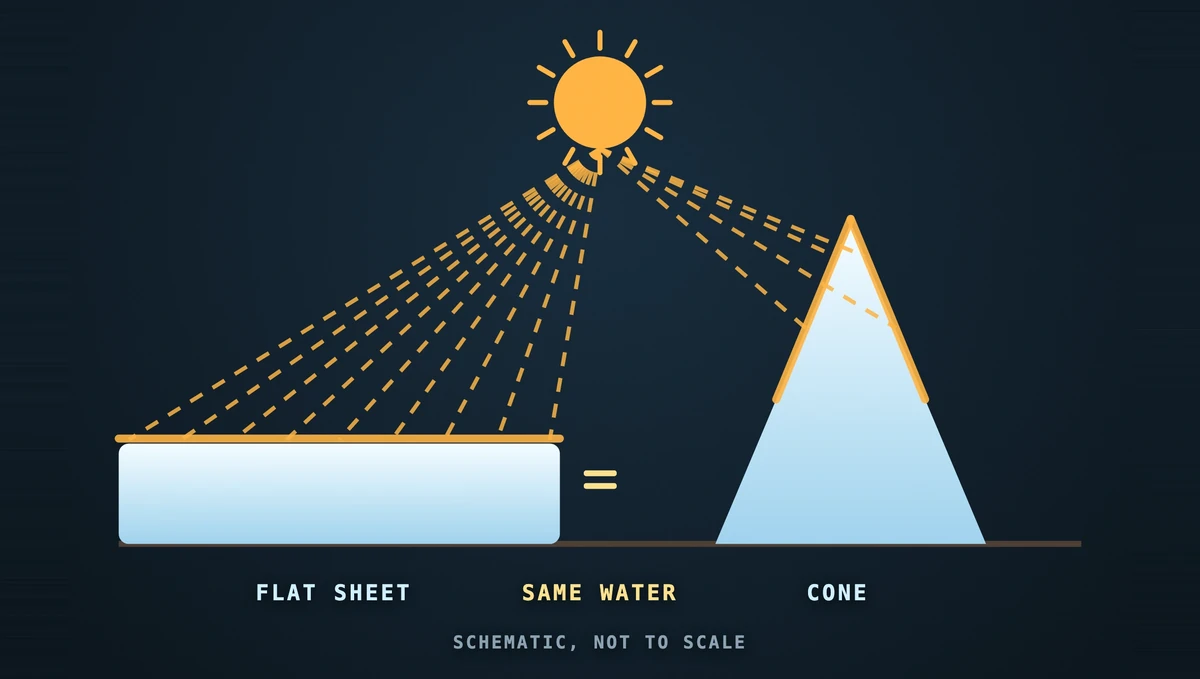
Ice lasts longer out of the sun, and you cannot shade a whole pond. A cone is the answer: it holds a large volume of ice while offering the sun very little surface. The first prototype, built in Leh in October 2013, stood about 6 m (20 ft) tall and held around 150,000 litres. It had no shade at all, and still it did not melt away completely until 18 May 2014, through days above 20 °C. Since then they have grown much bigger. One in Ladakh reached 30 m and stored 8 million litres.
An ice stupa is not a cure for melting glaciers, and the people who study them say so. It is a short-term store of water for the sowing season. It is also wasteful: researchers who modelled them found that around 80 percent of the water sprayed runs off before it can freeze. And it suits a particular climate. Cold, dry and clear places like Ladakh build the biggest cones; cloudy places melt them faster.
Higher up the same region, read why the Khardung La sign is wrong. Our Leh guide covers the monasteries of the Indus valley, with things to do in Leh and the best time to visit. For another story science changed, see the Roopkund skeletons.
An artificial glacier: a cone of ice built in winter from water that would otherwise flow away unused. Through spring it melts slowly and feeds the fields when sowing needs water and the streams are low. The name comes from its shape, which looks like the spire on top of a Buddhist stupa.
Stream water is piped downhill for a few kilometres, by gravity alone, with no pump or electricity. At the site it rises up a vertical pipe and sprays out like a fountain. In the cold air the spray freezes and builds a bumpy cone, and the pipe is lengthened as the cone grows.
A cone holds a large volume of ice while showing the sun very little surface, so it melts slowly. The first prototype, built in Leh in October 2013, stood about 6 m high. It did not melt completely until 18 May 2014, even on days above 20 °C, with no shade at all.
No. They are a short-term store of water for one village's spring, not a cure for shrinking glaciers. They also lose a lot: researchers found that around 80 percent of the water sprayed runs off before it freezes. They help most in cold, dry places like Ladakh.