Shangarh
area · 26 min from Sainj
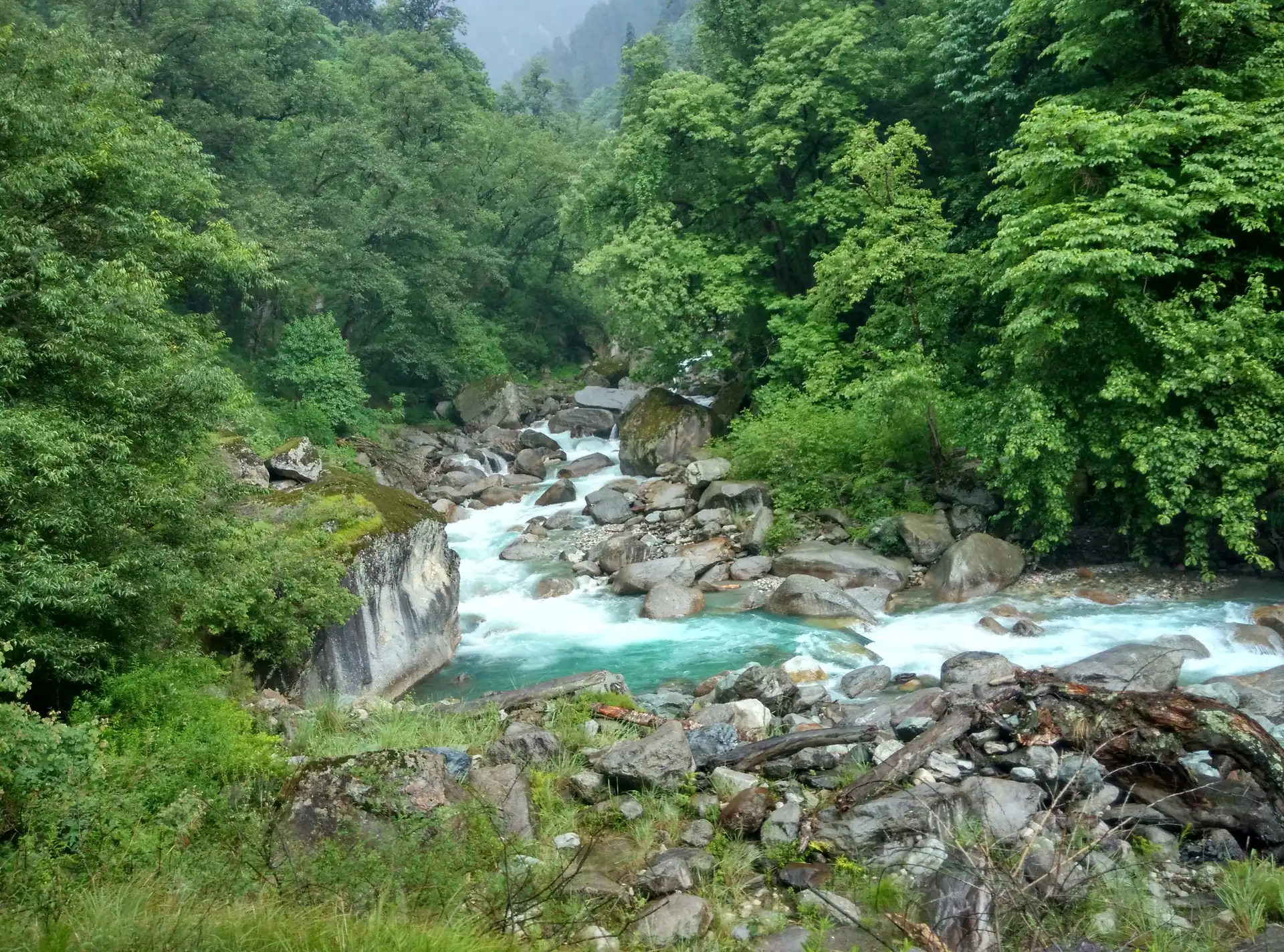
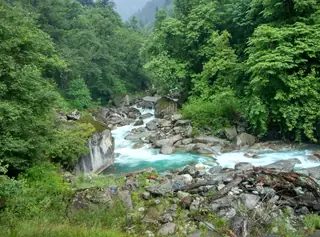
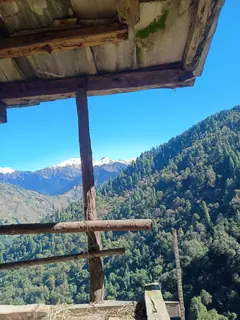
This is the Sainj valley's real reason to exist for a walker: the Great Himalayan National Park, entered at Ropa rather than from the Tirthan, on a permit, with a fraction of the people. The park was established in 1984, covers 1,171 km², spans 1,500 to 6,000 m and went onto the UNESCO list in 2014.
What this plan does NOT do is promise you a distance or a summit. Beyond the gate the route is the guide's call on the day — the river, the season and the party decide it — and anyone quoting you a fixed itinerary for the inside of a national park has not asked the park. What we can state is the approach, the permit, where you sleep and how long the road takes.
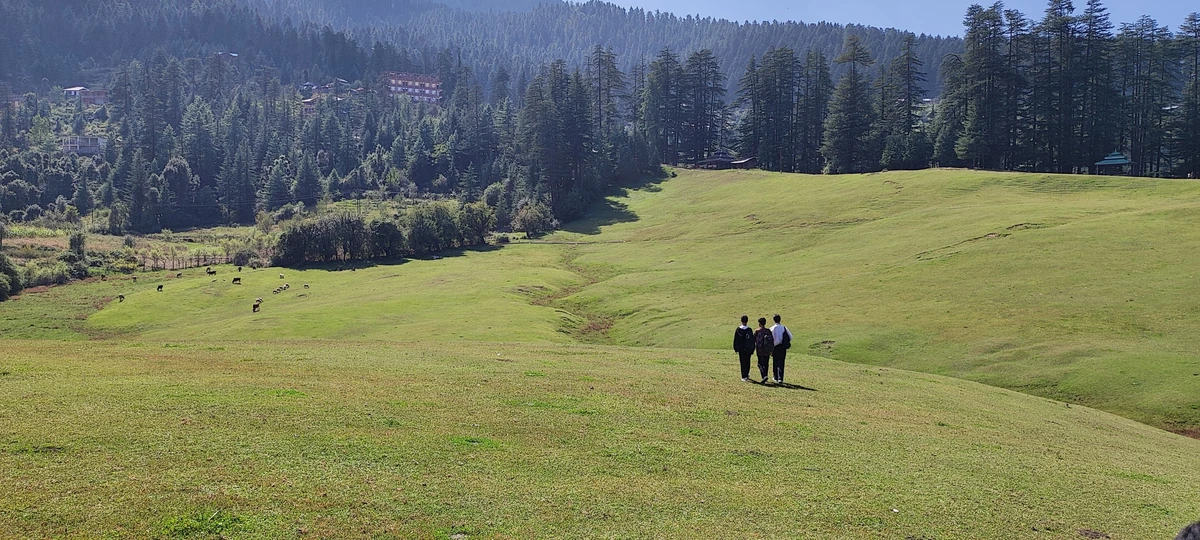
Photos: Rah.sin89 (CC BY-SA 4.0) · Ms Sarah Welch (CC0) · Rajani Gairshail (CC BY-SA 4.0) — via Wikimedia Commons, resized.
Walkers who can manage a long day on a path with a load, and who want the quiet flank of a park most people enter from Banjar. Not a first trek, not a monsoon plan, and not for anyone who needs a fixed distance in advance. For the meadow and the gate without the walk, take the two-day plan.
Arrive with the afternoon in hand. The permit and the guide are arranged at the park's office, not online, and the walk starts from the road-end the next morning.
The whole day is walking. The road ends above Ropa and everything beyond it is a path along the river, through forest, to the villages that farm at that height. Distances here are the guide's to set on the day, not ours to promise.
Back to the road-end by the middle of the day, then the drive down the valley — with the meadow at Shangarh as an afternoon if the legs allow.
The valley leaves the Kullu highway at Larji, 14 km and about 26 minutes below the village; Aut is 17 km and about 30 minutes. Kullu is 46 km and about 68 minutes away, Bhuntar's airport 35 km and about 54 minutes, Banjar and the Tirthan 34 km and about 58 minutes over.
Neuli the first night, for the homestays and the last hot water; inside the park it is a village room or canvas, arranged through the guide. ₹1,200–2,800 a night with meals outside the park as of September 2026, and a guide is typically ₹1,500–2,500 a day.
Without the walk: the two-day plan does the meadow, the temple and the gate.
From the other flank: the Tirthan guide enters the same park at Sai Ropa, with more homestays and more company.
In person at the park's office at Ropa, 7 km and about 13 minutes above the Sainj village. There are separate charges for cameras and a guide is required beyond the ecozone. The park sets the fees and closes areas by notice, so ask there rather than relying on a figure from anywhere else.
No. The road ends above Ropa and everything beyond it is a path. Shakti, the last hamlet up the Sainj river, is reached on foot with a permit, and a night there is a village room or canvas arranged through your guide — not a booking you make in advance from a city.
It is quieter, with fewer homestays and far less weekend traffic. The Tirthan side has more beds, more food and an easier first day. Choose Sainj if you want the park and not the scene around it; choose Banjar if you want a comfortable base and a shorter drive to it.