Polo — the British learned the game from Manipur
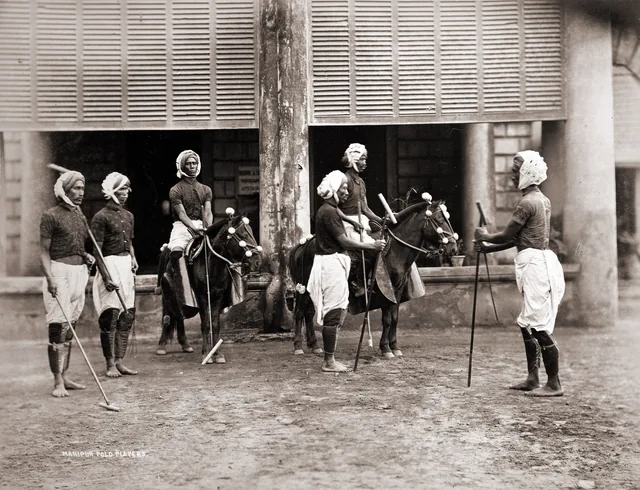
The word polo comes from Manipur, where it named the wooden ball. British tea planters learned the game from Manipuris and set up a club at Silchar in 1859.
Checked on
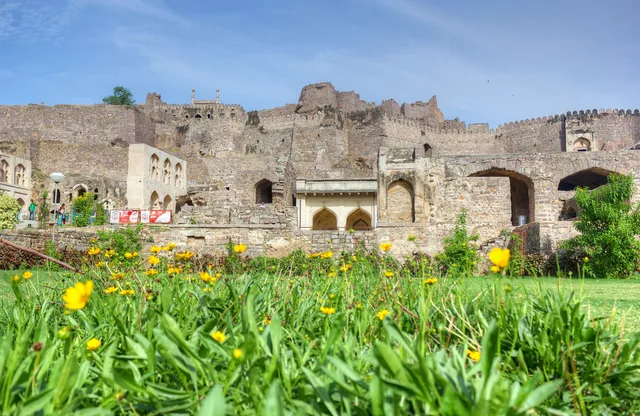
Golconda Fort sits on a granite hill in Hyderabad. Most people who come here remember one thing above the walls and the ruins: you clap your hands once at the gate, and somebody at the very top of the fort hears it.
Photos: Kuldeepburjbhalaike (CC BY-SA 4.0) · Mupendra 00 (CC BY-SA 4.0) — via Wikimedia Commons, resized.
Walk in through the outer gate and you stand under a dome. The ceiling is plain plaster, folded at the corners, with a small rosette at the centre. Clap once at the right spot below it and the sound does not die in the hall: it carries up the hill and is heard clearly at the Bala Hisar pavilion, the highest point of the fort, almost a kilometre away and far above you.
The reason given for it is defence. A guard at the gate who saw an attack coming could warn the top of the fort with a single clap, faster than any messenger running up the steps. The gate itself was built for attack too: the outer Fateh Darwaza, the Victory Gate, is studded with giant iron spikes to stop war elephants battering it down. It got its name from the army that did get in, Aurangzeb's.
Golconda began small. The Kakatiya kings built a fort of mud walls on the hill, and later an outpost in stone. The Qutb Shahi sultans made it the capital of their kingdom. Over 62 years the first three of them rebuilt it in granite into the citadel you see now: four distinct forts, with the clapping gate at the bottom and Bala Hisar at the top. The court later moved to the new city of Hyderabad, but Golconda stayed its fortress.
Its wealth came from the ground. Diamond mines nearby, the Kollur mine above all, made Golconda the market for some of the largest diamonds ever found, and its vaults are said to have held the Koh-i-Noor and the Hope diamond. That wealth drew the Mughals. Aurangzeb laid siege to the fort for eight months, took it, and ended the Qutb Shahi line by capturing its last king, Abul Hasan Qutb Shah. The fort has been a ruin since.
From the same series: Rani ki Vav, the stepwell on the 100-rupee note, Khejarli, where villagers gave their heads for trees, and Jaipur blue pottery, made without clay. In the hills, Barog's tunnel whose two ends never met and Tabo, the Ajanta of the Himalayas are stories of builders too. All the HimLocal guides are under Destinations, and every story is on the Blog.
Reels from these places: follow @himlocal.in on Instagram
Stand at a marked spot under the dome at the entrance and clap once. The sound carries up the hill and is heard clearly at the Bala Hisar pavilion, the fort's highest point, almost a kilometre away. It worked as the fort's alarm in case of an attack on the gate.
As a warning. A guard at the gate could raise the alarm at the top of the fort, almost a kilometre away and far uphill, with nothing more than a clap, faster than any runner on the steps. That is the use the story gives it: an early alert in case of an attack on the entrance.
It began as a mud fort of the Kakatiya kings. The Qutb Shahi sultans made it their capital and rebuilt it in granite over 62 years, until the court moved to Hyderabad. Aurangzeb's army took it after an eight-month siege, and it has stood in ruin since then.