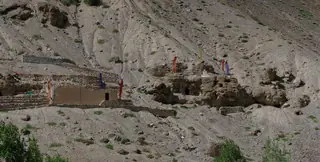
Tabo caves (Phoo Gumpha)
cave · 290 m away
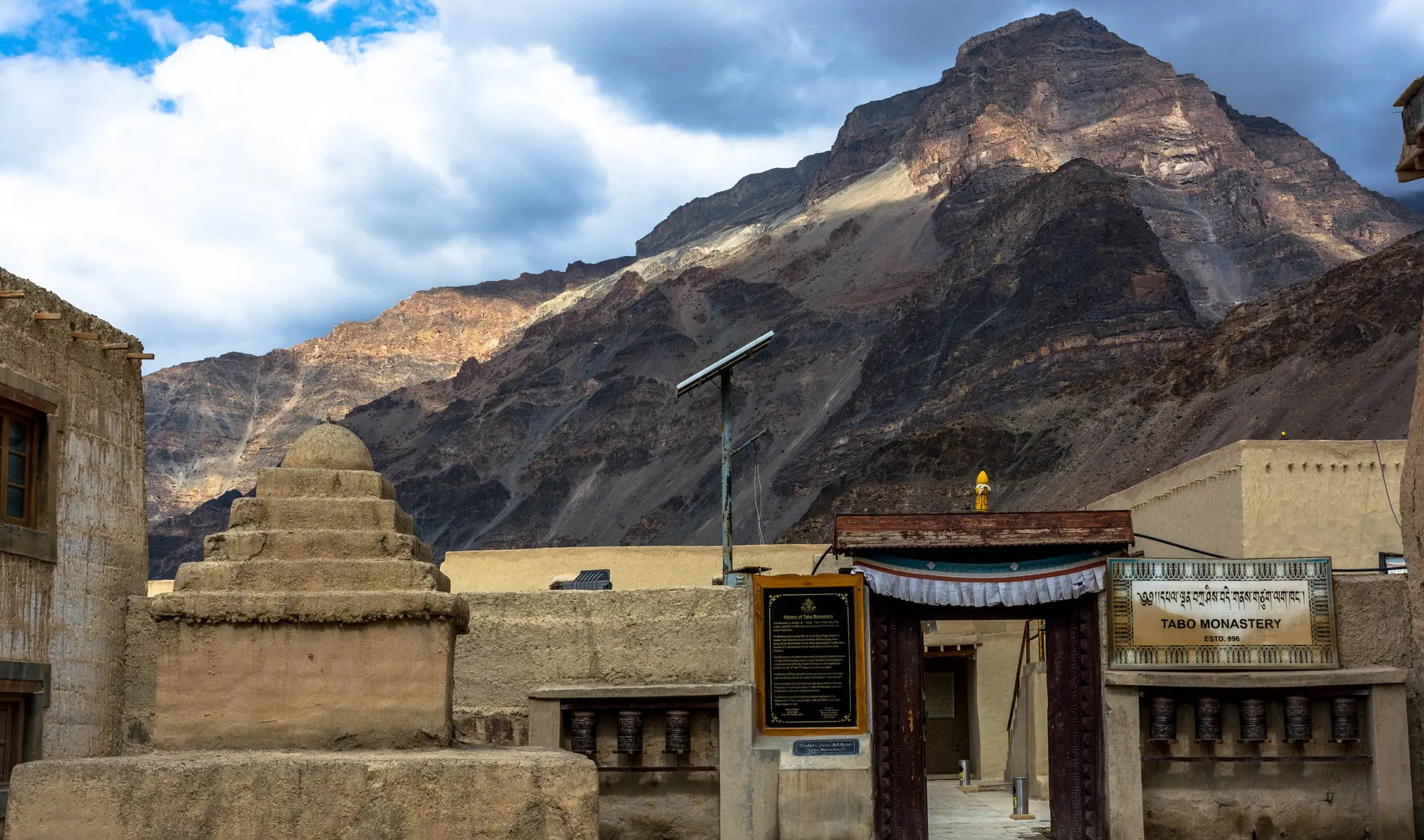
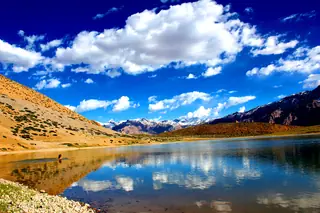
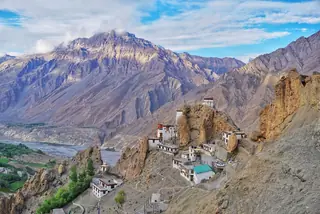
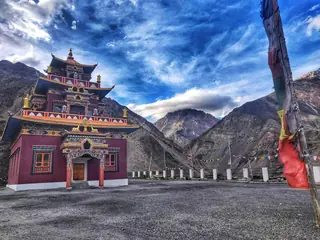
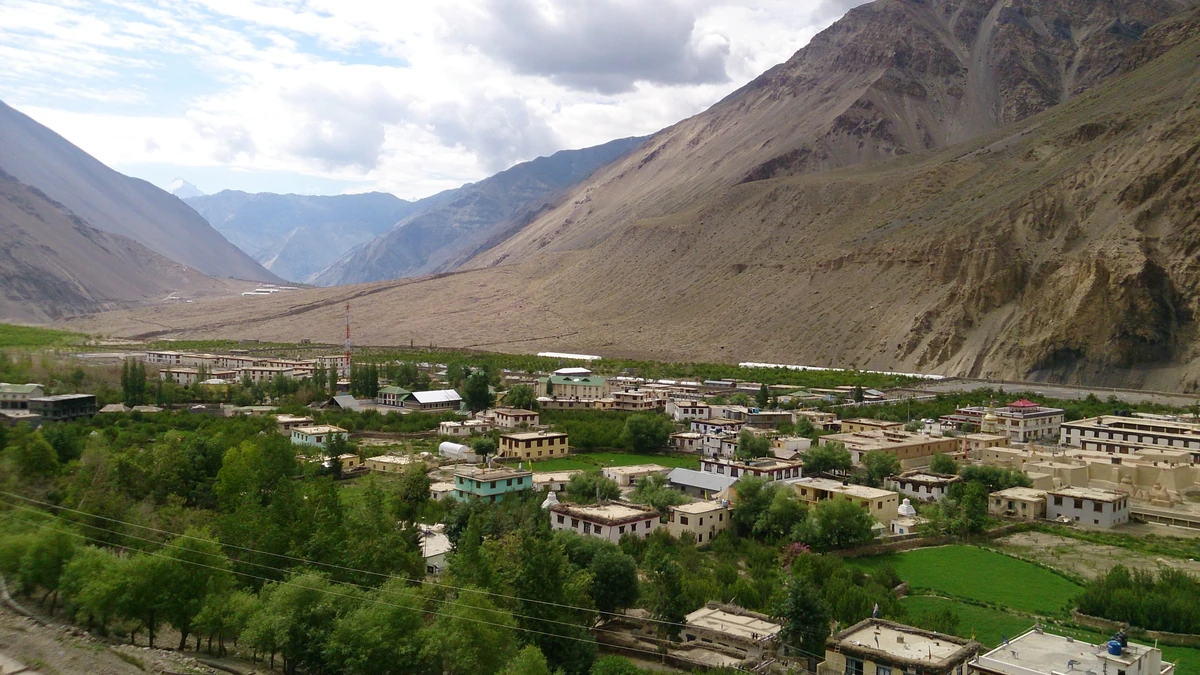
Tabo Monastery, also written Tabo Chos-Khor, stands in the town of Tabo, beside the Spiti River on its left bank. The translator Rinchen Zangpo founded it in 996 CE for Yeshe-Ö, king of the western Himalayan kingdom of Guge, and it is described as the oldest continuously operating Buddhist enclave in India and the Himalayas. It is a daughter monastery of Tholing in western Tibet.
Photos: Mdipa (CC BY-SA 4.0) · Gerd Eichmann (CC BY-SA 4.0) · Schwiki (CC BY-SA 4.0) — via Wikimedia Commons, resized.
It is in the town, about 1 km and 2 minutes by road from our reference point, and easily walked. From Kaza it is 47 km and about 67 minutes by road.
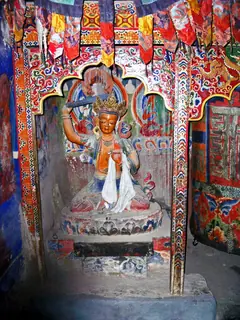
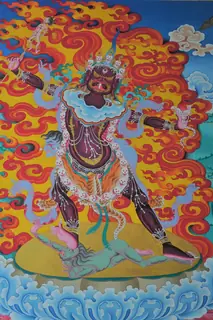
Inside the temples the walls carry paintings, clay statues, inscriptions and long wall texts; the iconography dates from 1042 and later. The monastery was damaged in the 1975 earthquake and rebuilt, and a new assembly hall was added in 1983, where the Dalai Lama held the Kalachakra ceremony. Photography is not permitted inside the temples. In the cliff above are cave retreats used by monks.
Summers are short, May to August, and winters long, from mid-September to April. See when to visit Tabo.
The cave retreats are in the cliff above, and Dhankar is the next great monastery site up the valley. See the one-day plan.
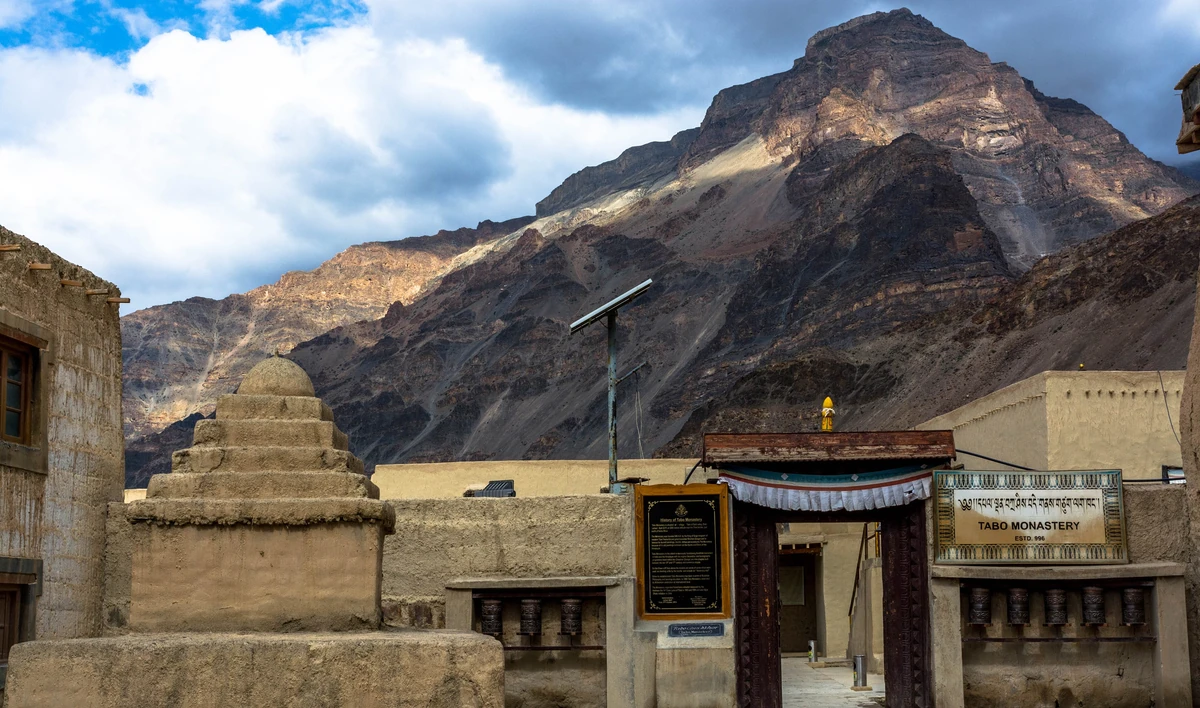
It was founded in 996 CE by the translator Rinchen Zangpo for the king of the western Himalayan kingdom of Guge. The monastery was renovated 46 years later, and it is described as the oldest continuously operating Buddhist enclave in India and the Himalayas.
Wall paintings, clay statues, inscriptions and extensive wall texts cover almost every wall of the temples. Iconographic depictions date from 1042 and later. The 1983 assembly hall is new. Photography is not permitted inside the temples, so the paintings are for the eye.
Yes, the Archaeological Survey of India protects it as a national historic treasure. The 1975 earthquake damaged it and it was rebuilt afterwards, and the paint is fragile, so follow the monks' instructions on where to stand and what not to touch.