Ice stupas — how Ladakh grows its own glacier for spring
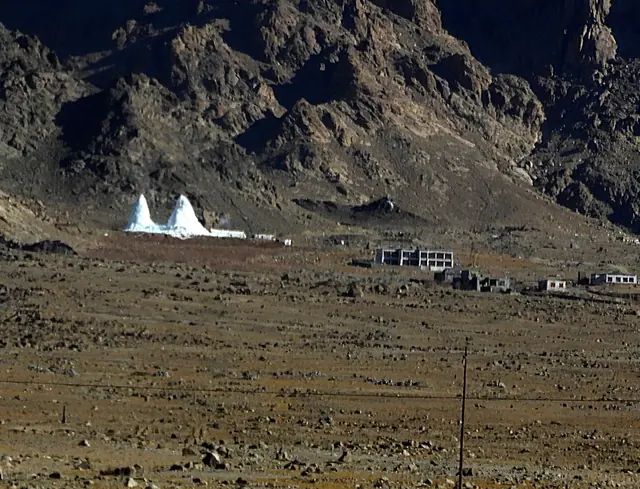
Ladakh's ice stupas freeze winter stream water into cones of ice that melt slowly into spring, when fields need water and streams run low. How they work.
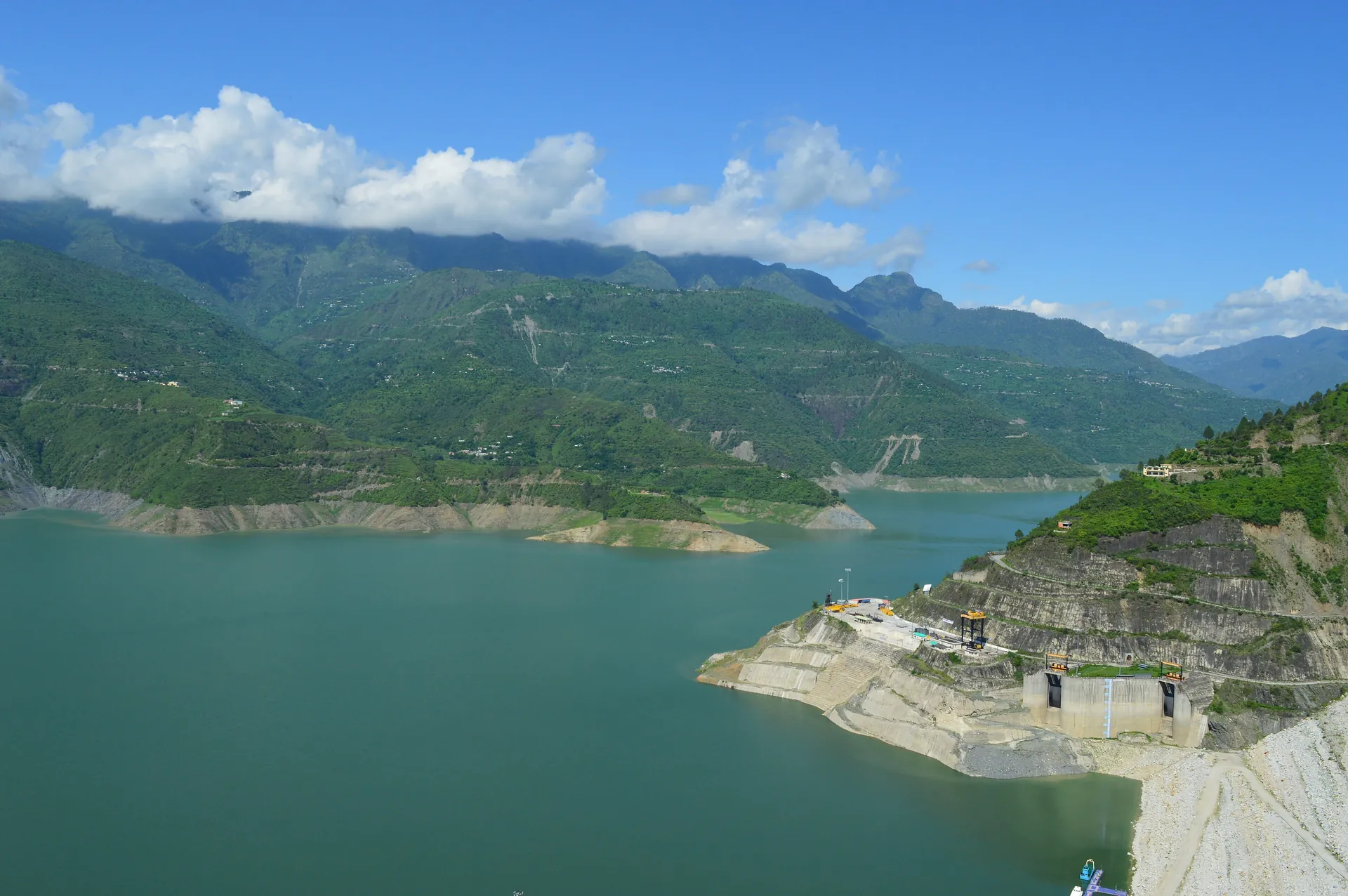
In Tehri Garhwal district of Uttarakhand, a long lake fills the valley of the Bhagirathi behind the tallest dam in India. It looks like any reservoir. But it now does a second job. When the grid has more electricity than it needs, water is pumped uphill into this lake. When the grid needs power, the water runs back down and makes electricity again. The lake works like a battery.
The trick needs two reservoirs, one above the other. The upper one is the Tehri lake. The lower one is the reservoir of the Koteshwar Dam, further down the Bhagirathi. Between them stand machines that can run both ways.
Nothing is burned and the water is not used up. The same water goes up and down between the two lakes, and the energy is stored as height.
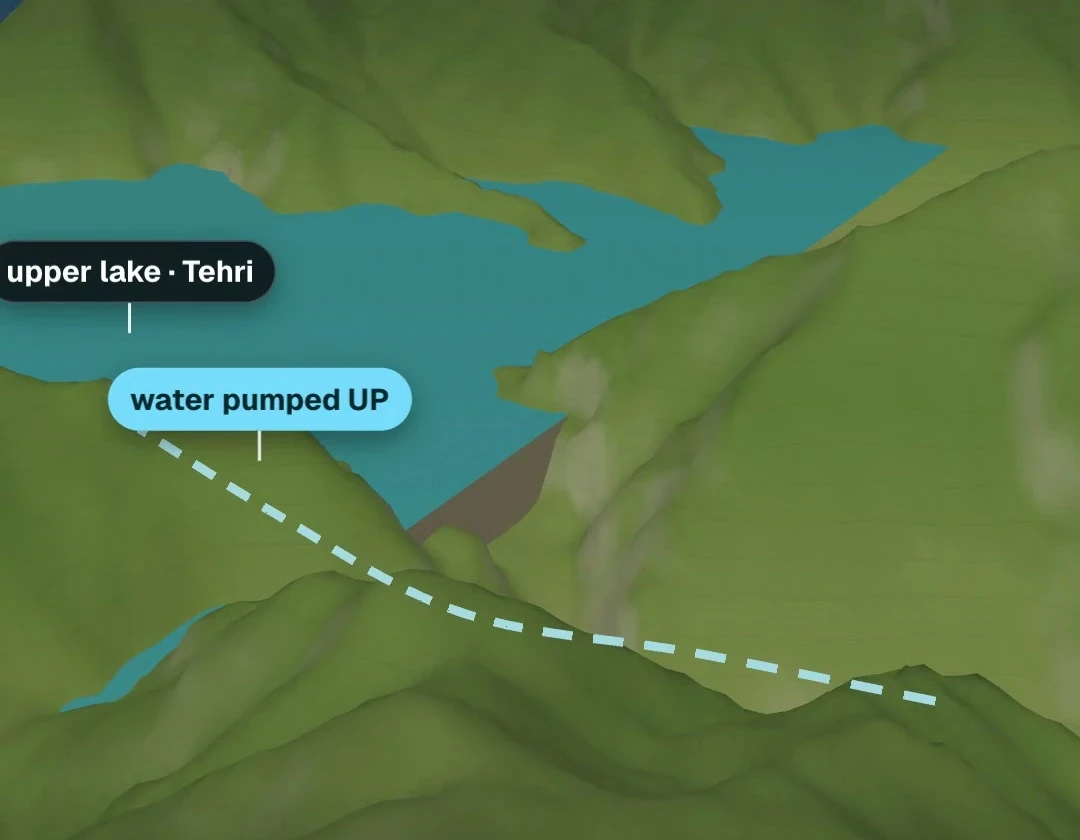
The plant has four reversible units of 250 MW each, 1,000 MW in all. They are variable-speed machines, which can adjust as the water level in the lakes rises and falls. The fourth unit began operating on 12 April 2026, which completed the plant.
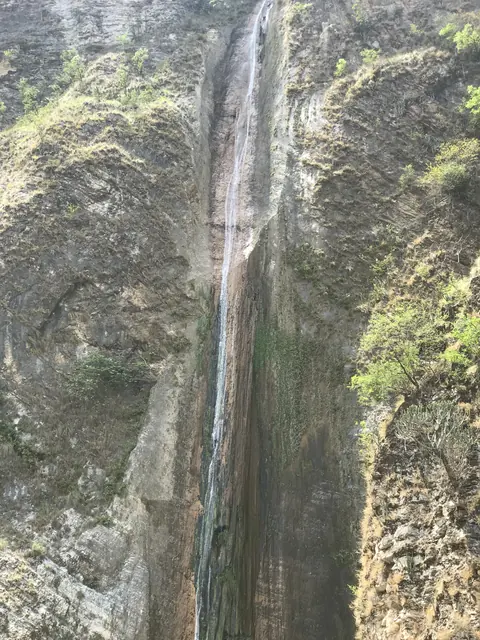
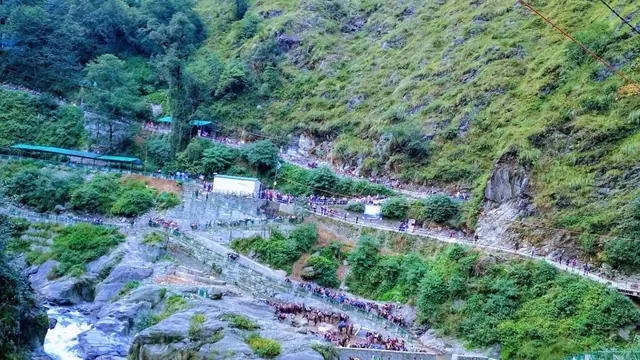
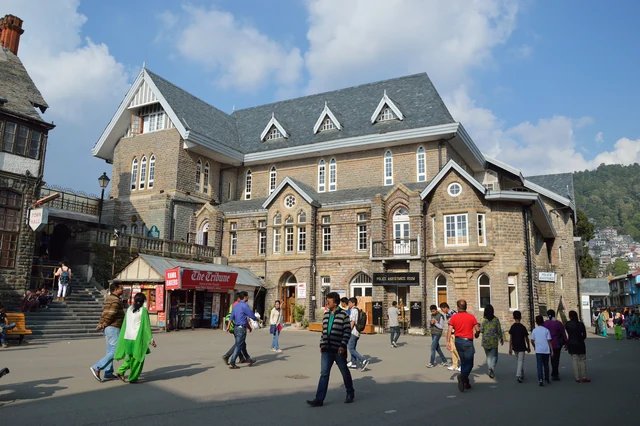
Photos: Dr Vikramjit Kakati (CC BY-SA 4.0) · Vaibhav78545 (CC BY-SA 4.0) · Haccom (CC BY-SA 4.0) — via Wikimedia Commons, resized.
The Tehri Dam itself is a rock and earth-fill wall about 260.5 m (855 ft) high, the tallest dam in India. Work began in 1978 and the dam was completed in 2006. Its lake covers some 52 km² of the valley, and it also supplies water for irrigation and for towns as well as power.
For another way the mountains store water, read how Ladakh grows its own glacier. To visit, start with our Tehri guide: the Tehri Dam, the lake and things to do in Tehri. Our other Uttarakhand guides include Rishikesh and Mussoorie. Or browse every destination.


It uses two lakes on the Bhagirathi. Tehri is the upper one; the reservoir of the Koteshwar Dam downstream is the lower one. When the grid has power to spare, reversible machines pump water up into Tehri. When power is needed, the same water falls back through them, now working as turbines, and makes electricity.
Because it stores energy and gives it back later, the way a battery does. Instead of charging cells, it lifts water uphill. The energy waits in the raised lake as stored height, and turns back into electricity when the water is released. The same water goes up and down between the two reservoirs.
It has four reversible units of 250 MW each, 1,000 MW in all, and they are variable-speed machines. The fourth unit began operating on 12 April 2026, completing the plant. It sits beside the dam's own power station, and Koteshwar has a power station of its own.
About 260.5 m, or 855 ft, which makes it the tallest dam in India, according to Wikipedia. Built of rock and earth across the Bhagirathi, in Tehri Garhwal district of Uttarakhand, it went up between 1978 and 2006, and its reservoir covers some 52 km² of the valley.