
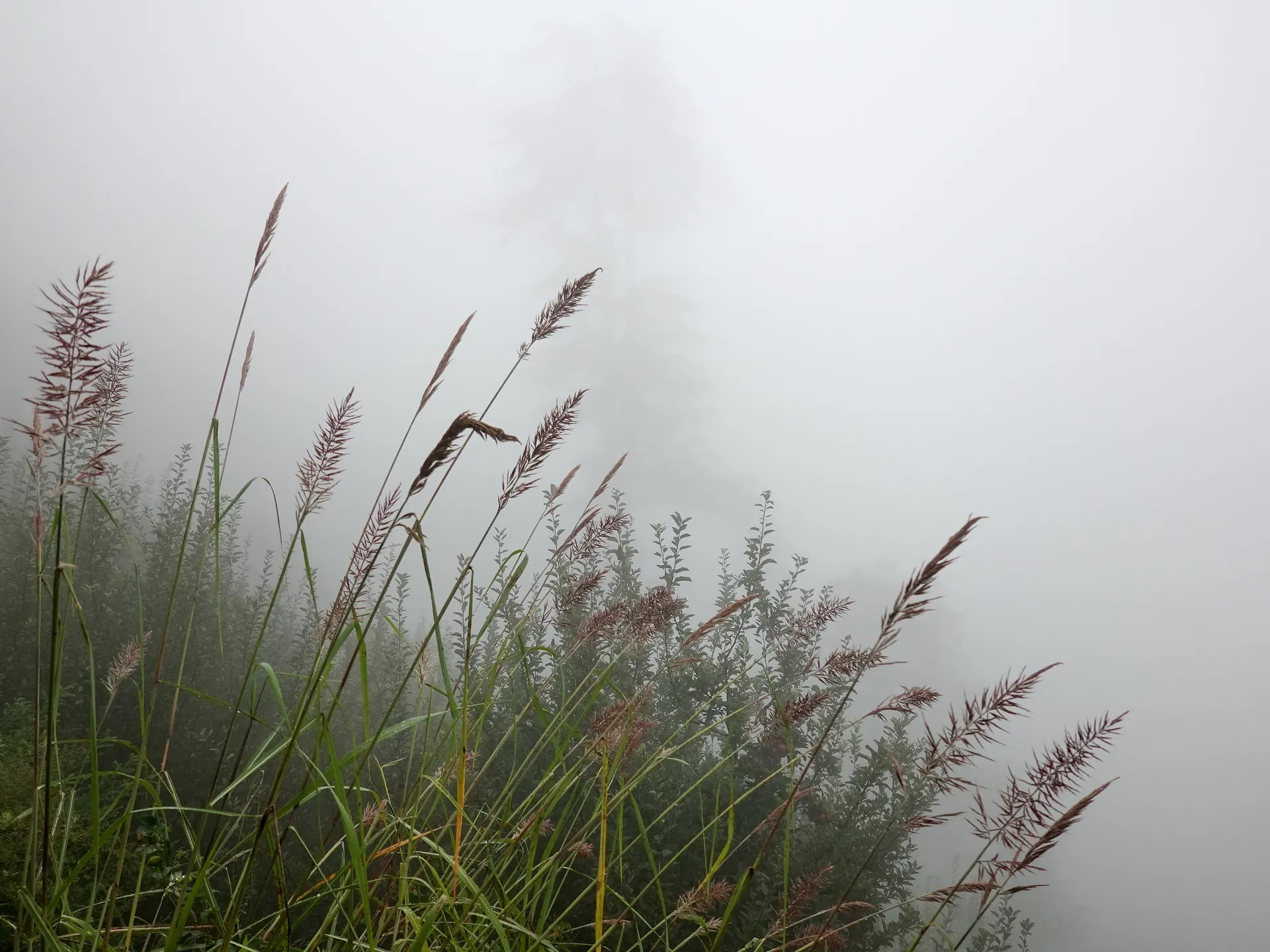
Manali in the monsoon — what July and August are really like, and who they suit
Two months the guidebooks skip
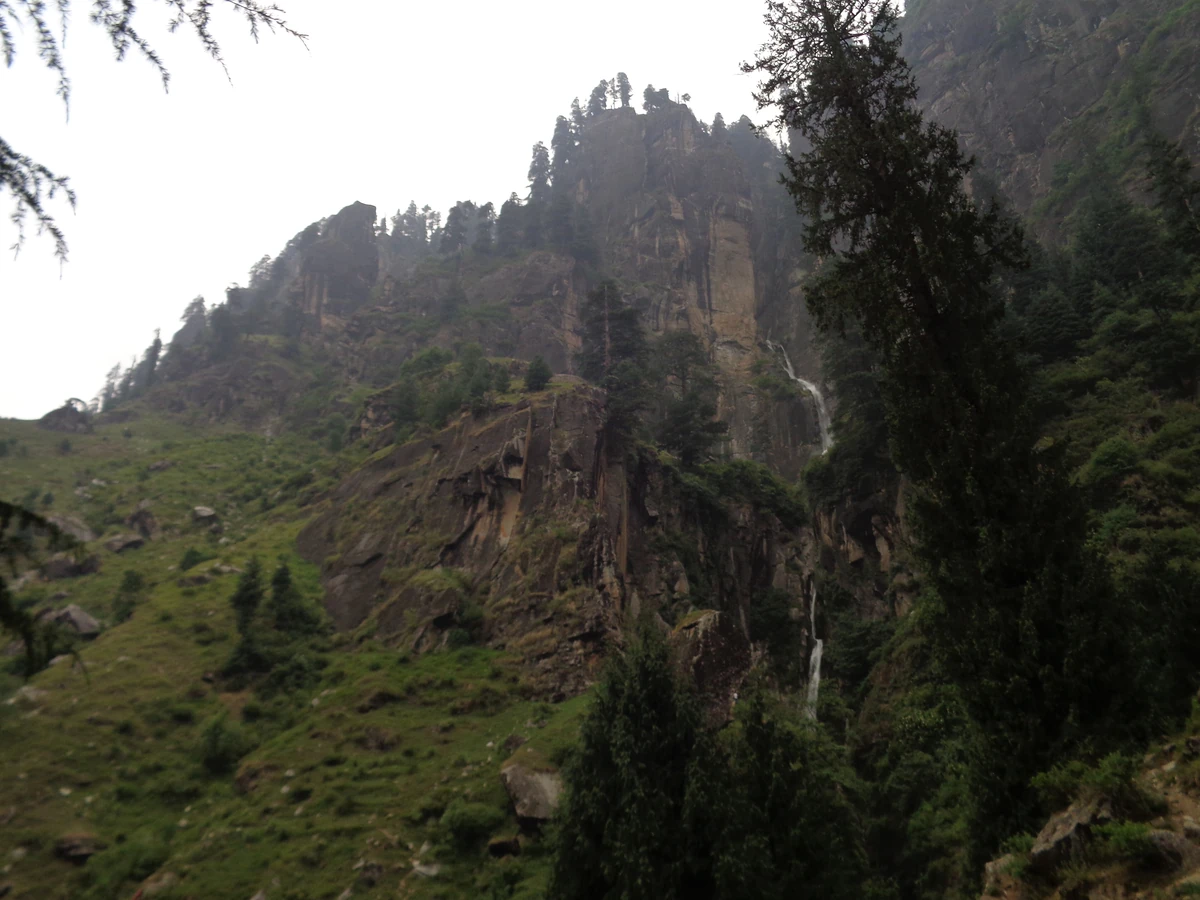
July and August are the months every Manali list tells you to avoid, and the numbers say why. 201.5 mm of rain in July and 217 mm in August on the IMD normals, the two wettest months by a distance, falling in long steady spells rather than the plains' bursts. The high roads close for hours after slides. The meadows sit in cloud. The flying stops, the rafting closes, the treks pause, and the pass, though officially open, spends much of the season shut for clearing.
Photos: Dhruv shridhar (CC BY-SA 4.0) · Dhruv shridhar (CC BY-SA 4.0) · Dinesh Valke from Thane, India (CC BY-SA 2.0) — via Wikimedia Commons, resized.
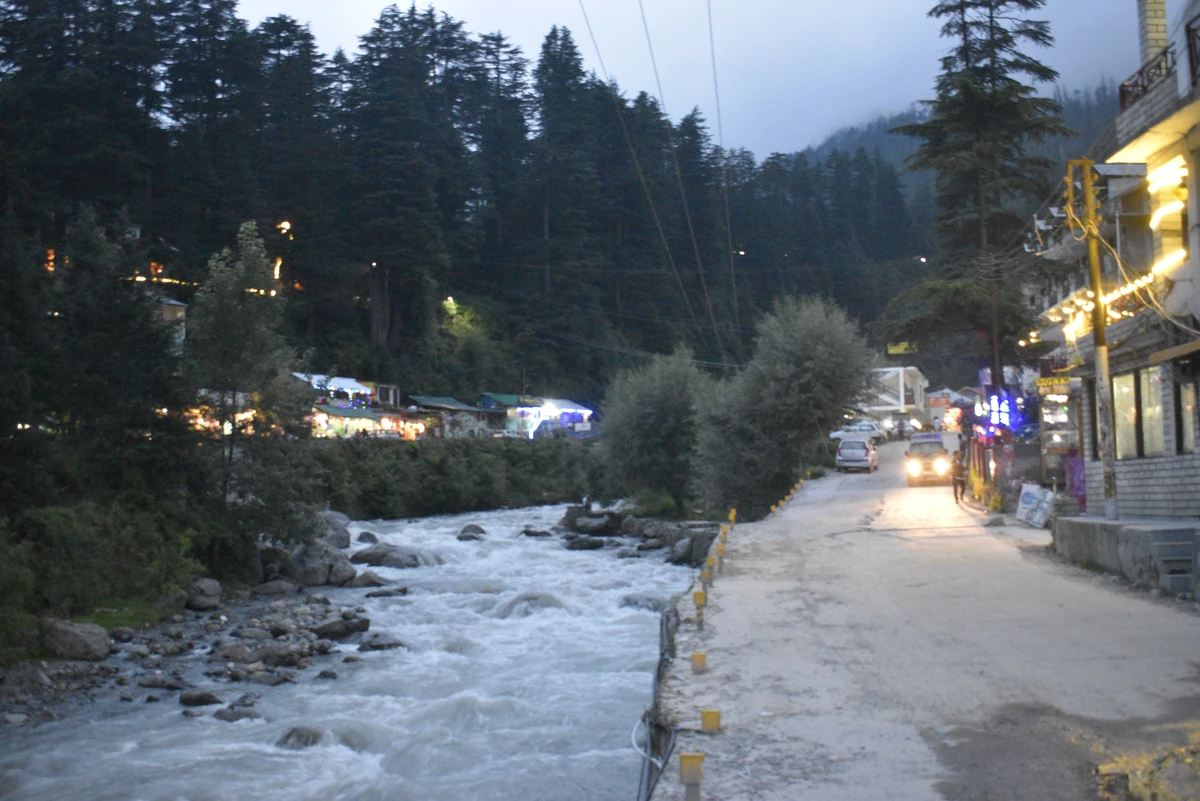
And yet. The valley floor is at its greenest, the rivers at their loudest, the forest dripping and alive, the town emptied of the June crowd. The guesthouses are at their cheapest rates of the year with weekly deals for the asking, and the cafés of Old Manali are quiet enough to sit in all afternoon. For a particular kind of trip — a slow one, a reading one, a working one, a cheap one — the monsoon is not the month to avoid. It is the month to choose.
What actually happens
Days stay warm, around 25 °C. Nights are mild, around 16 °C — the warmest of the year. The rain comes in spells that last hours, with breaks between them that can last a morning; a day is rarely all rain and rarely all dry. Cloud sits on the ridges and lifts and settles again. The Beas runs high and brown; the Manalsu through Old Manali is loud enough to hear from any room. Slides on the road above Solang and on the Mandi–Kullu highway close them for a few hours at a time, and the road authority clears them the same day in all but the worst weeks.
What does not happen: the pass, reliably; the flying at Solang; the rafting, which closes for the season; the camping treks, which pause; and the Jogini walk, whose stream crossings become awkward and whose rock turns slick.
Who the monsoon suits
Readers, writers and anyone with a laptop — the workation plan is written for a month like this. Couples who want the room and the café more than the drive. Anyone on a budget, because this is the low season and the rates say so. Anyone who has done Manali in June and wants to see the same valley with nobody in it. Photographers who like cloud.
Who it does not suit: anyone who came for the pass, the meadow or the flying; families with small children who need to be outside; anyone on a fixed three-day schedule with a mountain in it.
What to do
The forest. The sanctuary path from the gate near Old Manali is the walk that stays safe in every season, and under dripping deodar in the monsoon it is at its best. An hour or three under the big trees between showers, back for a late breakfast.
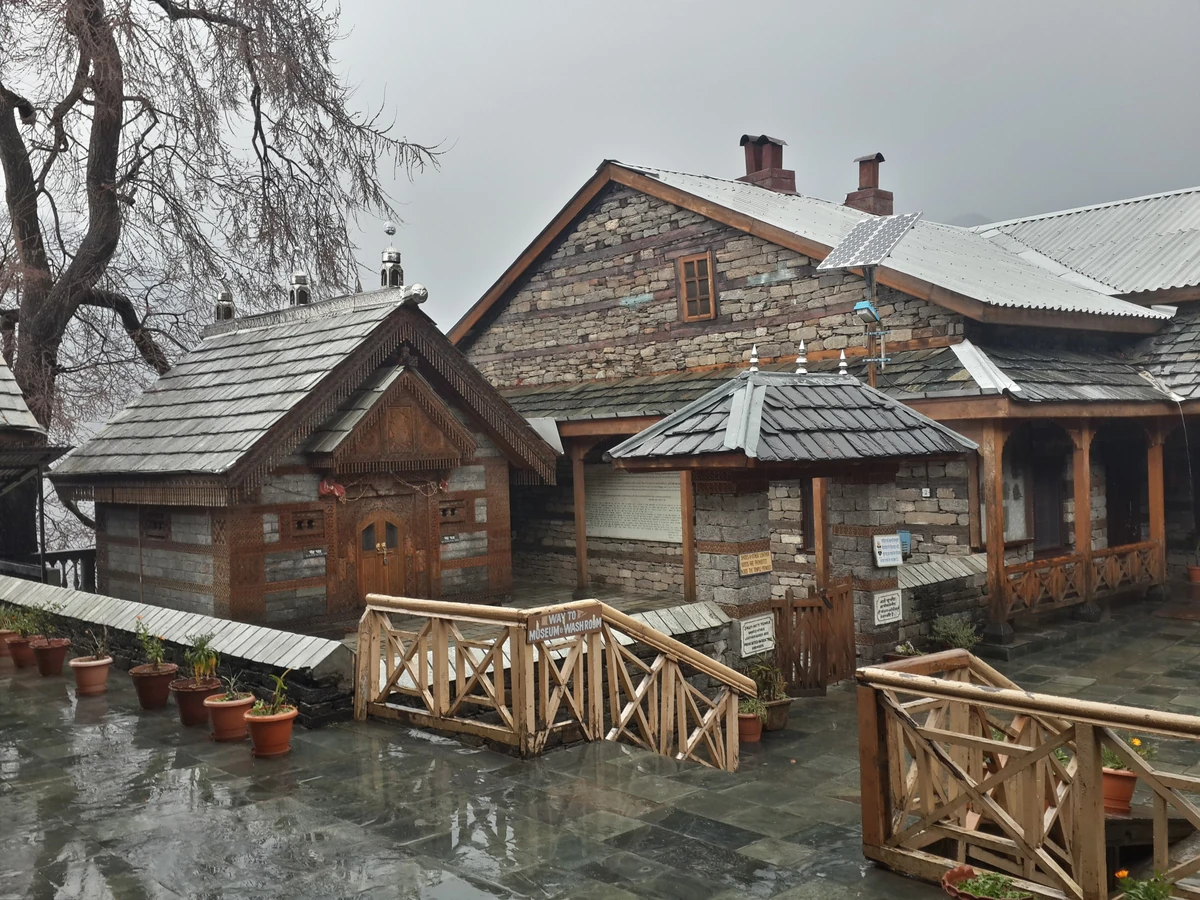
Under roofs. The museum at Dhungri, an hour with the house models and masks. Naggar Castle, 19 km down the valley on a low road, with courtyards and balconies over a valley in cloud and tea on the terrace between showers. The games hall and rink at the Club House for children.
Hot water. The baths at Vashisht are the monsoon's best hour — the village empty of day trippers, the tanks steaming in the rain.
The lane. Old Manali at its quietest and cheapest: long lunches, a book, the stream loud below the cafés. The cafés-and-lanes plan is two days of this.
The park. Van Vihar by the Beas, which is at its loudest now, for the breaks between the rain.
The tunnel, if the sky clears. The Atal Tunnel to Sissu is an hour each way, and Lahaul on the far side is in the rain shadow — often dry when the Kullu side is wet. Decide at eight by the road report at the taxi stand, go if the road is open, and be back by two before the afternoon rain. Never book it the day before.
What to skip
Rohtang, which is cloud at the top and a closed road below it more days than not. The Jogini walk in July and August — the waterfalls plan is for the dry months. Anything that needs a booked date and a high road. The monsoon's rule is to plan nothing that cannot be dropped at breakfast.
Getting here in the monsoon
The overnight bus from Delhi, 513 km, runs through the season with delays after slides on the Mandi–Kullu stretch; allow for them. The drive from Chandigarh, 264 km and about 289 min in the dry, is longer in rain and best done in daylight. Flights to Bhuntar, 49 km away, are cancelled in cloud more often now than in any other season — keep a road plan. The how to reach article compares them.
What to pack
A proper rain jacket rather than a shell, a cover for the bag, shoes that dry, a spare pair of everything that touches the ground, and something to read. The cold is the damp, not the temperature. Leeches are not a Manali problem; slippery paths are. The packing article has the list.
The plan
Three days that never depend on a high road — forest and museum, the castle under a roof, hot water and the lane — is the monsoon plan. A week with a laptop is the workation. And if the dates can slide to the last week of September, the rain has gone and the sky has cleared, and the October article takes over.
Plans that include this
All Manali itineraries → Day plan · FriendsRoad trip
 Day plan · First visitClassic
 Day plan · Slow travelTemples & heritage
 1 night · 2 days · Slow travelCafés & food
 1 night · 2 days · CouplesTemples & heritage
 1 night · 2 days · Slow travelWaterfalls
Questions people ask
Is it a good idea to visit Manali in July or August?
For the green, the quiet and the prices, yes; for the drives, no. The two months bring 201.5 mm and 217 mm of rain, slides that close the high roads for hours, and cloud on the meadows. The valley floor is at its greenest and emptiest, and rooms are cheapest. Come to sit, walk in the forest and eat.
Are the roads to Manali open in the monsoon?
The main road up from Mandi and Kullu stays open with delays after slides, sometimes hours; the road above Solang to the tunnel and the pass road close for hours at a time after heavy rain and reopen when cleared. Check on the morning at the taxi stand. Flights to Bhuntar are cancelled in cloud more often now.
Is Rohtang Pass open in August?
Officially, yes — the pass is open May to November — but in July and August the road is closed for hours or days after slides, the top is in cloud, and the permit queue is the one queue Manali has in the monsoon. It is the wrong month for the pass; if the sky clears, take the tunnel to Sissu.
What is there to do in Manali when it rains?
The museum at Dhungri, the castle at Naggar, the hot baths at Vashisht, the cafés of Old Manali, the games hall at the Club House for children, and the forest path in the sanctuary between showers, at its best under dripping deodar. The rain comes in long spells with breaks; be minutes from the room.