
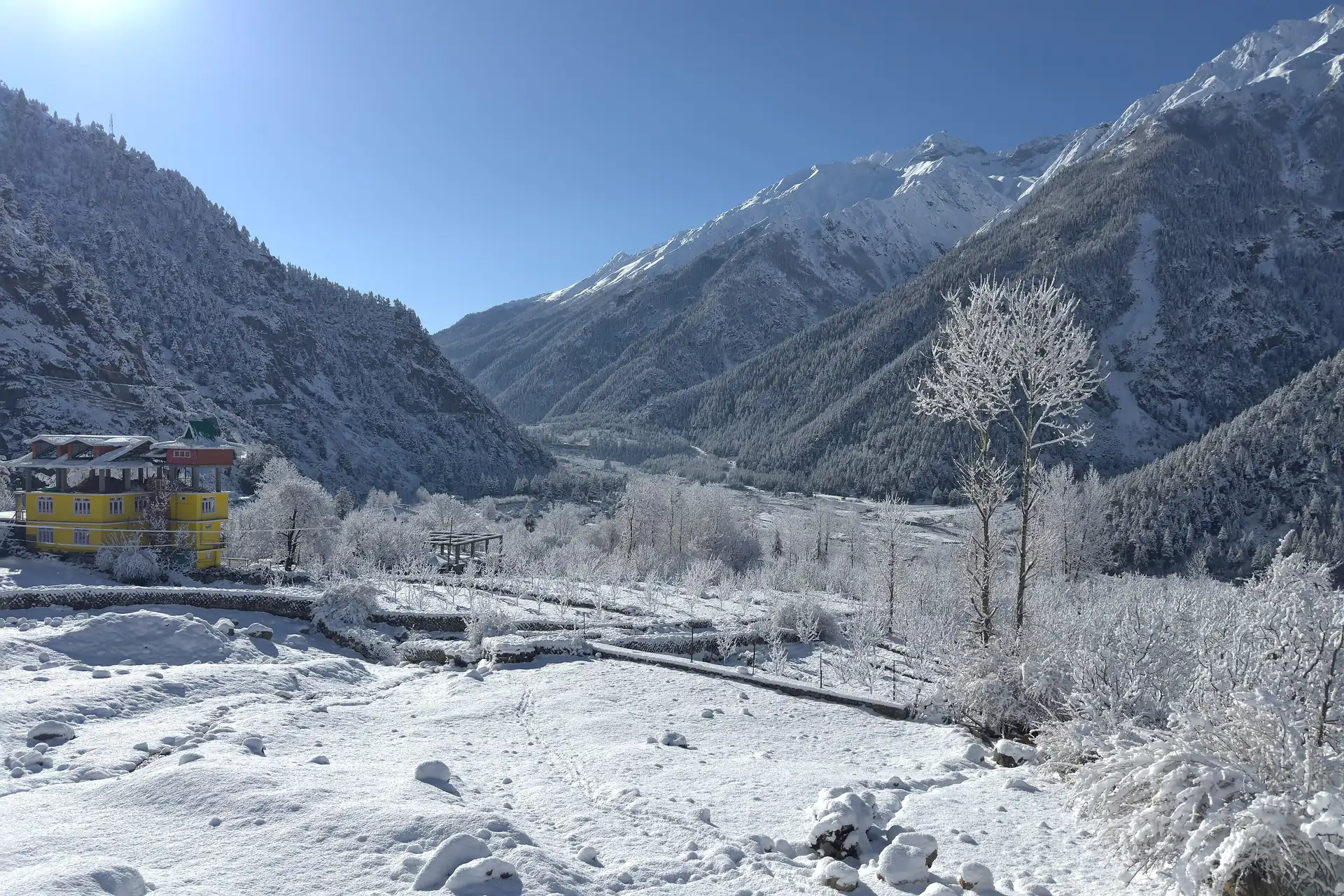
The best time to visit Sangla and the Baspa valley
A valley that runs cooler than it looks
Sangla sits at 2,650 m, and the nearest full weather station, Kalpa, sits noticeably higher and colder still — so treat every number below as a slightly cool estimate for Sangla itself, not an exact match. What holds true regardless of the exact figures: this is a genuinely cold-climate valley even in the warmer months, and the road above Sangla towards Chitkul is the thing that actually decides whether a trip works.
April to June — spring into early summer
The valley greens up and apple blossom appears on the slopes — the most comfortable window before the monsoon, and Kalpa's own record shows this stretch warming steadily, from highs around 5–7°C in January towards the low twenties by June. This is a reliable window for reaching Kamru Fort, Batseri and Chitkul all in the same trip.
July to September — lighter monsoon, but watch the road
Kinnaur sits partly in the rain shadow of the main Himalaya, so rainfall here runs lighter than lower Himachal even during monsoon. The real risk in these months isn't rain in the valley itself but landslip on the NH5 approach through the gorge below Sangla, which can add delay or force a reroute after heavy rain further down the highway.
October and November — apple harvest, clear skies, cooling fast
Kinnaur's apple harvest lands in October, and this is also when the valley's skies are at their clearest before winter sets in. A classic window for the drive to Chitkul, with the added bonus of the harvest itself if timing allows.
> the month — the window is short and weather turns quickly once it passes.
December to March — Sangla stays open, the valley above doesn't always
Winter lows fall to around -15°C at Sangla itself, colder still up the valley. The town remains reachable, but snow can close stretches of the road towards Rakcham and Chitkul for periods at a time each year — check conditions locally before planning that leg of a winter trip.
The short version
April to June or September to October for the full valley, Chitkul included. Any of those months work for Kamru Fort and Batseri alone, since both sit close to town. Avoid banking on the road past Rakcham in the depth of winter. The Sangla guide has the rest.
Plans that include this
All Sangla itineraries →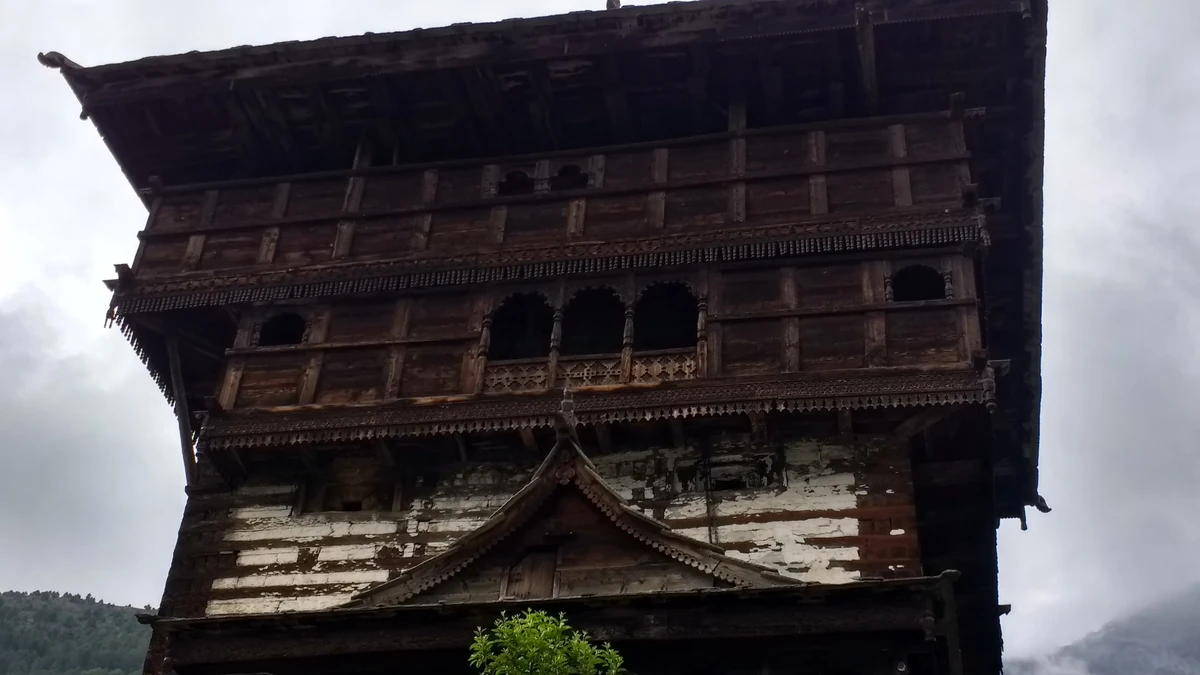
Questions people ask
Which month is best for Sangla?
April through June, or September and October — the valley is at its greenest in spring and its clearest in autumn, and both windows sit before or after the heavier rain. October adds the apple harvest, worth timing a visit around on its own.
Is Sangla open in winter?
The town itself stays reachable all winter, though winter lows fall to around -15°C and snow can close stretches of the road above Sangla towards Rakcham and Chitkul for periods at a time each year, sometimes lasting for days on end.
Does the monsoon affect a Sangla trip?
Less than in lower Himachal — Kinnaur sits partly in the rain shadow of the main Himalaya, so rainfall here is genuinely lighter. The bigger monsoon risk is landslip on the NH5 approach through the gorge, not rain in the valley itself.