Things to do in Kalpa — 5 stops, and which need a car
Five things to do in Kalpa, from the old village of Chini to the temple at Kothi and Reckong Peo, with measured drive times and the best time to go.
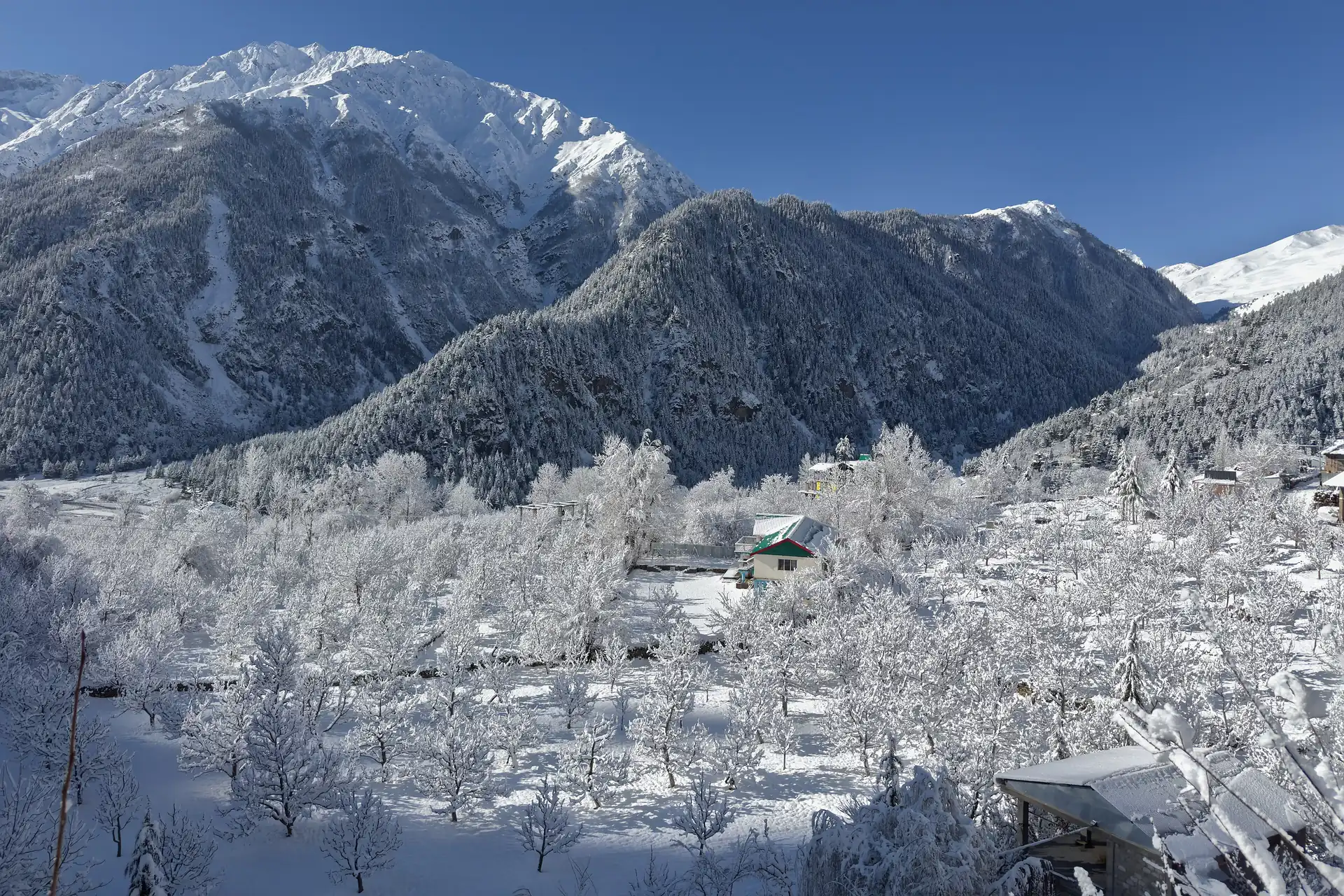
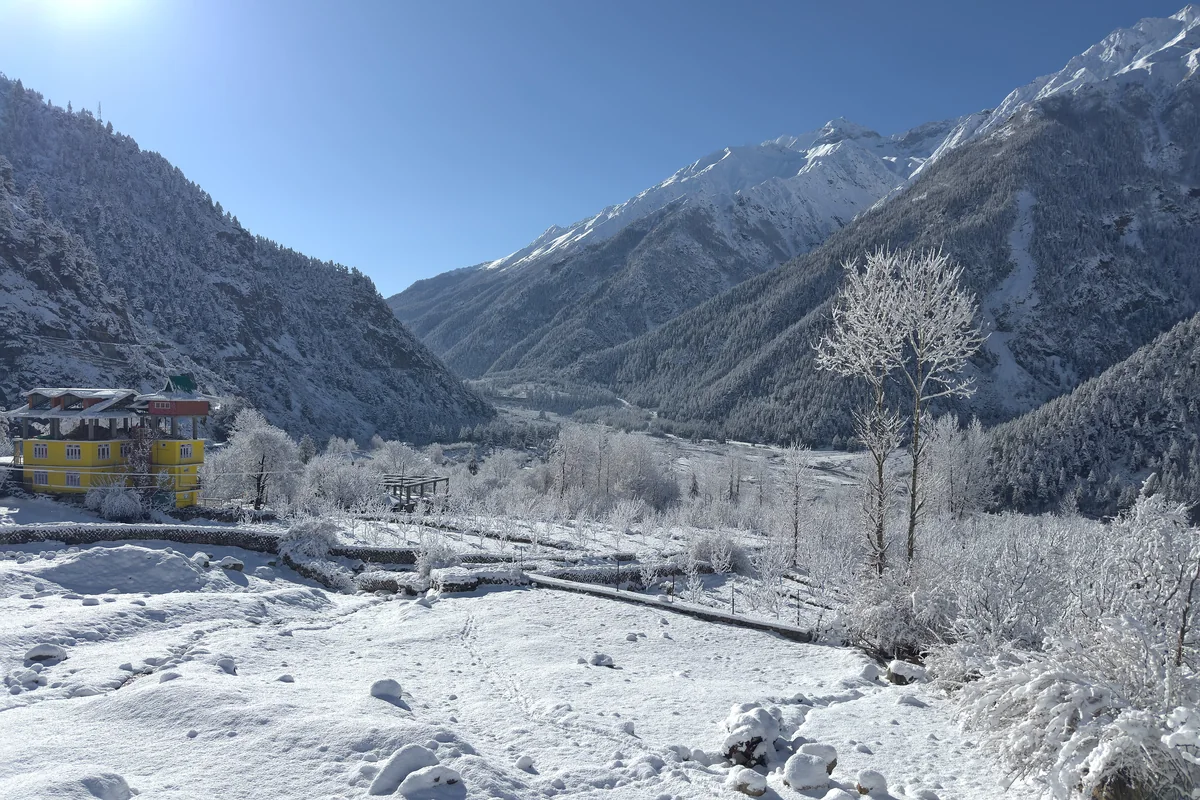
Kalpa has a long winter. Its own Wikipedia article gives winter as October to May, with the villages under about 5 to 7 ft of snow and the cold able to reach −20 °C. The IMD normals for the station, 1991 to 2020, put January days at 5.2 °C and nights at −3.8 °C, February at 6.7 °C and −2.9 °C, and December at 9.3 °C and −1.6 °C. The record lows are −15.4 °C in January, −11.0 °C in February and −8.6 °C in December.
Photos: UnpetitproleX (CC BY-SA 4.0) · UnpetitproleX (CC BY-SA 4.0) · Amareshwara Sainadh (CC BY-SA 3.0) · Rajarshi MITRA from Mumbai, India (CC BY 2.0) — via Wikimedia Commons, resized.
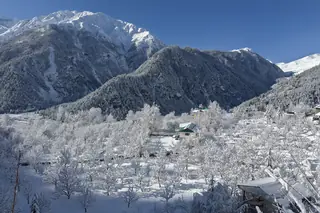
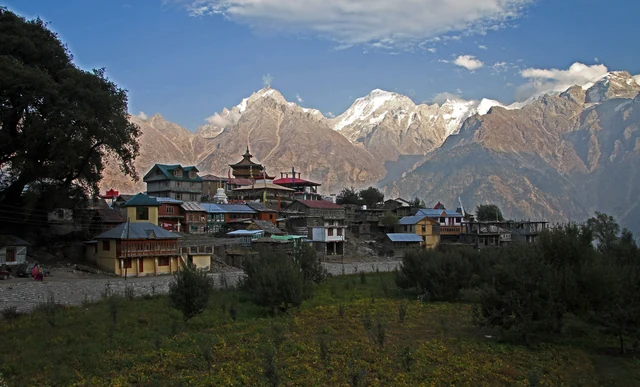
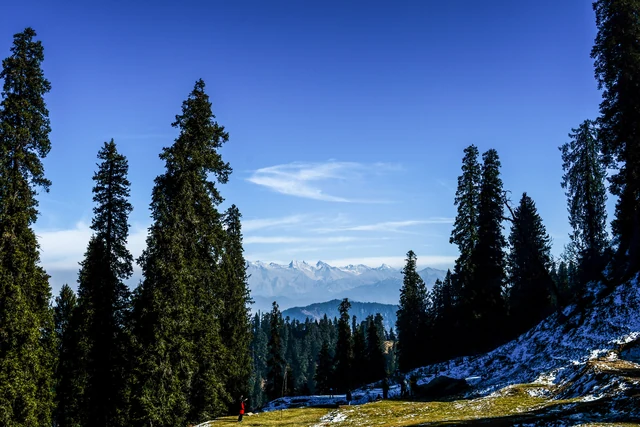
The reason to come anyway is the light: the Kinnaur Kailash range straight across the valley from Kalpa, white from top to bottom, and villages of wood and slate under snow with almost no one else on the road.
Precipitation at Kalpa, most of it snow in the cold months, builds through the winter: 35.1 mm in December, 94.7 mm in January, 103.7 mm in February and 147.3 mm in March, the wettest month of the year on the record. So December is the clear, cold month, best for views of the range, and January to March is when the big falls come. Sangla, down in the Baspa valley, gets winters cold enough to fall to −15 °C.
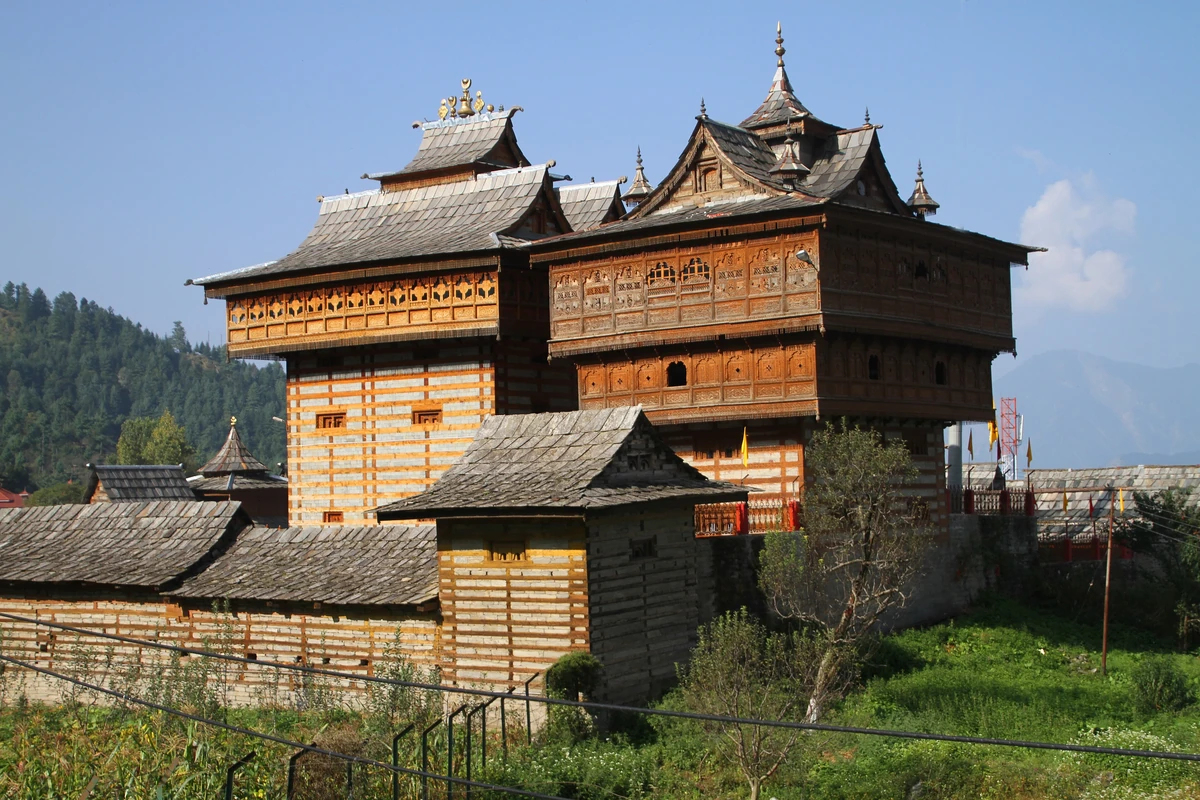
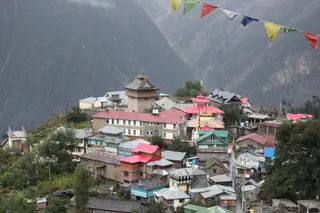
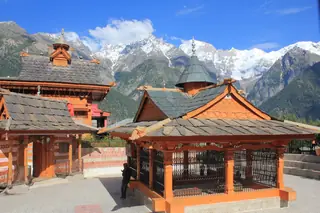
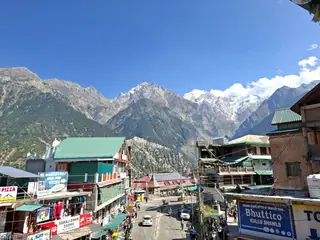
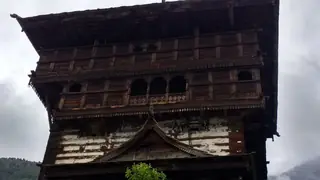
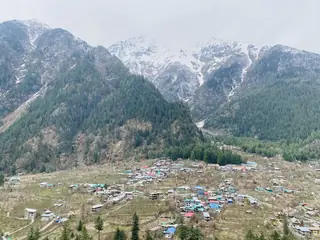
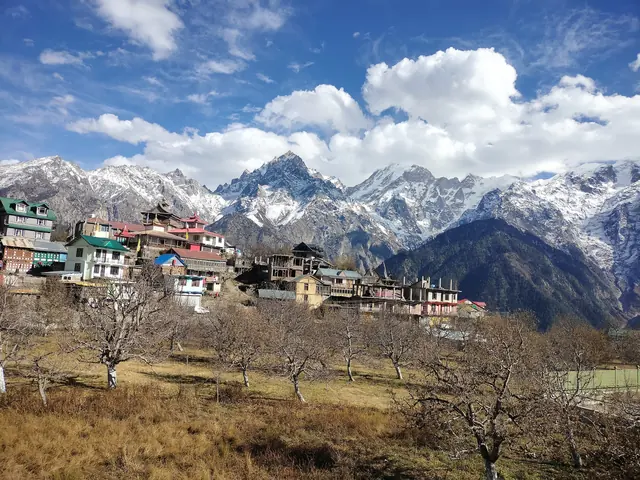
Kalpa. The old village above Reckong Peo, with the Narayan Nagini Temple and its wooden roofs, is lived in all winter. Walk it in the middle of the day, when the sun is on the lanes, and watch the range turn pink at dusk. Reckong Peo, the district headquarters about 20 min below, has the market and the bus stand.
Sangla. The Baspa valley is the classic Kinnaur snow picture: apple orchards, wooden houses and Kamru Fort on its spur, all white. Sangla is about 84 min from Kalpa by road in clear conditions. It is lived in through the winter and is the place to stay for the valley.
Chitkul. The last village of the valley mostly stays under snow in winter, and Wikipedia notes that its people move down to lower places for those months. Treat it as a day visit from Sangla if the road is clear, not a place to sleep, and ask in Sangla before going up.
Kalpa is about 220 km and 396 min from Shimla by road in clear conditions, up the Sutlej through Narkanda and Rampur. In winter break the drive with a night at Sarahan or Narkanda, and keep a spare day at the end for a closed stretch. The same road carries on to Nako, Tabo and Kaza, the only way into Spiti in winter; see Spiti in winter.
Pack for real cold: a down jacket, thermals, insulated boots, gloves and a hat, and ask before booking whether the room is heated. For the rest of the year, see the best time to visit Kalpa and things to do in Kalpa.
Heavily. Wikipedia describes long winters from October to May, with the villages covered by about 5 to 7 ft of snow and the cold able to reach −20 °C. On the IMD normals January days average 5.2 °C and nights −3.8 °C, and the record low is −15.4 °C.
Usually not to stay. Wikipedia notes that Chitkul mostly stays under snow in winter and that its people move down to lower places, so most of the village is shut. Sangla below it is lived in all year and is the place to base yourself; ask there whether the road up is open.
It is the main road of Kinnaur and is kept open through the winter, but heavy snow or a slide in the gorges can close it for a day or more. Kalpa is about 220 km and 396 min from Shimla on our measured routing in clear conditions; in winter plan for a night on the way.
January to March. Kalpa's record puts the most precipitation in March, 147.3 mm, after 94.7 mm in January and 103.7 mm in February, and the coldest nights in January. December is drier and clearer, good for views of Kinnaur Kailash but less likely to bring a fresh fall.