Chenab Rail Bridge — take away a pier and the train still runs
The Chenab Rail Bridge in Jammu and Kashmir stands 359 m above the river. Railways says it stays open at 30 km/h even if one pier or trestle is removed.
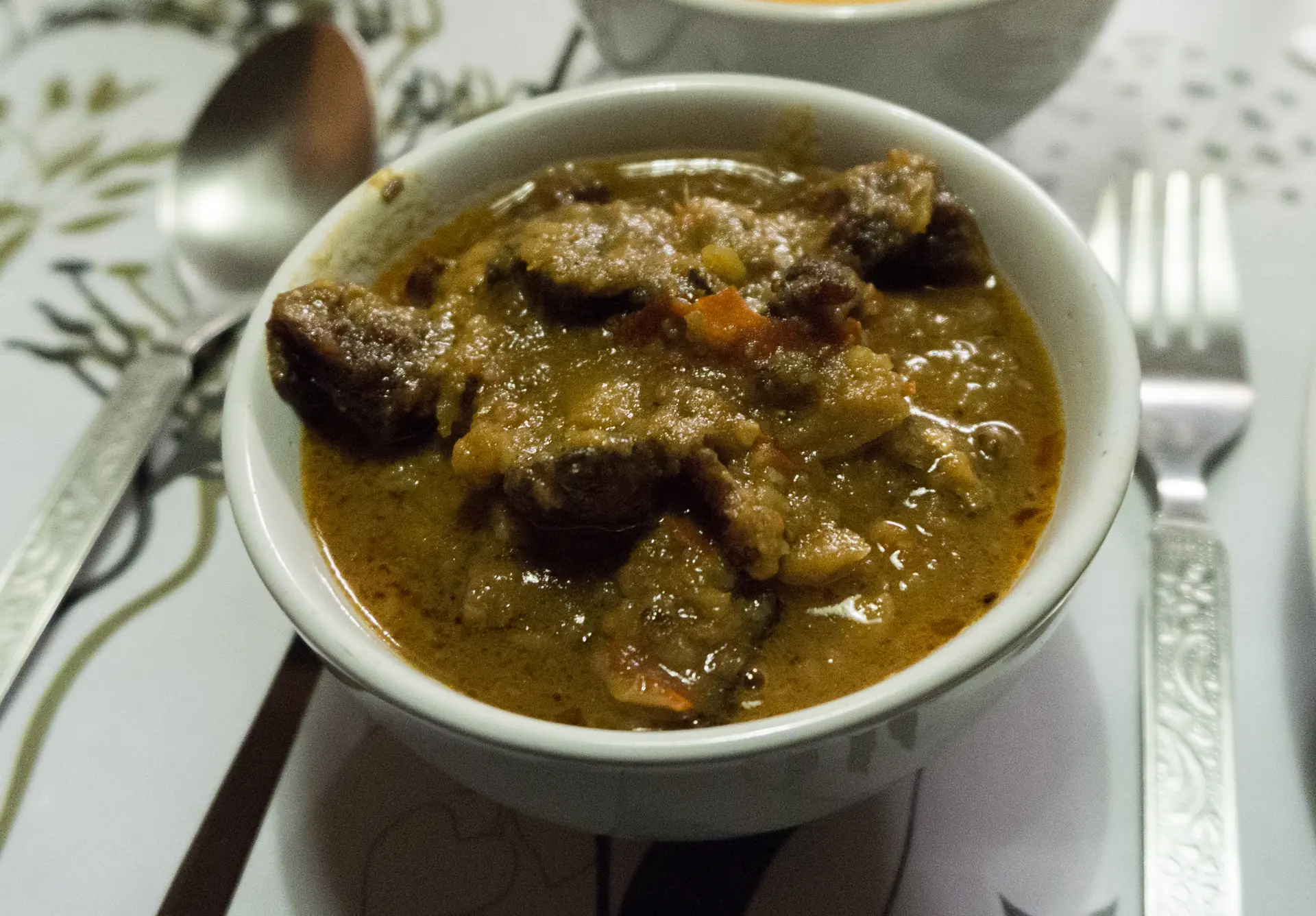
The food of Meghalaya and Nagaland is built on rice, pork, leaves and fermentation. Wikipedia calls rice the staple in both, eaten with foraged vegetables and fermented things, and says the dishes of the hill communities are many and different. This guide goes by what Wikipedia records, read on 24 October 2026. We name no restaurant, price or rating, because we have none we can check.
Photos: Wann Majaw (CC0) · Real Sovan (CC BY-SA 4.0) — via Wikimedia Commons, resized.
Wikipedia says the cooking falls into three regions by tribe: Khasi, Garo and Jaintia. Shillong was the colonial capital for the whole of the Northeast, which made it a food hub with a colonial taste: potatoes came with the British, and breads, cookies and cakes are tea-time favourites.
Wikipedia adds that the Slow Food movement has listed many of these Indigenous dishes in its Ark of Taste catalogue. For drinks, it names sha shiahkrot, a Khasi tea from the boiled root of a creeper, and cha khoo, a Jaintia rice drink.
Wikipedia describes a typical Naga meal as rice with a meat dish, boiled greens and a chutney. Wikipedia says the food is often hot, with the Naga morich and bhut jolokia chilli, and that Sichuan pepper is a popular spice. Dried or smoked meat is an important ingredient, and families keep it for a year.
The rice drinks are thuthse, the thicker, stronger, sweeter one, and zutho, which is lighter, both traditional among the Angami and Chakhesang.
Start in Shillong and Kohima, and read things to do in Shillong and things to do in Kohima. The Hornbill Festival and the village festivals are the best days for Naga food; see the festivals by month. Read how to reach Meghalaya and Nagaland from Delhi.






A rice and meat dish of the Khasi, the best-known dish of Meghalaya. Wikipedia lists it first among the Khasi dishes, with tungrymbai, the fermented soybean, dohkhlieh, a pork salad, tungtap, fermented fish, and dohjem, pork in sesame seeds. Rice is the staple carbohydrate across the state, eaten with foraged vegetables and fermented foods.
A fermented soybean product of Nagaland, also written akhuni, from the Sümi word for deep smell. Wikipedia says soybeans are boiled, fermented for three to four days in summer and about a week in winter, then crushed and wrapped in banana leaf. It is often served with smoked pork and beef, and it smells strong.
Wikipedia says smoked meat has practical value for farmers, foragers and hunters, and that families often keep it for a whole year as food security. Pork or beef is hung over a fire, or on the kitchen wall, anywhere from a day to a fortnight or more. A typical meal pairs rice with meat, boiled leaves and a chutney.