Loktak Lake and Keibul Lamjao — the national park that floats
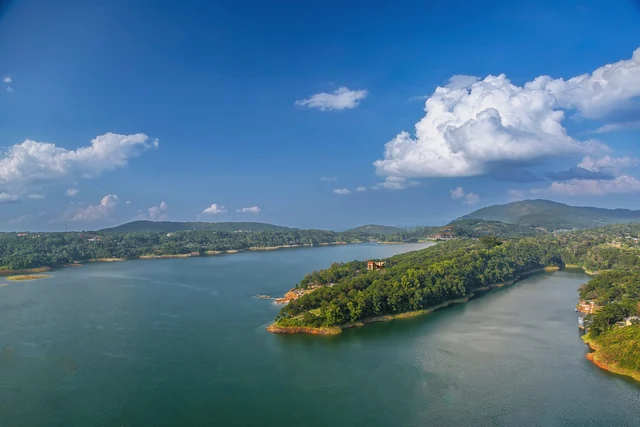
Keibul Lamjao on Loktak Lake, Manipur, is called the only floating national park: phumdi mats of grass and soil, 80% underwater, home of the sangai deer.
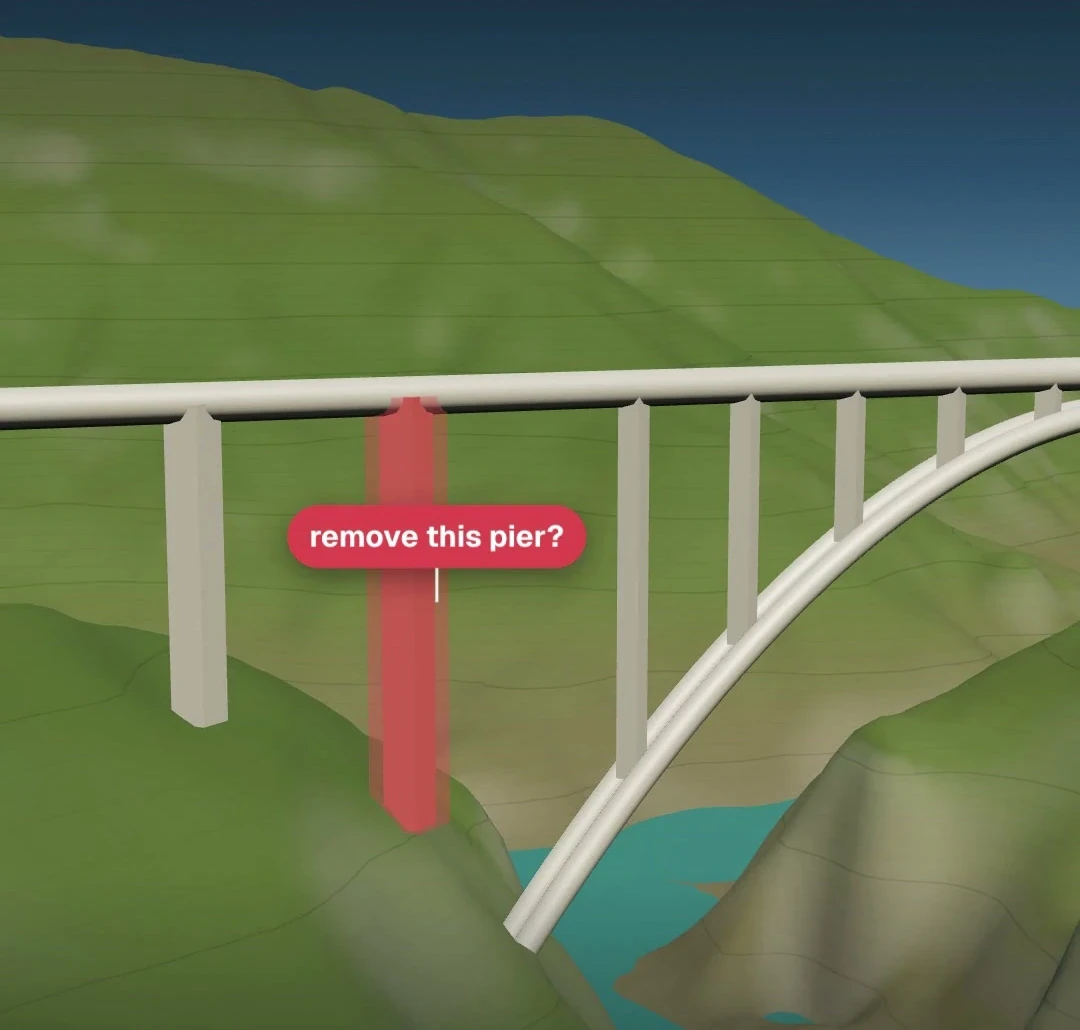
In Reasi district of Jammu and Kashmir, the railway to the Kashmir valley crosses the gorge of the Chenab on a steel arch. Its deck stands 359 m above the river bed, the highest railway bridge in the world. But the most surprising fact about it is not its height. Indian Railways says that if one of its piers were taken away, the bridge would not fall, and trains would still run across it.
When the arch was closed in April 2021, the Ministry of Railways listed the bridge's design features. One of them reads, in its own words, that the bridge "will remain operational at restricted speed of 30 Km/Hour even after removal of one pier/trestle".
So the bridge was built with spare strength: lose one support and it does not come down. Trains would have to slow to 30 km/h, but the line would stay open.
All from the Railways' release unless marked:
It stands between Kauri and Bakkal on the Jammu–Baramulla line, about 23 km north of Katra (Wikipedia).
Photos: bhisham pratap padha from Jammu, India (CC BY-SA 2.0) · Ojhayogesh (CC BY-SA 4.0) — via Wikimedia Commons, resized.
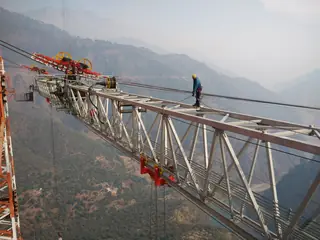
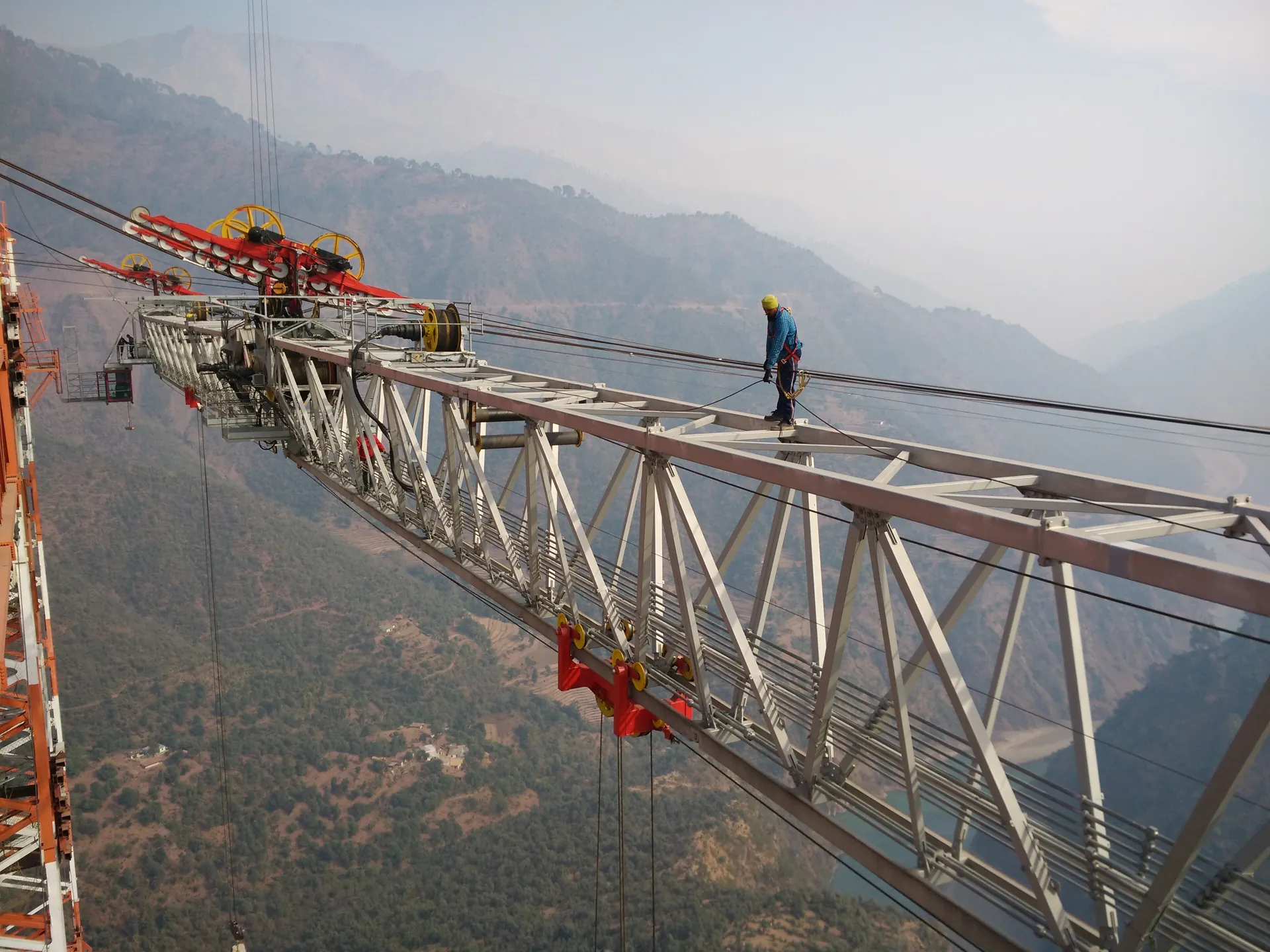
Tenders for the bridge went out in 2003. The pictures here show the build: the first piers and a cable-crane tower on the Kauri side in 2013, and the arch going up in 2016. The arch was joined in the middle in April 2021, the bridge was finished in August 2022, and trial runs began in June 2024. On 6 June 2025 it opened for regular trains, on the line between Katra and Srinagar.
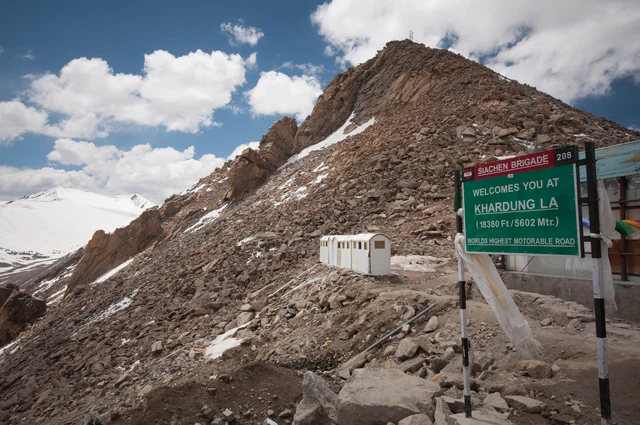
From the high roads of Ladakh, read why the Khardung La sign is wrong and how villages there grow their own glacier. The bridge is on the line north of Katra: see how to reach Katra, which follows the railway on to Srinagar. Our Kashmir guides start at Srinagar and Gulmarg. Or browse every destination.

Its deck stands 359 m above the river bed, which makes it the highest railway bridge in the world, according to Indian Railways and Wikipedia. It is 1,315 m long in 17 spans, and its main arch spans 467 m across the gorge of the Chenab in Reasi district of Jammu and Kashmir.
Indian Railways says the bridge will remain operational at a restricted speed of 30 km/h even after the removal of one pier or trestle. In other words, it was designed with spare strength, so losing one support does not bring it down; trains slow down, but they can still cross.
Regular trains began crossing it on 6 June 2025, between Katra and Srinagar. The arch had been closed in April 2021, the bridge was completed in August 2022, and trial runs began in June 2024, by Wikipedia's account. It carries the line that links the Kashmir valley to the rest of India's railways.
By the Railways' own figures: a design speed of 100 km/h, winds of up to 266 km/h, and the earthquake forces of seismic zone V, the highest intensity zone in India. Its designed life is 120 years, and its steel was chosen for temperatures from minus ten to forty degrees.