
Kabi Lungchok — the stones of the Lepcha–Bhutia blood brotherhood
What it is
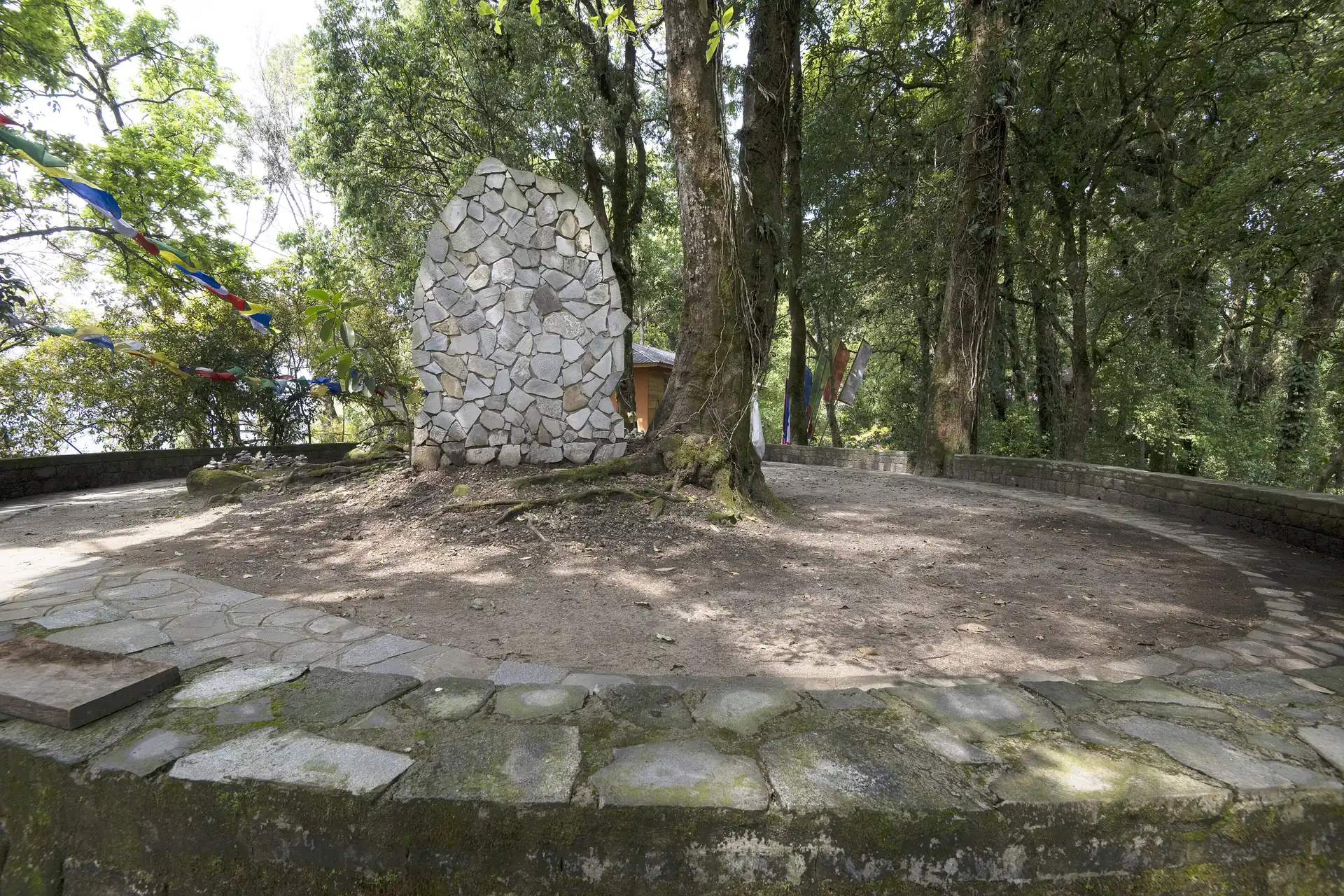
Kabi Lungchok, also written Kabi Longstok, is a historic site on the North Sikkim road, about 17 km north of Gangtok by Wikipedia's figure. By the traditional account, it is where the Bhutia leader Khye Bumsa and the Lepcha chief Thekong Tek swore a treaty of blood brotherhood, joining the two peoples.
Photos: walter callens (CC BY 2.0) — via Wikimedia Commons, resized.
The story
The Bhutias came to Sikkim from Tibet from the 14th century on, and the Lepchas are described by Wikipedia as the older community. The treaty was sworn with a ceremony, and stone pillars were raised to mark the place. The name Kabi Lungchok is read as "the stone erected by our blood". Wikipedia notes that other accounts describe a third party, the Limbu, so the traditions differ in detail.
What you see
A grove with stone pillars, ceremonial scarves tied round the stones, and statues of the two blood-brothers at human scale. It is a short stop, not a half-day site.
Getting there
It lies on the North Sikkim road, north of Gangtok and before Phodong; see the quick facts for the measured road time. We have no verified opening hours or entry rules.
Combine it with
The North Sikkim road day stops here on the way to Phodong and Labrang. Read things to do in Gangtok and how to reach Gangtok.
Plans that include this
All 1 plans that stop here →
Nearby places
All of Gangtok →
Nearby destinations
All destinations →
Questions people ask
What is Kabi Lungchok?
A historic site on the North Sikkim road, about 17 km north of Gangtok by Wikipedia's figure. By the traditional account the Bhutia king Khye Bumsa and the Lepcha chief Thekong Tek swore a treaty of blood brotherhood here, and stone pillars mark the place. The name is read as the stone erected by our blood.
Who signed the treaty at Kabi Lungchok?
Wikipedia says the Bhutia migrants from Tibet were represented by Khye Bumsa and the Lepchas by Thekong Tek, and that other sources describe three communities, Lepcha, Limbu and Bhutia, as parties. Details are told differently by different accounts, so treat the story as a tradition rather than a single dated record.
What is there to see at Kabi Lungchok?
Wikipedia mentions stone pillars at the spot and figures of the Lepcha chief and the Bhutia leader, made at human size. It is a quiet grove rather than a monument with a long visit, so it suits a short stop on the way to Phodong and Labrang. We have no verified opening hours or entry rules.