
The monasteries of Spiti — a guide to Kaza's gompas
Five monasteries, several schools
Spiti's best-known monasteries — Key, Dhankar, Tangyud, Kungri and Lhalung — span several schools of Tibetan Buddhism and several centuries of building. Each has its own reason to visit.
Key Monastery — the largest, and the easiest first stop
A short drive from Kaza, founded in the 11th century, and the valley's biggest active monastery — a training centre for lamas said to have housed around 100 monks in 1855, built up a hillside in stacked, whitewashed blocks.
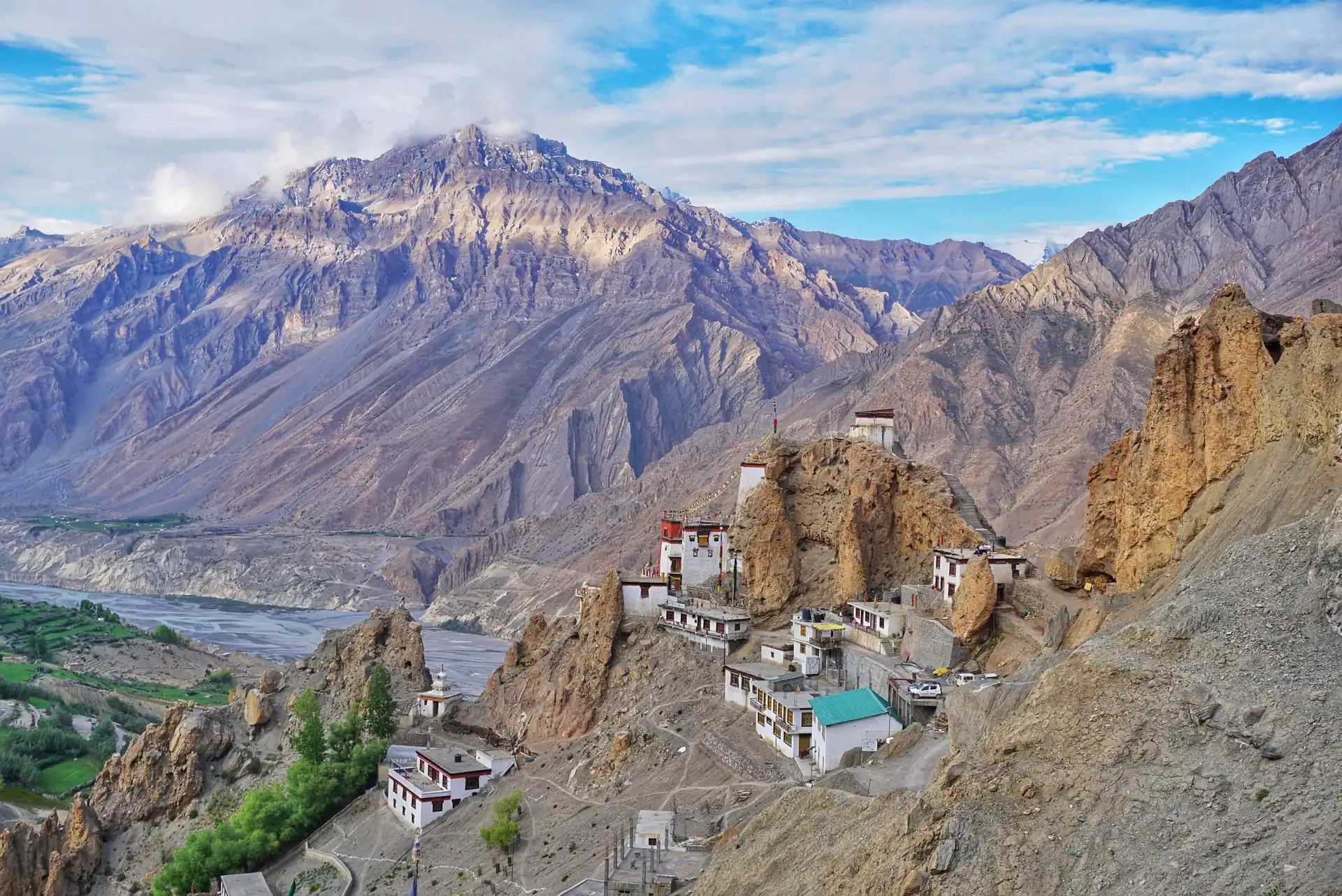
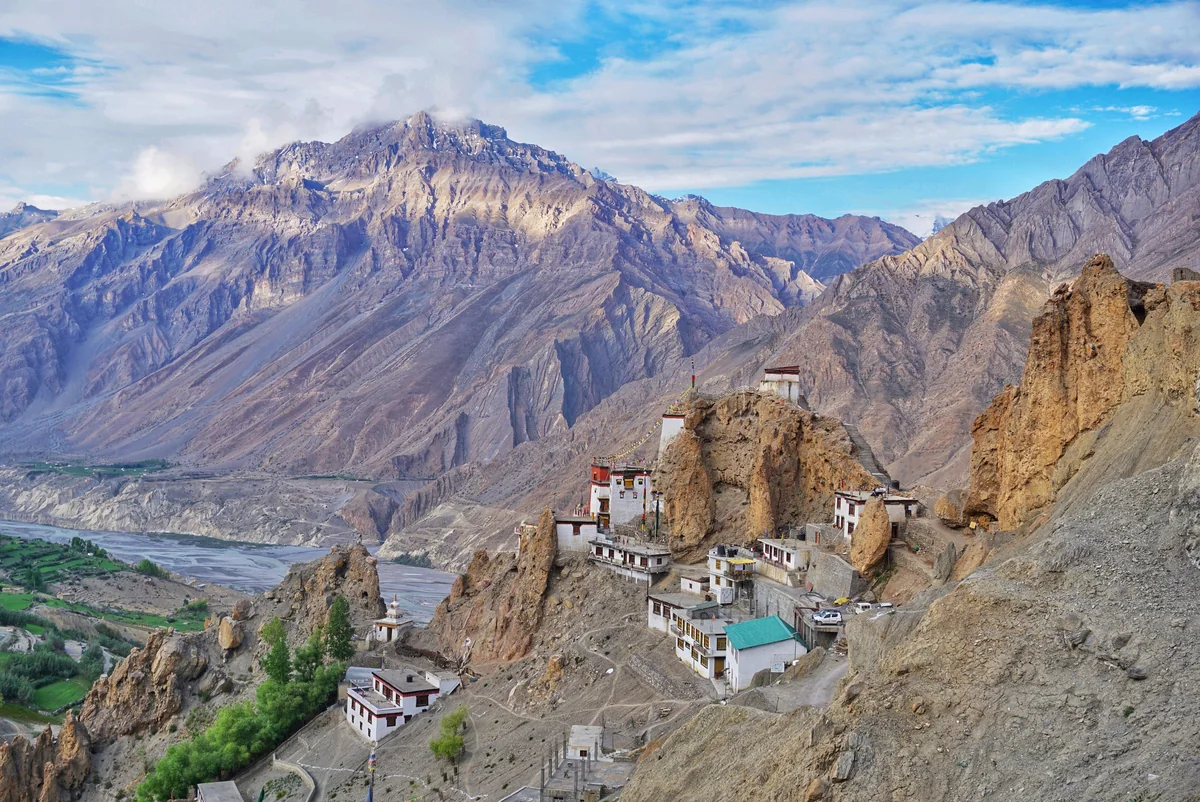
Dhankar — the most dramatic setting
On a 300-metre spur directly above the confluence of the Spiti and Pin rivers, in what's widely considered one of the most spectacular settings for a gompa anywhere. Built as a fort monastery on the same pattern as Key, with Dhankar Lake reached by a trek above it.
Tangyud Monastery — the fortified one at Komic
A castle-like structure at Komic village, its walls striped in red ochre and white, dating to the early 14th century — built to double as a defensible structure on a frontier, on the edge of a deep canyon overlooking Kaza.
Kungri and Lhalung — the Pin valley's quieter side
Kungri, founded roughly seven centuries ago, is second only to Key in age among Spiti's gompas and belongs to the Nyingma school — known locally for a sword dance performed on festival days. Lhalung, further up the same valley, holds a notable statue of Manjushri and sees far fewer visitors than anything on the main Kaza circuit.
> Lhalung as a separate Pin valley day — to move from the closest and easiest stop to the most remote.
Planning a monastery circuit
The one-day loop covers Key, Kibber and Chicham Bridge. Add a second day for Dhankar and its lake with the two-day classic plan, or a third day in the Pin valley with the three-day full-circuit plan.
Plans that include this
All Kaza itineraries →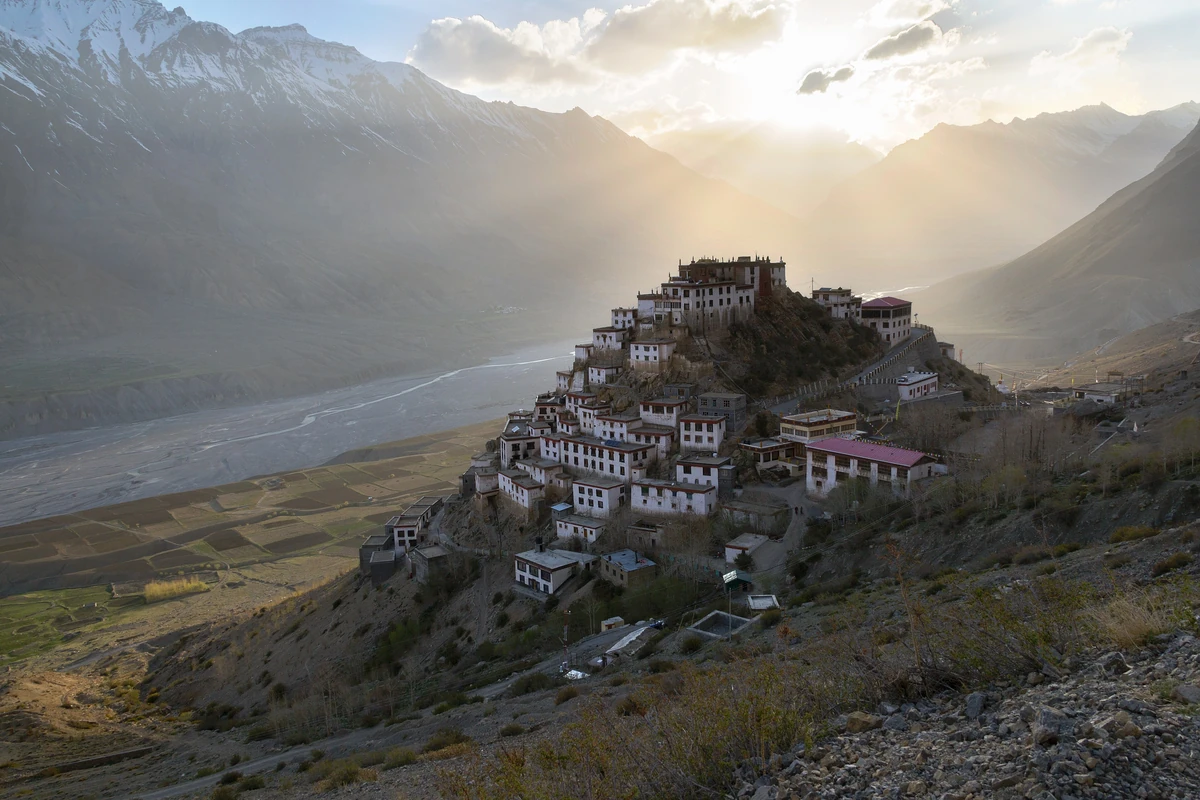
Questions people ask
Which of Spiti's monasteries should I visit first?
Key Monastery, closest to Kaza at about half an hour's drive, works well as an introduction — it's also the valley's largest. From there, Dhankar's dramatic cliff-edge setting and Tangyud's fortified walls at Komic add depth the first stop doesn't have.
What makes Spiti's monasteries look like forts?
Several — Key, Dhankar and Tangyud among them — were built on a central Tibetan pattern shared with Ladakh's Thiksey and Likir monasteries: massive slanted walls and battlements, built for defence on a frontier as much as for worship on a remote one.
Are all of Spiti's monasteries the same Buddhist school?
No — Key and Dhankar are associated with the Gelug tradition, while Kungri and Lhalung in the Pin valley belong to the older Nyingma school. The variety across a small area reflects Spiti's long history as a crossing point for different lineages of Tibetan Buddhism.