
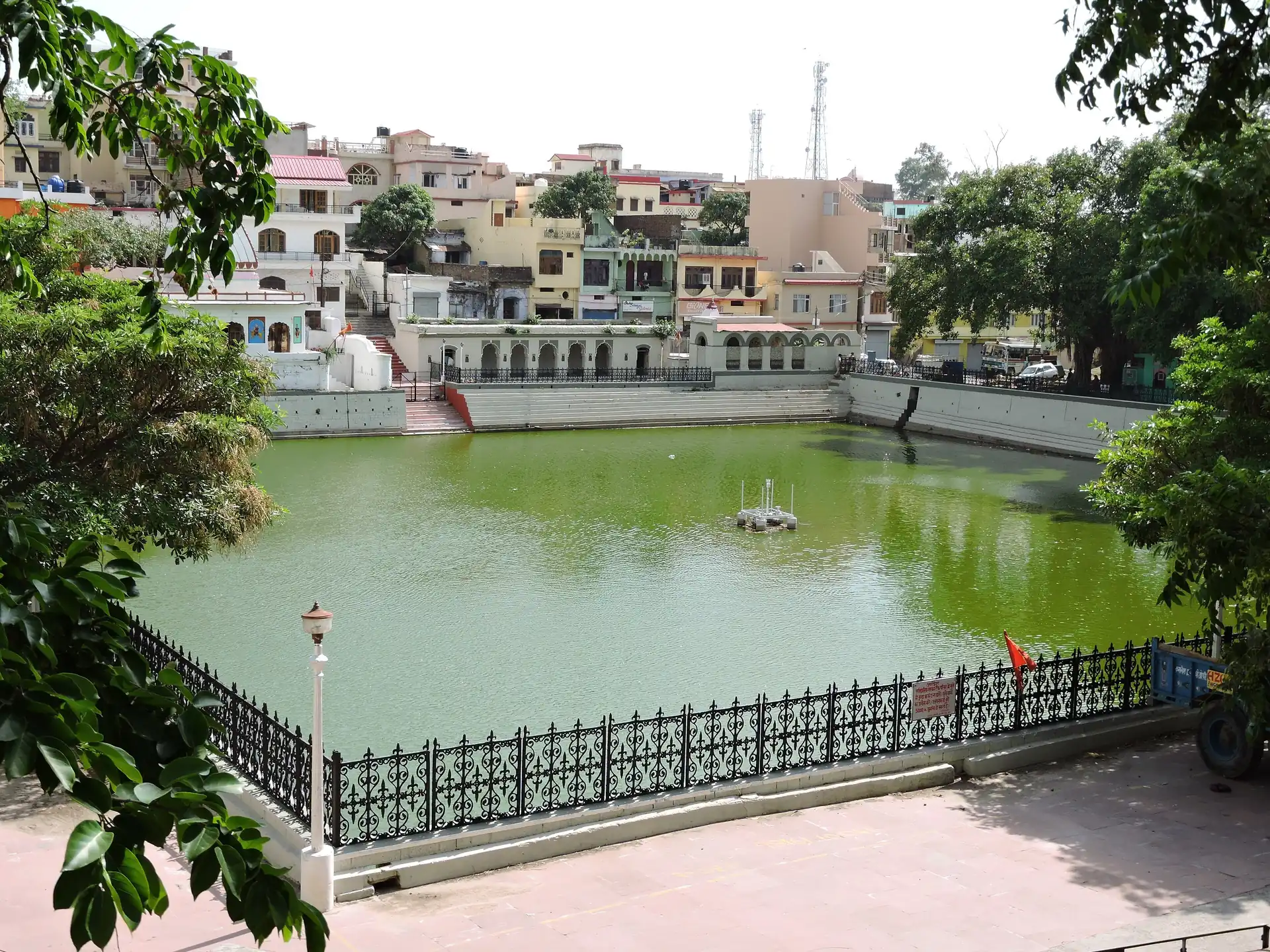
The best time to visit Nahan
The numbers we use
Nahan has a full published climate table from the India Meteorological Department, covering 1991–2020, so every figure below is a real monthly value for this station rather than a guess from a neighbour.
March and April — the best spring
Highs climb from 25.4°C in March to 31.2°C in April, and rain drops to about 40 mm and then 23 mm. A reliable stretch for Nahan Fort, Rani Tal and the drive out to Trilokpur Temple, which also holds a big fair at Navaratri in April.
May and June — hot
May highs average 33.6°C, and the record is 46.2°C. June is similar until the rain arrives, with about 234 mm. Start early and keep the middle of the day for shade.
July to September — the monsoon
July records about 480 mm over roughly 16 rain days and August about 505 mm, against an annual total of 1,733.1 mm. Highs ease to about 28°C, but humidity and rain make the pond and the fort walk unpleasant, and hill roads are slower.
October and November — clear and cooling
Rain falls away to about 41 mm in October and just 6 mm in November, and highs drop from 27°C to 23°C. This is the other best window, with clear evenings at Rani Tal.
December to February — cool
January highs are about 17°C and lows near 8°C, with a record low of −2.6°C. It is cool rather than cold, and February brings a little more rain than the other winter months.
The short version
March–April or October–November for the clearest, most comfortable stretch. Avoid May–June for the heat and July–August for the rain. The Nahan guide has the plans, things to do in Nahan lists the stops, and how to reach Nahan covers the roads.
Plans that include this
All Nahan itineraries →

Questions people ask
Which month is best for Nahan?
March–April and October–November. Highs sit around 25–31°C in spring and 23–27°C in autumn, and the rain is light. Avoid July and August, when the two months record about 480 mm and 505 mm, and May–June, when highs reach the low 30s°C.
Does Nahan get cold in winter?
Cool rather than cold. January highs are around 17°C and lows near 8°C, with a record low of −2.6°C on the station's own record. It is a mild winter for a Himachal town, since Nahan sits at only 932 m, well below the higher hill stations.
How bad is the monsoon in Nahan?
Very wet. July brings about 480 mm over roughly 16 rain days and August about 505 mm, together over half of the 1,733.1 mm annual total. Roads and views suffer, so plan the fort, the pond and Trilokpur for another season.