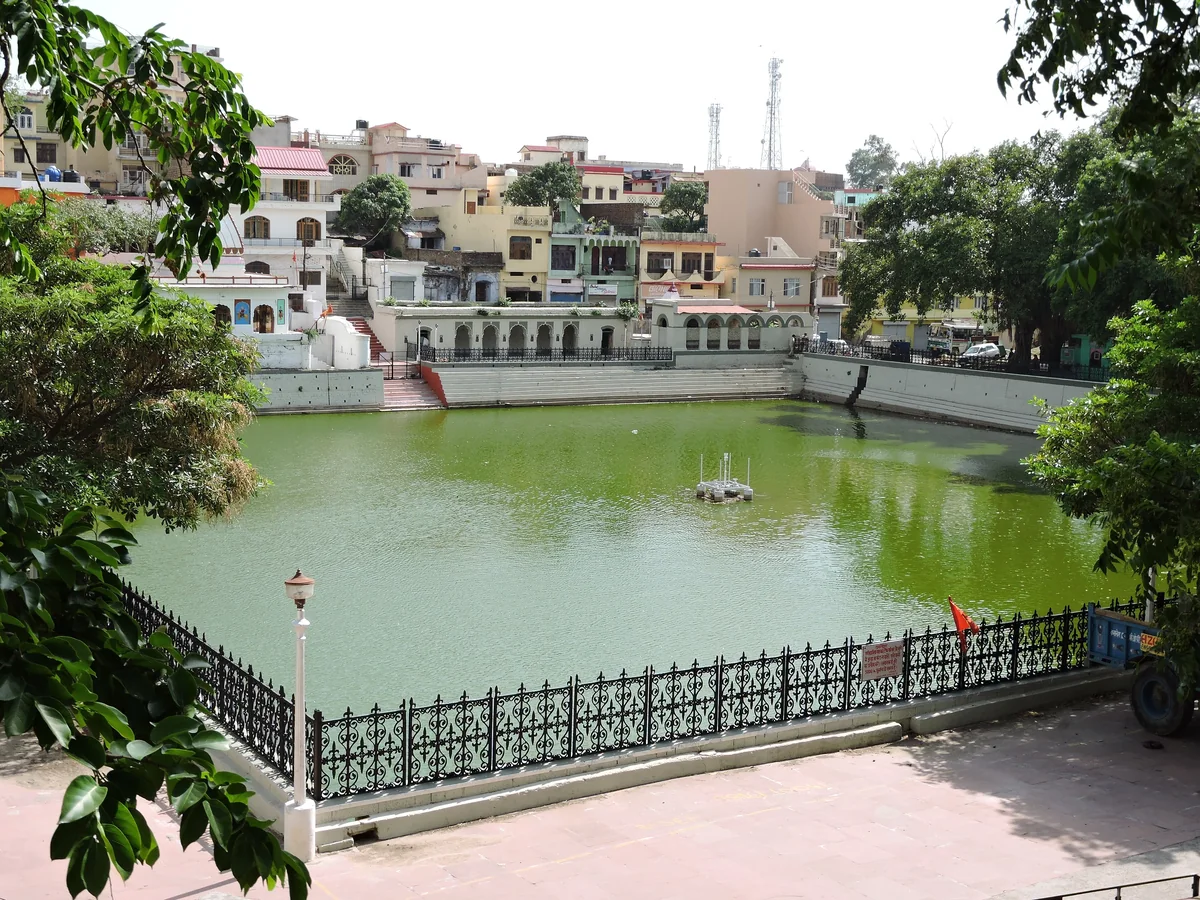
Rani Tal, Nahan
lake · 315 m away
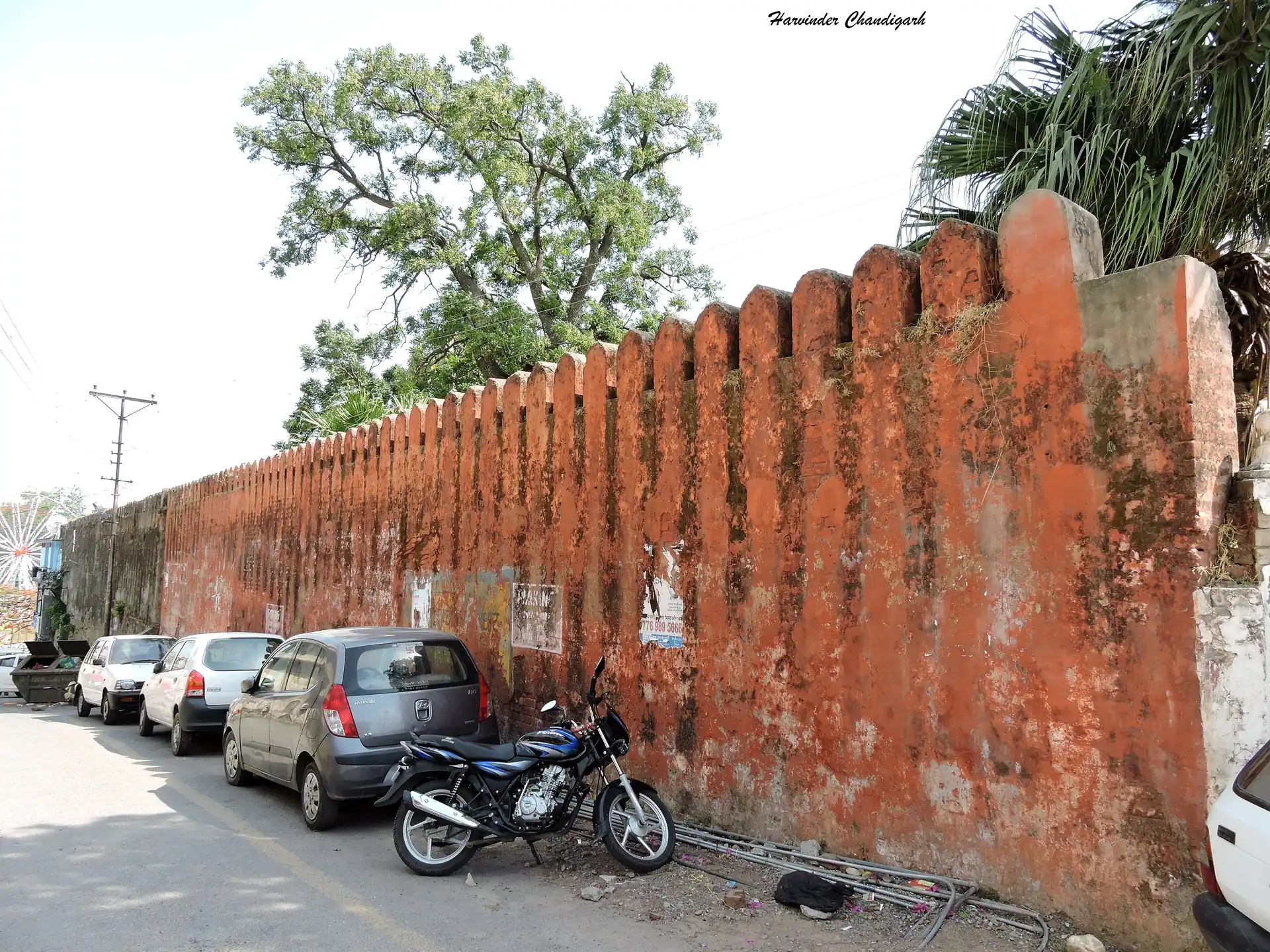
Nahan Fort, also called Nahan Palace, was the seat of the Sirmaur rulers. Raja Karam Prakash founded Nahan in 1621 and made it the capital of Sirmur, then a princely state. The fort sits inside the town, so its wall runs along ordinary streets, with shops and parked scooters beside it.
Photos: Harvinder Chandigarh (CC BY-SA 4.0) — via Wikimedia Commons, resized.
About 4 minutes by road from the centre point we measure from, roughly 1.4 km, and easily reached on foot from most of the town. It is a stop on both the one-day plan and the two-day plan.
The crenellated outer wall is the part you can see from the street, and it is worth walking along. Signs on the walls mark the property as private, so treat the wall and the gate as the visit and ask locally before assuming you can go in.
The history is the real interest. In 1810 Gurkha forces under Ranjor Singh Thapa attacked and ransacked the fort and palace. They are reported to have used the recovered material to build Jaitak Fort, the hill fortress about 15 km away that later saw a major battle of the Anglo-Nepalese War.
March–April or October–November, when Nahan is dry and mild. See when to visit Nahan for the monthly figures.
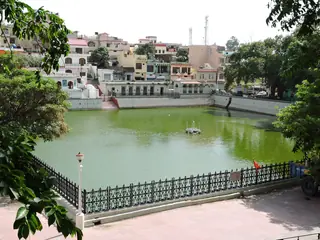
Rani Tal is the town's central pond and temple. Trilokpur Temple is the day trip out. For costs and timing across every stop, see things to do in Nahan.
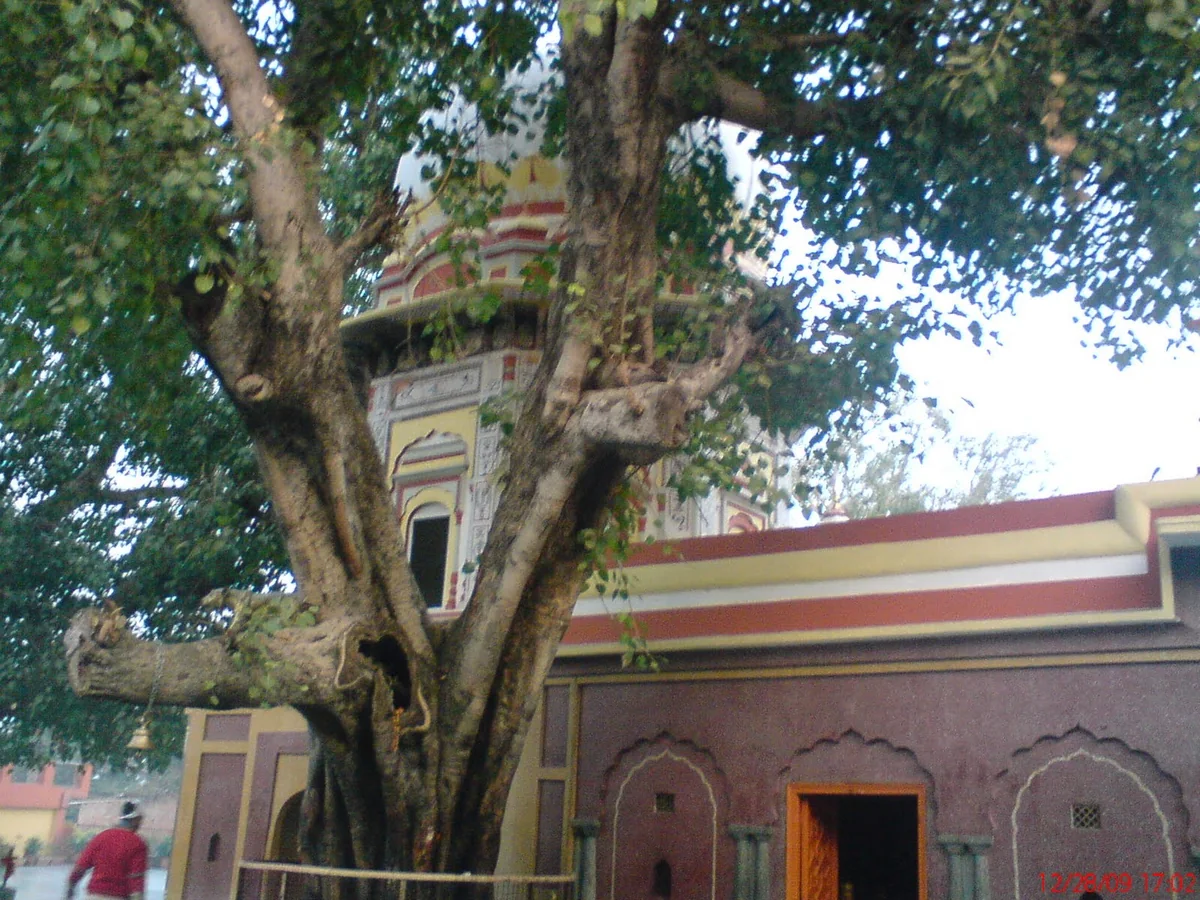
Nahan Fort, also known as Nahan Palace, was the royal seat of the Sirmaur rulers. Raja Karam Prakash founded the town in 1621 and made it the capital of Sirmur, then a princely state. What survives today is largely the crenellated outer wall, in the middle of the streets.
Gurkha forces under Ranjor Singh Thapa attacked and ransacked Nahan Fort and its palace in 1810. Jaitak Fort, about 15 km away, is reported to have been built from the material recovered from the ruined Nahan Fort, which links the two places.
Do not count on it. Signs on the walls mark the property as private, and access is not guaranteed. Treat the outer wall and the street it runs along as the reliable part of the visit, and ask locally if you want to know whether any part is open.