
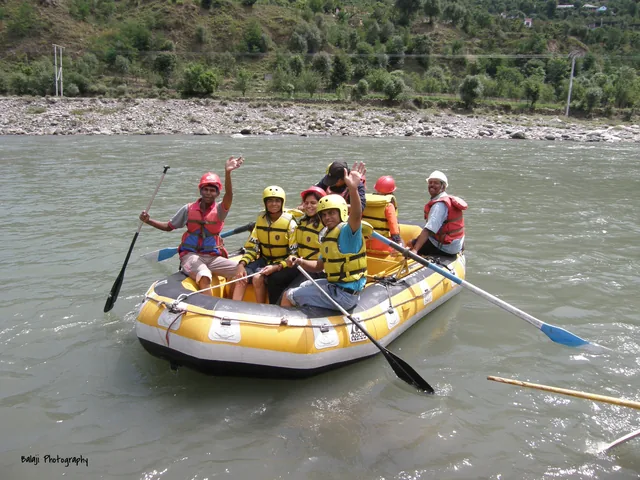
River rafting near Manali
Where it happens
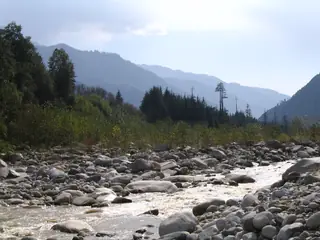
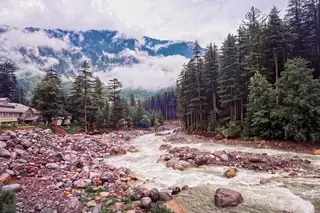
Rafting is a Kullu thing, not a Manali thing. The Beas at Manali is a steep, boulder-strewn torrent; by the time it reaches the valley floor below Kullu it has widened and slowed into a river you can put a raft on. The stretch runs from Pirdi, on the highway south of Kullu, down to around Jhiri near Bhuntar — about 40 km and roughly 49 min from the Manali bus stand. Most people do it as the first half of a day that continues to Kasol or on the way down to the airport at Bhuntar.
Photos: Kunalsvnit (CC BY-SA 4.0) · In Transit (CC BY 4.0) — via Wikimedia Commons, resized.
You do not book in Manali. The counters are on the roadside at Pirdi, side by side, and you go with the next raft to fill. Each counter is an operator with its own rafts and guides; there is no central booking and no need for one outside the peak weeks of May and June, when arriving by nine avoids the wait.
The stretches
Two, roughly. The short stretch is a few kilometres of steady water with a handful of small rapids — forty minutes on the river, the one families and first-timers take. The long stretch runs the full way to the take-out with more and bigger rapids and an hour and a half or more in the raft. Both end with a jeep ride back to the start, which is part of the price.
What it costs
Two operators list rafting on HimLocal, with their prices on the listing: Manali Trails Adventure, from its counter at Dobhi, charges ₹500 a person for the short run and ₹1,000 for the long. Aesthetic Himalayas charges ₹700 for its splash run and ₹1,300 for the rapids run. Those are their listed prices as of October 2026, and each operator page takes enquiries and bookings.
At the roadside counters the price is typically ₹500–1,500 per person, checked in September 2026 against the local market, the short stretch at the low end and the long at the top, quoted at the counters on the day. The price covers the raft, a guide, life jacket, helmet and the jeep back. Waterproof phone pouches and photographs are sold on top. Ask before paying what is included; ask to see the jacket and helmet; cash is easier at the river.
Season and water
March to June and September to November. Snowmelt makes May and June the highest, coldest and roughest water; the monsoon closes the river in July and August; autumn is lower and clearer with gentler rapids. Mornings are calmer than afternoons on the water and the road. Wear clothes that can get wet and shoes that stay on; leave everything else in the jeep.
Getting there and making a day of it
Down the valley on the Kullu road: about 40 km and 49 min by taxi, or any Kullu bus from the Manali bus stand to Pirdi. A taxi for the day makes sense if you are going on to Kasol or Manikaran afterwards, which is the usual shape of the day — raft in the morning, the Parvati valley after lunch. The Kullu guide has the town and the temples for the return.
Operators
No operator has listed this on HimLocal yet. The prices above are typical local rates; you pay the operator on the ground.
Run a centre here? List it on HimLocal →Plans that include this
All Manali itineraries →


Places around Manali
The Manali guide →
Nearby destinations
All destinations →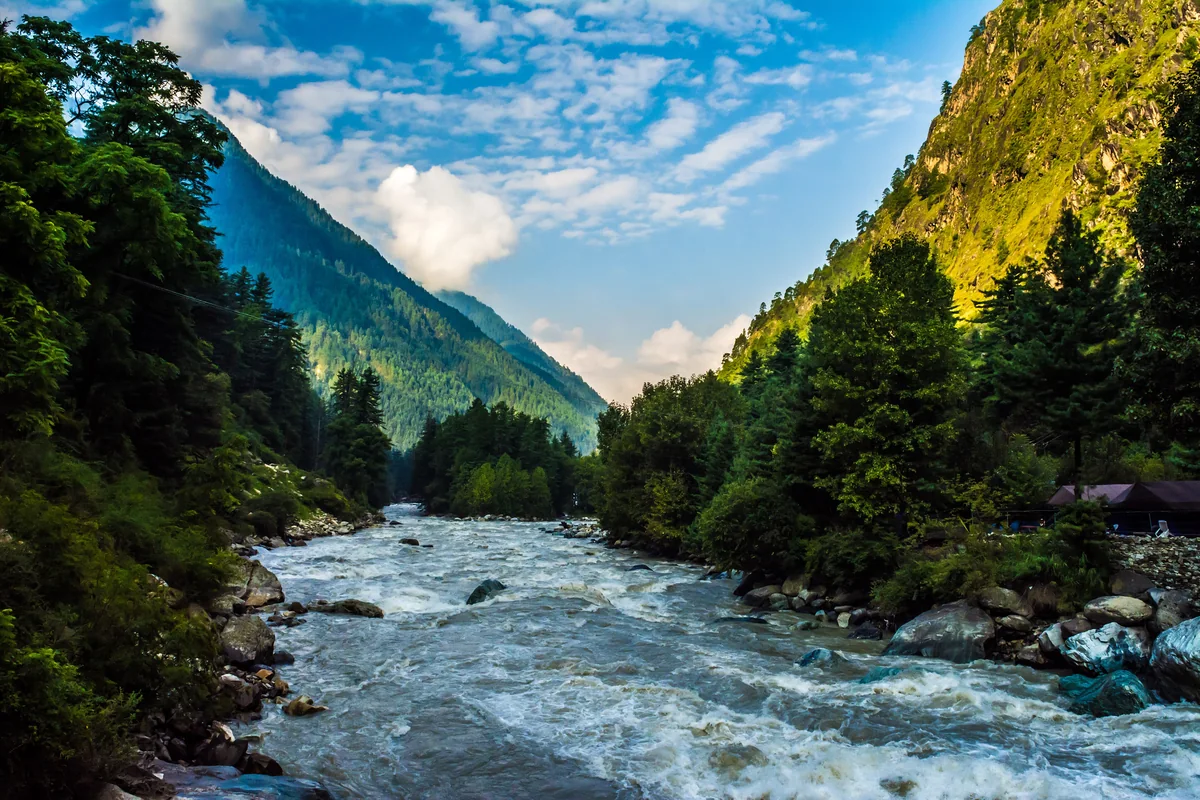
Questions people ask
Where is river rafting done from Manali?
Not in Manali itself — the river there is too steep and rocky. The rafting stretch is on the Beas below Kullu, put-in at Pirdi and take-out around Jhiri, about 40 km and roughly 49 min down the valley towards Bhuntar. Counters line the road at Pirdi; you turn up, pay, and go with the next raft.
How much does rafting cost near Manali?
Typically ₹500–1,500 per person, checked in September 2026 against the local market: the short stretch at the low end and the long one at the top, quoted at the riverside counters on the day. It includes the raft, guide, life jacket, helmet and the jeep back to the start; ask before you pay what is not.
When is the rafting season on the Beas?
Roughly March to June and again from September to November. The river is highest and wildest in the snowmelt of May and June; in the monsoon months of July and August it is closed as too high and brown. Autumn water is lower, clearer and colder, and the rapids gentler — better for families and first-timers.
Is rafting on the Beas safe for beginners and children?
The Kullu stretch is a beginner's river for most of the season, with guided rafts, life jackets and helmets, and the short stretch is what families and first-timers take. The river runs high in May and June; ask the guide about the day's water, and keep small children to the short stretch in autumn. Jackets for everyone.