
Verinag Spring — where the Jhelum rises, in Jahangir's stone basin
What it is
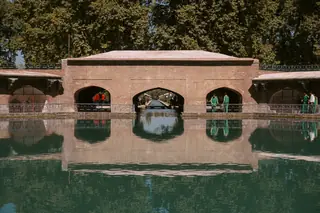
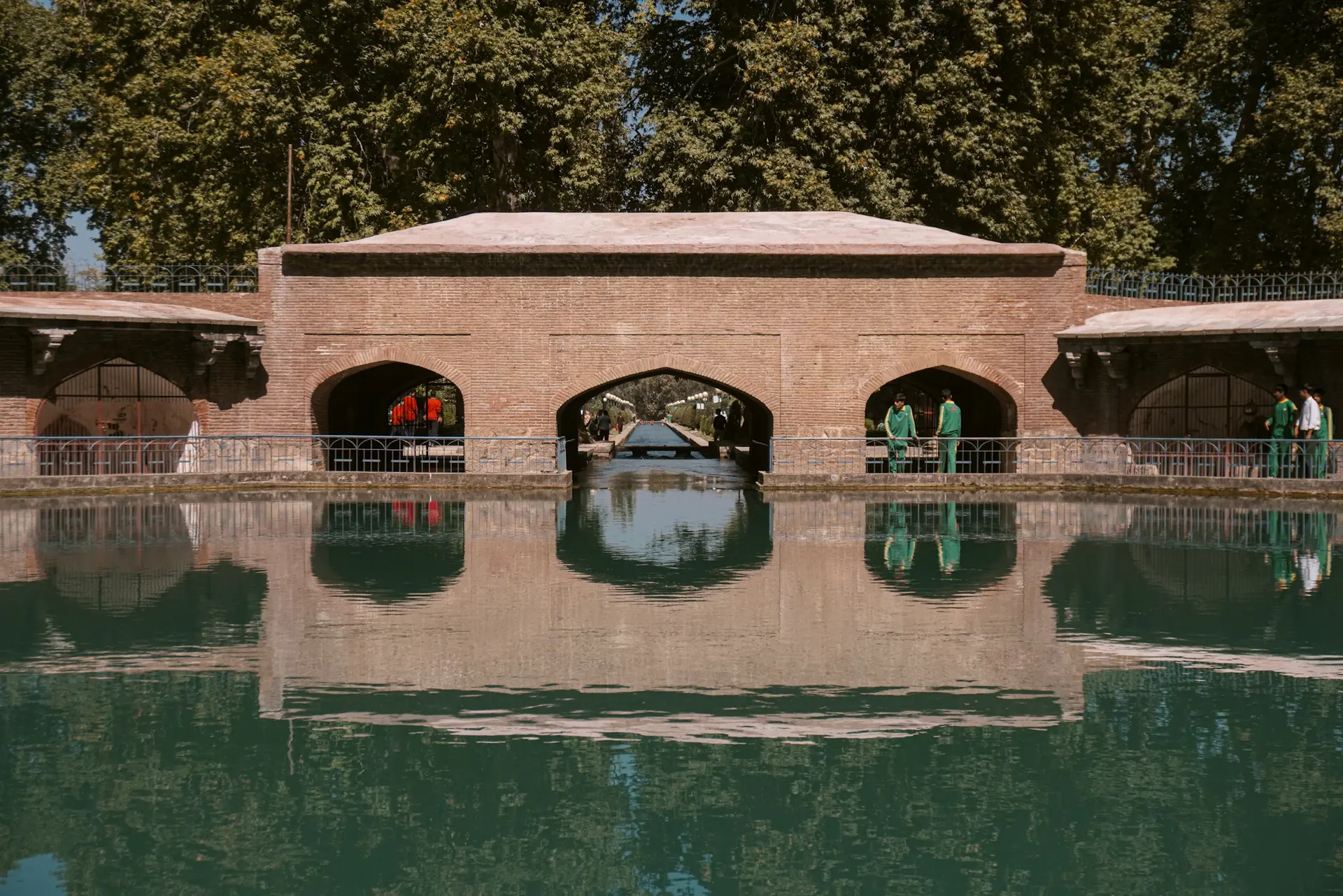
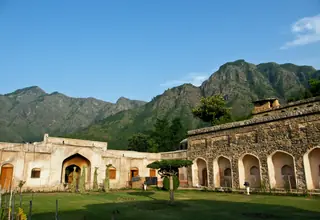
Verinag Spring, in the town of Verinag in Anantnag district, is where the Jhelum rises. The river that runs through the whole Kashmir Valley, the Vyath in Kashmiri, comes up here from deep under a pine-covered hill, at about 1,851 m. Around it stands an octagonal basin of carved stone with an arcade of arches, built by the Mughal emperor Jahangir in 1620. The spring and its arcade are a Monument of National Importance.
Jahangir's basin
Before Jahangir, the spring was a shapeless pond that seeped out in many places and made a small marsh. He had it gathered into one octagonal tank of carved stone, with carvers brought from Iran, and laid a garden beside it. The year, 1620, is carved on a stone slab in the southern wall, along with lines in Persian in praise of the spring.
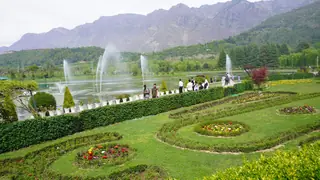
Seven years later his son, Shah Jahan, added the cascades and channels that run in straight lines down through the garden. The garden is long and narrow, about 460 m by 110 m, laid on the slope of the hill so that the water runs from the spring at the top down a central canal about 305 m long. Jahangir loved the place so much that he wished to be buried here.
The faith of the spring
This spring is the home of Nilanaga, the lord of all the Nagas, the spring-deities of Kashmir, and so it is also called Nilakunda. The goddess Vitasta, the Jhelum herself, came here to rise, but Shiva was dwelling at the spring, so she turned back and rose instead at Vithavatur, a short way to the north-west. Because she went back, the spring is called Virahnag, Vernag. In one of the arches of the arcade, the first on the left as you enter, stands a Shivling, and the garden has a small temple of its own.
Photos: Amitraina (CC BY-SA 3.0) · Mahi zahidi (CC BY-SA 4.0) · Akshey25 (CC BY-SA 3.0) — via Wikimedia Commons, resized.
Visiting
Verinag is about 78 km south-east of Srinagar and about 26 km from Anantnag, by Wikipedia's figures, a few kilometres off National Highway 1A on the side towards the Banihal pass. For many who come up from Jammu by road it is the first place in the valley. The nearest station on the Jammu–Baramulla line, Hillar Shahabad, is about 5 km away. We have no verified opening hours or entry rules; ask locally.
Combine it with
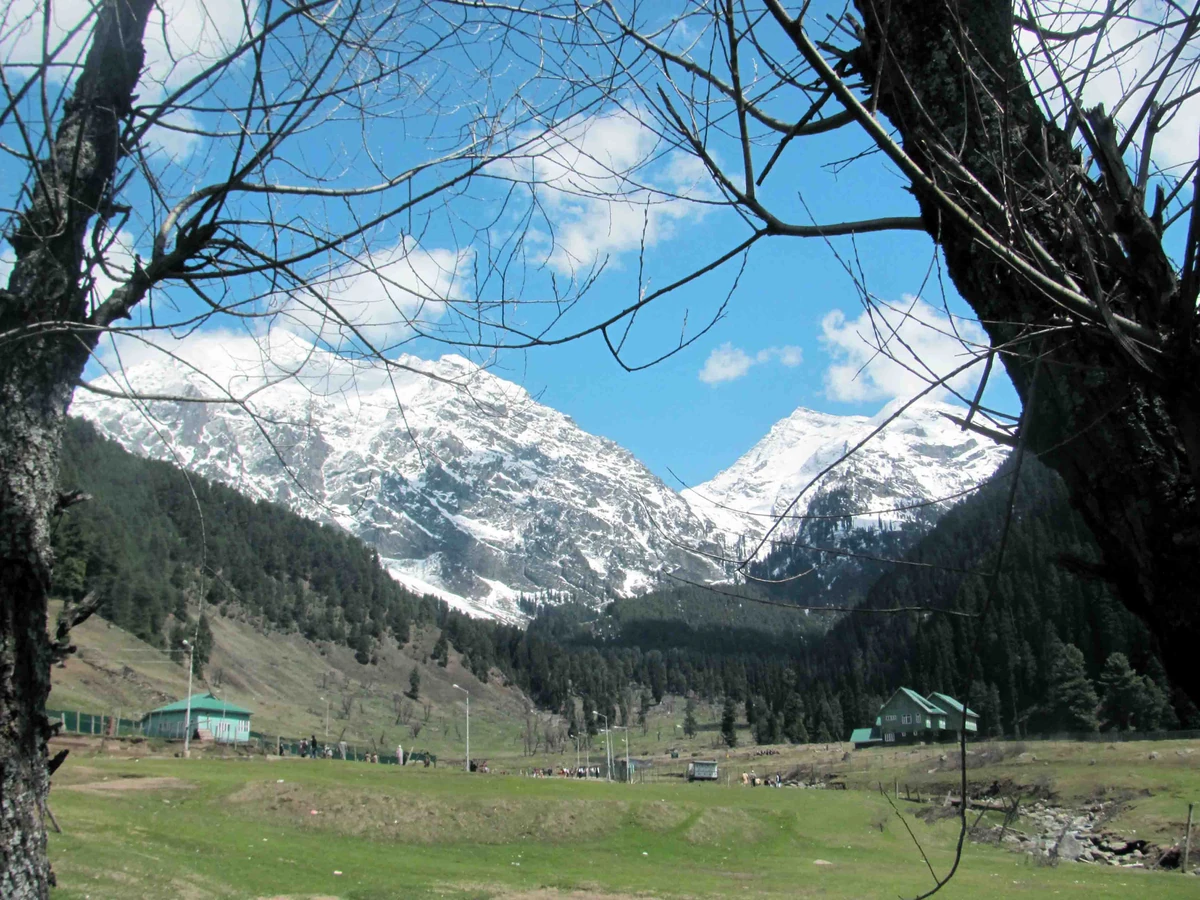
The Martand Sun Temple at Mattan, in the same district, is the other great old site of south Kashmir. Kokernag, with its springs and trout farm, is close by. For the high valley beyond, start with our Pahalgam guide.
Plans that include this
All Pahalgam itineraries →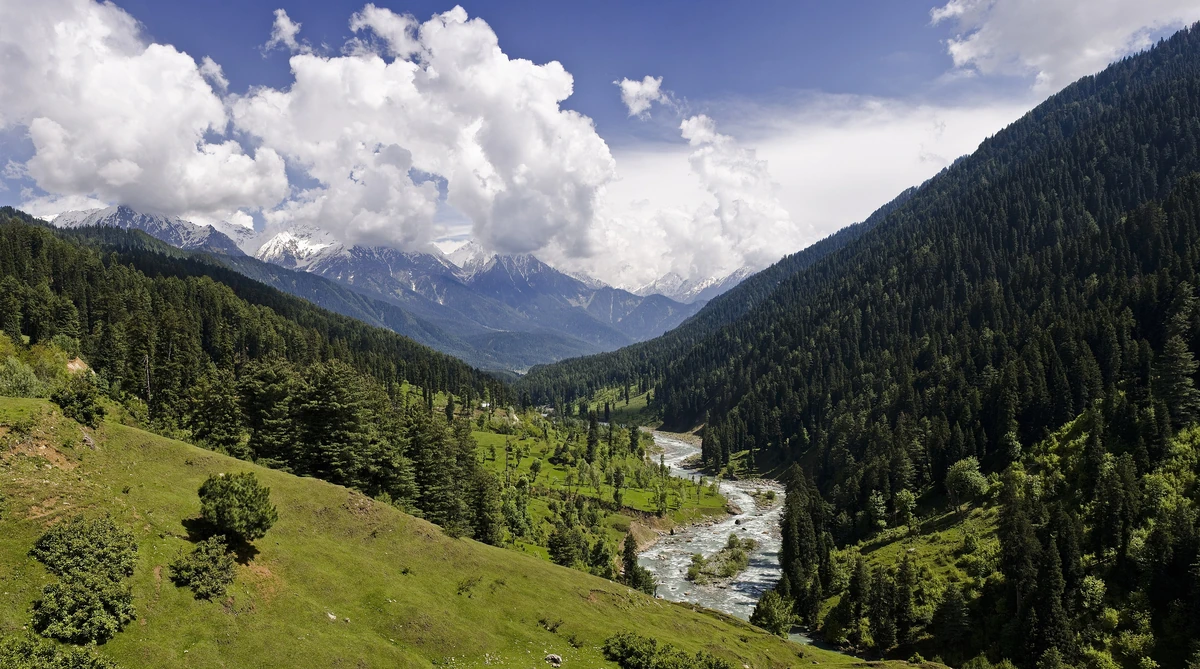
Nearby places
All of Pahalgam →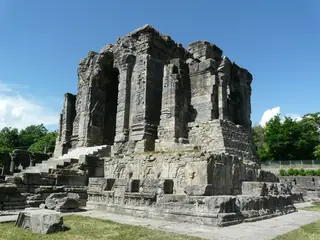
Nearby destinations
All destinations →
Questions people ask
Why is Verinag Spring famous?
It is the major source of the Jhelum, the river that flows through the whole Kashmir Valley. The spring rises at the foot of a pine-covered hill, inside an octagonal stone basin that the Mughal emperor Jahangir built in 1620 with an arcade around it. The spring and the arcade are a Monument of National Importance.
Who built the Verinag garden?
Jahangir built the octagonal basin and a garden in 1620, the year carved on a stone slab in the southern wall. Seven years later his son, Shah Jahan, added the cascades and water channels that run in straight lines through the garden, and hot and cold baths beside it, of which little is left now.
Is Verinag Spring sacred?
Yes. In the faith of Kashmir this spring is the home of Nilanaga, the lord of all the Nagas, the spring-deities of the valley, and so it is also called Nilakunda. A Shivling stands in one of the arches of the arcade, the first on the left as you enter, and the garden holds a small temple too.
How far is Verinag from Srinagar?
About 78 km south-east of Srinagar and about 26 km from Anantnag, by Wikipedia's figures, a few kilometres off National Highway 1A towards Banihal. It is the first sight of the valley for many who come up by road from Jammu. The nearest railway station, Hillar Shahabad, is about 5 km away.