
Martand Sun Temple — the eighth-century temple of Surya at Mattan
What it is
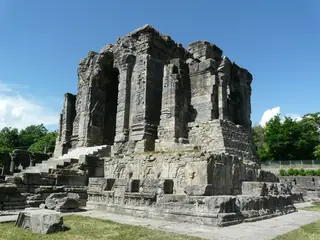
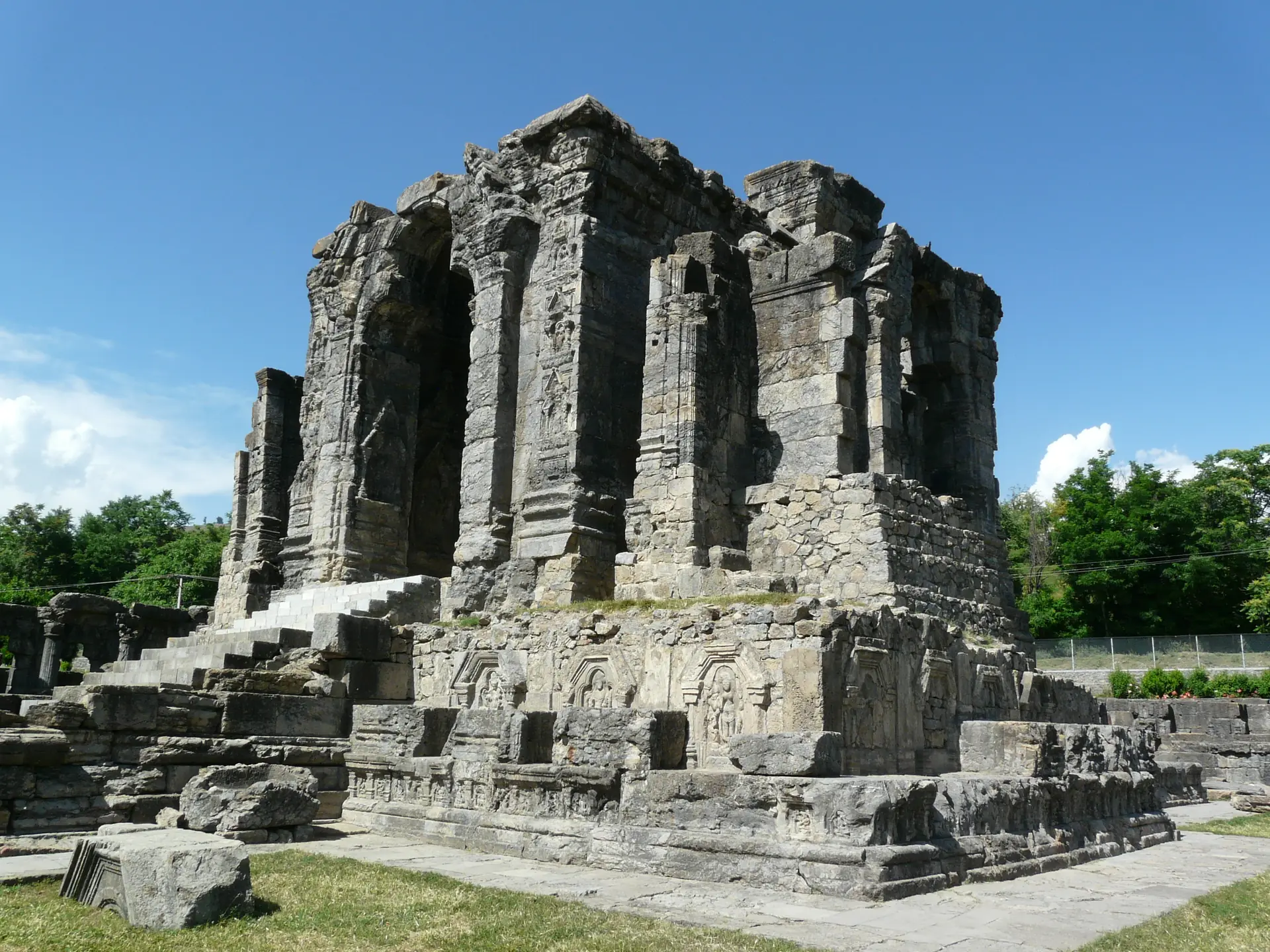
The Martand Sun Temple stands at Mattan in Anantnag district, on a plateau from which the whole Kashmir Valley opens out below. It was built in the eighth century CE for Surya, the sun god, whose other name, Martand, the temple carries. By the account of Kalhana, the chronicler of Kashmir, it was raised by King Lalitaditya Muktapida.
The temple of the sun
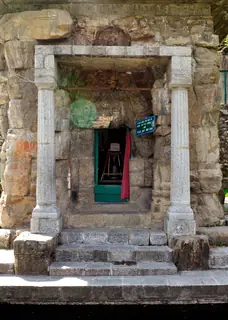
The main shrine stands in the centre of a great courtyard, and around the courtyard runs a colonnade of 84 smaller shrines. Altogether it measures about 220 by 142 feet, the largest temple of its kind in Kashmir. The main entrance is on the western side and as wide as the temple itself, richly carved. Inside the antechamber the walls show Surya, Vishnu, and the river goddesses Ganga and Yamuna.
The stone tells of many traditions meeting here. In the ruins, scholars see the Gandharan and Gupta styles, and Chinese forms too, joined into the Kashmiri way of building. The central shrine most likely once rose to a pyramid-shaped roof, like other temples of Kashmir.
Photos: Shaurya (CC BY-SA 3.0) · Goutam1962 (CC BY-SA 4.0) · John Edward Saché (CC0) — via Wikimedia Commons, resized.
Visiting
Earthquakes have damaged the stone over the centuries, and what stands now is the grey shell of the temple, still grand. The Archaeological Survey of India protects it as a site of national importance, and the government of Jammu and Kashmir began work to restore it in March 2024. We have no verified opening hours or entry rules; ask locally.
Combine it with
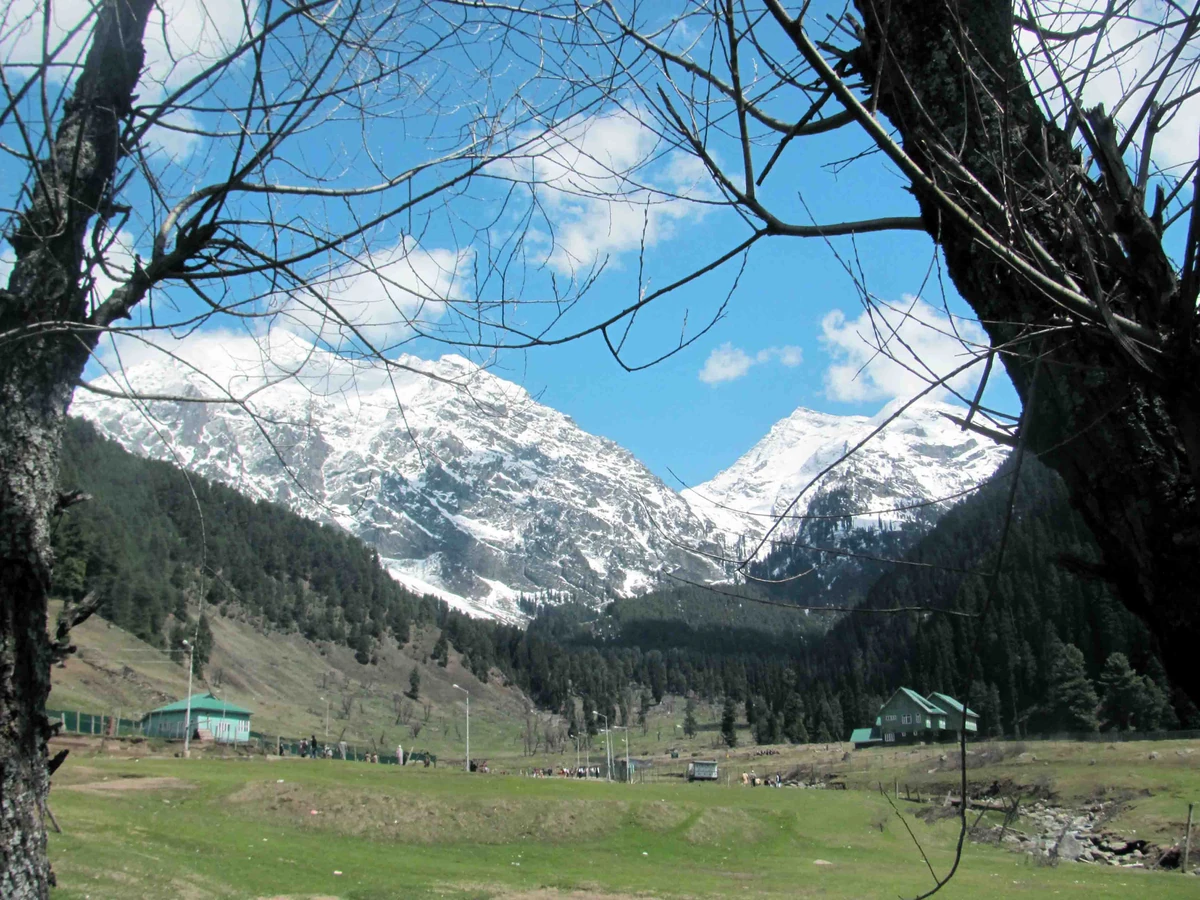
Verinag Spring, where the Jhelum rises, is in the same district. The road from Anantnag goes on up the Lidder to Pahalgam and the Mamleshwar Temple. Or start from Srinagar.
Plans that include this
All Pahalgam itineraries →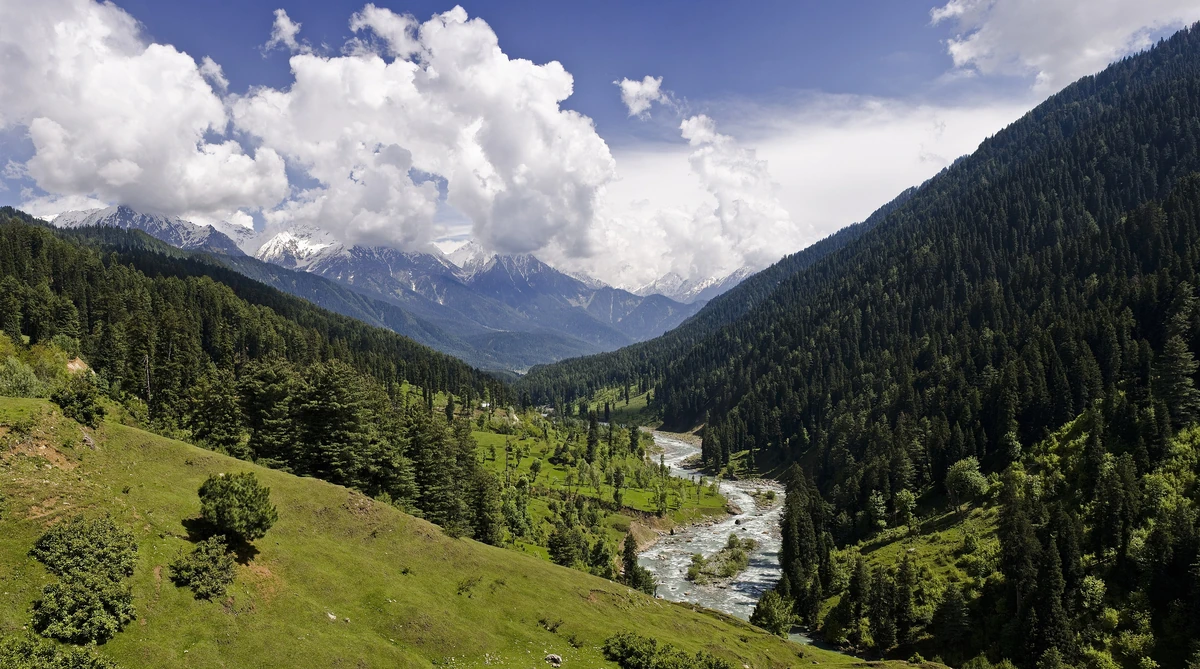
Nearby places
All of Pahalgam →
Nearby destinations
All destinations →
Questions people ask
Who built the Martand Sun Temple?
King Lalitaditya Muktapida, in the eighth century CE, by the account of Kalhana, the chronicler of Kashmir. The temple was dedicated to Surya, the sun god, who is also called Martand, which gives the temple its name. It stands at Mattan in Anantnag district, on a plateau looking out over the Kashmir Valley.
What does the Martand Sun Temple look like?
A main shrine stands in the middle of a colonnaded courtyard ringed by 84 smaller shrines, the whole about 220 by 142 feet. The main entrance is on the western side. Carvings in the antechamber show Surya, Vishnu, and the river goddesses Ganga and Yamuna. It is the largest temple of its kind in Kashmir.
Is the Martand Sun Temple protected?
Yes. The Archaeological Survey of India lists it among the centrally protected monuments of Jammu and Kashmir as Martanda (Sun Temple), a site of national importance. Earthquakes have damaged the stone over the centuries, and the government of Jammu and Kashmir began work to restore it in March 2024.