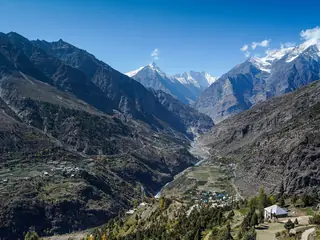
Kardang
town · 1.5 km away
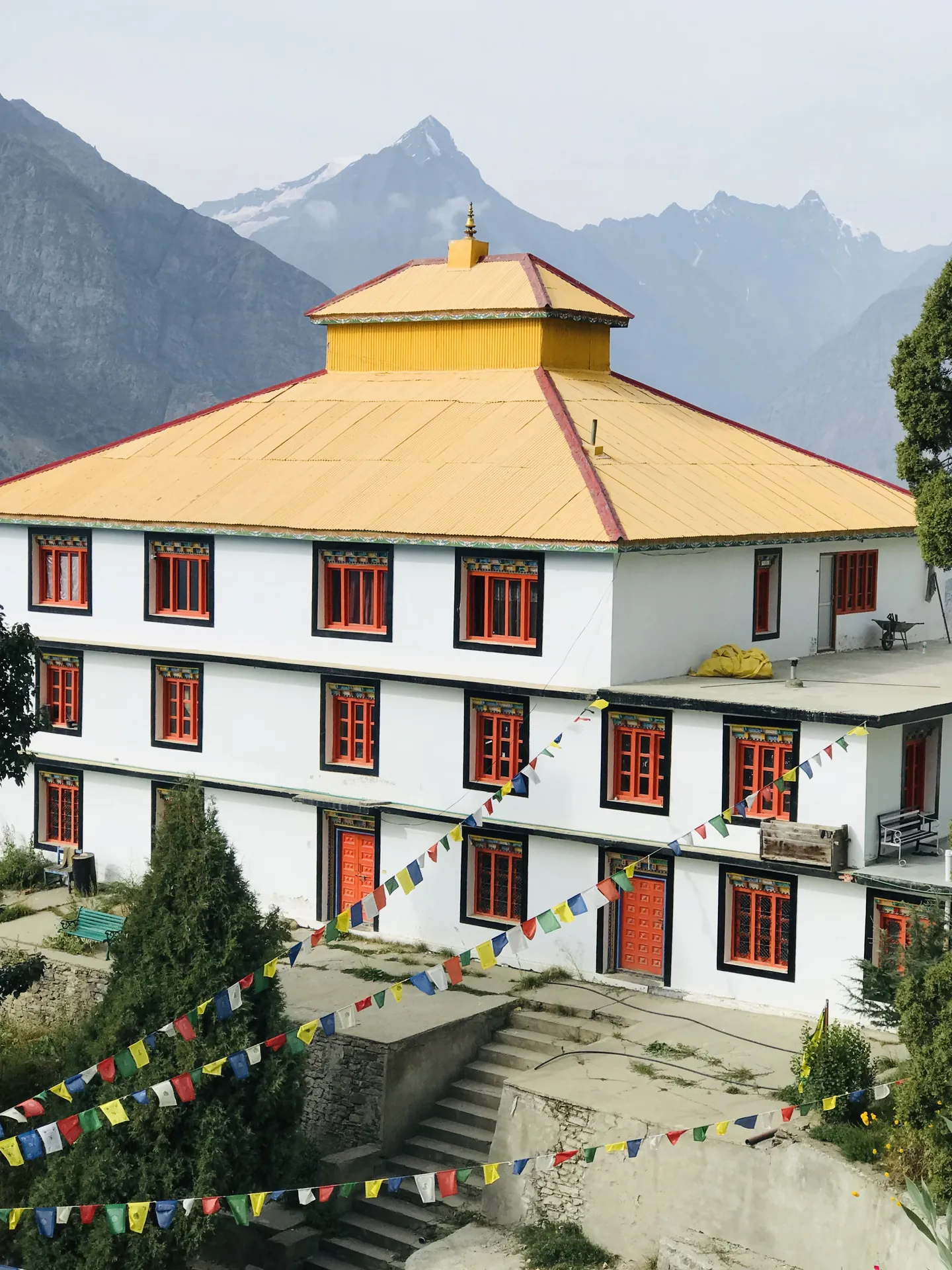
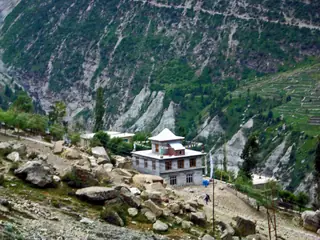
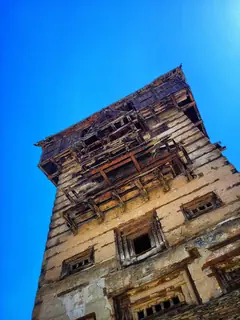
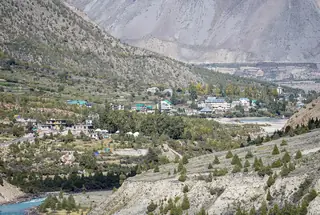
A Drukpa Kagyu monastery on a pine-covered slope above Keylong, founded by Dawa Gyatsho, a lama from Ladakh, in the 17th century. The name comes from the local dialect for "amidst blue pines," describing exactly where it sits.
Photos: Navneet Sharma (CC BY-SA 4.0) — via Wikimedia Commons, resized.
A short drive from Keylong's own bazaar, climbing through pine forest — close enough that a taxi covers it in well under fifteen minutes each way.
The monastery's prayer hall and the walk around its grounds are the visit itself — Shashur is quieter and smaller than Kardang across the river, without the crowds a festival day brings. The Tseshe festival, held between June and July, is the exception: masked dances and music fill the courtyard, and the valley's own villagers turn out alongside visitors.
> stop before Kardang and Tayul, both busier later in the day.
April to June and September to October, in line with the rest of the valley. The Tseshe festival (June–July) is worth timing a visit around if the dates line up with your trip.
Keylong and its bazaar are a short drive back down. Kardang and Tayul Monastery, across the Bhaga river, round out the one-day monastery loop, which also opens both the two-day and three-day plans.
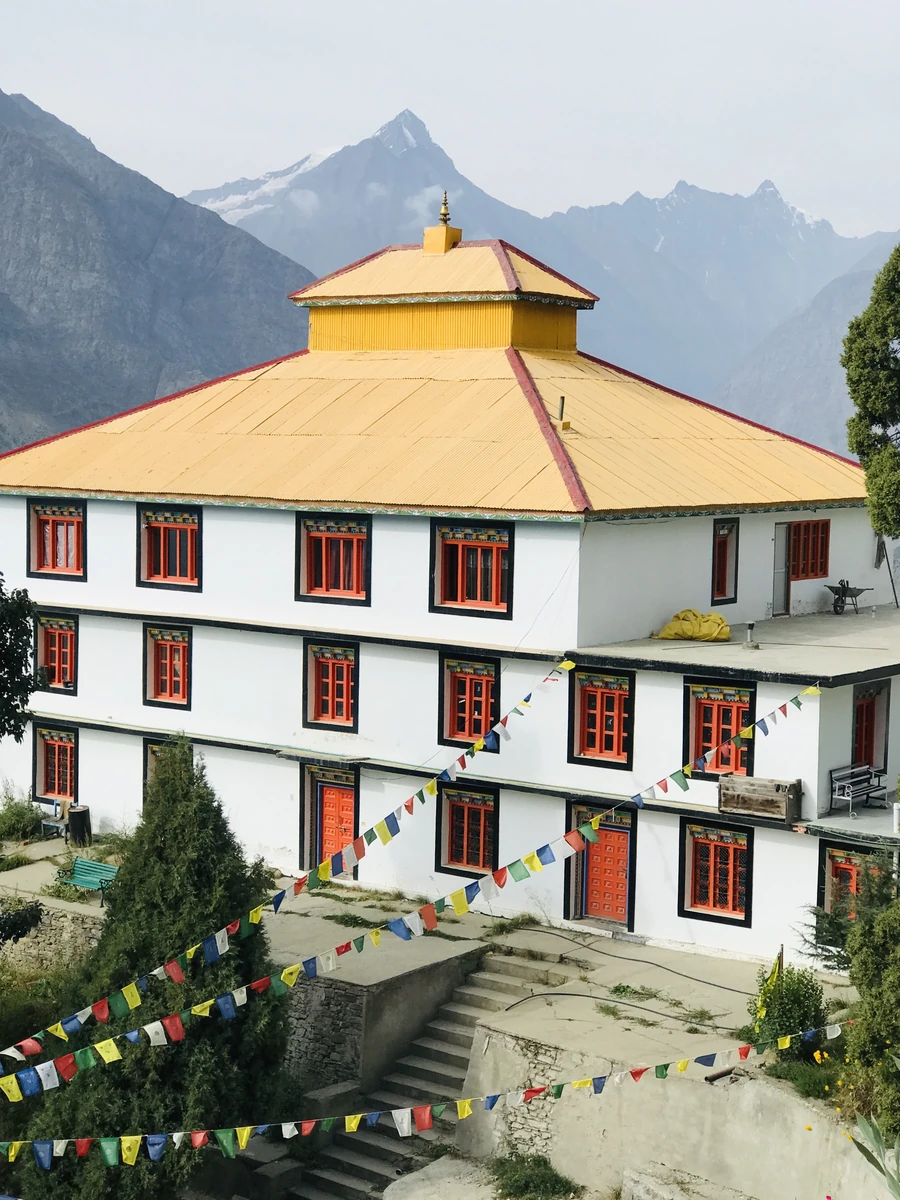
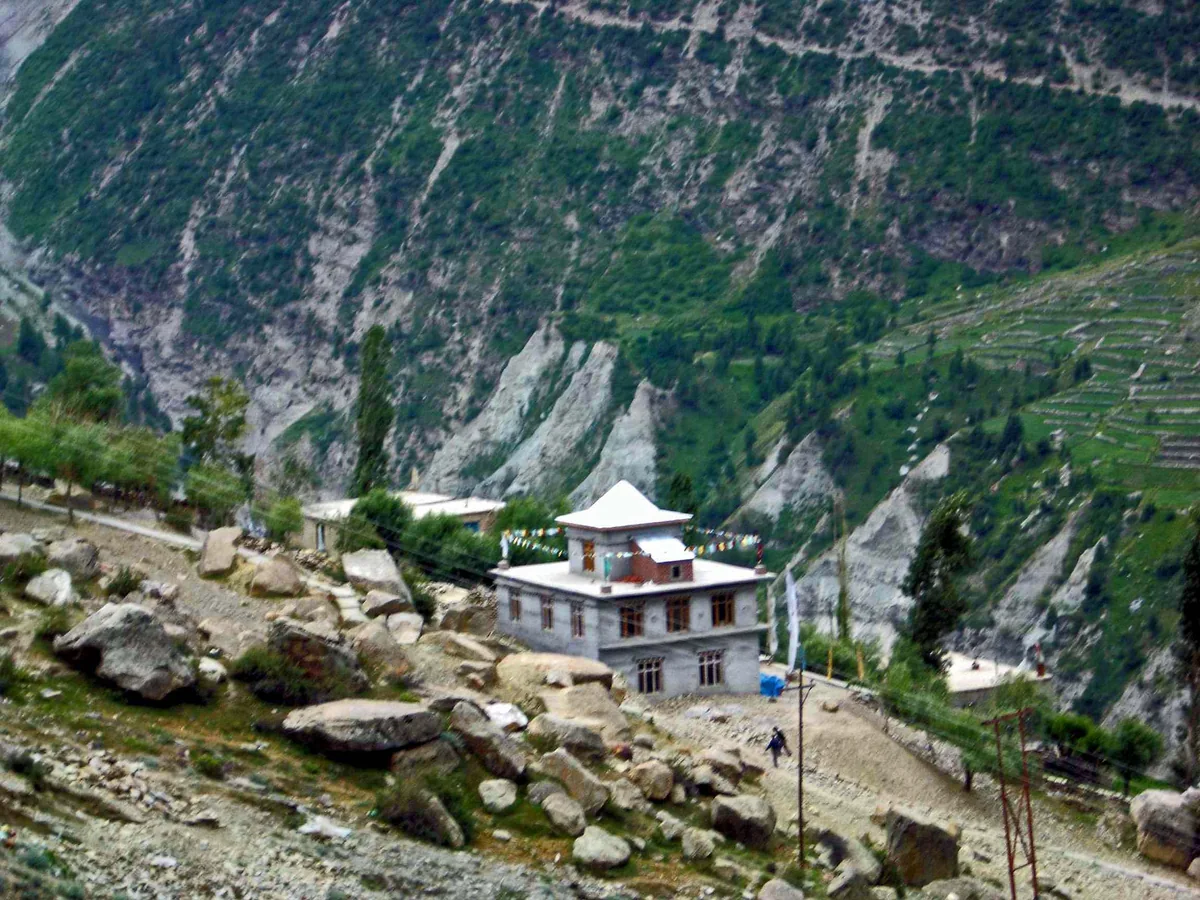
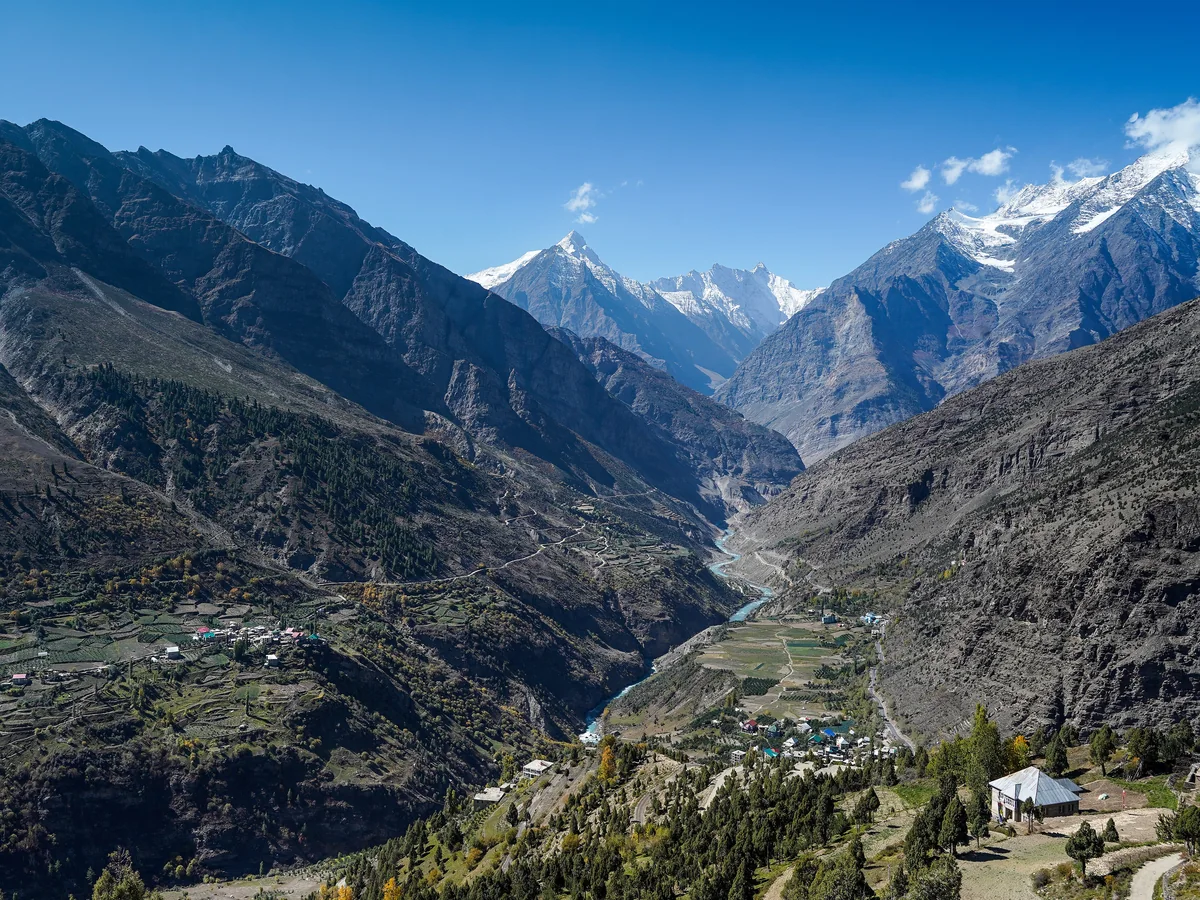
A short drive up a pine-covered slope — about 15 minutes by road, close enough that some visitors walk part of the way and take a taxi back down, or the other way round, depending on energy and weather that day.
"Amidst blue pines" in the local dialect, describing the pine forest the monastery sits within. It's also known locally as Shashur gonpa, and the two names are used interchangeably by most people who live in the valley day to day.
The monastery's annual Tseshe festival runs between June and July, with masked dances and music that draw visitors from across the valley — check the exact dates locally, since they shift with the lunar calendar each year rather than falling on a fixed date.