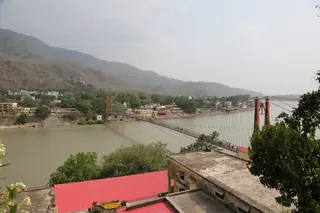
Ram Jhula, Rishikesh
monument · 1.5 km away
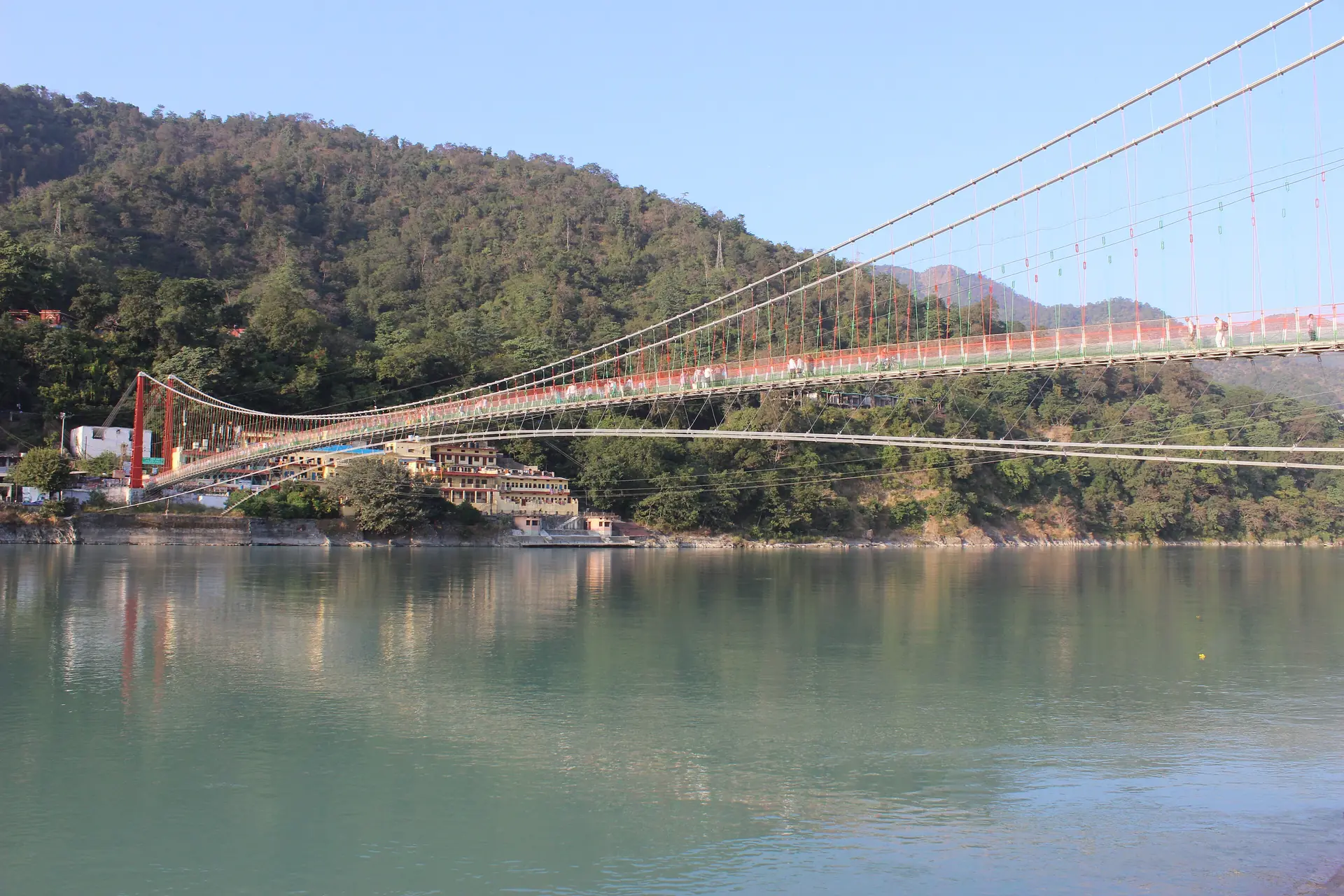
The Lakshman Jhula is the suspension bridge that most visitors picture when they think of Rishikesh. It crosses the Ganges about 5 km north-east of the centre and joins Tapovan, on the west bank in Tehri Garhwal district, to Jonk, on the east bank in Pauri Garhwal. The legend is that Lakshmana, Rama's younger brother, crossed the river on two jute ropes at this spot. Wikipedia says an iron-rope bridge of 1889 was swept away by floods in 1924 and replaced in 1927 by the present bridge, and that the work was completed in 1929.
Photos: KaustubhNayyar (CC BY-SA 4.0) · Tylersundance (CC BY-SA 3.0) — via Wikimedia Commons, resized.
By road it is about 5.6 km and 10 minutes from the centre of Rishikesh on our routing. The Ram Jhula is about 2 km downstream, and a walk along the bank links the two, past ashrams, temples and shops.
The point of the bridge is the setting: red cables over a green river, with forested hills behind and temples and guesthouses stacked up the bank on both sides. Wikipedia reports that the bridge became restricted to pedestrians on 5 November 2020, with barriers stopping motorbikes, and that it was set to close for good once a replacement is built alongside. It also mentions a planned glass bridge. We cannot tell you which of these has happened, so treat the bridge as something to check before you plan a crossing.
The river is high and brown in the monsoon and clearer in the cooler months. October to March is the easier season on foot; see when to visit Rishikesh.
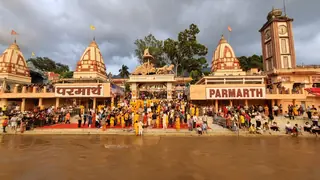
Ram Jhula is the next bridge downstream, and Parmarth Niketan stands by it. The Beatles Ashram is on the east bank. The one-day plan and the two-day plan both include the bridge.
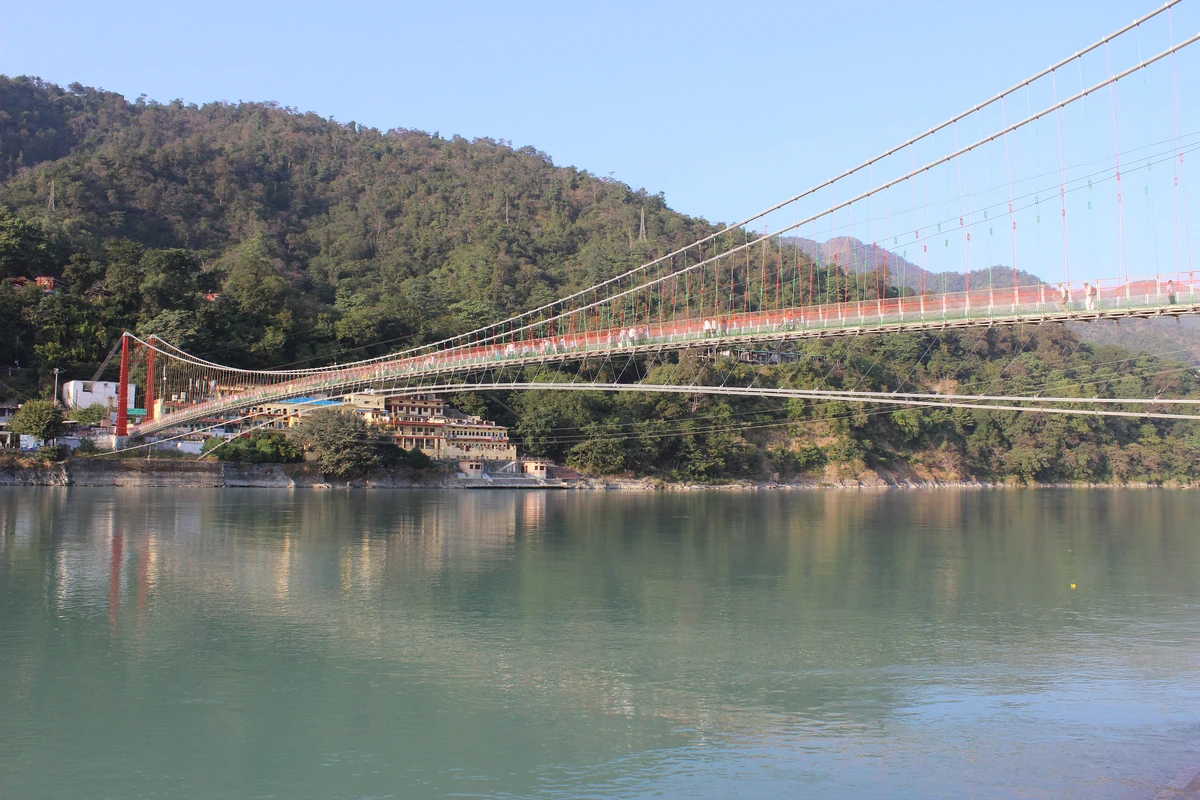
An iron suspension bridge over the Ganges about 5 km north-east of Rishikesh, linking Tapovan on the west bank with Jonk on the east. Legend says Lakshmana crossed here on jute ropes. Wikipedia dates the present bridge to 1927 to 1929, replacing an earlier one of 1889 that floods destroyed in 1924.
Check locally. Wikipedia says the bridge was restricted to pedestrians from 5 November 2020, closed to vehicles and motorbikes, and was to close permanently when a replacement is built alongside. We have no current word on its status, so ask at your hotel before you plan a crossing.
About 5.6 km and 10 minutes by road from the centre of Rishikesh on our routing. The Ram Jhula, a larger bridge built in 1986, is about 2 km downstream. Many visitors walk between the two along the bank, which takes in the ashrams and the shops that line it.