
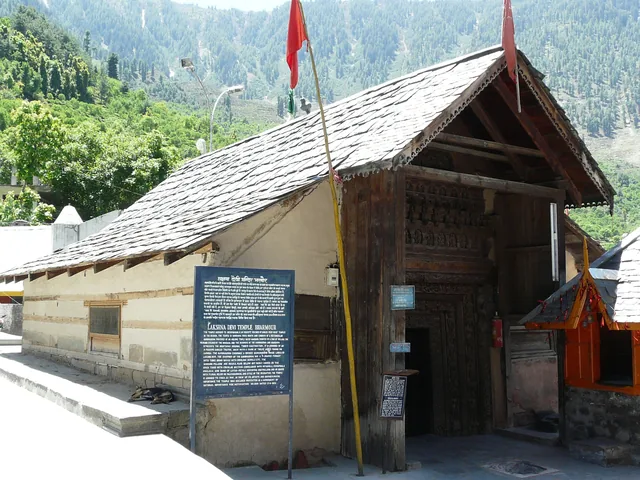
Lakshana Devi Temple, Bharmour
Checked on
What it is
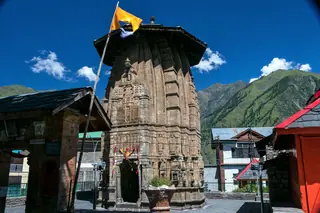
The Lakshana Devi Temple, also written Lakhna Devi and known as Bhadrakali, is the oldest temple in the Chaurasi complex at Bharmour, and among the earliest wooden temples still standing in India. It is dedicated to Durga as the four-armed Mahishasuramardini, slayer of the buffalo demon, and its carved wooden facade takes themes from Shaivism and Vaishnavism.
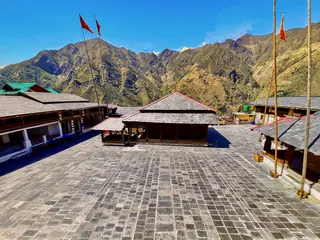
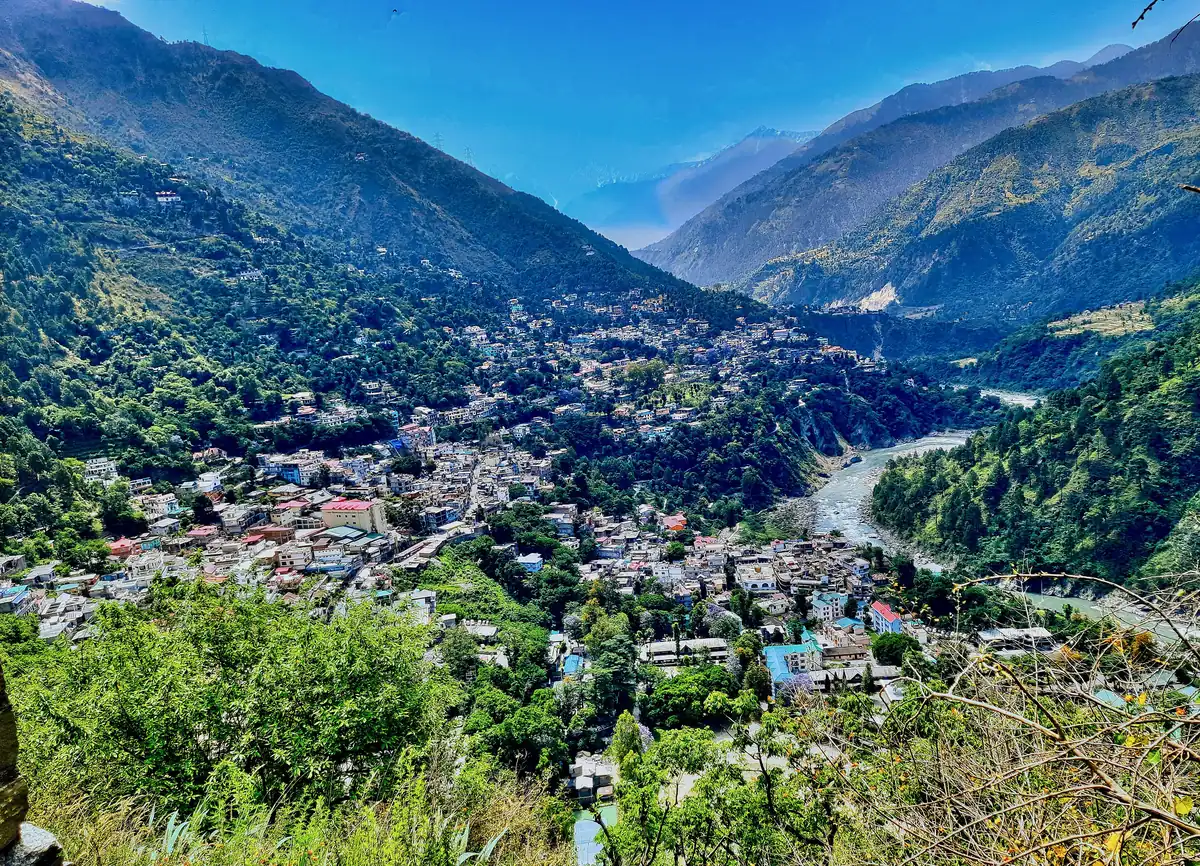
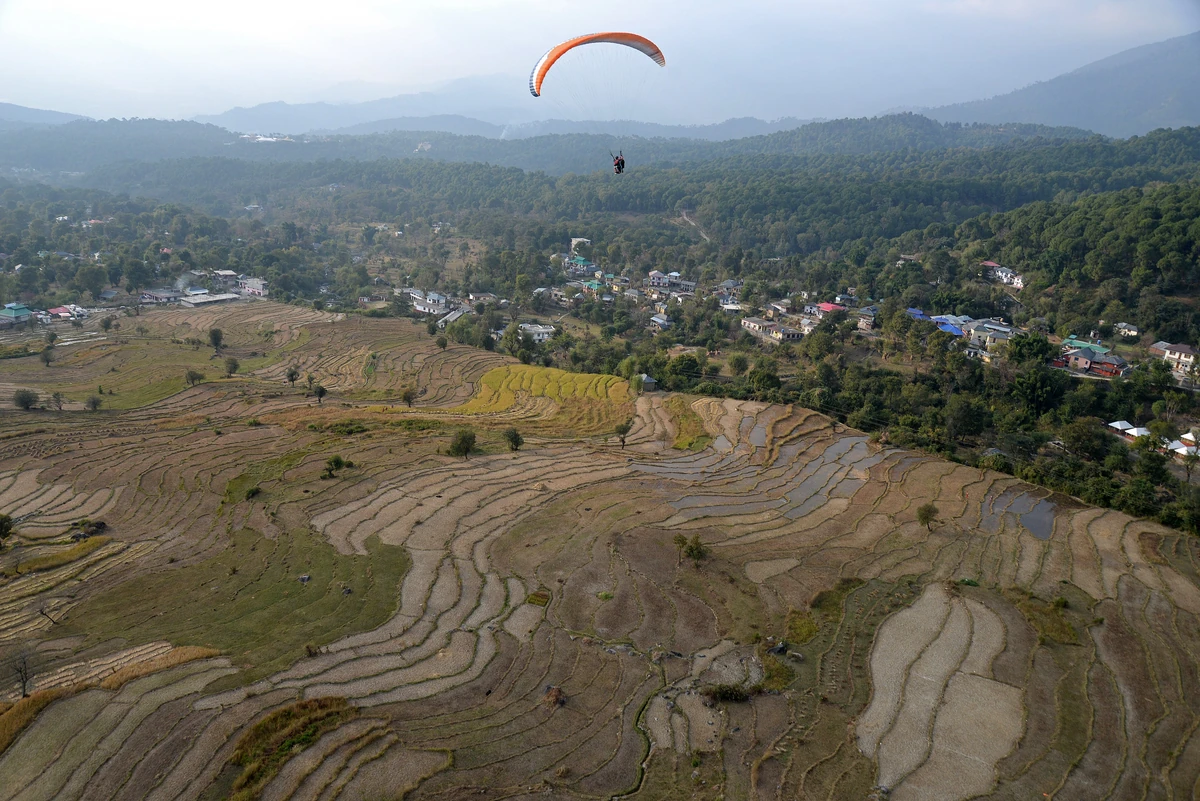
Photos: Dhruvaeng (CC BY-SA 4.0) · Varun Shiv Kapur from New Delhi, India (CC BY 2.0) — via Wikimedia Commons, resized.
Getting there
It stands inside the Chaurasi complex, about a minute's walk from the centre of town.
How old it is
The temple belongs to the late 7th century or the early 8th, and the date does not rest on guesswork. An inscription on the pedestal of the brass goddess in the sanctum names King Meruvarman and three of his forebears, whose names other records in the hills confirm. His reign is generally taken to have begun in 680 CE. In the translation by J. Ph. Vogel, the inscription says the king had the image of the goddess made by a craftsman named Gugga. When he made Bharmour his capital, this was the temple he had set up. Alexander Cunningham, the first archaeologist to describe it, came in 1839, and J. Ph. Vogel wrote it up in 1911. Scholars link its survival to the valley itself, which was hard to reach and largely spared the raids that struck the plains.
The visit
From outside it looks like a hut: a slate roof, mud-plastered walls, nothing grand. The reason to come is the wooden doorway, which is framed in three carved bands. The outer band has standing women and loving couples. The middle band has the river goddess Ganga on a crocodile-like makara on one side and Yamuna on a tortoise on the other, with Shiva and Nandi, Vishnu and Skanda above them. The inner band is leaves, flowers and a pair of peacocks. Over the lintel a triangular pediment shows Vishnu on Garuda. The wood is dark with age, and side light in the morning shows the relief best. Some of the figures are too worn to name, and the carving on the outside has weathered more than the vestibule inside, which Cunningham found well kept.
In the sanctum the goddess is a brass image of the 7th century, four-armed, with a trident, a sword and a bell, her foot on the head of the buffalo demon. The Archaeological Survey of India added the projecting roof over the doorway to protect the carving.
When to go
Any month the road is open. See when to visit Bharmour.
Around it
The Narasimha Temple is beside the complex. The one-day plan walks the temples in order.
Going to Bharmour?
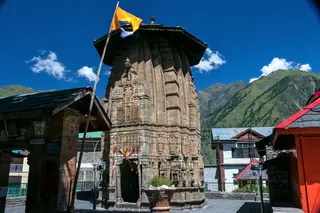 One day in Bharmour — the Chaurasi temples on footDay plan, ready to copy and change
- Stays in BharmourCompare live prices
- See it on the map
- Send this on WhatsApp
Reels from these places: follow @himlocal.in on Instagram
Run a café, a stay or a trek company near Lakshana Devi Temple, Bharmour? List it on HimLocal →



Plans that include this
All 2 plans that stop here →

Nearby places
All of Bharmour →

Nearby destinations
All destinations →
Questions people ask
What is the Lakshana Devi Temple?
The oldest temple in the Chaurasi complex at Bharmour, dedicated to Durga in her four-armed form as Mahishasuramardini, the slayer of the buffalo demon. It is also written Lakhna Devi, and called Bhadrakali, and its wooden facade carries carvings on themes from Shaivism and Vaishnavism.
What should you look at?
The carved wooden facade and the band of figures above the doorway, which are the reason to come close rather than photograph from the courtyard. The carving takes themes from both Shaivism and Vaishnavism, and the wood is dark with age, so side light shows it best.
How old is the Lakshana Devi Temple?
It dates from the late 7th or early 8th century. A dedicatory inscription on the brass goddess in the sanctum names King Meruvarman and three of his ancestors, and his reign is generally taken to have begun in 680 CE. Few wooden temples in India are older and still standing.
Where is it?
Inside the Chaurasi temple complex, a minute's walk from the centre of Bharmour. Because it sits within the complex, it is on foot from anywhere in the town, and it combines with the Manimahesh and Narasimha temples in a single morning.