
Things to do in Narkanda — 3 stops, and what each needs
How this list is built
Sorted by distance from Narkanda, because that is how a day here gets planned. The minutes are our own road routing, and each entry links to its own page inside one of our copyable itineraries.
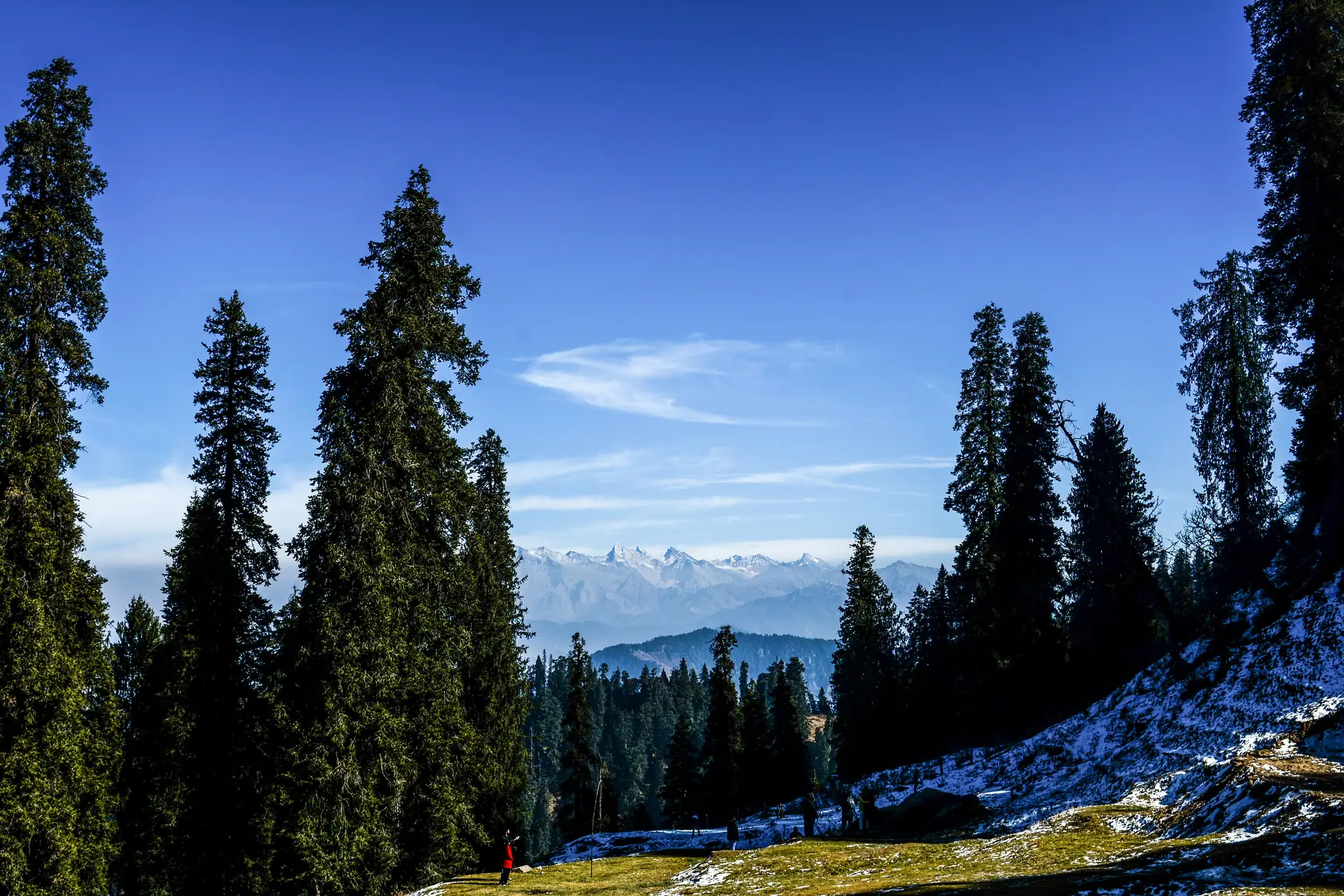
Photos: Ashish Gupta from Noida, India (CC BY 2.0) — via Wikimedia Commons, resized.
Close to the town
1. Hatu Peak and Hatu Mata Temple
The area's high point at 3,400 m, with a small wooden temple on top that local belief calls the temple of Maa Kaali, 18 minutes up a steep road. Hatu Peak.
2. Tani Jubbar Lake
A small still lake in fir forest, 21 minutes from the town, for the reflections. Tani Jubbar Lake.
Down the hill
3. Kotgarh
The apple-belt village 43 minutes away, where Satyanand Stokes planted the first American apple tree in India in 1916. Kotgarh.
Putting it together
The one-day plan covers stops 1 and 2. The two-day plan adds Kotgarh. For arrival see how to reach Narkanda, and for timing when to visit Narkanda.
Questions people ask
What are the best things to do in Narkanda?
Drive up Hatu Peak, 18 minutes from the town, for the wooden temple and the Himalayan views. Visit Tani Jubbar Lake, 21 minutes away, for its quiet reflections, and Kotgarh, 43 minutes away, to walk in the apple belt where the first American apple tree in India was planted.
What can you do in Narkanda in winter?
The town is covered in snow from November to March and works as a ski resort, with days of 7 to 8°C and nights that can fall to -5 or -10°C. We have no verified details of ski operators, so ask locally. The road up Hatu Peak can be hard going in the snow.
How many days do you need in Narkanda?
One day covers Hatu Peak and Tani Jubbar Lake. A second day adds Kotgarh. Many visitors stop for a single night between Shimla and Rampur or Kullu, which is enough for the peak at sunrise or in the evening light.