
Rampur Bushahr
Checked on
What it is
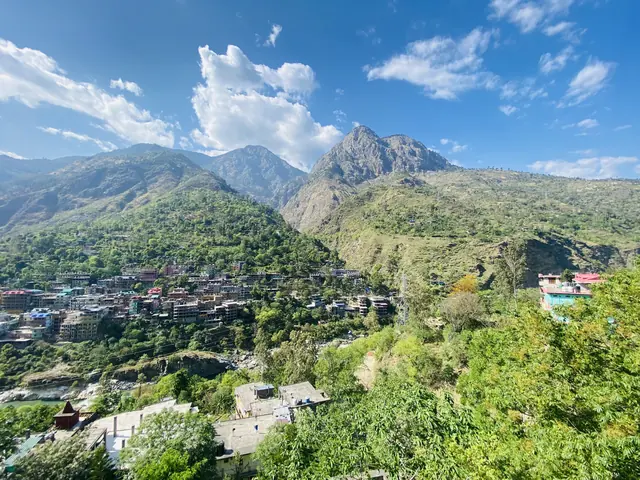
Rampur Bushahr is a town on the left bank of the Satluj in Shimla district, about 128 km from Shimla on the highway that runs through Theog, Narkanda and Kumarsain. It was the winter capital of the Bushahr state, whose summer capital was Sarahan, and it sat on the trading routes that joined the Indian markets with Central Asia and Tibet. After Bushahr joined the Indian Union in 1947 and then Himachal Pradesh, the town stayed a market for the valley.
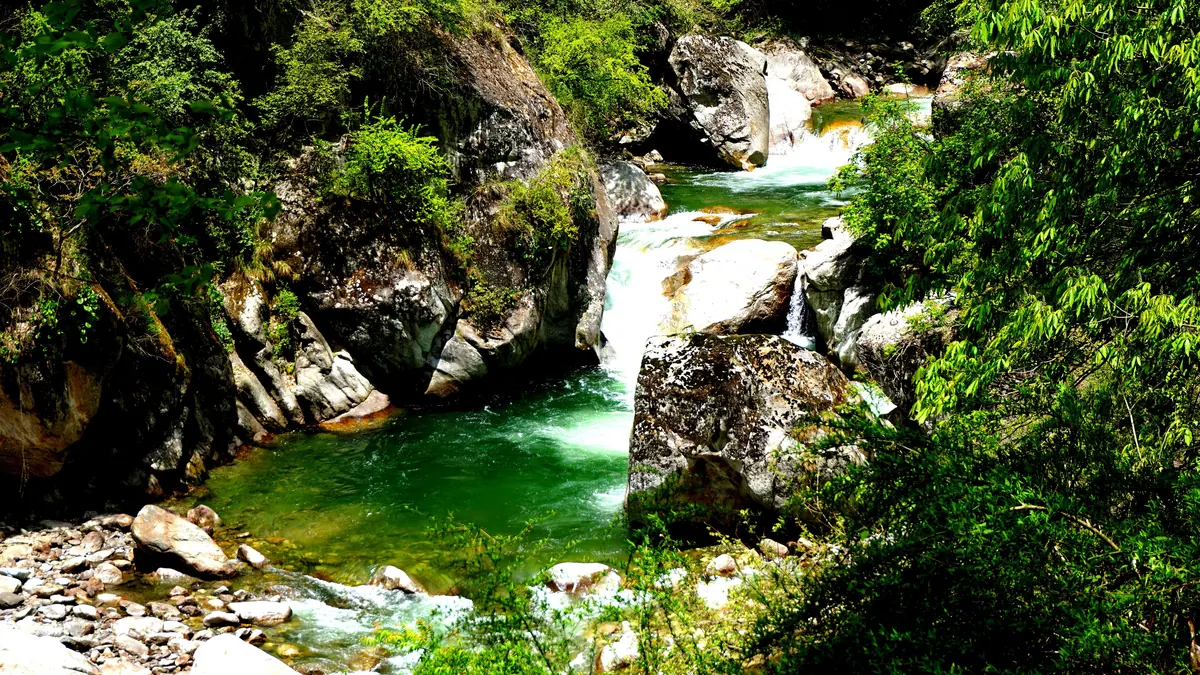
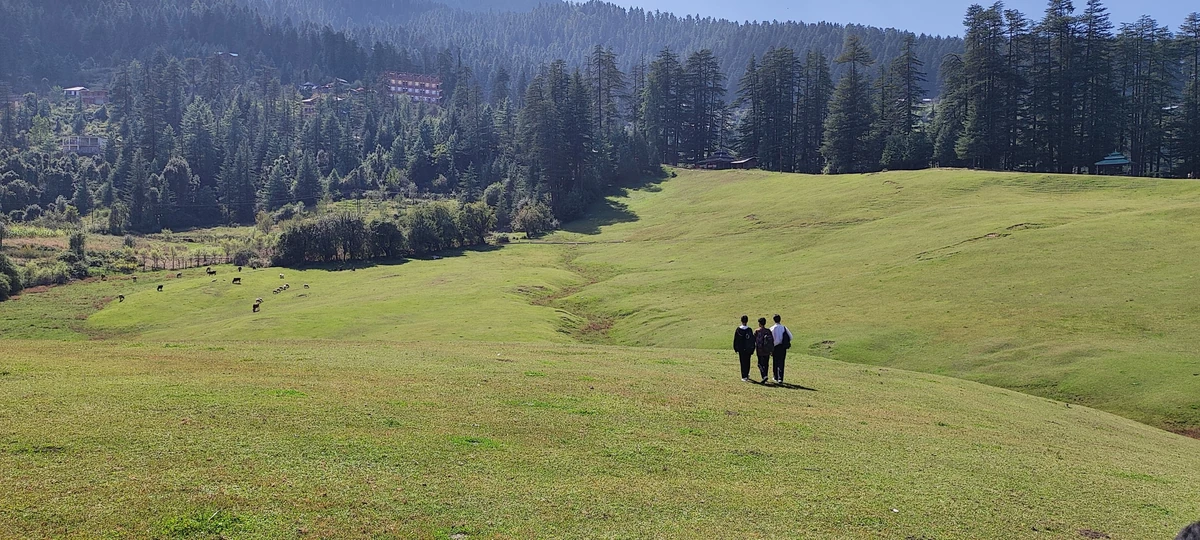
Photos: Frostbound Raven (CC BY-SA 4.0) · Vishvakk94 (CC BY-SA 4.0) · Harpreetsinghmohali (CC BY 4.0) · Aj Ajay Mehta 007 (CC BY-SA 4.0) — via Wikimedia Commons, resized.
Getting there
About 39 km and 79 minutes by car from Sarahan, down towards the river. It is on the Shimla–Narkanda highway, so it is also a natural stop for anyone driving on to Kinnaur. The temples of Nirmand are 17 km further up the valley.
The visit
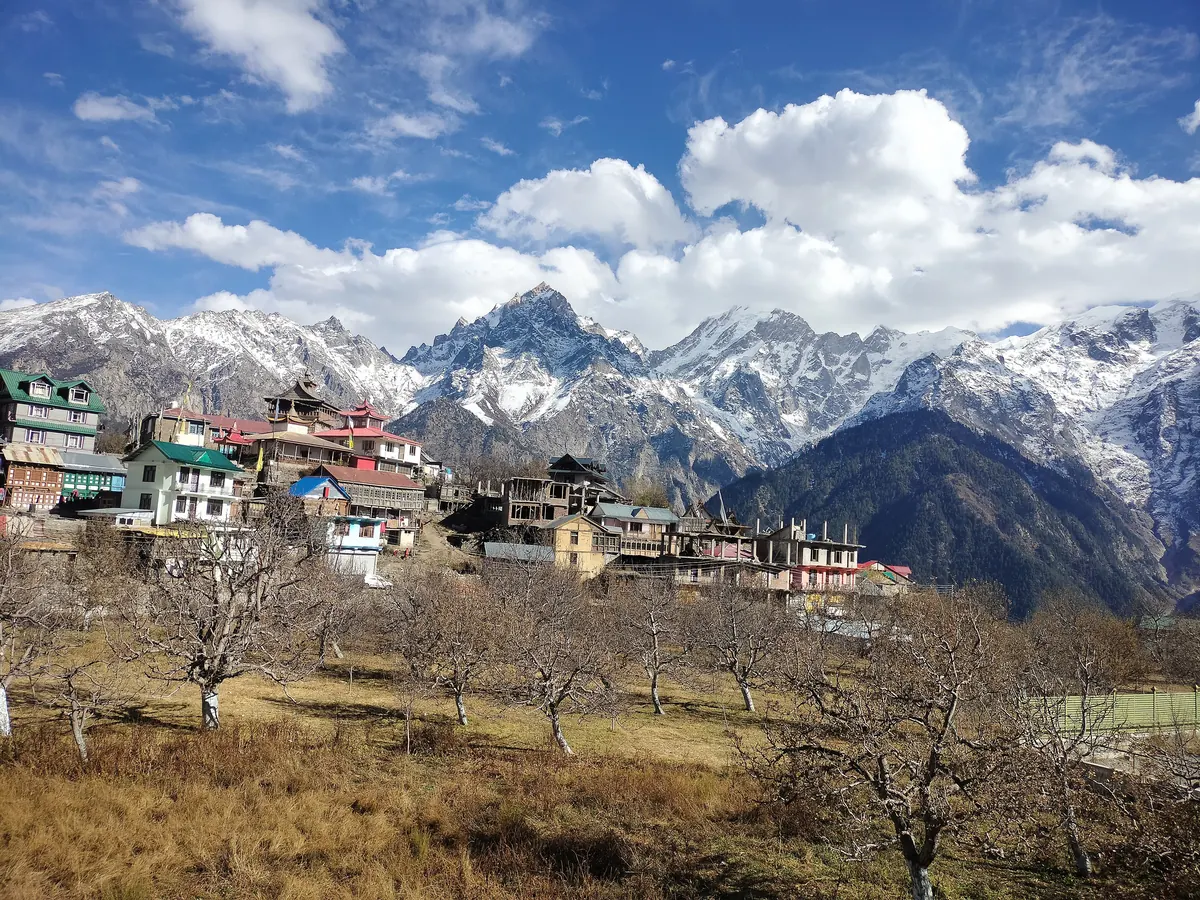
The town is a working market on a steep bank, with the Satluj below and mountains behind, and the thing to see is the trading town itself. The Padam Palace, set in a lawn with a pavilion, is the building people photograph; little is published about it, so this guide says no more than that it is there. The Shraikoti Temple, on a hilltop near the town, is one of the nearby sights.
The Lavi fair is held each November, and it comes out of a promise between Bushahr and Tibet that the next section tells. For the town's trading days, Wikipedia calls it the largest trading event in the north Himalayas, drawing traders from Kashmir, Ladakh, Yarkant and the plains.
Till the Satluj runs dry
Kinnaur has an old way of saying how long the deal with Tibet was meant to last. It would stand until the Satluj ran dry, until crows turned white, until horses grew horns, and until the stones it was written on, set at the border of the two states, grew hair or wool. That is oral tradition, handed down in Kinnauri, and nobody can show you those stones.
The treaty behind it is history. Raja Kehar Singh of Bushahr (Wikipedia spells him Kehri Singh) took the side of the Tibetans and Mongols in their 1679 campaign against Ladakh. The two sides then swore an agreement with the government at Lhasa under the Fifth Dalai Lama. There would be no tax on Bushahri merchants in Tibet, and none on Tibetan merchants in Bushahr. Sources date it differently. Wikipedia, following the historian Georgios Halkias, gives 1679 to 1684, and the state tourism site says 1681, so this guide gives the range.
The Census of India of 1961 adds the gesture that sealed it: Tibet sent horses and Bushahr sent swords, as a token of the friendship. The same census says the fair grew out of the trade that followed, and it is careful to call that a presumption. Nobody has published the year of the first fair, so this guide gives none.
Watch our reel
The Lavi fair in November
Its official name today is the International Lavi Fair. The Ministry of Tourism lists it from 11 to 14 November at the Lavi Mela Ground. The state tourism site says three days from the 11th, and the Shimla district's own page puts it on the 25th of Kartika. Wikipedia adds that the cultural nights run from 11 to 14 November and the market stays on through the month. The name is usually traced to loe, a sheet of woollen cloth, or to the shearing of sheep, and wool is what the fair was always about.
In the old days traders came from Tibet, Afghanistan and Uzbekistan with horses, dry fruit, wool and pashmina, and went home with salt, jaggery and other supplies bought in Rampur; the salt itself came from Gumma in Mandi district. The Chamurthi horses of the high valleys were sold here too. There is no trade with Tibet any more, the state tourism site says, but the fair goes on, and Kinnauri woollens, shawls and dry fruit still fill the stalls.
We found no official notice of the 2026 programme as of 7 November, so check the dates and venues locally before you plan around it.
When to go
Rampur sits far below Sarahan on the river, which fits its old role as the winter capital. November is the Lavi fair. See when to visit Sarahan.
Around it
Bhimakali Temple is back up the hill at Sarahan, and Nirmand lies on up the valley. The one-day plan and the two-day plan both stop here, and things to do in Sarahan has the rest.
Going to Sarahan?
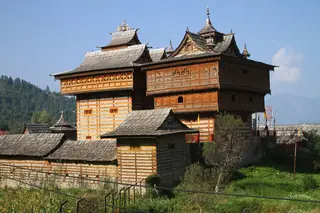 One day from Sarahan — the Bhimakali Temple and Rampur BushahrDay plan, ready to copy and change
- Stays in SarahanCompare live prices
- See it on the map
- Send this on WhatsApp
Reels from these places: follow @himlocal.in on Instagram
Run a café, a stay or a trek company near Rampur Bushahr? List it on HimLocal →
Plans that include this
All 2 plans that stop here →

Nearby places
All of Sarahan →



Nearby destinations
All destinations →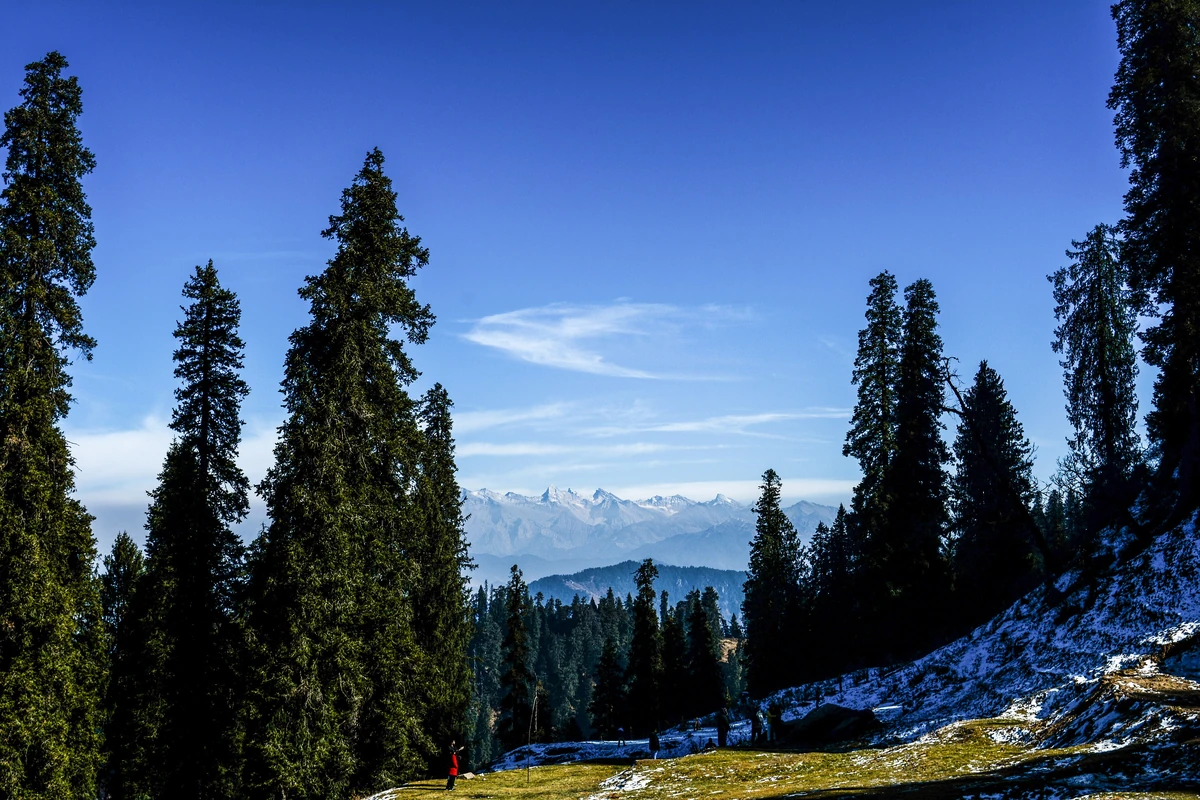
Questions people ask
What is Rampur Bushahr known for?
It was the winter capital of the Bushahr state, with Sarahan the summer one, and it grew as a trading town on the routes to Tibet. It is known for the Lavi fair held each November, which Wikipedia calls the largest trading event in the north Himalayas.
When is the Lavi fair in Rampur?
From 11 November. The Ministry of Tourism lists 11 to 14 November, the state tourism site says three days from the 11th, and Wikipedia adds that the market runs on through the month. We found no official 2026 notice as of 7 November, so check locally before you travel.
Where does the Lavi fair come from?
From a trade treaty between Raja Kehar Singh of Bushahr and Tibet at the end of the 17th century. Wikipedia dates it 1679 to 1684 and the state tourism site says 1681, so the sources differ. Merchants of both sides were to trade free of tax, and the fair followed.
What does «till the Satluj runs dry» mean?
It is how Kinnauri oral tradition remembers the length of the Bushahr–Tibet treaty: it would hold until the Satluj ran dry, crows turned white, horses grew horns and the border stones grew hair or wool. In other words, for ever. It is a saying, and it comes down to us by word of mouth.
How far is Rampur Bushahr from Sarahan?
About 39 km, roughly 79 minutes by car on our routing, down towards the Satluj. It is a half-day out from Sarahan and back, and it is the natural stop on the way on to Nirmand, which is 17 km further up the valley.