
Khajjiar
Checked on
What it is
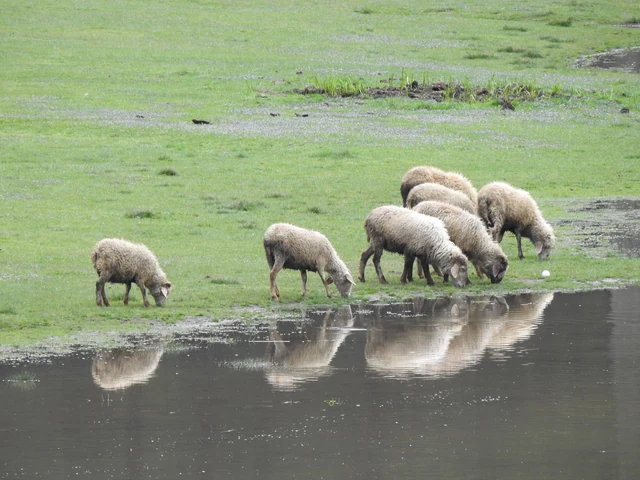
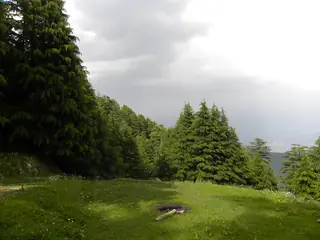
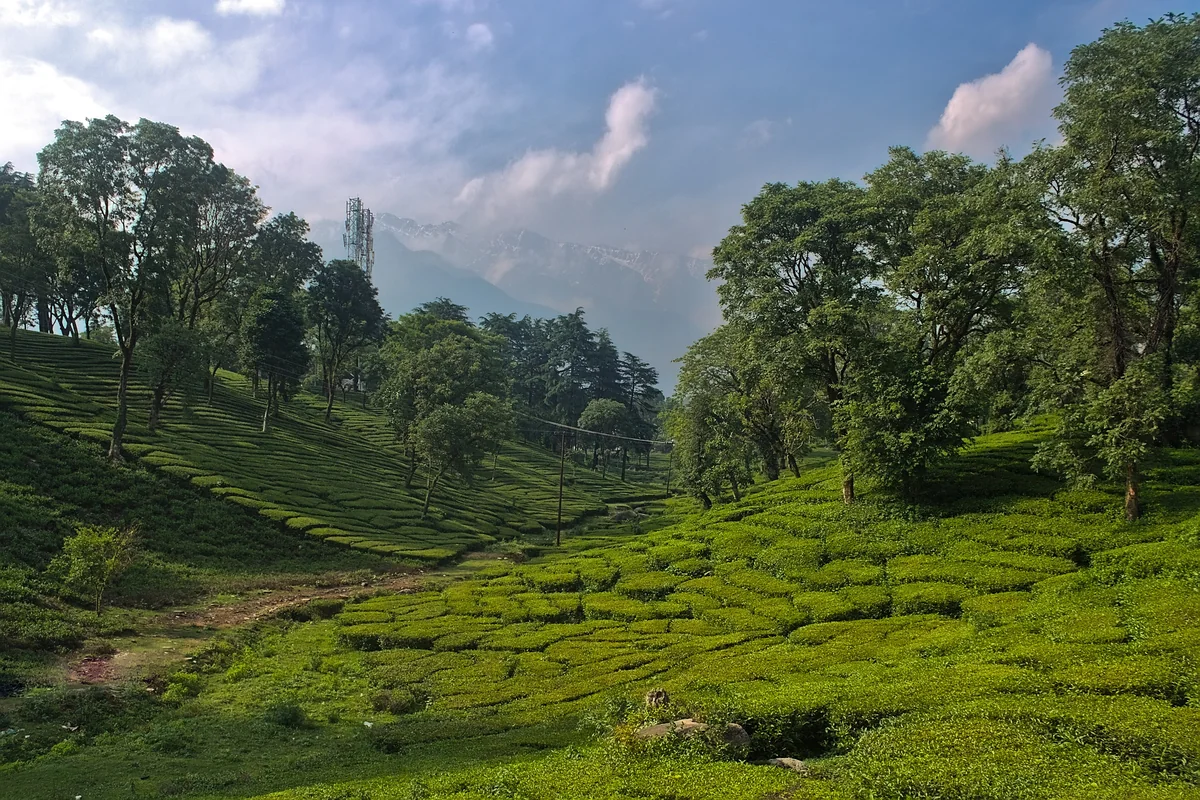
A saucer-shaped meadow ringed by deodar forest, with a small lake at its centre, at around 1,951 m between Dalhousie and Chamba town. It's the district's most-visited single spot, and a genuinely different landscape from the hill-station town itself.
Photos: Snigdhabafna (CC BY-SA 4.0) · Rajkumarjnub (CC BY-SA 3.0) — via Wikimedia Commons, resized.
Getting there
About 38 minutes by road from Dalhousie, roughly 18 km, past Kalatop Wildlife Sanctuary on the same route — the standard second-day trip, covered on the two-day plan.
The visit
The meadow and its small central lake are the whole point — a wide, open green space that reads as strikingly different from the forested hills around it. Pony rides are a common local activity for visitors rather than a functional way to get around.
Look for the Swiss sign
Walk the meadow looking for a small sign with a yellow Swiss hiking-trail symbol that gives Khajjiar's distance from Bern, 6,194 km. On 7 July 1992 the Swiss envoy Willy P. Blazer likened the place to Switzerland in miniature, had the sign put up, and took a stone from the meadow that now forms part of a stone collage around the Swiss Parliament building, as a reminder of Khajjiar. We cannot say whether the sign still stands, so ask locally if you cannot find it.
Then look at the lake. It sits in the middle of the saucer-shaped meadow, and a weed called vacha has grown over the edges so thickly that the banks are covered in spongy earth, which is why people speak of a floating island here.
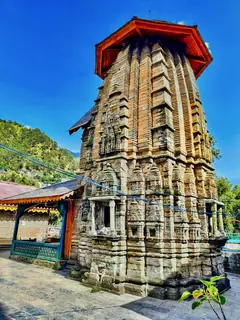
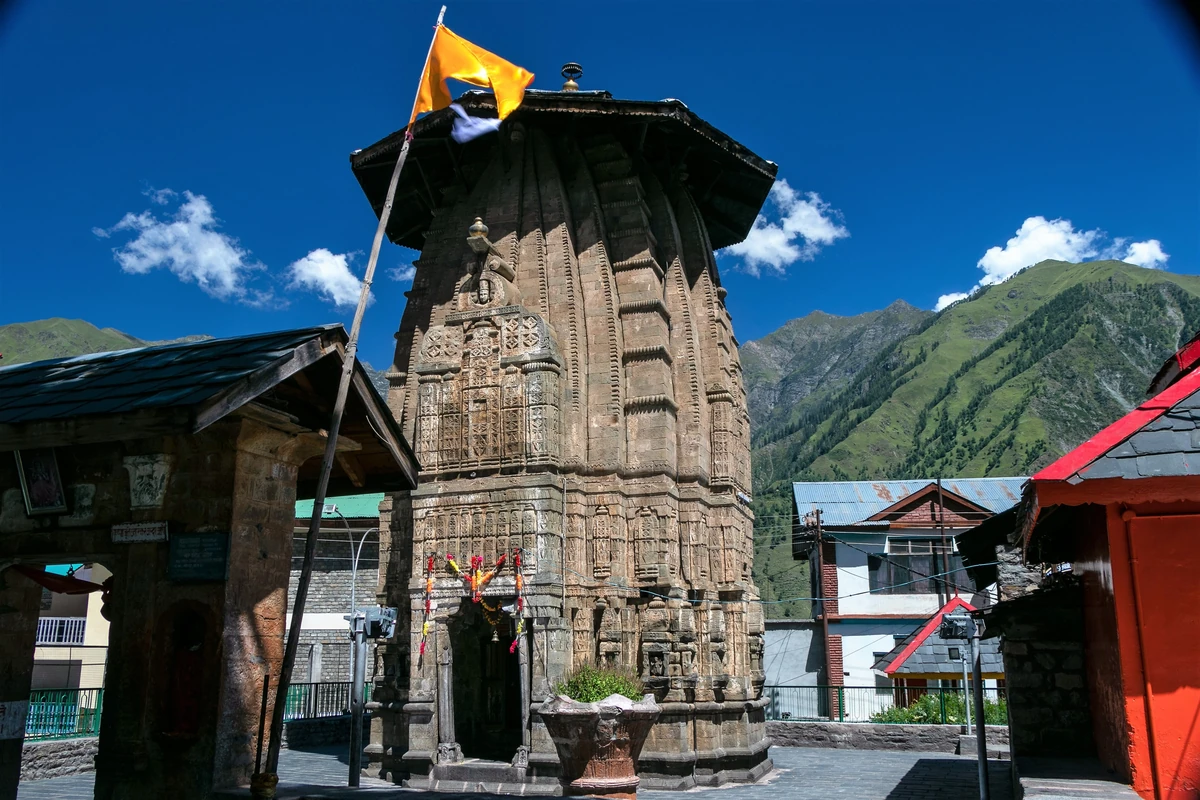
A little way from the lake stands the Khajji Nag Temple, built in the 12th century by Prithviraj Singh I, king of Chamba, and known for its golden dome. Inside, look up: images of the Pandavas and the defeated Kauravas hang from the roof of the path around the shrine. The sanctum is carved from wood, and the temple is given to snake worship, with several snake idols as well as Shiva and the goddess Hadimba.
When to go
April to June or September and October — outside the heaviest monsoon rain, and outside the July peak-season crowds if a quieter visit matters more than warm weather.
Around it
Kalatop Wildlife Sanctuary, on the same road back towards town, and Chamera Lake, further on, fill out the two-day plan from Dalhousie. Dainkund and Pohlani Mata Temple, on a different ridge closer to town, belong to the shorter one-day loop instead.
Watch our reel
Going to Dalhousie?
 Two days in Dalhousie — Dainkund and Khajjiar1 night · 2 days, ready to copy and change
- Stays in DalhousieCompare live prices
- See it on the map
- Send this on WhatsApp
Reels from these places: follow @himlocal.in on Instagram
Run a café, a stay or a trek company near Khajjiar Lake? List it on HimLocal →


Plans that include this
All 3 plans that stop here →

Nearby places
All of Dalhousie →
Nearby destinations
All destinations →
Questions people ask
Why is Khajjiar known as a day trip from Dalhousie?
Because it's a genuinely different landscape from the hill-station town — a saucer-shaped meadow ringed by deodar forest, with a small lake at its centre, rather than another set of colonial-era buildings and mall walks around a square.
How far is Khajjiar from Dalhousie?
About 38 minutes by road, roughly 18 km, past Kalatop Wildlife Sanctuary on the same route. It's the district's most-visited single spot, so expect real crowds in peak season, especially around the busy month of July itself.
How high up is Khajjiar?
Around 1,951 m, situated between Dalhousie and Chamba town, on the same road that continues towards the district capital. The elevation keeps it noticeably cool even when lower parts of the whole district feel a good deal warmer in comparison.