
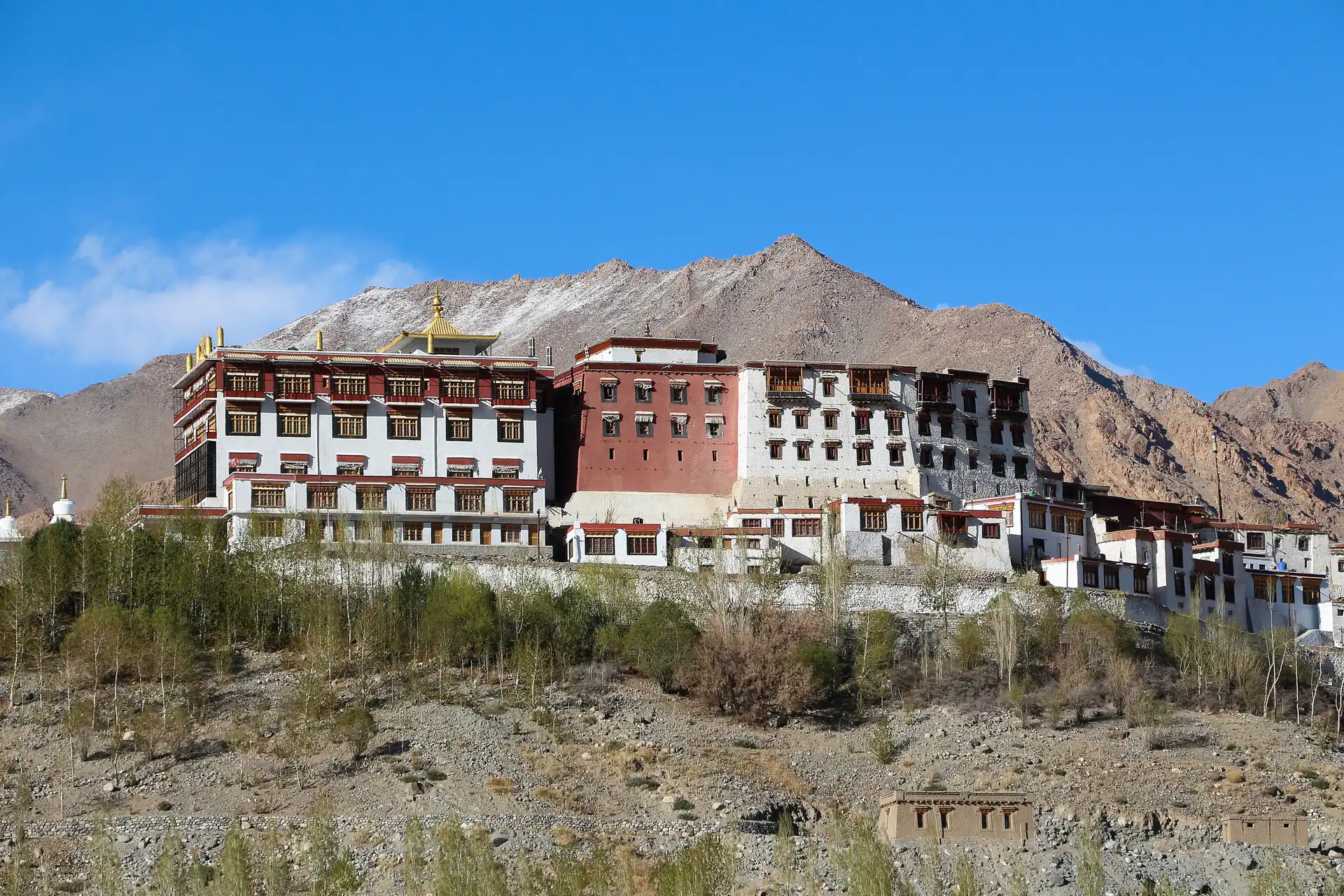
Phyang Monastery, Ladakh — the Drikung gompa on the blue hill west of Leh
What it is
Phyang Monastery, also written Phiyang Gompa, stands on a hill above the village of Phyang, about 25 minutes west of Leh on our routing. Its local name is Gangon Tashi Chodzong, after Gang Ngonpo, the blue mountain behind it.
Photos: Ingo Mehling (CC BY-SA 3.0) — via Wikimedia Commons, resized.
Its story
Wikipedia gives two traditions for its founding. One says the hill was given to a teacher of the Drikung order, and that a monastery called Tashi Chozong was set up here in 1515, the first seat of the Drikung teachings in Ladakh. The other credits King Tashi Namgyal, who reigned later in the sixteenth century. The chronicles of the time do not agree, and this page gives both.
Visiting
The road from Leh climbs off the Kargil highway to the village below the monastery. We have no verified opening hours; it is a working monastery, so dress modestly, walk clockwise and ask before photographing inside.
Combine it with
The west of Leh day goes on to Basgo and Likir; the three-day first trip visits it on the last day with Spituk. Read things to do in Leh.
Plans that include this
All 2 plans that stop here →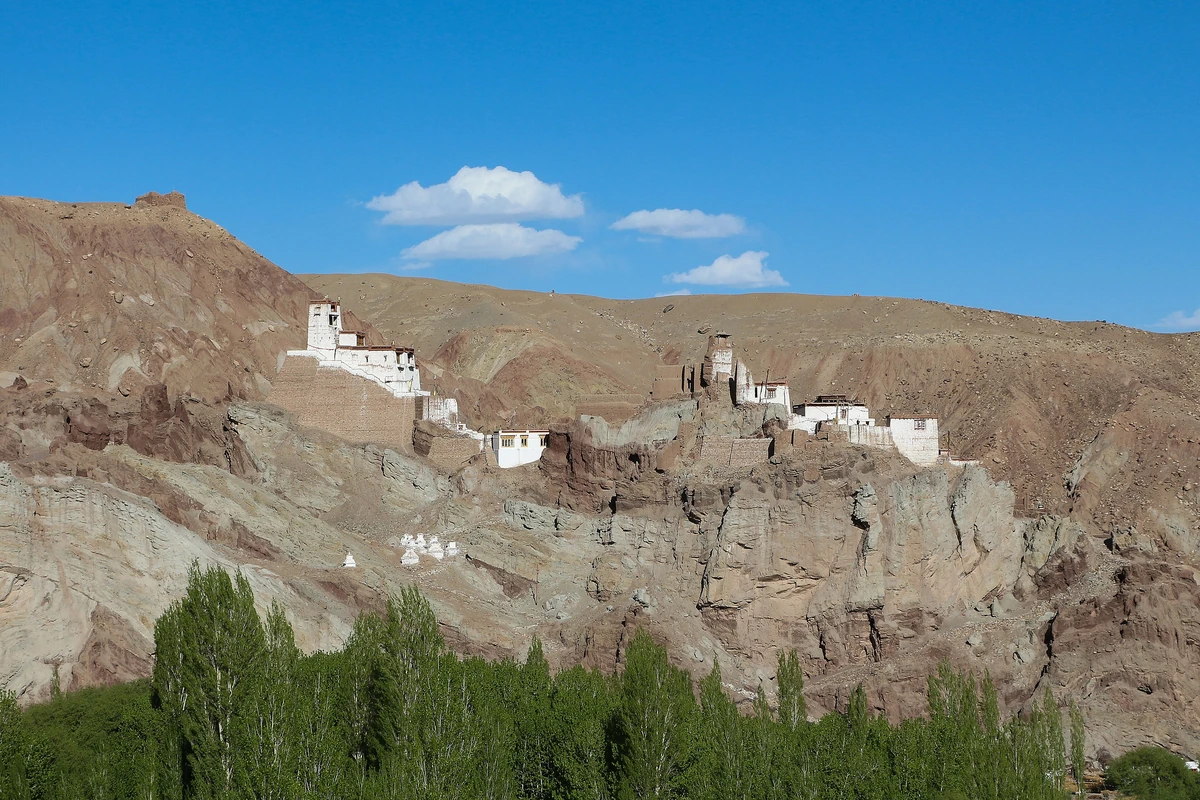
Nearby places
All of Leh →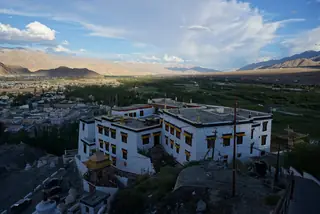
Nearby destinations
All destinations →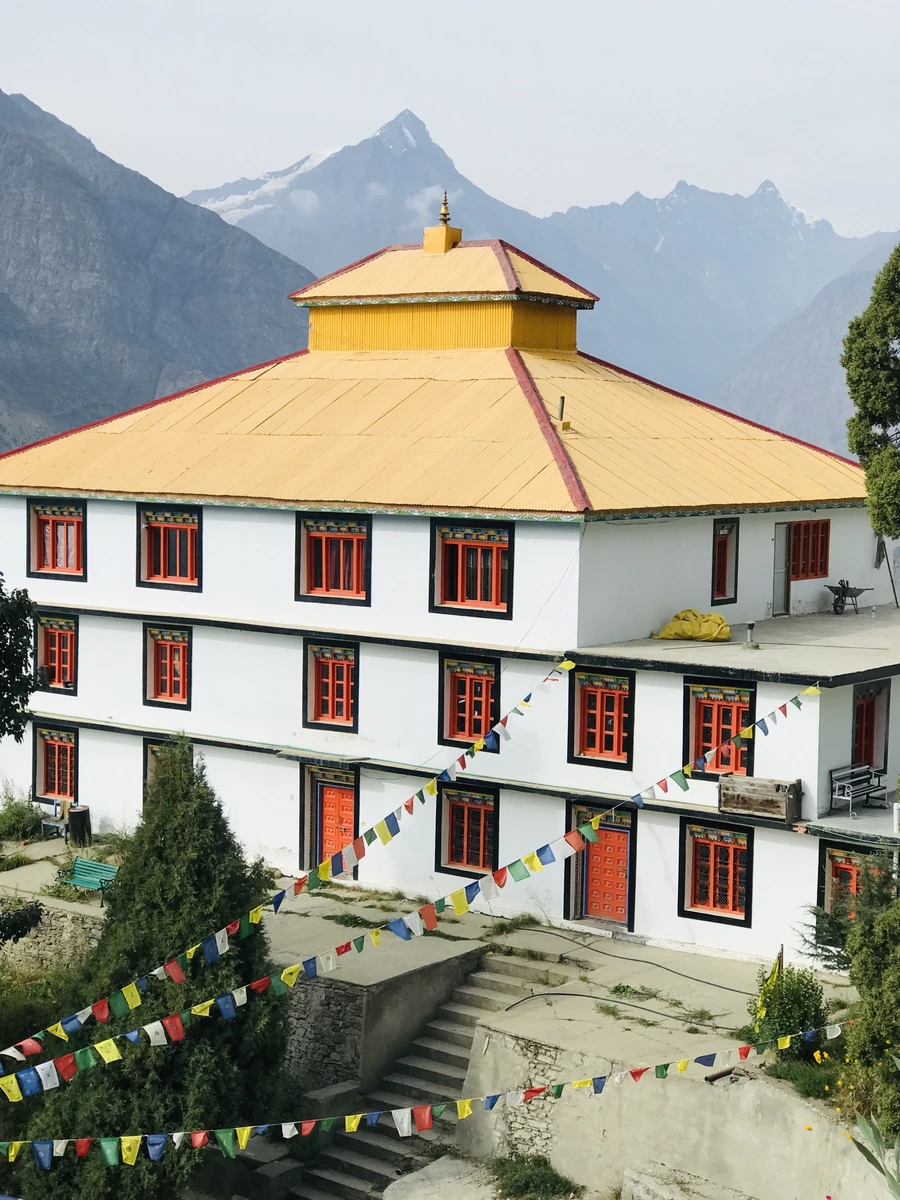
Questions people ask
How far is Phyang Monastery from Leh?
About 20.6 km and 25 minutes by road on our routing; Wikipedia says 15 or 16 km west of Leh. The monastery stands on a hill above the village of Phyang, off the road to Kargil, so it pairs easily with Spituk on the way out or with Basgo and Likir further west.
When was Phyang Monastery founded?
Wikipedia gives 1515, as the monastery of Tashi Chozong, where the Drikung teachings were first set up in Ladakh. Another tradition credits King Tashi Namgyal, who reigned later in the sixteenth century; Wikipedia notes the chronicles of this period are hard to reconcile.
What does the name Phyang mean?
Its local name is Gangon Tashi Chodzong, and Wikipedia says it comes from Gang Ngonpo, meaning blue mountain, after the hill behind the monastery. The village name is also written Phiyang or Fiang. We have no verified opening hours; it is a working monastery, so ask before photographing inside.