
Best time to visit Cherrapunji — month by month, from the rain figures
The best time to visit Cherrapunji, month by month from the IMD normals: a very wet monsoon, a dry cool winter and when the waterfalls and views work best.
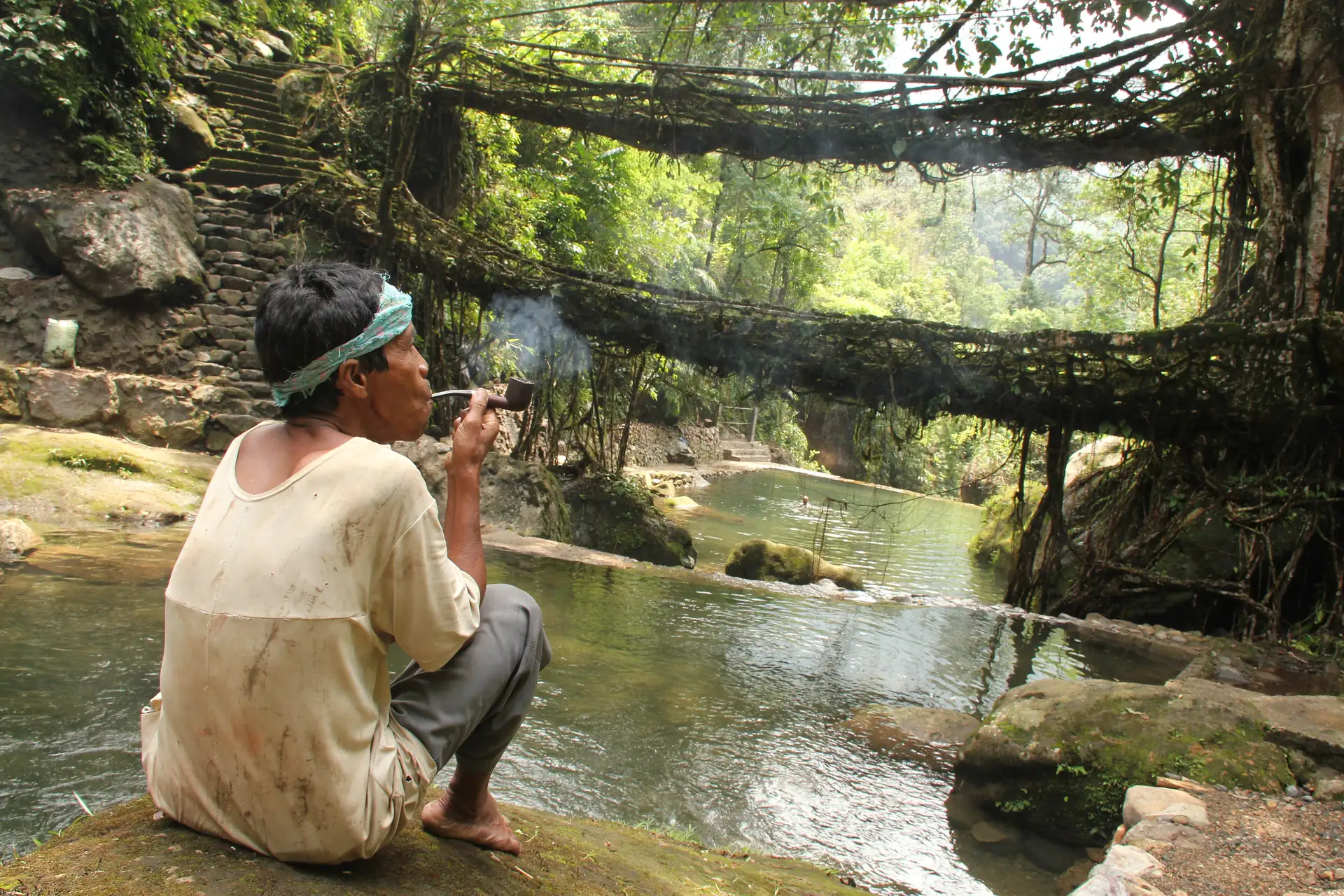
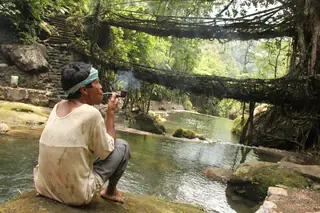
Cherrapunji is known for its living root bridges, and this guide is honest about what we can and cannot yet verify.
Photos: PJeganathan (CC BY-SA 4.0) — via Wikimedia Commons, resized.
Living root bridges are formed from the aerial roots of the rubber fig, which the Khasi and Jaintia peoples of the southern Shillong Plateau guide across a stream and let thicken over years. Wikipedia says the Khasi do not know when the tradition started, and that Henry Yule's note of 1844 in the Journal of the Asiatic Society of Bengal is the earliest written record of Cherrapunji's bridges. A bridge keeps growing as long as the tree is healthy, and the roots must be pruned and guided to strengthen it.
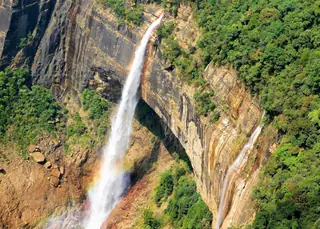
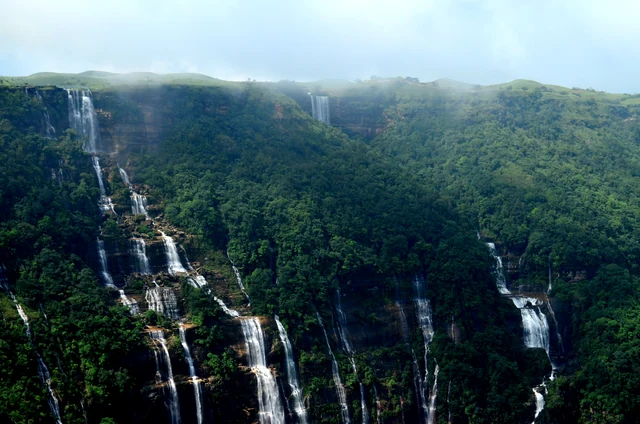
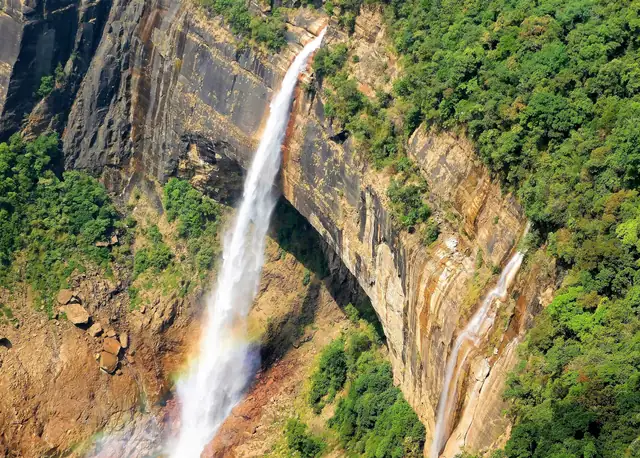
Wikipedia names the Umshiang, Mawsaw and Ritymmen root bridges and the two-tier bridge at Nongriat in villages near the town, with Rangthylliang 1, over 50 m, described as the longest. At Nongriat, the village has three working bridges, and stone steps join it to Tyrna, below the Cherrapunji–Laitkynsew bridle path. The waterfall of Ka Likai, the Nohkalikai Falls, is best seen from Laitkynsew in the monsoon.
Our table has no verified point for any of these bridges: its «living root bridge» rows disagree about the place, one sitting about 40 km east. Wikipedia's figures for the walk to the double-decker also disagree between articles, so we give no route, distance, step count or walking time. Ask your hotel in Cherrapunji, or a local guide, for the route and the day's conditions.
The bridges are alive. Wikipedia says tourism has damaged the health of the double-decker, and that a replica has been made at Nongriat to show the craft. Keep to the paths, never carve or cut the roots, and take your litter out.
Read things to do in Cherrapunji and when to visit Cherrapunji, and copy the one-day plan.
A bridge grown from the aerial roots of a rubber fig tree, guided across a stream and left to thicken. Wikipedia says the Khasi and Jaintia peoples make them, that a mature bridge can carry 50 or more people and last several hundred years, and that the earliest written record of Cherrapunji's bridges dates to 1844.
In the village of Nongriat, East Khasi Hills, by Wikipedia's account, where the village has three working root bridges; the best-known, the double-decker, is Jingkieng Nongriat. Wikipedia reaches Nongriat by stone steps from Tyrna. Our table has no verified point for it, so we give no route, distance or walking time.
Wikipedia gives different figures in different articles: some bridges take 10 to 15 years, some about 25. It says the oldest bridge still in use is over 500 years old, and that the bridges need active care, because without it many decay or grow wild. Tourism has also put the health of some bridges at risk.