Things to do in Cherrapunji — waterfalls, rain, root bridges and caves
Things to do in Cherrapunji: Nohkalikai and the Seven Sisters waterfalls, the living root bridges of nearby villages, valley viewpoints and the heavy rain.
Cherrapunji, officially Sohra again, is one of the wettest places on Earth, so the time to go depends on whether you want full waterfalls or clear views. The figures below are the India Meteorological Department normals for 1991–2020, as Wikipedia prints them.
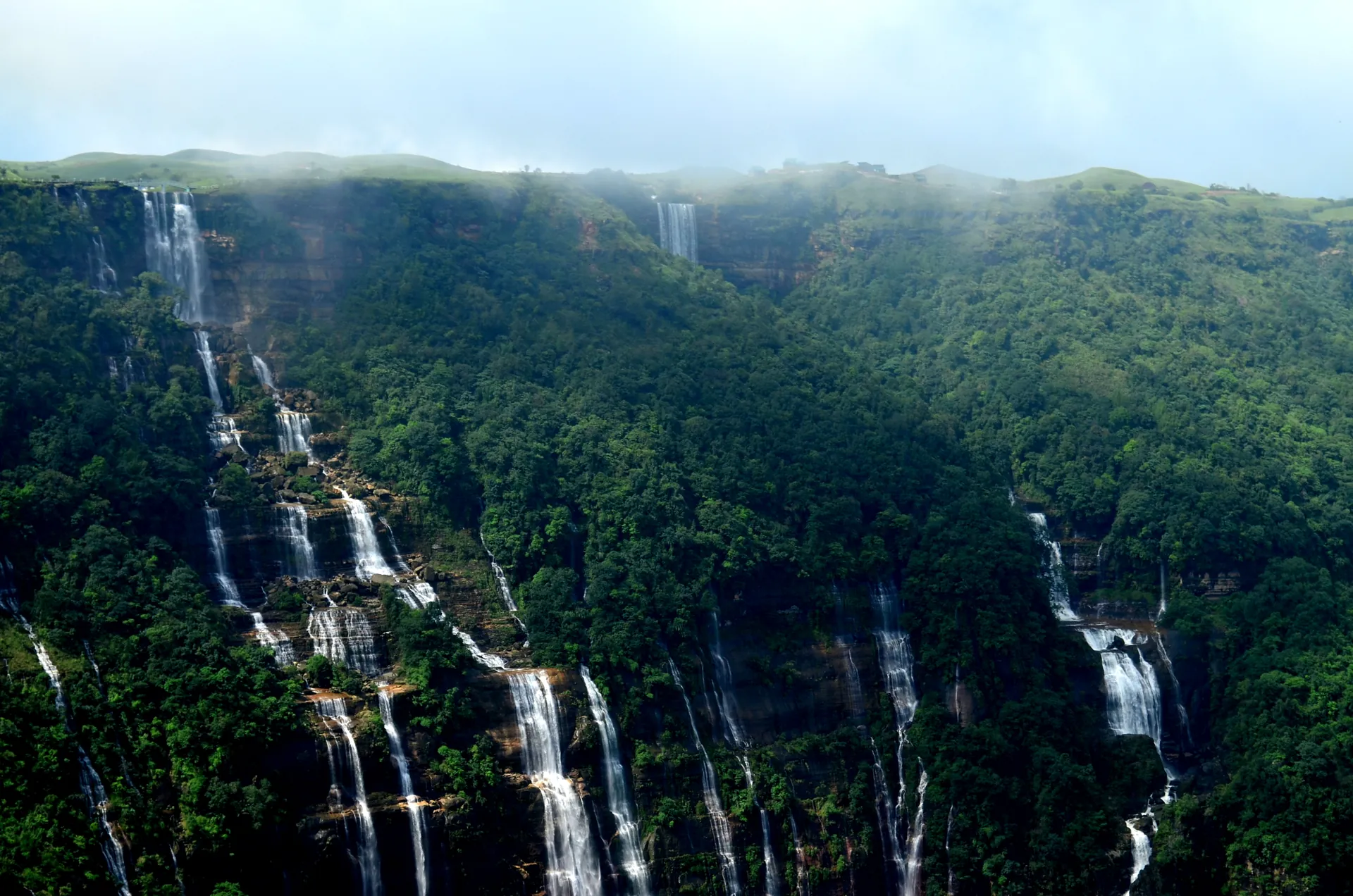
The Nohkalikai Falls and the Seven Sisters are strongest in and just after the monsoon, though Wikipedia says the Seven Sisters run only in the rains and Nohkalikai weakens from December to February. Clear days are likelier in the dry months, when the falls are thinner. Many visitors choose October or November, a compromise.
Read things to do in Cherrapunji and how to reach Cherrapunji, and copy the one-day plan.
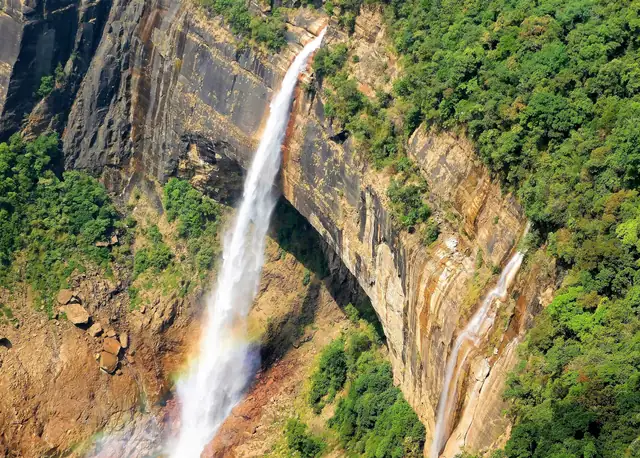
It depends on what you want. The waterfalls are fullest in the monsoon, but the IMD normals give 2,608.1 mm of rain in June and 2,665.4 mm in July, and cloud often hides the gorges. The cooler, drier months from October to February are clearer, with 49.3 mm in November, though the falls weaken.
Very. Wikipedia says its average rainfall is 11,777 mm a year, just behind nearby Mawsynram, and that it still holds the records for the most rain in a calendar month, 9,300 mm in July 1861, and in a year. It has one long monsoon, and the driest months are November to February.
Mild. The IMD normals give a January high of 17.2 °C and a low of 6.6 °C, and Wikipedia gives a mean of 11.5 °C in January and 20.6 °C in August. The table's record low is 1.0 degree below freezing. Carry a rain jacket in any month, and a warm layer from November.