
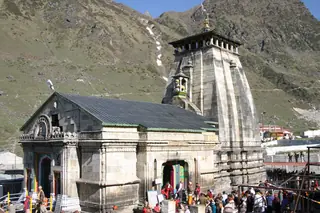
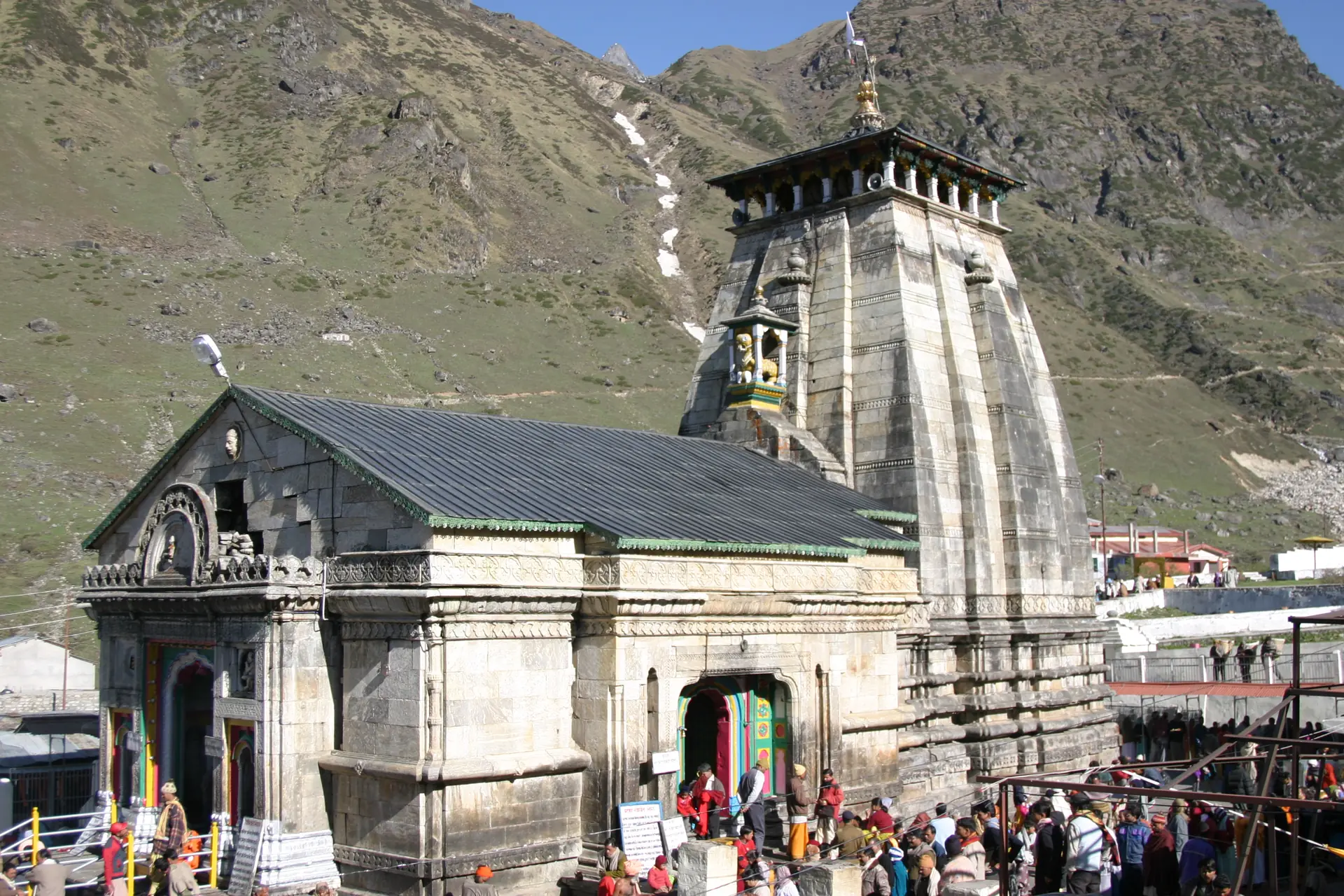
Kedarnath Temple — the Shiva shrine above the Mandakini
What it is
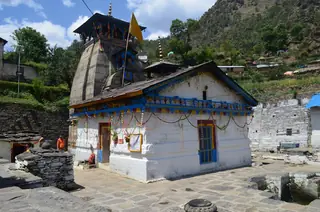
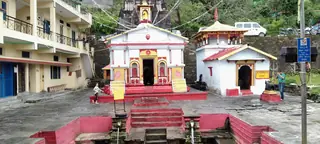
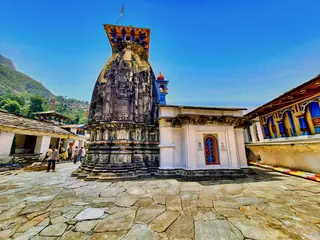
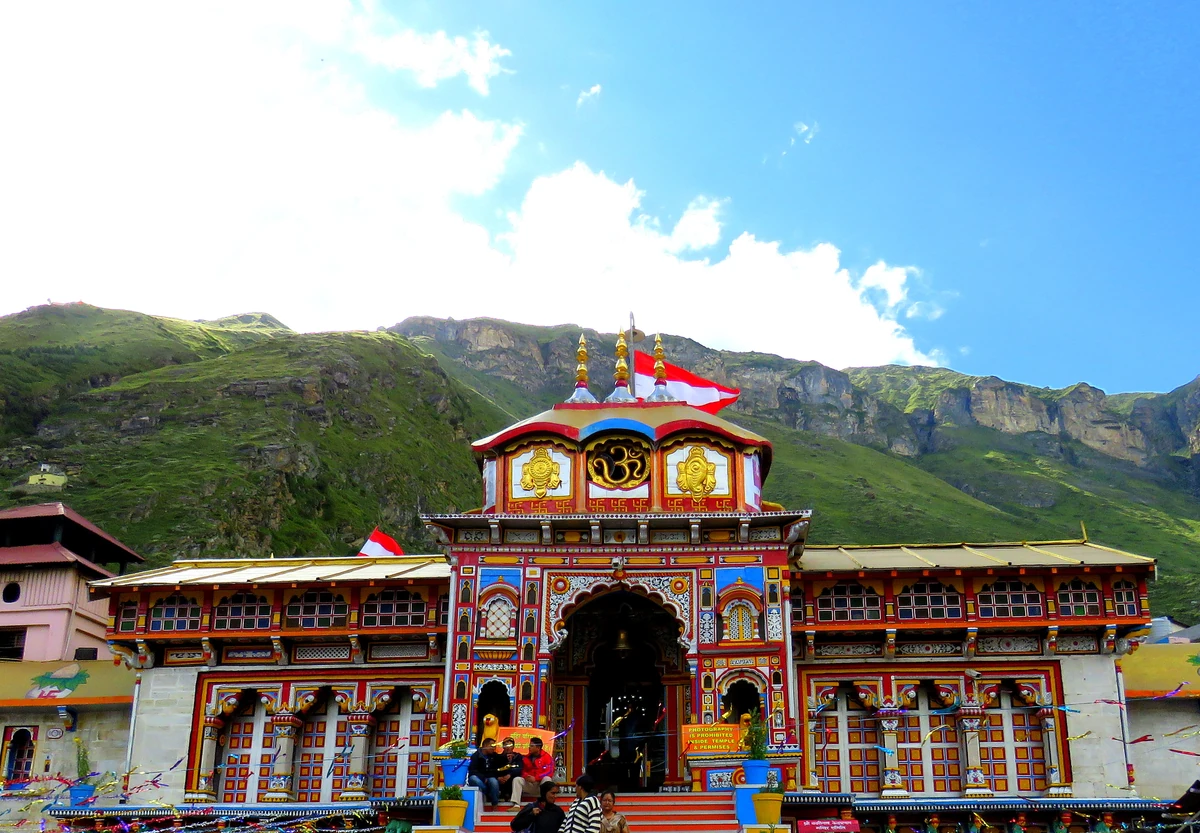
The Kedarnath Temple, "temple of the lord of the field", is a Shiva shrine at about 3,583 m near the source of the Mandakini, in Kedarnath. It is one of the twelve jyotirlingas and, by Wikipedia's account, the highest of them; it is the first of the five Panch Kedar shrines and one of the four Chota Char Dham. The presiding image is a three-sided lingam, believed by devotees to be self-manifested. A small pillared hall in front holds images of Parvati and the five Pandava princes, and behind the temple is the samadhi of Adi Shankara.
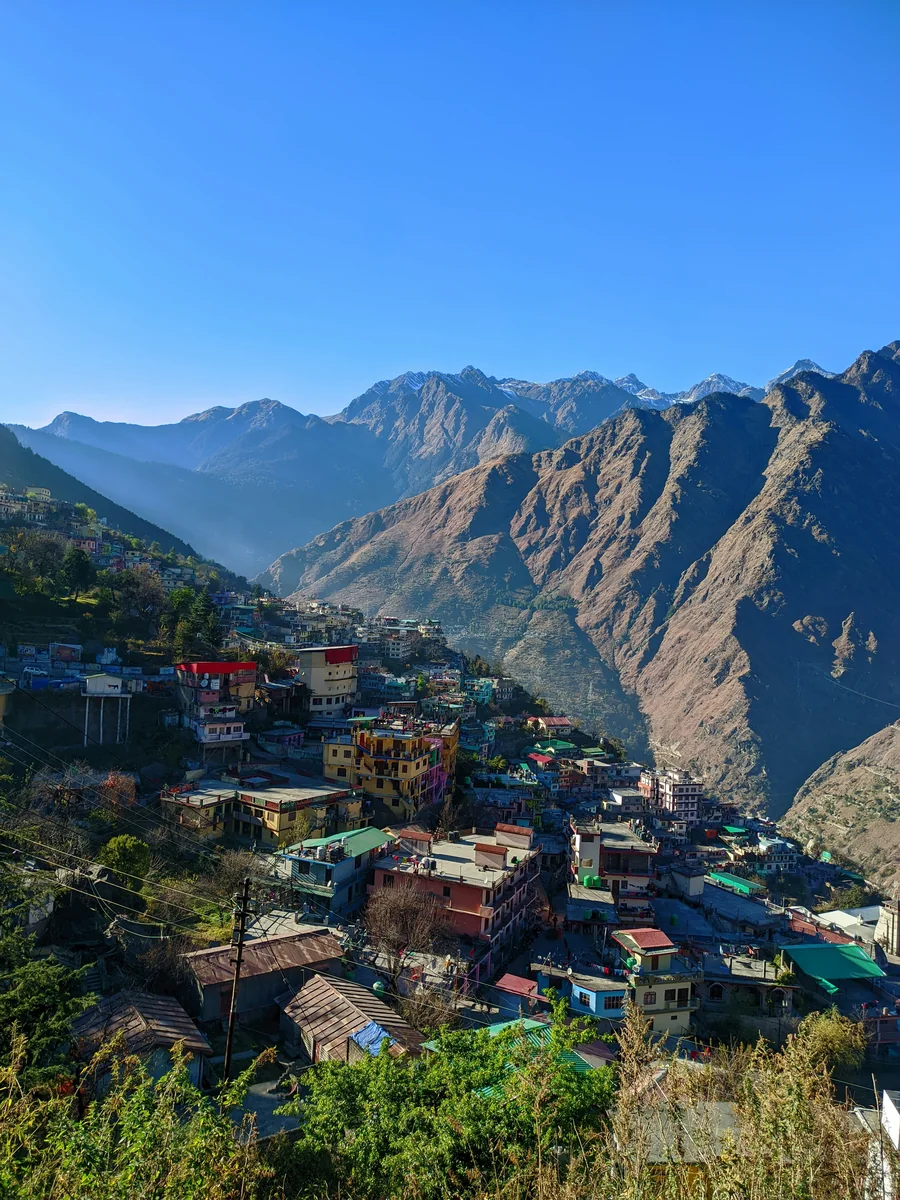
Photos: Shivam Kumar 766 (CC BY-SA 4.0) · Asdelhi95 (CC BY-SA 4.0) · Asdelhi95 (CC BY-SA 4.0) — via Wikimedia Commons, resized.
Getting there
The road ends at Gauri Kund. From there the temple is 17 km uphill on foot (one Wikipedia article gives 16 km), which Wikipedia says takes 6 to 8 hours. Ponies, palanquins and helicopters carry those who do not walk; the helicopters fly from places such as Phata and Sersi, in 8 to 10 minutes. We have no verified fares, timings or booking rules for any of them, so ask at Gaurikund and check the temple committee's notices. A 12.9 km ropeway from Sonprayag is a planned project, not a service you can use. No source gives the time down, so we budget the same as the climb.
History and belief
Nobody knows who built the first temple or when. Tradition credits the Pandavas, and by tradition Adi Shankara revived it and is said to have attained mahasamadhi near here. One of the earliest written mentions is in the Skanda Purana, from about the 7th or 8th century, and Kedarnath was a well-known pilgrimage by the 12th century. The story of the bull is told at Guptakashi: Shiva, hiding from the Pandavas as a bull, is said to have sunk into the ground and reappeared in five forms, the hump at Kedarnath. The head priest, the Raval, belongs to the Veerashaiva community of Karnataka and, unlike at Badrinath, does not perform the pujas himself; his assistants do.
The 2013 floods
In June 2013 a landslide and then a rush of water and rock from the Chorabari lake above wiped out most of the town. The temple's complex was damaged and hundreds of pilgrims and locals died by Wikipedia's count in one article, with thousands killed or missing in another; a large boulder lodged behind the temple and turned the flood aside, and the temple structure survived. Weather here is serious: check the day's advice before you set out.
When to go
April to November only. The monsoon months bring the worst of the weather on the path. In the closed months the deity is worshipped at Ukhimath. See when to visit Kedarnath.
Around it
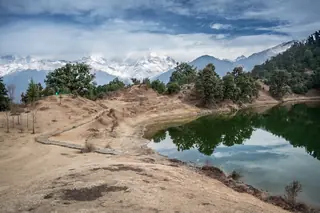
On a ridge east of the town stands the open-air shrine of Bhairavnath, the temple's guardian. About 6 km upstream lies the glacial lake of Chorabari Tal, also called Gandhi Sarovar; we have no verified timings or permit rules for it, so we plan nothing there. The two-day walk puts a night at the top, and how to reach Kedarnath has the road.
Plans that include this
All 1 plans that stop here →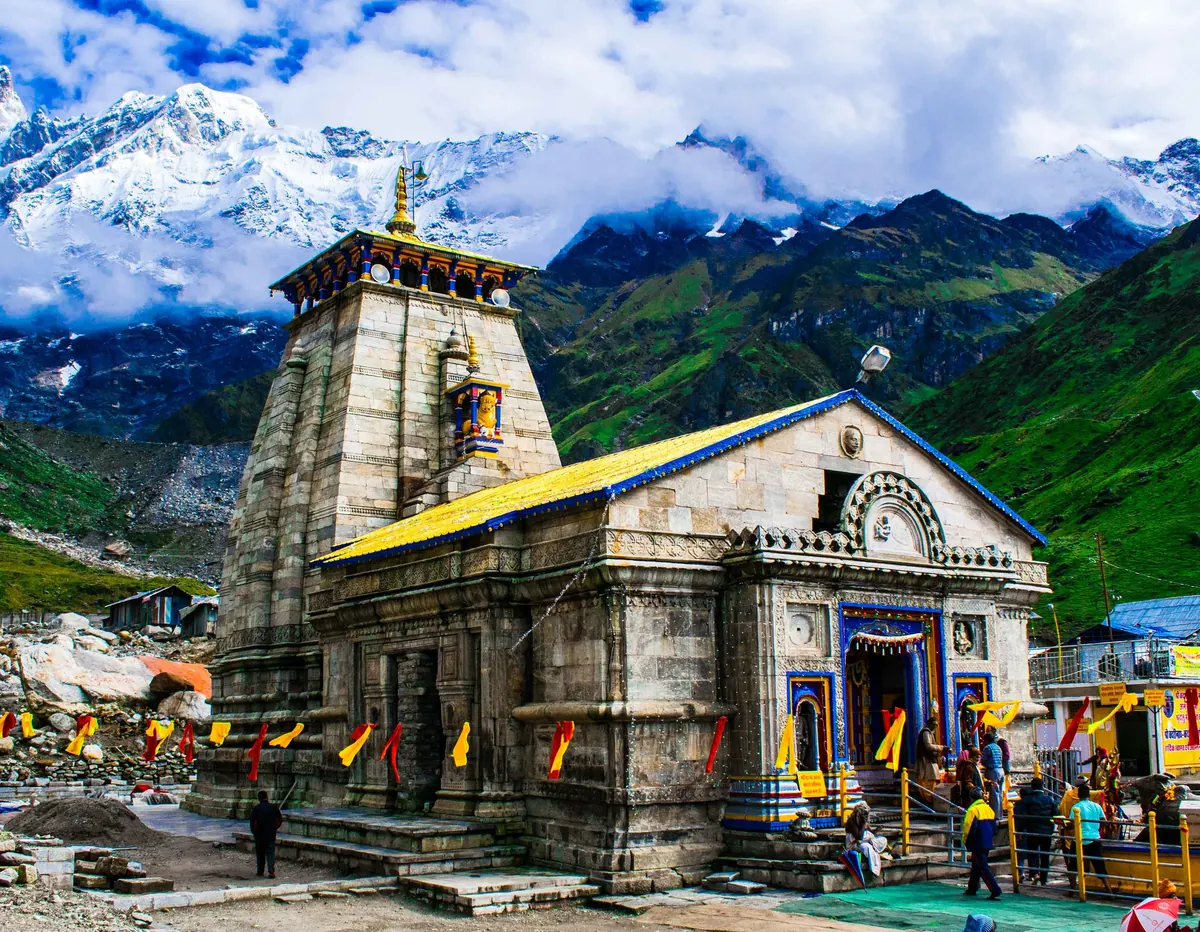
Nearby places
All of Kedarnath →
Nearby destinations
All destinations →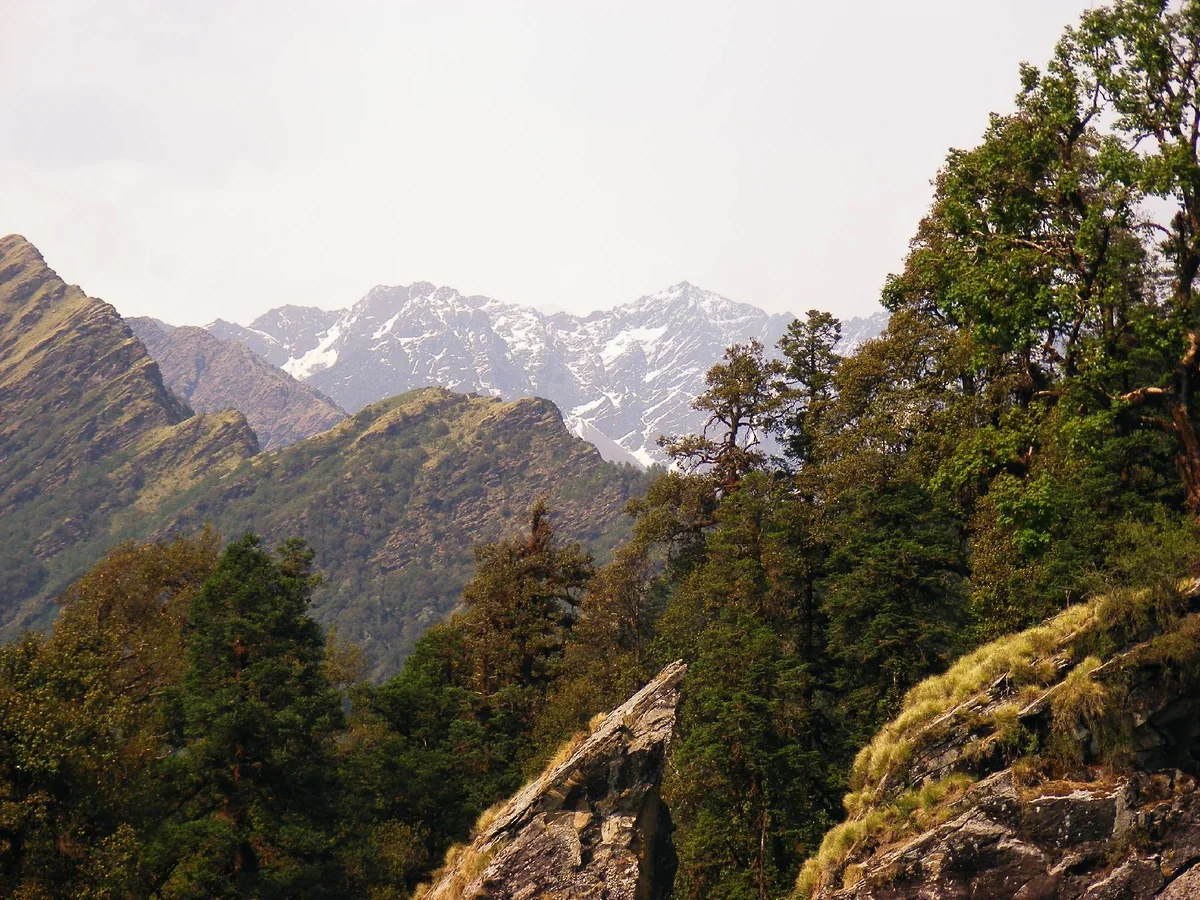
Questions people ask
How long is the walk to Kedarnath?
About 17 km from Gaurikund, where the road ends; one Wikipedia article gives 16 km. The same article says the walk takes 6 to 8 hours depending on pace and weather. Ponies, palanquins and helicopters are the other ways up. No source gives the time down, so budget the same again.
When is the Kedarnath Temple open?
Only between April, around Akshaya Tritiya, and November, around Kartika Purnima, the autumn full moon. For the six months of heavy snow the deity is carried down to Ukhimath and worshipped there. The exact opening and closing dates are set each year by the temple committee.
Is there a road or ropeway to Kedarnath?
No road reaches it; the road ends at Gaurikund. A 12.9 km ropeway from Sonprayag is a planned project that Wikipedia describes as expected to cut the trek to 36 minutes, but it is not a running service. Helicopters fly from places such as Phata and Sersi, in 8 to 10 minutes.