
Badrinath Temple — the Char Dham shrine on the Alaknanda
What it is
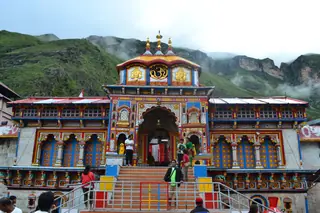
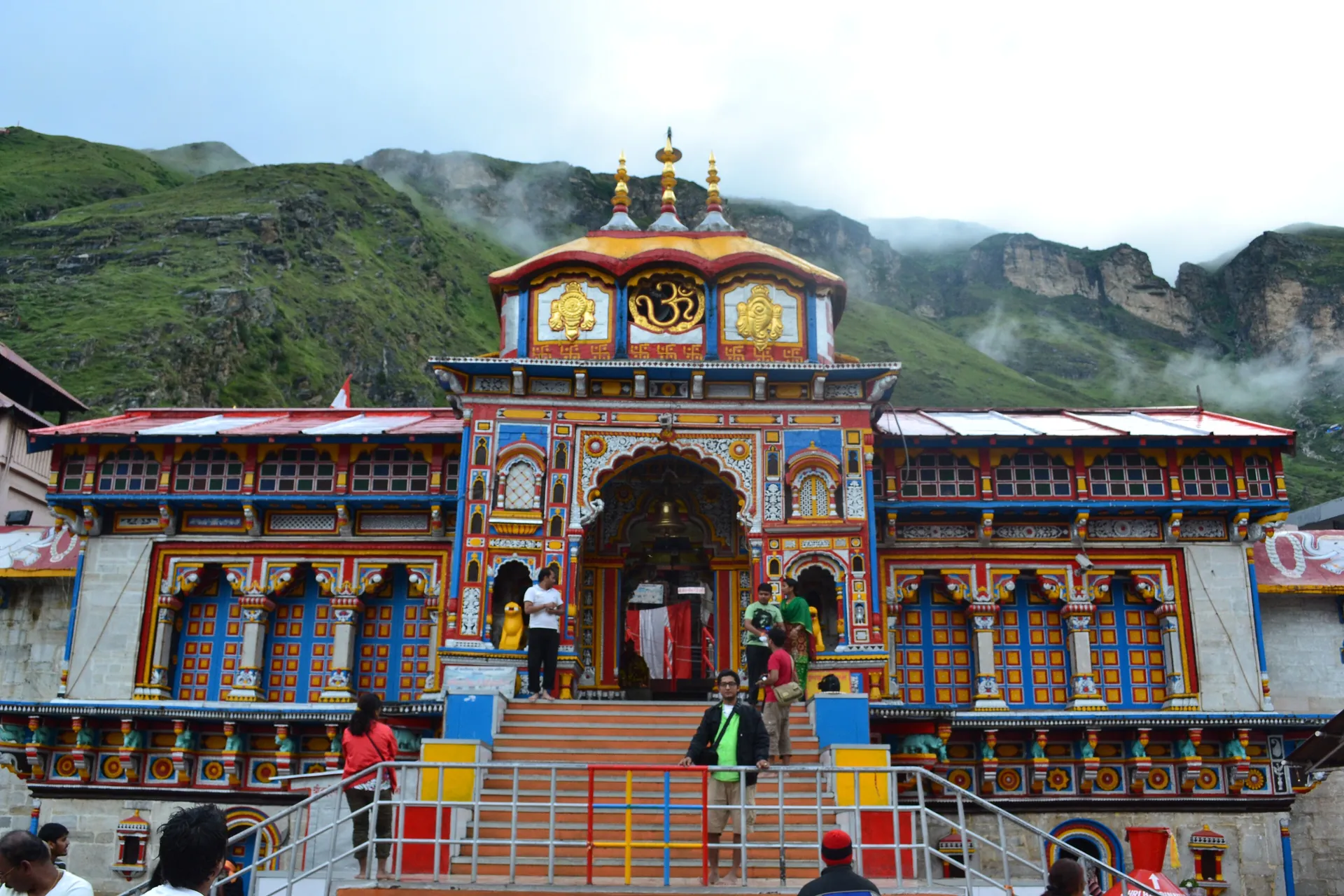
The Badrinath Temple, also called Badarinarayana, is the Vishnu temple that gives Badrinath its name. It stands at about 3,133 m on the bank of the Alaknanda, with Nar Parbat across the river, and it counts among the four Char Dham shrines and the 108 Divya Desams of Vaishnavism. The image inside is a small black stone figure of Vishnu as Badrinarayan, about a foot high. Because of the snow, the temple opens for only about six months a year, from late April to early November.
Photos: Bahuln89 (CC BY-SA 3.0) · Heavren (CC BY-SA 4.0) — via Wikimedia Commons, resized.
Getting there
It is in the middle of the town, about 2 minutes by road from the town centre and a short walk from anywhere you stay. A broad stairway leads up to the painted gateway. Register for the yatra on the Uttarakhand portal before you travel, as the temple committee asks, and carry an identity card: Wikipedia records that proof of identity is required to enter. Wikipedia records 2.8 million visits in just two months of 2022, and each devotee is allotted 10 to 20 seconds before the deity, so expect a queue.
The building
The sanctum's conical roof is about 15 m high, topped by a small gilt cupola, and the stone façade with its arched windows is painted in bright colours. Inside, a pillared hall with carved walls leads to the sanctum. By Wikipedia's account the pilgrimage was founded by Adi Shankara in the ninth century. The kings of Garhwal enlarged the temple in the 17th century, and after the great Garhwal earthquake of 1803 the King of Jaipur paid for most of its rebuilding. Since 1776 the chief priests have come from the Nambudiri community of Kerala, a custom that continues.
Tapt Kund
Right under the temple lie the hot sulphur springs of Tapt Kund. The water stays at about 55 °C through the year while the air is usually below 17 °C, and many pilgrims bathe here before going up to the shrine. The temple's two smaller ponds are Narad Kund and Surya Kund. One tradition holds that the image was once thrown into Tapt Kund and recovered by Adi Shankara.
When to go
Only between the opening in late April or May and the closing in early November. May, June, September and October are the usual months; July and August are the wettest and the road can be cut by landslides. In winter the worship moves down the valley: to Pandukeshwar by one Wikipedia article, to the Narsingh temple in Joshimath by another. See when to visit Badrinath.
Around it
Mana, about 3 km on, is the natural second stop, and the one-day plan puts them together. For the journey up, read how to reach Badrinath, and for the rest of the valley, things to do in Badrinath.
Plans that include this
All 3 plans that stop here →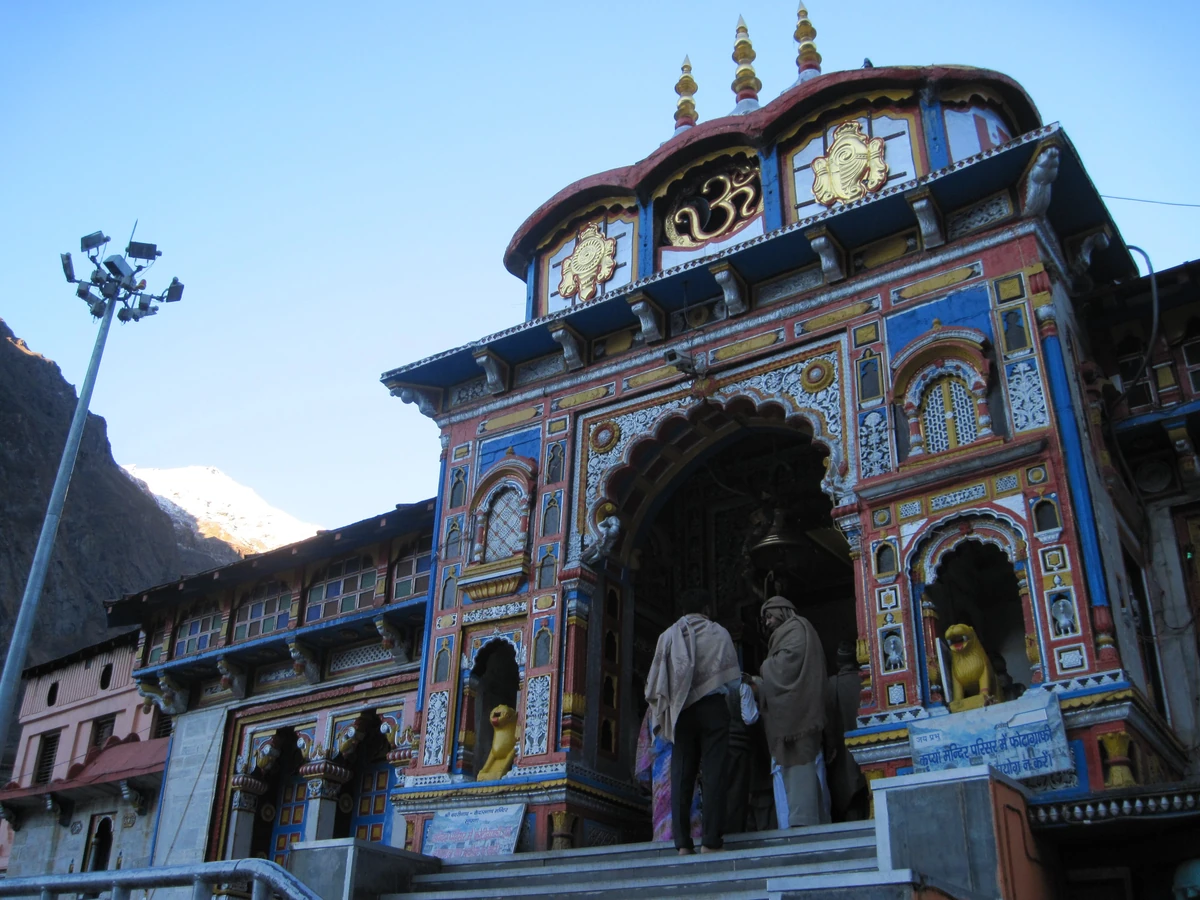
Nearby places
All of Badrinath →


Nearby destinations
All destinations →
Questions people ask
When does the Badrinath Temple open and close?
It is open for about six months a year, from late April to early November, because of the winter snow. The dates are fixed each year, so check the temple committee's site before you plan. Pilgrims are asked to register on the state's yatra portal, and proof of identity is required at the temple.
What is Tapt Kund?
Hot sulphur springs right under the temple, at about 55 °C all year, while the air outside is usually below 17 °C. Many pilgrims bathe here before going up to the shrine. The temple also has two smaller ponds, Narad Kund and Surya Kund.
How old is the Badrinath Temple?
Wikipedia credits Adi Shankara with founding the pilgrimage here in the ninth century, and the shrine is named in old texts such as the Vishnu Purana. The building has been rebuilt more than once: the kings of Garhwal enlarged it in the 17th century, and after the 1803 earthquake the King of Jaipur paid for most of its rebuilding.